Ernst Ludwig Kirchner
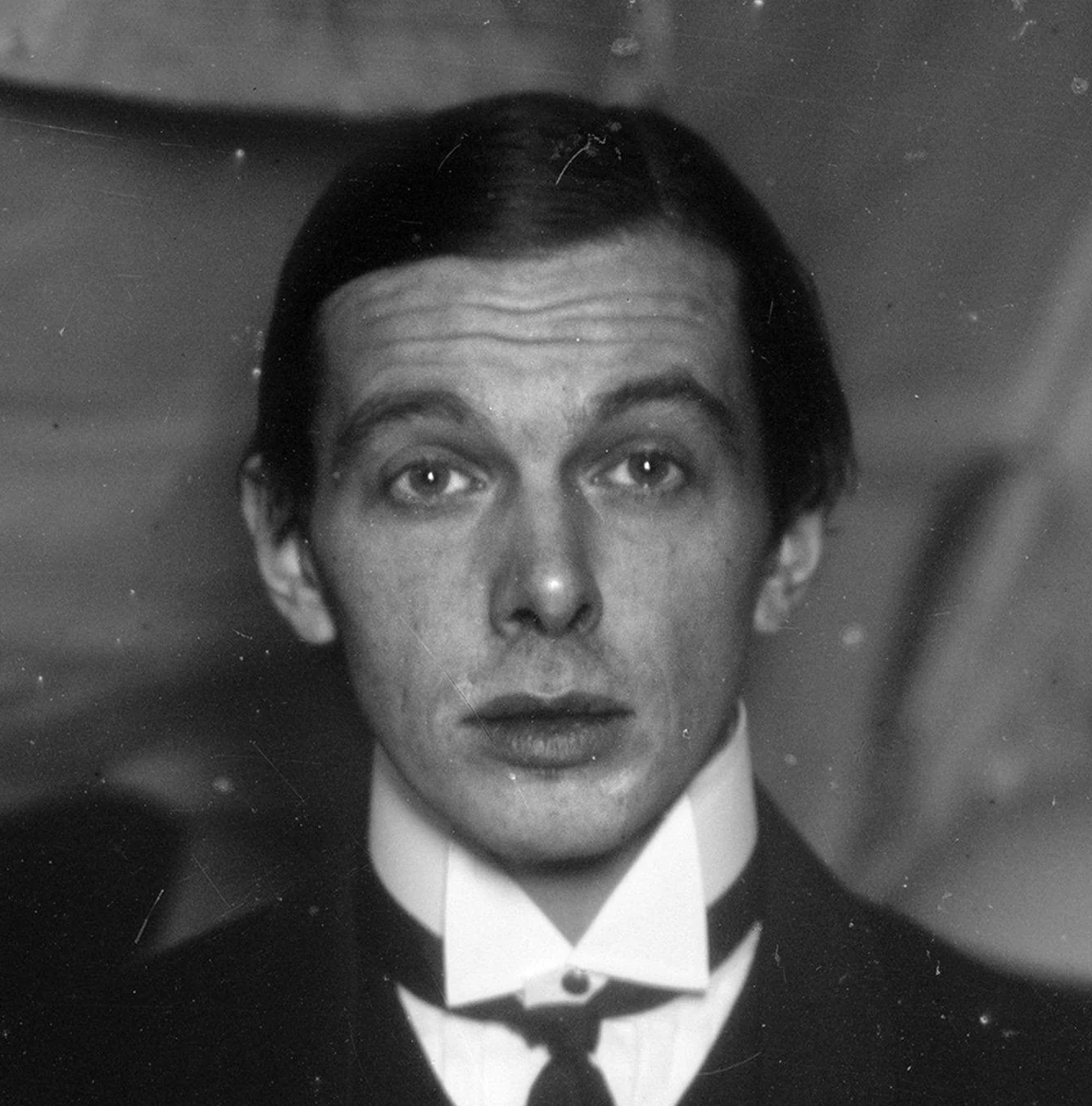
Image from Wikipedia
Image from Wikipedia
Ernst Ludwig Kirchner: The Radical Expression of German Expressionism
A Life Between Breakthrough, Rupture, and Artistic Consistency
Ernst Ludwig Kirchner is one of the defining figures of European modernism. Born on May 6, 1880, in Aschaffenburg and died on June 15, 1938, in Frauenkirch-Wildboden near Davos, he developed a body of work that vividly showcases the energy, nervousness, and fragmentation of his time with exceptional force. As a painter, graphic artist, and co-founder of the artists' group Die Brücke, he became one of the most important representatives of Expressionism. ([de.wikipedia.org](https://de.wikipedia.org/wiki/Ernst_Ludwig_Kirchner?utm_source=openai))
Kirchner's biography is closely linked to the upheavals of modernity. His work represents artistic radicalism, a break with academic conventions, and an attempt to translate inner states into color, line, and form. The fact that the Nazis branded his art as "degenerate" in 1937 marks a dark endpoint to a career that had previously been considered one of the most innovative of the 20th century. More than 600 of his works were sold or destroyed; a year later, Kirchner died from a gunshot wound. ([de.wikipedia.org](https://de.wikipedia.org/wiki/Ernst_Ludwig_Kirchner?utm_source=openai))
Die Brücke: The Beginning of a New Visual Language
Kirchner's decisive artistic breakthrough began in 1905 with the founding of Die Brücke together with Fritz Bleyl, Erich Heckel, and Karl Schmidt-Rottluff in Dresden. MoMA describes this founding as a moment now regarded as the birth of German Expressionism. The group sought immediate, unfiltered expression and consciously turned away from the smooth security of academic painting. ([moma.org](https://www.moma.org/collection/artists/3115?utm_source=openai))
At this phase, Kirchner was not only a co-founder but also a stylistic force. His early works combine sharp drawing, intensely vibrant colors, and a rapid, almost improvised organization of images. This formal language developed from the spirit of the avant-garde and from a general distrust of conventions, bourgeois order, and the heroic pathos of the Wilhelminian era. The Germanic National Museum emphasizes this rebellious attitude of the young Expressionists. ([gnm.de](https://www.gnm.de/objekte/der-trinker-selbstbildnis?utm_source=openai))
Berlin, Metropolis, and Psychological Tension
With the move to Berlin, the tone of his work also shifted. Kirchner responded to modern urban life with images of high psychological tension, sharp contours, and often disturbing dynamics. Works such as the Berlin street scenes are now among his most sought-after and highly regarded pieces. The Hamburger Kunsthalle highlights the central role of Hamburg in the early reception of Brücke Expressionism while also pointing to the later confiscation of Kirchner's works by the Nazis. ([hamburger-kunsthalle.de](https://www.hamburger-kunsthalle.de/de/kirchner?utm_source=openai))
In this phase, his perspective on the modern subject becomes more concentrated: isolated, accelerated, perpetually exposed. The figures in his paintings often appear nervous, highly sensitive, driven by an inner unrest. Thus, Kirchner's art is not only a stylistic event but also a documentary seismograph for the mental state of modernity. This is consistently highlighted in museum texts and exhibition contexts, such as at the National Gallery of Art and the Art Institute of Chicago. ([nga.gov](https://www.nga.gov/artists/1436-ernst-ludwig-kirchner?utm_source=openai))
Stigmatization, Davos, and Later Works
A physical and emotional breakdown led Kirchner to a sanatorium in Königstein in the Taunus. Later, he lived in Davos, where the landscape, light, and distance from the metropolis set new accents in his work. The Bündner Kunstmuseum describes Kirchner as the focal point of its Expressionism collection and highlights his years in Davos from 1917 to 1938. ([dhm.de](https://www.dhm.de/lemo/biografie/ernst-ludwig-kirchner?utm_source=openai))
It was especially in Davos that his visual language became more lyrical, landscape-oriented, yet no less tense. The nature motifs, interiors, and portraits from this time showcase an artist who does not settle down but sharpens his perception further. Kirchner's late works are characterized by a peculiar mix of discipline and vulnerability, making his overall development particularly compelling. The Kirchner Museum Davos currently addresses this complexity with exhibitions that closely connect early, middle, and late works. ([kirchnermuseum.ch](https://kirchnermuseum.ch/programm/ausstellungen/archiv/detail/wiederentdeckt-und-wiedervereint/?utm_source=openai))
Discography of Modernity: Printmaking, Painting, and Medium as Language
There is no "discography" in the musical sense for Kirchner, but his work possesses a comparable internal structure: paintings, woodcuts, drawings, pastels, watercolors, and photographs form a cohesive oeuvre with strong recognizability. LACMA highlights him as one of the most original printmakers of the 20th century, while the Kirchner Museum Davos describes his extensive body of work on paper, consisting of around 900 pieces. ([lacma.org](https://www.lacma.org/art/exhibition/ernst-ludwig-kirchner-selections-robert-gore-rifkind-center-german-expressionist?utm_source=openai))
Especially in the woodcuts and drawings, Kirchner's mastery in handling line, density, and abstraction is evident. For him, line is never merely contour but an expressive movement. The museum in Davos describes watercolors and works on paper as a standalone, powerful means of expression that has long been underestimated. This highlights the enduring modernity of his work: in the interplay between spontaneity and compositional control. ([kirchnermuseum.ch](https://kirchnermuseum.ch/programm/ausstellungen/archiv/detail/ausdruck-in-linie-und-farbe/?utm_source=openai))
Critical Reception, Cultural Influence, and Canonization
Kirchner is now among the central names of Expressionism and classical modernity. His works are part of major international collections, including MoMA, the National Gallery of Art, the Art Institute of Chicago, the National Galleries of Scotland, and numerous German museums. This broad presence underscores his standing as an artist whose works have shaped both museum history and research on modernity. ([moma.org](https://www.moma.org/collection/artists/3115?utm_source=openai))
The density of exhibitions also speaks to his lasting significance. The Kirchnerhaus Aschaffenburg and the Kirchner Museum Davos continuously organize presentations that open new perspectives on frames, works on paper, photography, and iconic masterpieces. Exhibitions are documented for 2024 and 2025, including "The Animal in Expressionist Art," "Rediscovered and Reunited," and "Expression in Line & Color." This continuity shows that Kirchner is not only canonized but continues to be read productively in new ways. ([kirchnerhaus.com](https://www.kirchnerhaus.com/index.php/das-tier-in-der-kunst-des-expressionismus/?utm_source=openai))
His cultural influence extends far beyond art history. Kirchner represents the expression of a nervous century, the connection between inner experience and formal audacity. Those who view his paintings see not only color and figure but an entire era in a state of upheaval. This intensity makes him an indispensable reference point for anyone wanting to understand modernity even today. ([kunstmuseum.gr.ch](https://kunstmuseum.gr.ch/en/Sammlung/Highlights/expressionismus/Seiten/Expressionismus.aspx?utm_source=openai))
Current Projects and Exhibitions Related to Ernst Ludwig Kirchner
Since Ernst Ludwig Kirchner died in 1938, there are no current artistic projects in the stricter sense. However, the present relevance of his work is evident in ongoing and recently presented exhibitions. The Kirchner Museum Davos showcased the exhibition "Rediscovered and Reunited: Frames and Paintings by Ernst Ludwig Kirchner" in 2025 and planned "Expression in Line & Color" for fall 2025 to January 2026. The KirchnerHAUS Aschaffenburg is also documenting the exhibition "Ernst Ludwig Kirchner Reloaded" for 2026. ([kirchnermuseum.ch](https://kirchnermuseum.ch/programm/ausstellungen/archiv/detail/wiederentdeckt-und-wiedervereint/?utm_source=openai))
These projects clarify that Kirchner's work is not museum-bound or static. Instead, it is continually recontextualized, whether through comparisons between painting and photography, through the role of the frame, or through thematic approaches such as representations of animals in Expressionism. This keeps Kirchner a vibrant reference point for art history, exhibition practice, and cultural memory. ([kirchnermuseum.ch](https://kirchnermuseum.ch/programm/ausstellungen/detail/ernst-ludwig-kirchner-zwischen-malerei-und-fotografie/?utm_source=openai))
Conclusion: Why Ernst Ludwig Kirchner Continues to Captivate Today
Ernst Ludwig Kirchner fascinates because his work not only represents Expressionism but embodies its entire tension. He was an artist of departure, of the metropolis, of vulnerability, and of unconditional formal exploration. His paintings remain intense because they do not merely depict but provoke. Encountering Kirchner means meeting one of the most determined image creators of modernity. ([moma.org](https://www.moma.org/collection/artists/3115?utm_source=openai))
It is precisely the combination of artistic radicalism, historical poignancy, and emotional immediacy that makes him compelling for today’s viewers. A museum visit featuring Kirchner’s works is more than mere art observation: it is an encounter with the energy of an epoch. Those who experience his exhibition understand how strongly color, line, and composition can carry the spirit of modernity. ([kirchnermuseum.ch](https://kirchnermuseum.ch/programm/ausstellungen/archiv/detail/wiederentdeckt-und-wiedervereint/?utm_source=openai))
Official Channels of Ernst Ludwig Kirchner:
- Instagram: No official profile found
- Facebook: No official profile found
- YouTube: No official profile found
- Spotify: No official profile found
- TikTok: No official profile found
Sources:
- MoMA – Ernst Ludwig Kirchner
- LeMO Biography – Ernst Ludwig Kirchner
- Hamburger Kunsthalle – Kirchner
- Kirchner Museum Davos – Rediscovered and Reunited
- Kirchner Museum Davos – Ernst Ludwig Kirchner. Between Painting and Photography
- KirchnerHaus Aschaffenburg – The Animal in Expressionist Art
- KirchnerHaus Aschaffenburg – The Kirchner Museum Davos Hosted at the Artist's Birthplace
- State Museums of Berlin – Biography Ernst Ludwig Kirchner
- National Gallery of Art – Ernst Ludwig Kirchner
- Art Institute of Chicago – Ernst Ludwig Kirchner
- National Galleries of Scotland – Ernst Ludwig Kirchner
- Wikipedia: Image and text source
Upcoming Events
Ernst Ludwig Kirchner Reloaded