
Schöllkrippen
Ernstkirchen 2-4, 63825 Schöllkrippen, Deutschland
Foundation House Mirjam | Photos & Reviews
Many inquiries about the Foundation House Mirjam revolve around photos, reviews, and its precise classification in Schöllkrippen. This page addresses that: it provides the first overview of an institution that is much more than a single house. The Foundation House Mirjam is a public-law foundation in Ernstkirchen near Schöllkrippen that supports young women, young parents, and children while also combining housing, education, care, and social support under one roof. The official website offers current insights, photo series, and clearly structured information about the individual areas, allowing interested parties to quickly understand how history, everyday life, and support services are interconnected. Those who wish to gather information before a visit, inquiry, or placement will find the essential facts about the structure, mission, and contact methods presented in an understandable form. ([haus-mirjam.de](https://www.haus-mirjam.de/?utm_source=openai))
History and Mission of the Foundation House Mirjam
The roots of the Foundation House Mirjam, according to its own statements, go back over 150 years. The institution originally emerged as a rescue home for girls and was supported by the Poor School Sisters; this historical origin continues to shape its ethos today. From a classic welfare institution, it has evolved into a modern youth welfare and educational structure that focuses on protection, development, and stabilization of daily life. It is particularly important that the foundation is not just a place to live, but an organized space for living and learning: it supports people coming from social problem areas or facing difficulties in the regular education system, combining educational support with practical assistance. The official representation makes it clear that the foundation is now divided into three independent areas: vocational training center, mother-child facility, and Priska gGmbH. This tripartite structure is central to understanding the house, as it shows that different forms of assistance interact and complement each other in everyday life. Those looking for a place where social responsibility is not just a guiding principle but is lived out in clear structures will find a very concrete example here. Each area has designated leadership for case inquiries, emphasizing the professional organization and clear responsibilities. Thus, a contemporary assistance system emerges from tradition, connecting education, protection, and perspectives. ([haus-mirjam.de](https://www.haus-mirjam.de/uber-uns/?utm_source=openai))
Photos, Atmosphere, and the First Impression on Site
Those searching for photos of the Foundation House Mirjam will not find a sterile administrative appearance on the official website, but numerous visual impressions from the real everyday life of the institution. The pages feature photo series and sliders that showcase both the houses and current activities, celebrations, and projects. This creates an impression of closeness, structure, and lived community. Particularly in the mother-child facility, the atmosphere is vividly described: two connected houses offer friendly single rooms and apartments that are adjacent to cozy communal spaces. This is complemented by a self-sufficiency house with bright, colorful apartments. This architectural and spatial language conveys something that often comes across even more clearly in photos than in text: security, order, and a consciously homely character. Other pages also feature visual references to excursions, devotions, celebrations, or creative projects, making the institution appear not as an anonymous entity, but as a vibrant place with people, relationships, and routines. Additionally, the descriptions do not rely on grand buzzwords but emphasize small, everyday details: communal spaces, child-friendly environments, structured living forms, and respectful interactions. This makes the visual language credible. It does not sell a facade but shows a place where help becomes visible. For visitors, this first impression is important because it conveys even before the appointment that this is about stability, protection, and development. ([haus-mirjam.de](https://www.haus-mirjam.de/?utm_source=openai))
Mother/Father-Child Facility and Initial Contact
The mother-child facility is one of the most well-known areas of the house and is officially aimed at pregnant women as well as young mothers, fathers, and parents with their children. The facility is currently evolving into a mother/father/parent-child facility, making the family-oriented approach even clearer. The content goes beyond accommodation: the support includes personal case management, advice on childbirth, early childhood development, and attachment behavior, childcare in the house or connection to a local kindergarten, psychological counseling, support in crisis situations, and art therapy. The combination of a protective space and gradual self-sufficiency is particularly important. The self-sufficiency living helps individuals test their independence without losing necessary support. Additionally, the website describes an interdisciplinary team of educators, therapists, psychologists, pediatric nurses, and midwives who accompany young parents in all aspects of life. The spatial environment is also intentionally designed to be family-friendly: there are stroller-accessible paths, and the town features a natural adventure pool and a goat farm. The initial contact is clearly regulated and typically lasts 1 to 1.5 hours; it serves mutual acquaintance and a house tour. Those preparing for it can bring photos and formulate their own questions, such as about duration of stay, daily life, child protection, or perspective planning. This shows that the institution not only offers help but also creates transparent access. This mix of reliability, personal approach, and clear structure is crucial, especially for people in difficult life situations. ([haus-mirjam.de](https://www.haus-mirjam.de/mutter-kind-einrichtung/?utm_source=openai))
Vocational Training Center, Boarding School, and Therapeutic Living Groups
Another focus of the Foundation House Mirjam is the vocational training center with a boarding school. Here, vocational orientation, qualification, and educational support are at the center. According to the official representation, young women can try out various professions and find their way into training or work with support. The offerings include vocational preparatory educational measures, household management 1 with food preparation and service, household management 2 with house and laundry care, horticulture and floristry, as well as rehabilitation training for specialist practitioners in household management or assistant cooks. This enumeration shows how broad the spectrum is: it is not about a single career goal but about realistic entry opportunities, practical testing, and gradual development. The vocational training center is complemented by therapeutic living forms. The therapeutic group, according to the website, accommodates up to five female adolescents with particularly intensive support needs and accompanies them in the transition between school and work. In the therapeutic living group, educational assistance for coping with life and self-sufficiency within a small family group is prioritized; the vocational measure is supported by the employment agency. A team of trainers, educational companions, social educators, teachers, caregivers, a psychologist, and medical services is also part of it. This is important for seekers because it precisely describes the character of the house: here, educational, vocational, and personal development are not thought of separately but are interconnected. The institution thus offers not only accommodation or care but a framework in which young people can build competencies, learn relationships, and practice concrete everyday steps. This combination of expertise and everyday relevance makes the vocational training center a central building block of the entire foundation. ([haus-mirjam.de](https://www.haus-mirjam.de/uber-uns/?utm_source=openai))
Priska gGmbH, Everyday Life, and Practical Support
In addition to the educational and housing-related offerings, the Foundation House Mirjam also includes the integration company Priska gGmbH. It is not a marginal topic but an important part of the overall picture because it combines practical work, provision, and social integration. According to the official website, Priska takes on tasks in school and company cafeterias, delivers kindergarten meals, offers cleaning services, and works in catering and party service. This creates a profile that links two levels: on one hand, the economic-organizational provision of institutions and businesses, and on the other hand, the integrative function for people developing work-related skills in a socially supported context. In public perception, Priska is often mentioned together with the main location because the gGmbH sensibly complements the structure of the house. Therefore, those who want to understand the Foundation House Mirjam better should not only look at housing and pedagogy but also at this practical side of everyday life. Because especially in social institutions, quality often shows in how well provision, order, and procedural routines function. That Priska gGmbH organizes meals for children, supplies cafeterias, and offers cleaning services indicates a high degree of reliability and professional implementation. For the residents of the house, this means living in an environment where not only counseling but also the everyday infrastructure is in place. For outsiders, it is an indication that the foundation thinks economic and social tasks are closely intertwined. This creates a closed system in which educational goals and practical processes support each other rather than running parallel. ([haus-mirjam.de](https://www.haus-mirjam.de/uber-uns/?utm_source=openai))
Old School, Mirjam Festival, and Life in Schöllkrippen
The Foundation House Mirjam is not only a place for help and education but also a part of local life in Schöllkrippen. This is particularly evident in the Old School, which is listed on the official website as a café and cultural venue. Currently, the café is closed to the public; at the same time, it is pointed out that a series of four to six cultural events per year will be continued when conditions are suitable. Here it becomes visible that the foundation is also open to encounters and public engagement when the framework conditions are right. Additionally, the Mirjam Festival plays an important role. It appears on the institution's homepage as well as in reports and municipal notices. The Caritas report from 2024 describes a double anniversary: 170 years of the Foundation House Mirjam and 20 years of the mother-child facility. The festival was not only an internal anniversary but a communal event with guests, relatives, alumni, cooperation partners, and friends of the institution. Such events are important for understanding the foundation because they show that the house is more than just a provider of help. It is a social meeting point where history, identity, and present come together. Therefore, those searching for the House Mirjam in Schöllkrippen will not only encounter services and offerings but a lively institution with recurring festivals, cultural formats, and a clear local anchoring. This combination with the photo series and current news creates the impression of a house that openly documents its work and actively shapes its role in the community. ([haus-mirjam.de](https://www.haus-mirjam.de/cafe/?utm_source=openai))
Address, Contact, and Good Preparation for the Visit
The most important practical information for inquiries, visits, and initial contacts is the address of the Foundation House Mirjam: Ernstkirchen 4, 63825 Schöllkrippen. The contact page also lists clear responsibilities, making the organization of the institution very transparent. For administration, Christel Meder can be reached at the phone number 06024 6734-0 and via email at verwaltung@haus-mirjam.de; further contacts are listed on the contact page. For the mother-child facility, Sabine Jung-Schäfer and Katharina Sckell are mentioned, for the vocational training center Ute Roth, and for Priska Klaus Schäfer. This division is helpful as it directs inquiries to the right place and avoids unnecessary detours. For example, those inquiring about the mother-child facility should contact the respective management; those needing information about vocational education or a possible placement in the integration area will also find a clear contact person. This is particularly important for people who are currently in a sensitive life situation and do not want to spend a long time researching. The website makes it easy for them to quickly and appropriately get in touch. For good preparation, it is advisable to formulate one's question as specifically as possible: Is it about admission, initial contact, career perspectives, a possible conversation, or general information about the house? The clearer the concern, the more targeted the foundation can respond. For first-time visitors, this provides a good starting point: exact address, direct contacts, understandable responsibilities, and a clearly structured organization of the institution. This mix ensures that a search inquiry can turn into genuine orientation. ([haus-mirjam.de](https://www.haus-mirjam.de/kontakt/?utm_source=openai))
Sources:
- Foundation House Mirjam - Official Website ([haus-mirjam.de](https://www.haus-mirjam.de/?utm_source=openai))
- Foundation House Mirjam - About Us ([haus-mirjam.de](https://www.haus-mirjam.de/uber-uns/?utm_source=openai))
- Foundation House Mirjam - Contact ([haus-mirjam.de](https://www.haus-mirjam.de/kontakt/?utm_source=openai))
- Foundation House Mirjam - Mother-Child Facility ([haus-mirjam.de](https://www.haus-mirjam.de/mutter-kind-einrichtung/?utm_source=openai))
- Foundation House Mirjam - Vocational Training Center ([haus-mirjam.de](https://www.haus-mirjam.de/berufsforderzentrum/?utm_source=openai))
- Foundation House Mirjam - Old School ([haus-mirjam.de](https://www.haus-mirjam.de/cafe/?utm_source=openai))
- Caritas Würzburg - Mirjam Festival with Double Anniversary in Schöllkrippen, 24.05.2024 ([caritas-wuerzburg.de](https://www.caritas-wuerzburg.de/aktuelles/nachrichten/detail/ansicht/mirjamsfest-mit-doppeljubiläum-in-schoellkrippen/?utm_source=openai))
Show moreShow less
Foundation House Mirjam | Photos & Reviews
Many inquiries about the Foundation House Mirjam revolve around photos, reviews, and its precise classification in Schöllkrippen. This page addresses that: it provides the first overview of an institution that is much more than a single house. The Foundation House Mirjam is a public-law foundation in Ernstkirchen near Schöllkrippen that supports young women, young parents, and children while also combining housing, education, care, and social support under one roof. The official website offers current insights, photo series, and clearly structured information about the individual areas, allowing interested parties to quickly understand how history, everyday life, and support services are interconnected. Those who wish to gather information before a visit, inquiry, or placement will find the essential facts about the structure, mission, and contact methods presented in an understandable form. ([haus-mirjam.de](https://www.haus-mirjam.de/?utm_source=openai))
History and Mission of the Foundation House Mirjam
The roots of the Foundation House Mirjam, according to its own statements, go back over 150 years. The institution originally emerged as a rescue home for girls and was supported by the Poor School Sisters; this historical origin continues to shape its ethos today. From a classic welfare institution, it has evolved into a modern youth welfare and educational structure that focuses on protection, development, and stabilization of daily life. It is particularly important that the foundation is not just a place to live, but an organized space for living and learning: it supports people coming from social problem areas or facing difficulties in the regular education system, combining educational support with practical assistance. The official representation makes it clear that the foundation is now divided into three independent areas: vocational training center, mother-child facility, and Priska gGmbH. This tripartite structure is central to understanding the house, as it shows that different forms of assistance interact and complement each other in everyday life. Those looking for a place where social responsibility is not just a guiding principle but is lived out in clear structures will find a very concrete example here. Each area has designated leadership for case inquiries, emphasizing the professional organization and clear responsibilities. Thus, a contemporary assistance system emerges from tradition, connecting education, protection, and perspectives. ([haus-mirjam.de](https://www.haus-mirjam.de/uber-uns/?utm_source=openai))
Photos, Atmosphere, and the First Impression on Site
Those searching for photos of the Foundation House Mirjam will not find a sterile administrative appearance on the official website, but numerous visual impressions from the real everyday life of the institution. The pages feature photo series and sliders that showcase both the houses and current activities, celebrations, and projects. This creates an impression of closeness, structure, and lived community. Particularly in the mother-child facility, the atmosphere is vividly described: two connected houses offer friendly single rooms and apartments that are adjacent to cozy communal spaces. This is complemented by a self-sufficiency house with bright, colorful apartments. This architectural and spatial language conveys something that often comes across even more clearly in photos than in text: security, order, and a consciously homely character. Other pages also feature visual references to excursions, devotions, celebrations, or creative projects, making the institution appear not as an anonymous entity, but as a vibrant place with people, relationships, and routines. Additionally, the descriptions do not rely on grand buzzwords but emphasize small, everyday details: communal spaces, child-friendly environments, structured living forms, and respectful interactions. This makes the visual language credible. It does not sell a facade but shows a place where help becomes visible. For visitors, this first impression is important because it conveys even before the appointment that this is about stability, protection, and development. ([haus-mirjam.de](https://www.haus-mirjam.de/?utm_source=openai))
Mother/Father-Child Facility and Initial Contact
The mother-child facility is one of the most well-known areas of the house and is officially aimed at pregnant women as well as young mothers, fathers, and parents with their children. The facility is currently evolving into a mother/father/parent-child facility, making the family-oriented approach even clearer. The content goes beyond accommodation: the support includes personal case management, advice on childbirth, early childhood development, and attachment behavior, childcare in the house or connection to a local kindergarten, psychological counseling, support in crisis situations, and art therapy. The combination of a protective space and gradual self-sufficiency is particularly important. The self-sufficiency living helps individuals test their independence without losing necessary support. Additionally, the website describes an interdisciplinary team of educators, therapists, psychologists, pediatric nurses, and midwives who accompany young parents in all aspects of life. The spatial environment is also intentionally designed to be family-friendly: there are stroller-accessible paths, and the town features a natural adventure pool and a goat farm. The initial contact is clearly regulated and typically lasts 1 to 1.5 hours; it serves mutual acquaintance and a house tour. Those preparing for it can bring photos and formulate their own questions, such as about duration of stay, daily life, child protection, or perspective planning. This shows that the institution not only offers help but also creates transparent access. This mix of reliability, personal approach, and clear structure is crucial, especially for people in difficult life situations. ([haus-mirjam.de](https://www.haus-mirjam.de/mutter-kind-einrichtung/?utm_source=openai))
Vocational Training Center, Boarding School, and Therapeutic Living Groups
Another focus of the Foundation House Mirjam is the vocational training center with a boarding school. Here, vocational orientation, qualification, and educational support are at the center. According to the official representation, young women can try out various professions and find their way into training or work with support. The offerings include vocational preparatory educational measures, household management 1 with food preparation and service, household management 2 with house and laundry care, horticulture and floristry, as well as rehabilitation training for specialist practitioners in household management or assistant cooks. This enumeration shows how broad the spectrum is: it is not about a single career goal but about realistic entry opportunities, practical testing, and gradual development. The vocational training center is complemented by therapeutic living forms. The therapeutic group, according to the website, accommodates up to five female adolescents with particularly intensive support needs and accompanies them in the transition between school and work. In the therapeutic living group, educational assistance for coping with life and self-sufficiency within a small family group is prioritized; the vocational measure is supported by the employment agency. A team of trainers, educational companions, social educators, teachers, caregivers, a psychologist, and medical services is also part of it. This is important for seekers because it precisely describes the character of the house: here, educational, vocational, and personal development are not thought of separately but are interconnected. The institution thus offers not only accommodation or care but a framework in which young people can build competencies, learn relationships, and practice concrete everyday steps. This combination of expertise and everyday relevance makes the vocational training center a central building block of the entire foundation. ([haus-mirjam.de](https://www.haus-mirjam.de/uber-uns/?utm_source=openai))
Priska gGmbH, Everyday Life, and Practical Support
In addition to the educational and housing-related offerings, the Foundation House Mirjam also includes the integration company Priska gGmbH. It is not a marginal topic but an important part of the overall picture because it combines practical work, provision, and social integration. According to the official website, Priska takes on tasks in school and company cafeterias, delivers kindergarten meals, offers cleaning services, and works in catering and party service. This creates a profile that links two levels: on one hand, the economic-organizational provision of institutions and businesses, and on the other hand, the integrative function for people developing work-related skills in a socially supported context. In public perception, Priska is often mentioned together with the main location because the gGmbH sensibly complements the structure of the house. Therefore, those who want to understand the Foundation House Mirjam better should not only look at housing and pedagogy but also at this practical side of everyday life. Because especially in social institutions, quality often shows in how well provision, order, and procedural routines function. That Priska gGmbH organizes meals for children, supplies cafeterias, and offers cleaning services indicates a high degree of reliability and professional implementation. For the residents of the house, this means living in an environment where not only counseling but also the everyday infrastructure is in place. For outsiders, it is an indication that the foundation thinks economic and social tasks are closely intertwined. This creates a closed system in which educational goals and practical processes support each other rather than running parallel. ([haus-mirjam.de](https://www.haus-mirjam.de/uber-uns/?utm_source=openai))
Old School, Mirjam Festival, and Life in Schöllkrippen
The Foundation House Mirjam is not only a place for help and education but also a part of local life in Schöllkrippen. This is particularly evident in the Old School, which is listed on the official website as a café and cultural venue. Currently, the café is closed to the public; at the same time, it is pointed out that a series of four to six cultural events per year will be continued when conditions are suitable. Here it becomes visible that the foundation is also open to encounters and public engagement when the framework conditions are right. Additionally, the Mirjam Festival plays an important role. It appears on the institution's homepage as well as in reports and municipal notices. The Caritas report from 2024 describes a double anniversary: 170 years of the Foundation House Mirjam and 20 years of the mother-child facility. The festival was not only an internal anniversary but a communal event with guests, relatives, alumni, cooperation partners, and friends of the institution. Such events are important for understanding the foundation because they show that the house is more than just a provider of help. It is a social meeting point where history, identity, and present come together. Therefore, those searching for the House Mirjam in Schöllkrippen will not only encounter services and offerings but a lively institution with recurring festivals, cultural formats, and a clear local anchoring. This combination with the photo series and current news creates the impression of a house that openly documents its work and actively shapes its role in the community. ([haus-mirjam.de](https://www.haus-mirjam.de/cafe/?utm_source=openai))
Address, Contact, and Good Preparation for the Visit
The most important practical information for inquiries, visits, and initial contacts is the address of the Foundation House Mirjam: Ernstkirchen 4, 63825 Schöllkrippen. The contact page also lists clear responsibilities, making the organization of the institution very transparent. For administration, Christel Meder can be reached at the phone number 06024 6734-0 and via email at verwaltung@haus-mirjam.de; further contacts are listed on the contact page. For the mother-child facility, Sabine Jung-Schäfer and Katharina Sckell are mentioned, for the vocational training center Ute Roth, and for Priska Klaus Schäfer. This division is helpful as it directs inquiries to the right place and avoids unnecessary detours. For example, those inquiring about the mother-child facility should contact the respective management; those needing information about vocational education or a possible placement in the integration area will also find a clear contact person. This is particularly important for people who are currently in a sensitive life situation and do not want to spend a long time researching. The website makes it easy for them to quickly and appropriately get in touch. For good preparation, it is advisable to formulate one's question as specifically as possible: Is it about admission, initial contact, career perspectives, a possible conversation, or general information about the house? The clearer the concern, the more targeted the foundation can respond. For first-time visitors, this provides a good starting point: exact address, direct contacts, understandable responsibilities, and a clearly structured organization of the institution. This mix ensures that a search inquiry can turn into genuine orientation. ([haus-mirjam.de](https://www.haus-mirjam.de/kontakt/?utm_source=openai))
Sources:
- Foundation House Mirjam - Official Website ([haus-mirjam.de](https://www.haus-mirjam.de/?utm_source=openai))
- Foundation House Mirjam - About Us ([haus-mirjam.de](https://www.haus-mirjam.de/uber-uns/?utm_source=openai))
- Foundation House Mirjam - Contact ([haus-mirjam.de](https://www.haus-mirjam.de/kontakt/?utm_source=openai))
- Foundation House Mirjam - Mother-Child Facility ([haus-mirjam.de](https://www.haus-mirjam.de/mutter-kind-einrichtung/?utm_source=openai))
- Foundation House Mirjam - Vocational Training Center ([haus-mirjam.de](https://www.haus-mirjam.de/berufsforderzentrum/?utm_source=openai))
- Foundation House Mirjam - Old School ([haus-mirjam.de](https://www.haus-mirjam.de/cafe/?utm_source=openai))
- Caritas Würzburg - Mirjam Festival with Double Anniversary in Schöllkrippen, 24.05.2024 ([caritas-wuerzburg.de](https://www.caritas-wuerzburg.de/aktuelles/nachrichten/detail/ansicht/mirjamsfest-mit-doppeljubiläum-in-schoellkrippen/?utm_source=openai))
Foundation House Mirjam | Photos & Reviews
Many inquiries about the Foundation House Mirjam revolve around photos, reviews, and its precise classification in Schöllkrippen. This page addresses that: it provides the first overview of an institution that is much more than a single house. The Foundation House Mirjam is a public-law foundation in Ernstkirchen near Schöllkrippen that supports young women, young parents, and children while also combining housing, education, care, and social support under one roof. The official website offers current insights, photo series, and clearly structured information about the individual areas, allowing interested parties to quickly understand how history, everyday life, and support services are interconnected. Those who wish to gather information before a visit, inquiry, or placement will find the essential facts about the structure, mission, and contact methods presented in an understandable form. ([haus-mirjam.de](https://www.haus-mirjam.de/?utm_source=openai))
History and Mission of the Foundation House Mirjam
The roots of the Foundation House Mirjam, according to its own statements, go back over 150 years. The institution originally emerged as a rescue home for girls and was supported by the Poor School Sisters; this historical origin continues to shape its ethos today. From a classic welfare institution, it has evolved into a modern youth welfare and educational structure that focuses on protection, development, and stabilization of daily life. It is particularly important that the foundation is not just a place to live, but an organized space for living and learning: it supports people coming from social problem areas or facing difficulties in the regular education system, combining educational support with practical assistance. The official representation makes it clear that the foundation is now divided into three independent areas: vocational training center, mother-child facility, and Priska gGmbH. This tripartite structure is central to understanding the house, as it shows that different forms of assistance interact and complement each other in everyday life. Those looking for a place where social responsibility is not just a guiding principle but is lived out in clear structures will find a very concrete example here. Each area has designated leadership for case inquiries, emphasizing the professional organization and clear responsibilities. Thus, a contemporary assistance system emerges from tradition, connecting education, protection, and perspectives. ([haus-mirjam.de](https://www.haus-mirjam.de/uber-uns/?utm_source=openai))
Photos, Atmosphere, and the First Impression on Site
Those searching for photos of the Foundation House Mirjam will not find a sterile administrative appearance on the official website, but numerous visual impressions from the real everyday life of the institution. The pages feature photo series and sliders that showcase both the houses and current activities, celebrations, and projects. This creates an impression of closeness, structure, and lived community. Particularly in the mother-child facility, the atmosphere is vividly described: two connected houses offer friendly single rooms and apartments that are adjacent to cozy communal spaces. This is complemented by a self-sufficiency house with bright, colorful apartments. This architectural and spatial language conveys something that often comes across even more clearly in photos than in text: security, order, and a consciously homely character. Other pages also feature visual references to excursions, devotions, celebrations, or creative projects, making the institution appear not as an anonymous entity, but as a vibrant place with people, relationships, and routines. Additionally, the descriptions do not rely on grand buzzwords but emphasize small, everyday details: communal spaces, child-friendly environments, structured living forms, and respectful interactions. This makes the visual language credible. It does not sell a facade but shows a place where help becomes visible. For visitors, this first impression is important because it conveys even before the appointment that this is about stability, protection, and development. ([haus-mirjam.de](https://www.haus-mirjam.de/?utm_source=openai))
Mother/Father-Child Facility and Initial Contact
The mother-child facility is one of the most well-known areas of the house and is officially aimed at pregnant women as well as young mothers, fathers, and parents with their children. The facility is currently evolving into a mother/father/parent-child facility, making the family-oriented approach even clearer. The content goes beyond accommodation: the support includes personal case management, advice on childbirth, early childhood development, and attachment behavior, childcare in the house or connection to a local kindergarten, psychological counseling, support in crisis situations, and art therapy. The combination of a protective space and gradual self-sufficiency is particularly important. The self-sufficiency living helps individuals test their independence without losing necessary support. Additionally, the website describes an interdisciplinary team of educators, therapists, psychologists, pediatric nurses, and midwives who accompany young parents in all aspects of life. The spatial environment is also intentionally designed to be family-friendly: there are stroller-accessible paths, and the town features a natural adventure pool and a goat farm. The initial contact is clearly regulated and typically lasts 1 to 1.5 hours; it serves mutual acquaintance and a house tour. Those preparing for it can bring photos and formulate their own questions, such as about duration of stay, daily life, child protection, or perspective planning. This shows that the institution not only offers help but also creates transparent access. This mix of reliability, personal approach, and clear structure is crucial, especially for people in difficult life situations. ([haus-mirjam.de](https://www.haus-mirjam.de/mutter-kind-einrichtung/?utm_source=openai))
Vocational Training Center, Boarding School, and Therapeutic Living Groups
Another focus of the Foundation House Mirjam is the vocational training center with a boarding school. Here, vocational orientation, qualification, and educational support are at the center. According to the official representation, young women can try out various professions and find their way into training or work with support. The offerings include vocational preparatory educational measures, household management 1 with food preparation and service, household management 2 with house and laundry care, horticulture and floristry, as well as rehabilitation training for specialist practitioners in household management or assistant cooks. This enumeration shows how broad the spectrum is: it is not about a single career goal but about realistic entry opportunities, practical testing, and gradual development. The vocational training center is complemented by therapeutic living forms. The therapeutic group, according to the website, accommodates up to five female adolescents with particularly intensive support needs and accompanies them in the transition between school and work. In the therapeutic living group, educational assistance for coping with life and self-sufficiency within a small family group is prioritized; the vocational measure is supported by the employment agency. A team of trainers, educational companions, social educators, teachers, caregivers, a psychologist, and medical services is also part of it. This is important for seekers because it precisely describes the character of the house: here, educational, vocational, and personal development are not thought of separately but are interconnected. The institution thus offers not only accommodation or care but a framework in which young people can build competencies, learn relationships, and practice concrete everyday steps. This combination of expertise and everyday relevance makes the vocational training center a central building block of the entire foundation. ([haus-mirjam.de](https://www.haus-mirjam.de/uber-uns/?utm_source=openai))
Priska gGmbH, Everyday Life, and Practical Support
In addition to the educational and housing-related offerings, the Foundation House Mirjam also includes the integration company Priska gGmbH. It is not a marginal topic but an important part of the overall picture because it combines practical work, provision, and social integration. According to the official website, Priska takes on tasks in school and company cafeterias, delivers kindergarten meals, offers cleaning services, and works in catering and party service. This creates a profile that links two levels: on one hand, the economic-organizational provision of institutions and businesses, and on the other hand, the integrative function for people developing work-related skills in a socially supported context. In public perception, Priska is often mentioned together with the main location because the gGmbH sensibly complements the structure of the house. Therefore, those who want to understand the Foundation House Mirjam better should not only look at housing and pedagogy but also at this practical side of everyday life. Because especially in social institutions, quality often shows in how well provision, order, and procedural routines function. That Priska gGmbH organizes meals for children, supplies cafeterias, and offers cleaning services indicates a high degree of reliability and professional implementation. For the residents of the house, this means living in an environment where not only counseling but also the everyday infrastructure is in place. For outsiders, it is an indication that the foundation thinks economic and social tasks are closely intertwined. This creates a closed system in which educational goals and practical processes support each other rather than running parallel. ([haus-mirjam.de](https://www.haus-mirjam.de/uber-uns/?utm_source=openai))
Old School, Mirjam Festival, and Life in Schöllkrippen
The Foundation House Mirjam is not only a place for help and education but also a part of local life in Schöllkrippen. This is particularly evident in the Old School, which is listed on the official website as a café and cultural venue. Currently, the café is closed to the public; at the same time, it is pointed out that a series of four to six cultural events per year will be continued when conditions are suitable. Here it becomes visible that the foundation is also open to encounters and public engagement when the framework conditions are right. Additionally, the Mirjam Festival plays an important role. It appears on the institution's homepage as well as in reports and municipal notices. The Caritas report from 2024 describes a double anniversary: 170 years of the Foundation House Mirjam and 20 years of the mother-child facility. The festival was not only an internal anniversary but a communal event with guests, relatives, alumni, cooperation partners, and friends of the institution. Such events are important for understanding the foundation because they show that the house is more than just a provider of help. It is a social meeting point where history, identity, and present come together. Therefore, those searching for the House Mirjam in Schöllkrippen will not only encounter services and offerings but a lively institution with recurring festivals, cultural formats, and a clear local anchoring. This combination with the photo series and current news creates the impression of a house that openly documents its work and actively shapes its role in the community. ([haus-mirjam.de](https://www.haus-mirjam.de/cafe/?utm_source=openai))
Address, Contact, and Good Preparation for the Visit
The most important practical information for inquiries, visits, and initial contacts is the address of the Foundation House Mirjam: Ernstkirchen 4, 63825 Schöllkrippen. The contact page also lists clear responsibilities, making the organization of the institution very transparent. For administration, Christel Meder can be reached at the phone number 06024 6734-0 and via email at verwaltung@haus-mirjam.de; further contacts are listed on the contact page. For the mother-child facility, Sabine Jung-Schäfer and Katharina Sckell are mentioned, for the vocational training center Ute Roth, and for Priska Klaus Schäfer. This division is helpful as it directs inquiries to the right place and avoids unnecessary detours. For example, those inquiring about the mother-child facility should contact the respective management; those needing information about vocational education or a possible placement in the integration area will also find a clear contact person. This is particularly important for people who are currently in a sensitive life situation and do not want to spend a long time researching. The website makes it easy for them to quickly and appropriately get in touch. For good preparation, it is advisable to formulate one's question as specifically as possible: Is it about admission, initial contact, career perspectives, a possible conversation, or general information about the house? The clearer the concern, the more targeted the foundation can respond. For first-time visitors, this provides a good starting point: exact address, direct contacts, understandable responsibilities, and a clearly structured organization of the institution. This mix ensures that a search inquiry can turn into genuine orientation. ([haus-mirjam.de](https://www.haus-mirjam.de/kontakt/?utm_source=openai))
Sources:
- Foundation House Mirjam - Official Website ([haus-mirjam.de](https://www.haus-mirjam.de/?utm_source=openai))
- Foundation House Mirjam - About Us ([haus-mirjam.de](https://www.haus-mirjam.de/uber-uns/?utm_source=openai))
- Foundation House Mirjam - Contact ([haus-mirjam.de](https://www.haus-mirjam.de/kontakt/?utm_source=openai))
- Foundation House Mirjam - Mother-Child Facility ([haus-mirjam.de](https://www.haus-mirjam.de/mutter-kind-einrichtung/?utm_source=openai))
- Foundation House Mirjam - Vocational Training Center ([haus-mirjam.de](https://www.haus-mirjam.de/berufsforderzentrum/?utm_source=openai))
- Foundation House Mirjam - Old School ([haus-mirjam.de](https://www.haus-mirjam.de/cafe/?utm_source=openai))
- Caritas Würzburg - Mirjam Festival with Double Anniversary in Schöllkrippen, 24.05.2024 ([caritas-wuerzburg.de](https://www.caritas-wuerzburg.de/aktuelles/nachrichten/detail/ansicht/mirjamsfest-mit-doppeljubiläum-in-schoellkrippen/?utm_source=openai))
Upcoming Events
No events found
Frequently Asked Questions
Reviews
Trude Kreis
16. July 2017
It's nice that young girls get another chance here.
Cathrin Wisser
10. May 2025
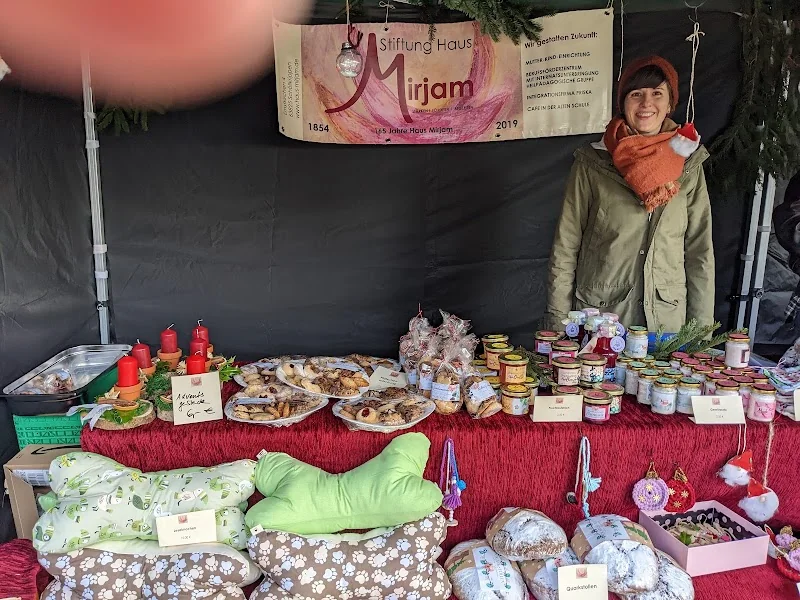
Today we attended the annual Mirjamfest. Everything was lovingly arranged. There was good food, delicacies from Ukraine and Cameroon, for example. Tours through the various facilities were also offered. Anyone still looking for a Mother's Day gift could find something here. A well-stocked cake buffet and an ice cream sale rounded off the wishes of the sweet tooth. There were plenty of activities for the kids: face painting, Bobby car races, building musical instruments, among others. Those who wanted could buy plants from the in-house nursery. A thoroughly successful afternoon. Many thanks to the many hardworking helpers and the organizers.
Mrs Lépreux
14. September 2024
The worst time of my life, and I can speak for all the mothers who were in the group with me as we are still in contact. Even though the horror was so many years ago, each of us still feels the shadow of Haus Mirjam. I can only agree with the review in front of me - so many mothers had to give up their children, and even today I still don't know why for many. I came to this facility because I wanted help, but in the end, I had to fight every day to keep my child from being taken away. Every day we were blackmailed with words like "You have to do this now, otherwise there will be a record" or "I haven't finished writing the daily report yet, I can still change it." I sincerely hope that the circumstances are no longer the same today and that young mothers really get the support and peace that this facility advertises on its homepage. Even though I find it very "interesting" that Haus Mirjam brought in a positive letter from a former resident as a reference - I just hope that young mothers today are doing better than we were back then.
Kath K
17. June 2023
A long time ago, I also got to live here for a while. Back then, I thought it was really stupid, but looking back, it was a great help. I visited just a few weeks ago and was warmly welcomed by the caregivers I still knew. Great house, great rooms, and just a lovely environment.
Tanja Goetzke
28. December 2024
Hello, I just wanted to briefly share my experience. I was in a support course at Haus Miriam in Schöllkrippen from 1996 to 1998. It was a very beautiful and pleasant time that I miss a lot today, and I would come back again if I could. If I have the opportunity, I will come to a Mirjamfest again. I think it's nice that it is now a mother-child facility. I know one caregiver, so I find the accounts from some moms who have written here a bit strange; I wouldn't say it's bad, but I know one from this mother-child facility, a very sweet and nice mom of a son. She was already working with us as a caregiver back then, very loving but also strict. The time with the 24 girls in our boarding school in the support course was great. We had the area of handicrafts, had to get up in the morning as if we were going to work, so handicrafts, gardening, and also cooking. It was a wonderful time that I will always miss. We once had a little newspaper, unfortunately, I don't have it anymore, but in this newspaper, it said that we had action all over the place, going up and down the stairs. We also did a theater performance back then with the lovely Sabine, I won't mention her last name. Sabine was so sweet and nice to us. I had the lead role with another girl from our boarding school. It was a very beautiful play that I will never forget for the rest of my life. So, now I've shared my experience from Haus Miriam. Of course, I don't know how it is today, and I actually don't think it's bad that there is a mother-child facility there. I wish everyone a good time and a happy new year.