
Aschaffenburg
Stiftsgasse 1a, 63739 Aschaffenburg, Deutschland
Stiftsmuseum Aschaffenburg | Opening Hours & Prices
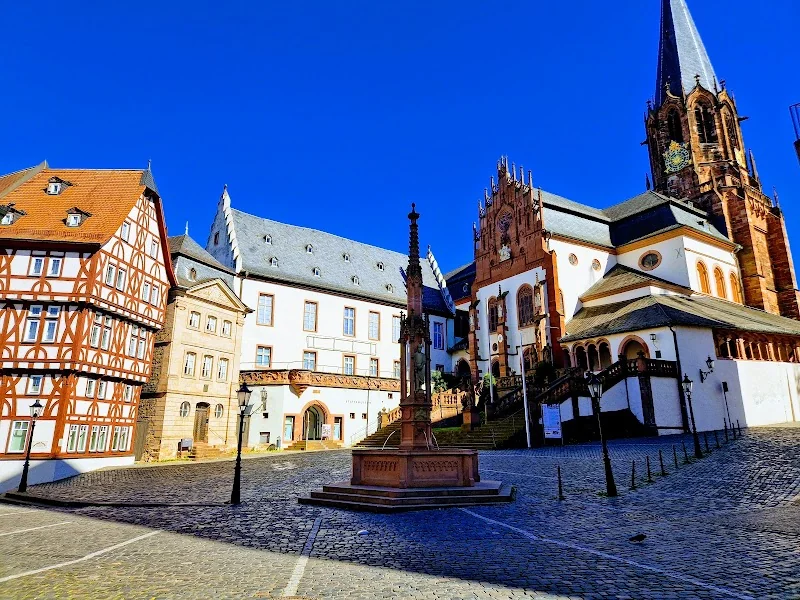
The Stiftsmuseum Aschaffenburg is not a museum that you just visit casually. When you enter the Stiftsplatz, you stand in a place where history, art, and religious memory have intertwined for centuries. The house belongs to the museums of the city of Aschaffenburg and is closely linked to the Stift district surrounding the late Romanesque St. Peter and Alexander collegiate church. In the historic chapter buildings, it currently presents the St. Peter and Alexander treasury, along with other significant collection areas ranging from archaeology to baroque sacred art. This combination of historic architecture, a permanently displayed treasure, and a clear visitor structure creates a unique charm. Those looking for opening hours, tickets, directions, or photos will find here not just a classic museum, but a developed ensemble that is one of the most important cultural sites in the city. Particularly noteworthy is that the museum has been housed in the buildings of the former chapter since 1861, thus becoming part of the long history of this place. ([stiftsschatz.de](https://www.stiftsschatz.de/d/service_adresse.html))
Opening Hours, Tickets, and Prices at Stiftsmuseum Aschaffenburg
For planning a visit, practical information is particularly important, as the Stiftsmuseum has clear, easily memorable times. It is regularly open daily except Monday from 11 AM to 5 PM. This opening time is well-suited for a museum visit in the afternoon, but also allows enough time to explore the Stift district, the collegiate church, and the surroundings at a leisurely pace. This is an advantage, especially during a city walk through Aschaffenburg, as the museum visit can easily be integrated into a historical route. Those wishing to come on holidays should pay attention to special times, as the city publishes differing opening hours for individual holidays. This is particularly helpful for travelers and spontaneous visitors, as the regular weekly schedule does not remain unchanged on every calendar date. ([stiftsschatz.de](https://www.stiftsschatz.de/d/service_adresse.html))
The admission prices at the Stiftsmuseum are also consciously kept low. The regular admission costs 2.50 euros, reduced 1.50 euros. Families pay 5 euros, school classes and children under 6 years enter free, and groups of 10 or more also receive reduced admission. Additionally, there is a train cooperation, through which holders of a valid Bayern-Ticket or Schönes-Wochenende-Ticket benefit from a discount. This is a strong signal for guests arriving by public transport who want to connect culture with mobility easily. Especially for a place that showcases a medieval treasure in a historic setting, the prices are pleasantly moderate and make the museum attractive for families, school groups, and short visits. So, those searching for stiftsmuseum aschaffenburg tickets or stiftsmuseum aschaffenburg prices will find a fair and well-structured solution. ([stiftsschatz.de](https://www.stiftsschatz.de/d/service_adresse.html))
History of the Stiftsmuseum and the Stiftsberg in Aschaffenburg
The historical depth of the Stiftsmuseum does not begin with its museum history, but with the place itself. For about a millennium, a cohesive ensemble of the late Romanesque collegiate church, the famous cloister, and the medieval buildings of the chapter has stood on the Stiftsberg. This architectural unity continues to shape the image of Aschaffenburg today and is one of the central historical spaces of the city. This is important for visitors because the museum visit cannot be understood in isolation from its surroundings. The Stiftsmuseum is located in the midst of a developed spiritual and cultural core area, where sacred architecture, administrative history, and art development closely converge. Particularly impressive is the continuity: the place has not simply been used over many centuries, but has been repeatedly adapted, preserved, and reinterpreted. ([stiftsschatz.de](https://www.stiftsschatz.de/e/geschichte.html?utm_source=openai))
The institution itself also has a long history. Since 1861, the Stiftsmuseum has been housed in the buildings of the former chapter. The roots of the St. Peter and Alexander Stift reach even further back and are associated with members of the family of Otto the Great; the founding is documented before the official certificate of 957. Thus, the place is not only a museum but a testament to ecclesiastical power, representation, and cultural collecting over many centuries. In the collegiate church itself, there is also an Ottonian crucifix, which is considered one of the most significant sculptures of this type in German art. Such objects make it clear that the Stift district is not only locally important but also has a regional impact in art historical terms. Therefore, when visiting the Stiftsmuseum, one enters a historical system of construction, liturgy, art, and memory. ([stiftsschatz.de](https://www.stiftsschatz.de/e/geschichte.html?utm_source=openai))
The St. Peter and Alexander Treasury as the Heart of the Museum
The actual crowd puller of the house is the St. Peter and Alexander treasury. It is permanently exhibited in specially designed rooms and makes medieval treasure culture comprehensively experienceable for the first time in a public museum presentation. Outstanding pieces include objects made of silver, gold, and rock crystal, as well as precious manuscripts with book painting. This material diversity creates a special tension: here, artistic sophistication, religious significance, and craftsmanship meet in close quarters. For visitors, this means not only a look at valuable individual objects but also at an entire system of medieval memory culture, in which relics, liturgical devices, and images are interconnected. The treasury is thus not simply an exhibition space but a concentrated place for illustrating faith and representation. ([stiftsschatz.de](https://www.stiftsschatz.de/e/schatzkammer.html?utm_source=openai))
Particularly central is the so-called Magdalene altar from the workshop of Lucas Cranach. It forms a focal point of the presentation and anchors the treasure in the art history of the Renaissance and the Reformation period. In addition, the collection shows other famous pieces such as the silver bust of St. Peter, the relic bust of St. Alexander, the rock crystal cross, the chalice and monstrance environment, as well as the well-known board game from the treasure context. Another highlight is the Aschaffenburg panel painting from the mid-13th century, which is one of the oldest panel paintings in Germany and was discovered during renovation work in the Stiftsmuseum in 1986. Such works give the house its special aura: one does not only see medieval art but also the traces of its transmission, rediscovery, and museal reorganization. For this reason, the Stiftsmuseum in Aschaffenburg is often searched with terms like stiftsschatz or schatzkammer. ([stiftsschatz.de](https://www.stiftsschatz.de/e/schatzkammer.html?utm_source=openai))
Gallery, Photos, and Collections at Stiftsmuseum Aschaffenburg
Those searching for stiftsmuseum photos usually mean not only beautiful images but also a first impression of what the house actually shows. The official gallery of the museum serves this purpose, as it leads through central objects and conveys the diversity of the treasure and the collection in visual form. Among other things, liturgical and artisanal pieces such as passionals, altar crosses, ivory boxes, lectionaries, manuscripts, and stained glass appear there. This gallery is helpful because it prepares for the museum visit in advance and clearly shows that the Stiftsmuseum cannot be reduced to a single exhibit. Rather, it opens a path through different epochs, materials, and functions. The digital presentation does not replace the visit but makes the thematic breadth visible and shows why the house appears so frequently in search queries related to images, impressions, and photos. ([stiftsschatz.de](https://www.stiftsschatz.de/e/galerie.html?utm_source=openai))
The museum rooms themselves are also part of the experience. The Stiftsmuseum comprises three medieval building sections that originally served for the administration of the large church area. Many rooms are still preserved in the decorative forms of their time, so that architecture and collection intertwine here. Today, the house houses five significant collection areas of the Aschaffenburg museums: archaeology, medieval art, the Stift treasury, Renaissance art, and sacred art of the baroque period. Thus, the museum is not only a showcase of a treasure but a compact cultural archive of the city. Walking through the rooms, one does not experience an isolated exhibition but an ensemble in which the shell itself has historical significance. This finding explains why the Stiftsmuseum is exciting for both art history enthusiasts and those interested in city history, photographic motifs, and historical interiors. ([stiftsschatz.de](https://www.stiftsschatz.de/d/stiftsbezirk_museum.html?utm_source=openai))
Directions, Parking, Accessibility, and Tours at Stiftsmuseum Aschaffenburg
The approach to the Stiftsmuseum is straightforward if you know the central location advantages. Walking from the train station, the path leads through easily recognizable stations to the Stiftsplatz; the official directions mention, among others, Frohsinnstraße, Erthalstraße, Friedrichstraße, Luitpoldstraße, Landingstraße, Dalbergstraße, and finally the Stiftsplatz. Those arriving by car should know that there is no long-term parking directly at the house. However, for guests with mobility impairments, the museum provides specific options: in front of the town hall, there are three disabled parking spaces about 100 meters away, and the underground garage Theaterplatz offers six disabled parking spaces and is open continuously. This makes planning the museum visit possible, even if one relies on short distances. These details are particularly helpful for anyone searching for stiftsmuseum aschaffenburg directions or stiftsmuseum aschaffenburg parking. ([stiftsschatz.de](https://www.stiftsschatz.de/d/service_anfahrt.html?utm_source=openai))
When it comes to accessibility, an honest assessment is important. The new exhibition rooms are located on the second floor and can only be reached via wide staircases due to the historic building fabric; an elevator is currently not available. The tour is therefore only partially accessible for wheelchair users, and the second floor cannot currently be reached. At the same time, there are partial access points via a ramp and the forecourt of the collegiate church, so that individual rooms on the first floor are accessible. Admission is through the museum entrance at Stiftsplatz 1a with four steps. For tours, adults should contact the tourist information, where themed tours with a maximum of 25 people are organized, lasting about 90 minutes; school classes and children's groups are supervised by the museum educational service of the VHS, also with clear booking modalities. Thus, the house is not fully accessible due to historical reasons, but is well-structured organizationally and well accessible for different visitor groups. ([stiftsschatz.de](https://www.stiftsschatz.de/d/service_info-handicap.html?utm_source=openai))
Guided Tours, Groups, and Visit Planning for the Stiftsmuseum of the City of Aschaffenburg
The Stiftsmuseum is a place where good preparation significantly enriches the visit. Especially because the collection consists of several layers, it is worthwhile to have a thematic orientation in advance. Themed tours are offered for adults, organized through the tourist information. The topic of the Stift treasure is particularly popular because it vividly illustrates the connection between treasure art, chapter history, and church space. Booking is done through the tourist information at Schlossplatz, and the official description mentions a maximum group size of 25 people and a duration of about 90 minutes. The costs are also transparently listed: the themed tour costs 66 euros, plus an additional fee for foreign languages. For visitor groups wishing to combine a city tour with a cultural highlight, this is a good option, as the tour can be integrated into a longer stay in Aschaffenburg. ([stiftsschatz.de](https://www.stiftsschatz.de/d/service_fuehrungen-erwachsene.html?utm_source=openai))
For schools, families, and children's groups, there is a separate educational offer. The museum education of the VHS coordinates tours and workshops tailored to different age groups. Here, too, the group size is limited to a maximum of 25 people, and the formats are dialogical and active. This makes the Stiftsmuseum not only a place of viewing but also a learning place where medieval art and city history are vividly conveyed. Those coming with children also benefit from the favorable admission regulations and the fact that children under 6 years can enter for free. Thus, the house is suitable for school projects as well as family outings, cultural historical group trips, and personal exploration tours. This mixture of low admission, clear tour structures, and high-quality collection makes the Stiftsmuseum Aschaffenburg one of the most interesting addresses in the historic city center. ([stiftsschatz.de](https://www.stiftsschatz.de/d/service_fuehrungen-schulklassen.html?utm_source=openai))
Sources:
- Museums of the City of Aschaffenburg - Address, Opening Hours, Prices
- Museums of the City of Aschaffenburg - History
- Museums of the City of Aschaffenburg - Stift District and Museum
- Museums of the City of Aschaffenburg - Treasury
- Museums of the City of Aschaffenburg - Accessibility and Parking
- Museums of the City of Aschaffenburg - Directions
- Museums of the City of Aschaffenburg - Gallery
Mehr anzeigenWeniger anzeigen
Stiftsmuseum Aschaffenburg | Opening Hours & Prices
The Stiftsmuseum Aschaffenburg is not a museum that you just visit casually. When you enter the Stiftsplatz, you stand in a place where history, art, and religious memory have intertwined for centuries. The house belongs to the museums of the city of Aschaffenburg and is closely linked to the Stift district surrounding the late Romanesque St. Peter and Alexander collegiate church. In the historic chapter buildings, it currently presents the St. Peter and Alexander treasury, along with other significant collection areas ranging from archaeology to baroque sacred art. This combination of historic architecture, a permanently displayed treasure, and a clear visitor structure creates a unique charm. Those looking for opening hours, tickets, directions, or photos will find here not just a classic museum, but a developed ensemble that is one of the most important cultural sites in the city. Particularly noteworthy is that the museum has been housed in the buildings of the former chapter since 1861, thus becoming part of the long history of this place. ([stiftsschatz.de](https://www.stiftsschatz.de/d/service_adresse.html))
Opening Hours, Tickets, and Prices at Stiftsmuseum Aschaffenburg
For planning a visit, practical information is particularly important, as the Stiftsmuseum has clear, easily memorable times. It is regularly open daily except Monday from 11 AM to 5 PM. This opening time is well-suited for a museum visit in the afternoon, but also allows enough time to explore the Stift district, the collegiate church, and the surroundings at a leisurely pace. This is an advantage, especially during a city walk through Aschaffenburg, as the museum visit can easily be integrated into a historical route. Those wishing to come on holidays should pay attention to special times, as the city publishes differing opening hours for individual holidays. This is particularly helpful for travelers and spontaneous visitors, as the regular weekly schedule does not remain unchanged on every calendar date. ([stiftsschatz.de](https://www.stiftsschatz.de/d/service_adresse.html))
The admission prices at the Stiftsmuseum are also consciously kept low. The regular admission costs 2.50 euros, reduced 1.50 euros. Families pay 5 euros, school classes and children under 6 years enter free, and groups of 10 or more also receive reduced admission. Additionally, there is a train cooperation, through which holders of a valid Bayern-Ticket or Schönes-Wochenende-Ticket benefit from a discount. This is a strong signal for guests arriving by public transport who want to connect culture with mobility easily. Especially for a place that showcases a medieval treasure in a historic setting, the prices are pleasantly moderate and make the museum attractive for families, school groups, and short visits. So, those searching for stiftsmuseum aschaffenburg tickets or stiftsmuseum aschaffenburg prices will find a fair and well-structured solution. ([stiftsschatz.de](https://www.stiftsschatz.de/d/service_adresse.html))
History of the Stiftsmuseum and the Stiftsberg in Aschaffenburg
The historical depth of the Stiftsmuseum does not begin with its museum history, but with the place itself. For about a millennium, a cohesive ensemble of the late Romanesque collegiate church, the famous cloister, and the medieval buildings of the chapter has stood on the Stiftsberg. This architectural unity continues to shape the image of Aschaffenburg today and is one of the central historical spaces of the city. This is important for visitors because the museum visit cannot be understood in isolation from its surroundings. The Stiftsmuseum is located in the midst of a developed spiritual and cultural core area, where sacred architecture, administrative history, and art development closely converge. Particularly impressive is the continuity: the place has not simply been used over many centuries, but has been repeatedly adapted, preserved, and reinterpreted. ([stiftsschatz.de](https://www.stiftsschatz.de/e/geschichte.html?utm_source=openai))
The institution itself also has a long history. Since 1861, the Stiftsmuseum has been housed in the buildings of the former chapter. The roots of the St. Peter and Alexander Stift reach even further back and are associated with members of the family of Otto the Great; the founding is documented before the official certificate of 957. Thus, the place is not only a museum but a testament to ecclesiastical power, representation, and cultural collecting over many centuries. In the collegiate church itself, there is also an Ottonian crucifix, which is considered one of the most significant sculptures of this type in German art. Such objects make it clear that the Stift district is not only locally important but also has a regional impact in art historical terms. Therefore, when visiting the Stiftsmuseum, one enters a historical system of construction, liturgy, art, and memory. ([stiftsschatz.de](https://www.stiftsschatz.de/e/geschichte.html?utm_source=openai))
The St. Peter and Alexander Treasury as the Heart of the Museum
The actual crowd puller of the house is the St. Peter and Alexander treasury. It is permanently exhibited in specially designed rooms and makes medieval treasure culture comprehensively experienceable for the first time in a public museum presentation. Outstanding pieces include objects made of silver, gold, and rock crystal, as well as precious manuscripts with book painting. This material diversity creates a special tension: here, artistic sophistication, religious significance, and craftsmanship meet in close quarters. For visitors, this means not only a look at valuable individual objects but also at an entire system of medieval memory culture, in which relics, liturgical devices, and images are interconnected. The treasury is thus not simply an exhibition space but a concentrated place for illustrating faith and representation. ([stiftsschatz.de](https://www.stiftsschatz.de/e/schatzkammer.html?utm_source=openai))
Particularly central is the so-called Magdalene altar from the workshop of Lucas Cranach. It forms a focal point of the presentation and anchors the treasure in the art history of the Renaissance and the Reformation period. In addition, the collection shows other famous pieces such as the silver bust of St. Peter, the relic bust of St. Alexander, the rock crystal cross, the chalice and monstrance environment, as well as the well-known board game from the treasure context. Another highlight is the Aschaffenburg panel painting from the mid-13th century, which is one of the oldest panel paintings in Germany and was discovered during renovation work in the Stiftsmuseum in 1986. Such works give the house its special aura: one does not only see medieval art but also the traces of its transmission, rediscovery, and museal reorganization. For this reason, the Stiftsmuseum in Aschaffenburg is often searched with terms like stiftsschatz or schatzkammer. ([stiftsschatz.de](https://www.stiftsschatz.de/e/schatzkammer.html?utm_source=openai))
Gallery, Photos, and Collections at Stiftsmuseum Aschaffenburg
Those searching for stiftsmuseum photos usually mean not only beautiful images but also a first impression of what the house actually shows. The official gallery of the museum serves this purpose, as it leads through central objects and conveys the diversity of the treasure and the collection in visual form. Among other things, liturgical and artisanal pieces such as passionals, altar crosses, ivory boxes, lectionaries, manuscripts, and stained glass appear there. This gallery is helpful because it prepares for the museum visit in advance and clearly shows that the Stiftsmuseum cannot be reduced to a single exhibit. Rather, it opens a path through different epochs, materials, and functions. The digital presentation does not replace the visit but makes the thematic breadth visible and shows why the house appears so frequently in search queries related to images, impressions, and photos. ([stiftsschatz.de](https://www.stiftsschatz.de/e/galerie.html?utm_source=openai))
The museum rooms themselves are also part of the experience. The Stiftsmuseum comprises three medieval building sections that originally served for the administration of the large church area. Many rooms are still preserved in the decorative forms of their time, so that architecture and collection intertwine here. Today, the house houses five significant collection areas of the Aschaffenburg museums: archaeology, medieval art, the Stift treasury, Renaissance art, and sacred art of the baroque period. Thus, the museum is not only a showcase of a treasure but a compact cultural archive of the city. Walking through the rooms, one does not experience an isolated exhibition but an ensemble in which the shell itself has historical significance. This finding explains why the Stiftsmuseum is exciting for both art history enthusiasts and those interested in city history, photographic motifs, and historical interiors. ([stiftsschatz.de](https://www.stiftsschatz.de/d/stiftsbezirk_museum.html?utm_source=openai))
Directions, Parking, Accessibility, and Tours at Stiftsmuseum Aschaffenburg
The approach to the Stiftsmuseum is straightforward if you know the central location advantages. Walking from the train station, the path leads through easily recognizable stations to the Stiftsplatz; the official directions mention, among others, Frohsinnstraße, Erthalstraße, Friedrichstraße, Luitpoldstraße, Landingstraße, Dalbergstraße, and finally the Stiftsplatz. Those arriving by car should know that there is no long-term parking directly at the house. However, for guests with mobility impairments, the museum provides specific options: in front of the town hall, there are three disabled parking spaces about 100 meters away, and the underground garage Theaterplatz offers six disabled parking spaces and is open continuously. This makes planning the museum visit possible, even if one relies on short distances. These details are particularly helpful for anyone searching for stiftsmuseum aschaffenburg directions or stiftsmuseum aschaffenburg parking. ([stiftsschatz.de](https://www.stiftsschatz.de/d/service_anfahrt.html?utm_source=openai))
When it comes to accessibility, an honest assessment is important. The new exhibition rooms are located on the second floor and can only be reached via wide staircases due to the historic building fabric; an elevator is currently not available. The tour is therefore only partially accessible for wheelchair users, and the second floor cannot currently be reached. At the same time, there are partial access points via a ramp and the forecourt of the collegiate church, so that individual rooms on the first floor are accessible. Admission is through the museum entrance at Stiftsplatz 1a with four steps. For tours, adults should contact the tourist information, where themed tours with a maximum of 25 people are organized, lasting about 90 minutes; school classes and children's groups are supervised by the museum educational service of the VHS, also with clear booking modalities. Thus, the house is not fully accessible due to historical reasons, but is well-structured organizationally and well accessible for different visitor groups. ([stiftsschatz.de](https://www.stiftsschatz.de/d/service_info-handicap.html?utm_source=openai))
Guided Tours, Groups, and Visit Planning for the Stiftsmuseum of the City of Aschaffenburg
The Stiftsmuseum is a place where good preparation significantly enriches the visit. Especially because the collection consists of several layers, it is worthwhile to have a thematic orientation in advance. Themed tours are offered for adults, organized through the tourist information. The topic of the Stift treasure is particularly popular because it vividly illustrates the connection between treasure art, chapter history, and church space. Booking is done through the tourist information at Schlossplatz, and the official description mentions a maximum group size of 25 people and a duration of about 90 minutes. The costs are also transparently listed: the themed tour costs 66 euros, plus an additional fee for foreign languages. For visitor groups wishing to combine a city tour with a cultural highlight, this is a good option, as the tour can be integrated into a longer stay in Aschaffenburg. ([stiftsschatz.de](https://www.stiftsschatz.de/d/service_fuehrungen-erwachsene.html?utm_source=openai))
For schools, families, and children's groups, there is a separate educational offer. The museum education of the VHS coordinates tours and workshops tailored to different age groups. Here, too, the group size is limited to a maximum of 25 people, and the formats are dialogical and active. This makes the Stiftsmuseum not only a place of viewing but also a learning place where medieval art and city history are vividly conveyed. Those coming with children also benefit from the favorable admission regulations and the fact that children under 6 years can enter for free. Thus, the house is suitable for school projects as well as family outings, cultural historical group trips, and personal exploration tours. This mixture of low admission, clear tour structures, and high-quality collection makes the Stiftsmuseum Aschaffenburg one of the most interesting addresses in the historic city center. ([stiftsschatz.de](https://www.stiftsschatz.de/d/service_fuehrungen-schulklassen.html?utm_source=openai))
Sources:
- Museums of the City of Aschaffenburg - Address, Opening Hours, Prices
- Museums of the City of Aschaffenburg - History
- Museums of the City of Aschaffenburg - Stift District and Museum
- Museums of the City of Aschaffenburg - Treasury
- Museums of the City of Aschaffenburg - Accessibility and Parking
- Museums of the City of Aschaffenburg - Directions
- Museums of the City of Aschaffenburg - Gallery
Stiftsmuseum Aschaffenburg | Opening Hours & Prices
The Stiftsmuseum Aschaffenburg is not a museum that you just visit casually. When you enter the Stiftsplatz, you stand in a place where history, art, and religious memory have intertwined for centuries. The house belongs to the museums of the city of Aschaffenburg and is closely linked to the Stift district surrounding the late Romanesque St. Peter and Alexander collegiate church. In the historic chapter buildings, it currently presents the St. Peter and Alexander treasury, along with other significant collection areas ranging from archaeology to baroque sacred art. This combination of historic architecture, a permanently displayed treasure, and a clear visitor structure creates a unique charm. Those looking for opening hours, tickets, directions, or photos will find here not just a classic museum, but a developed ensemble that is one of the most important cultural sites in the city. Particularly noteworthy is that the museum has been housed in the buildings of the former chapter since 1861, thus becoming part of the long history of this place. ([stiftsschatz.de](https://www.stiftsschatz.de/d/service_adresse.html))
Opening Hours, Tickets, and Prices at Stiftsmuseum Aschaffenburg
For planning a visit, practical information is particularly important, as the Stiftsmuseum has clear, easily memorable times. It is regularly open daily except Monday from 11 AM to 5 PM. This opening time is well-suited for a museum visit in the afternoon, but also allows enough time to explore the Stift district, the collegiate church, and the surroundings at a leisurely pace. This is an advantage, especially during a city walk through Aschaffenburg, as the museum visit can easily be integrated into a historical route. Those wishing to come on holidays should pay attention to special times, as the city publishes differing opening hours for individual holidays. This is particularly helpful for travelers and spontaneous visitors, as the regular weekly schedule does not remain unchanged on every calendar date. ([stiftsschatz.de](https://www.stiftsschatz.de/d/service_adresse.html))
The admission prices at the Stiftsmuseum are also consciously kept low. The regular admission costs 2.50 euros, reduced 1.50 euros. Families pay 5 euros, school classes and children under 6 years enter free, and groups of 10 or more also receive reduced admission. Additionally, there is a train cooperation, through which holders of a valid Bayern-Ticket or Schönes-Wochenende-Ticket benefit from a discount. This is a strong signal for guests arriving by public transport who want to connect culture with mobility easily. Especially for a place that showcases a medieval treasure in a historic setting, the prices are pleasantly moderate and make the museum attractive for families, school groups, and short visits. So, those searching for stiftsmuseum aschaffenburg tickets or stiftsmuseum aschaffenburg prices will find a fair and well-structured solution. ([stiftsschatz.de](https://www.stiftsschatz.de/d/service_adresse.html))
History of the Stiftsmuseum and the Stiftsberg in Aschaffenburg
The historical depth of the Stiftsmuseum does not begin with its museum history, but with the place itself. For about a millennium, a cohesive ensemble of the late Romanesque collegiate church, the famous cloister, and the medieval buildings of the chapter has stood on the Stiftsberg. This architectural unity continues to shape the image of Aschaffenburg today and is one of the central historical spaces of the city. This is important for visitors because the museum visit cannot be understood in isolation from its surroundings. The Stiftsmuseum is located in the midst of a developed spiritual and cultural core area, where sacred architecture, administrative history, and art development closely converge. Particularly impressive is the continuity: the place has not simply been used over many centuries, but has been repeatedly adapted, preserved, and reinterpreted. ([stiftsschatz.de](https://www.stiftsschatz.de/e/geschichte.html?utm_source=openai))
The institution itself also has a long history. Since 1861, the Stiftsmuseum has been housed in the buildings of the former chapter. The roots of the St. Peter and Alexander Stift reach even further back and are associated with members of the family of Otto the Great; the founding is documented before the official certificate of 957. Thus, the place is not only a museum but a testament to ecclesiastical power, representation, and cultural collecting over many centuries. In the collegiate church itself, there is also an Ottonian crucifix, which is considered one of the most significant sculptures of this type in German art. Such objects make it clear that the Stift district is not only locally important but also has a regional impact in art historical terms. Therefore, when visiting the Stiftsmuseum, one enters a historical system of construction, liturgy, art, and memory. ([stiftsschatz.de](https://www.stiftsschatz.de/e/geschichte.html?utm_source=openai))
The St. Peter and Alexander Treasury as the Heart of the Museum
The actual crowd puller of the house is the St. Peter and Alexander treasury. It is permanently exhibited in specially designed rooms and makes medieval treasure culture comprehensively experienceable for the first time in a public museum presentation. Outstanding pieces include objects made of silver, gold, and rock crystal, as well as precious manuscripts with book painting. This material diversity creates a special tension: here, artistic sophistication, religious significance, and craftsmanship meet in close quarters. For visitors, this means not only a look at valuable individual objects but also at an entire system of medieval memory culture, in which relics, liturgical devices, and images are interconnected. The treasury is thus not simply an exhibition space but a concentrated place for illustrating faith and representation. ([stiftsschatz.de](https://www.stiftsschatz.de/e/schatzkammer.html?utm_source=openai))
Particularly central is the so-called Magdalene altar from the workshop of Lucas Cranach. It forms a focal point of the presentation and anchors the treasure in the art history of the Renaissance and the Reformation period. In addition, the collection shows other famous pieces such as the silver bust of St. Peter, the relic bust of St. Alexander, the rock crystal cross, the chalice and monstrance environment, as well as the well-known board game from the treasure context. Another highlight is the Aschaffenburg panel painting from the mid-13th century, which is one of the oldest panel paintings in Germany and was discovered during renovation work in the Stiftsmuseum in 1986. Such works give the house its special aura: one does not only see medieval art but also the traces of its transmission, rediscovery, and museal reorganization. For this reason, the Stiftsmuseum in Aschaffenburg is often searched with terms like stiftsschatz or schatzkammer. ([stiftsschatz.de](https://www.stiftsschatz.de/e/schatzkammer.html?utm_source=openai))
Gallery, Photos, and Collections at Stiftsmuseum Aschaffenburg
Those searching for stiftsmuseum photos usually mean not only beautiful images but also a first impression of what the house actually shows. The official gallery of the museum serves this purpose, as it leads through central objects and conveys the diversity of the treasure and the collection in visual form. Among other things, liturgical and artisanal pieces such as passionals, altar crosses, ivory boxes, lectionaries, manuscripts, and stained glass appear there. This gallery is helpful because it prepares for the museum visit in advance and clearly shows that the Stiftsmuseum cannot be reduced to a single exhibit. Rather, it opens a path through different epochs, materials, and functions. The digital presentation does not replace the visit but makes the thematic breadth visible and shows why the house appears so frequently in search queries related to images, impressions, and photos. ([stiftsschatz.de](https://www.stiftsschatz.de/e/galerie.html?utm_source=openai))
The museum rooms themselves are also part of the experience. The Stiftsmuseum comprises three medieval building sections that originally served for the administration of the large church area. Many rooms are still preserved in the decorative forms of their time, so that architecture and collection intertwine here. Today, the house houses five significant collection areas of the Aschaffenburg museums: archaeology, medieval art, the Stift treasury, Renaissance art, and sacred art of the baroque period. Thus, the museum is not only a showcase of a treasure but a compact cultural archive of the city. Walking through the rooms, one does not experience an isolated exhibition but an ensemble in which the shell itself has historical significance. This finding explains why the Stiftsmuseum is exciting for both art history enthusiasts and those interested in city history, photographic motifs, and historical interiors. ([stiftsschatz.de](https://www.stiftsschatz.de/d/stiftsbezirk_museum.html?utm_source=openai))
Directions, Parking, Accessibility, and Tours at Stiftsmuseum Aschaffenburg
The approach to the Stiftsmuseum is straightforward if you know the central location advantages. Walking from the train station, the path leads through easily recognizable stations to the Stiftsplatz; the official directions mention, among others, Frohsinnstraße, Erthalstraße, Friedrichstraße, Luitpoldstraße, Landingstraße, Dalbergstraße, and finally the Stiftsplatz. Those arriving by car should know that there is no long-term parking directly at the house. However, for guests with mobility impairments, the museum provides specific options: in front of the town hall, there are three disabled parking spaces about 100 meters away, and the underground garage Theaterplatz offers six disabled parking spaces and is open continuously. This makes planning the museum visit possible, even if one relies on short distances. These details are particularly helpful for anyone searching for stiftsmuseum aschaffenburg directions or stiftsmuseum aschaffenburg parking. ([stiftsschatz.de](https://www.stiftsschatz.de/d/service_anfahrt.html?utm_source=openai))
When it comes to accessibility, an honest assessment is important. The new exhibition rooms are located on the second floor and can only be reached via wide staircases due to the historic building fabric; an elevator is currently not available. The tour is therefore only partially accessible for wheelchair users, and the second floor cannot currently be reached. At the same time, there are partial access points via a ramp and the forecourt of the collegiate church, so that individual rooms on the first floor are accessible. Admission is through the museum entrance at Stiftsplatz 1a with four steps. For tours, adults should contact the tourist information, where themed tours with a maximum of 25 people are organized, lasting about 90 minutes; school classes and children's groups are supervised by the museum educational service of the VHS, also with clear booking modalities. Thus, the house is not fully accessible due to historical reasons, but is well-structured organizationally and well accessible for different visitor groups. ([stiftsschatz.de](https://www.stiftsschatz.de/d/service_info-handicap.html?utm_source=openai))
Guided Tours, Groups, and Visit Planning for the Stiftsmuseum of the City of Aschaffenburg
The Stiftsmuseum is a place where good preparation significantly enriches the visit. Especially because the collection consists of several layers, it is worthwhile to have a thematic orientation in advance. Themed tours are offered for adults, organized through the tourist information. The topic of the Stift treasure is particularly popular because it vividly illustrates the connection between treasure art, chapter history, and church space. Booking is done through the tourist information at Schlossplatz, and the official description mentions a maximum group size of 25 people and a duration of about 90 minutes. The costs are also transparently listed: the themed tour costs 66 euros, plus an additional fee for foreign languages. For visitor groups wishing to combine a city tour with a cultural highlight, this is a good option, as the tour can be integrated into a longer stay in Aschaffenburg. ([stiftsschatz.de](https://www.stiftsschatz.de/d/service_fuehrungen-erwachsene.html?utm_source=openai))
For schools, families, and children's groups, there is a separate educational offer. The museum education of the VHS coordinates tours and workshops tailored to different age groups. Here, too, the group size is limited to a maximum of 25 people, and the formats are dialogical and active. This makes the Stiftsmuseum not only a place of viewing but also a learning place where medieval art and city history are vividly conveyed. Those coming with children also benefit from the favorable admission regulations and the fact that children under 6 years can enter for free. Thus, the house is suitable for school projects as well as family outings, cultural historical group trips, and personal exploration tours. This mixture of low admission, clear tour structures, and high-quality collection makes the Stiftsmuseum Aschaffenburg one of the most interesting addresses in the historic city center. ([stiftsschatz.de](https://www.stiftsschatz.de/d/service_fuehrungen-schulklassen.html?utm_source=openai))
Sources:
- Museums of the City of Aschaffenburg - Address, Opening Hours, Prices
- Museums of the City of Aschaffenburg - History
- Museums of the City of Aschaffenburg - Stift District and Museum
- Museums of the City of Aschaffenburg - Treasury
- Museums of the City of Aschaffenburg - Accessibility and Parking
- Museums of the City of Aschaffenburg - Directions
- Museums of the City of Aschaffenburg - Gallery
Upcoming Events
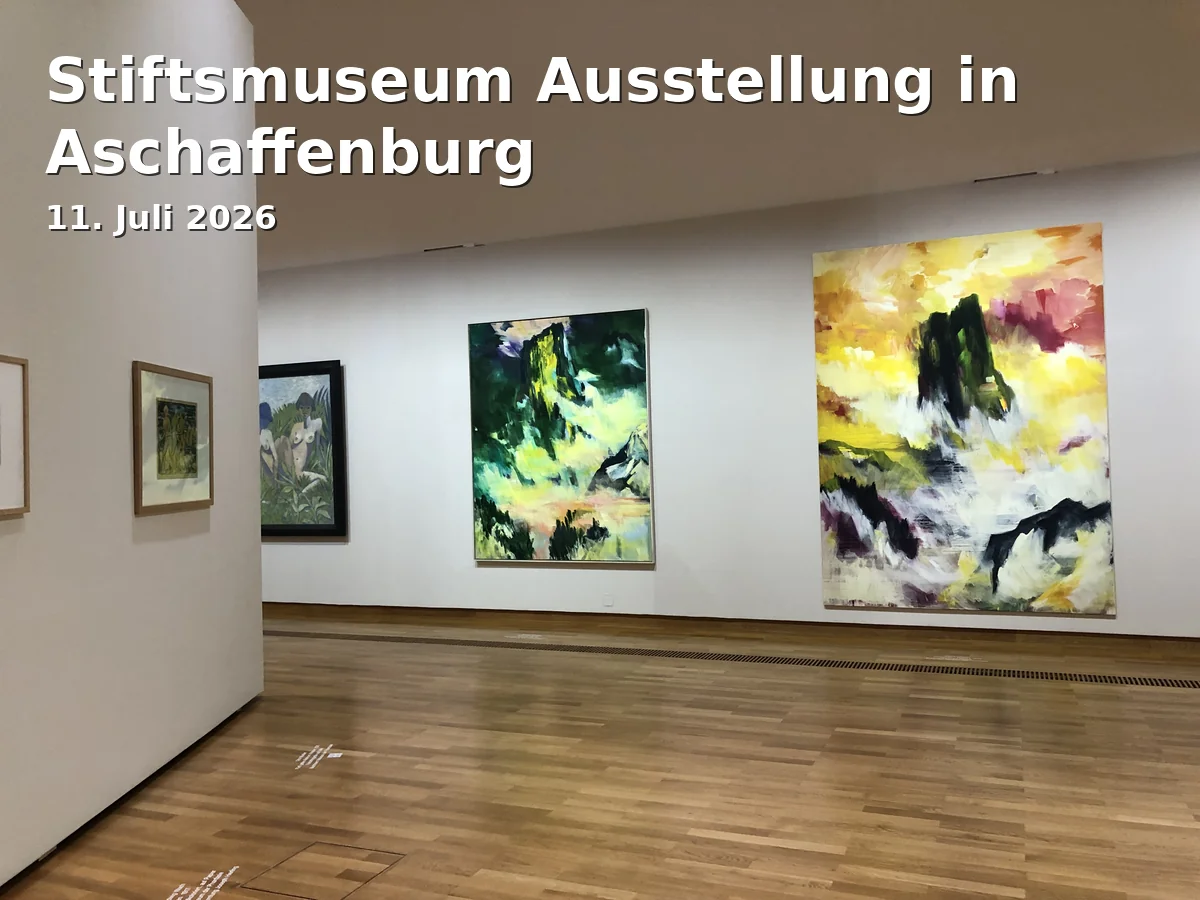
Stiftsmuseum Exhibition in Aschaffenburg
Visit the Stiftsmuseum in Aschaffenburg and experience art and history up close.
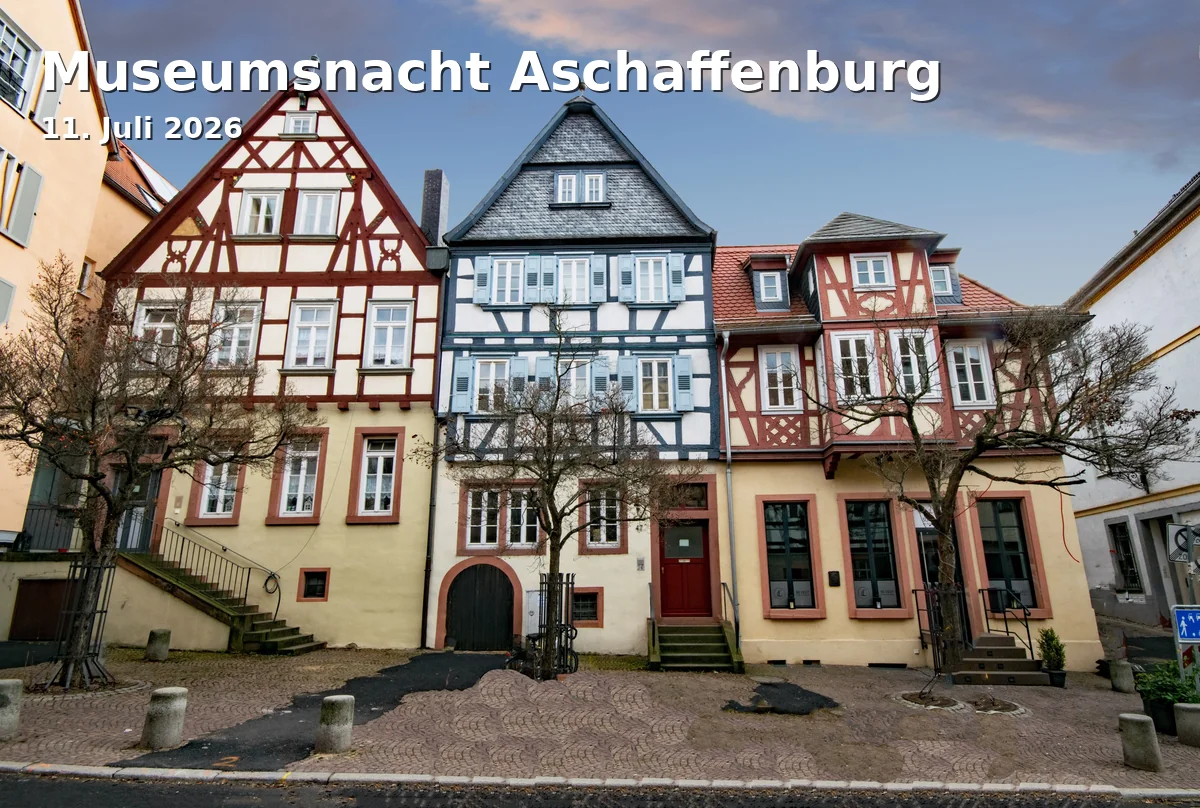
Museums Night Aschaffenburg
Visit the Museum Night in Aschaffenburg on July 11, 2026. Look forward to exhibitions, concerts, and more.
Frequently Asked Questions
Reviews
Hanna Dudzińska
6. November 2024
Amazing collection of art, I recommend strongly to anyone interested in history, especially the catholic church. What I didn’t like is the absence of an English version!!! Please change that… Also, the staff was following me EVERYWHERE which was super awkward for me. I recommend getting acquainted with the concept of cameras.
A P
3. July 2021
Interesting exhibits covering topics from the stone age to the middle age in the region; beautiful art - alone for this worth going. On a side note - the torture chamber and tools shocked my family a bit - seeing those tools and especially the bench in real, it seemed you could hear the screams of those being tortured ...
Garima Chanouria
26. June 2025
Beautiful 😍
aki Atuz
2. August 2023
Marvellous. Fabulous. Excellent. A place to go. A place for prayer.
Leif
25. November 2023
cool