
Aschaffenburg
Stiftsgasse 5, 63739 Aschaffenburg, Deutschland
Stiftsbasilika Aschaffenburg | Services & Photos
The Stiftsbasilika St. Peter and Alexander is one of the most defining landmarks of Aschaffenburg: high above the Main, closely connected to the old town, and for centuries a spiritual center, a place of remembrance, and a treasure of art. Therefore, those searching for the Stiftsbasilika are not just looking for a church building, but an ensemble of liturgy, city history, architecture, music, and museum culture. This complexity is also reflected in the search queries that repeatedly revolve around services, photos, parking, history, and concerts. The church belongs to the parish community of St. Martin, has held the title of a Basilica minor since 1958, and together with the Stifts buildings, stairway, cloister, and museum forms an urban landscape that makes Aschaffenburg unmistakable to this day. For visitors, it is a place where faith, art, and urban identity are experienced simultaneously. ([aschaffenburgzweinull.stadtarchiv-digital.de](https://aschaffenburgzweinull.stadtarchiv-digital.de/stiftsgasse-stiftskirche-st-peter-und-alexander/))
Services and Livestreams from the Stiftsbasilika
The current services are managed by the Stift parish of St. Peter and Alexander in the parish community of St. Martin. The official community page has a dedicated section for services as well as information on the livestreams from the Stiftsbasilika; additionally, the current parish newsletter is provided there. The parish office of the parish community is located at Stiftsgasse 5 in Aschaffenburg, directly at the church site, and is currently open on Tuesdays, Thursdays, and Fridays. Thus, the basilica is not only a sight to see but a vibrant sacred space with a fixed place in the daily life of the downtown community. Those who wish to understand the church as an active place of faith will find the most reliable orientation here, as the community not only communicates dates but also visibly expands its offerings into the digital space. ([st-martin-aschaffenburg.de](https://www.st-martin-aschaffenburg.de/))
Those who find the Stiftsbasilika through the search term services are usually looking for reliable practical information: When does the mass take place, who is the contact person, and is there a digital transmission? For this reason, the parish community is the right source. The website clearly points to the service area and the livestreams, allowing even those who cannot be on site to follow liturgical celebrations. Especially for a church with such a strong historical presence, this connection of analog and digital access is important: visitors experience the space on-site, while from home, they can still reach the liturgy. The parish newsletter additionally shows that the Stift parish is integrated into a broader network of offerings, dates, and community information. Therefore, for SEO searches around Stiftsbasilika Aschaffenburg services, not only the church itself is relevant, but also the organizational structure behind it. ([st-martin-aschaffenburg.de](https://www.st-martin-aschaffenburg.de/))
History of the Stiftsbasilika St. Peter and Alexander
The history of the Stiftsbasilika dates back to the early Middle Ages. The treasury of the museums of the city of Aschaffenburg describes the founding of the Stift St. Peter and Alexander around 950; at the same time, excavations point to a Carolingian burial chapel of Queen Liutgard from the mid-9th century. On this foundation, the sacred core of the city developed step by step. The archaeological and architectural findings also show an Ottonian predecessor building from the 10th century as well as a later Staufer reconstruction as a three-nave basilica with an east transept and a single-nave choir. The city archive and museum documents make it very clear that the church did not arise from a single act of construction, but from many phases in which political power, spiritual function, and urban development influenced each other. ([museen-aschaffenburg.de](https://www.museen-aschaffenburg.de/dokumente/ST_Broschuere_Stiftsschatz.pdf))
The later development is also closely linked to Aschaffenburg's role as a spiritual center. The Stiftskirche was located on the high rocky spur above the Main crossing and together with Schloss Johannisburg shaped the city silhouette. The site was thus never just a church on the edge of the city, but a focal point from which the upper town developed and which made the relationship between power, piety, and memory visible. In 1949, the remains of the Carolingian burial chapel and the Ottonian successor building were uncovered on the Stiftsberg; restorations followed in the 1950s in connection with the 1000-year celebration of the Stift. A particularly important date is June 7, 1958: On that day, Pope Pius XII awarded the parish church the honorary title of Basilica minor. The Aschaffenburg Stiftskirche is thus the only Basilica minor in the Diocese of Würzburg, which further underscores its ecclesiastical and cultural special status. For search queries such as Stiftsbasilika Aschaffenburg history or Basilica minor Aschaffenburg, this connection of very early origin, medieval continuity, and modern recognition is central. ([aschaffenburgzweinull.stadtarchiv-digital.de](https://aschaffenburgzweinull.stadtarchiv-digital.de/stiftsgasse-stiftskirche-st-peter-und-alexander/))
Stiftsbasilika Photos: Facade, Stairway, and Cloister
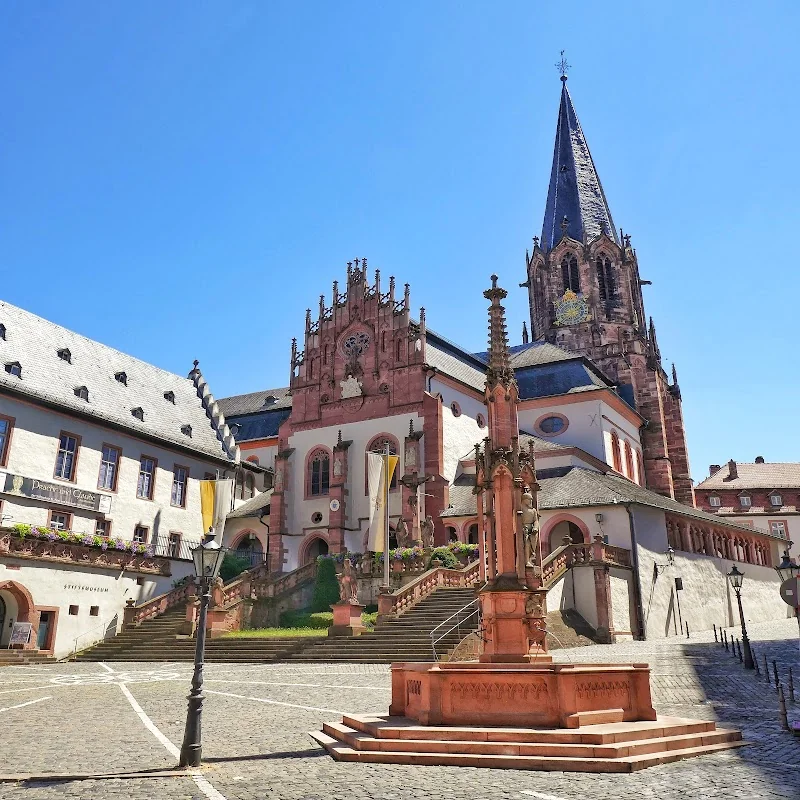
Those looking for photos of the Stiftsbasilika are actually searching for strong perspectives. The site offers plenty of them: The church is situated high on the eastern, highest rocky spur of the upper town, and its baroque stairway from 1723 leads in two arms to a terrace in front of the northern porch. There, the monumental figures of the Stift patrons flank the entrance, and above sits the crucifixion group. This arrangement already provides impressive exterior shots, as architecture, sculpture, and urban space come together in a confined area. The neo-Gothic main facade from 1870 and the gable zone above shape the view from the square. Approaching the church on foot, one experiences not just a facade, but a staged approach: from the square over the steps, through the courtyard, and up into an elevated, almost ceremonial threshold space. ([aschaffenburgzweinull.stadtarchiv-digital.de](https://aschaffenburgzweinull.stadtarchiv-digital.de/stiftsgasse-stiftskirche-st-peter-und-alexander/))
Inside, the same mixture of layers that makes the basilica so interesting externally is revealed. The current building preserves traces of the Ottonian, Staufer, Gothic, Baroque, and neo-Gothic construction phases. The nave, the clerestory windows, the flat choir closure, and the overall layout oriented to the topography make the space particularly appealing for architecture enthusiasts. The city archive documentation emphasizes that the church, together with the Stifts buildings and the square situation, forms a distinctive urban ensemble that continues to shape the silhouette of the downtown area. For photo fans, this is important because the Stiftsbasilika does not just provide a single motif, but a whole series: the stairs as a scene of ascent, the square as an urban image, the facade as a historicist showcase, and the cloister as a quiet contrast to the open space. Even technical details such as the slightly southward deviating axis of the nave or the north group of Stifts buildings adapted to the slope contribute to the uniqueness of the ensemble. ([aschaffenburgzweinull.stadtarchiv-digital.de](https://aschaffenburgzweinull.stadtarchiv-digital.de/stiftsgasse-stiftskirche-st-peter-und-alexander/))
Stiftsschatz, Artworks, and the Stiftsmuseum
The Stiftsbasilika is part of an extraordinary art context. The Stiftsmuseum of the city of Aschaffenburg has been presenting the Stiftsschatz St. Peter and Alexander since 1861, and the museum page describes it as one of the most significant church treasures in Germany. The proximity of the basilica, cloister, and museum is no coincidence, but an expression of a centuries-old historical unity. Even the brochure for the Stiftsschatz makes it clear that the church was not only a liturgical space but also a repository of relics, altars, and artistic testimonies of the highest rank. Particularly important for art enthusiasts are the great names associated with the Stift: Lucas Cranach, Matthias Grünewald, and other masters whose works once stood here in liturgical and representative contexts. The Stiftsmuseum makes this history tangible by not only displaying objects but also explaining the religious and political context from which the treasure originated. ([museen-aschaffenburg.de](https://www.museen-aschaffenburg.de/dokumente/ST_Broschuere_Stiftsschatz.pdf))
Among the outstanding works is the Lamentation of Christ by Matthias Grünewald, which has been located on the east wall of the church since the 1950s. Equally defining is the Ottonian crucifix, which is one of the oldest furnishings of the church and stood for a long time at the stairway leading to the Maria-Schnee chapel. Additionally, there is the Magdalene altar from the circle of Lucas Cranach, the monumental connection with Cardinal Albrecht of Brandenburg, and other epitaphs and memorials preserved in the Stiftskirche and cloister or kept in the museum. The Magdalene altar was originally intended for Halle an der Saale and arrived in Aschaffenburg in the 16th century, where it became a key work of the Reformation period. The museum area impressively illustrates how closely piety, representation, and art promotion were connected in the history of the basilica. Therefore, those searching for Stiftsbasilika St. Peter and Alexander or Stiftsbasilika photos will find here an ensemble that is not only beautiful but also excellently documented in art history. The Stiftsmuseum itself lists the visitor address as Stiftsplatz 1a and states opening hours daily except Monday from 11 AM to 5 PM. ([aschaffenburgzweinull.stadtarchiv-digital.de](https://aschaffenburgzweinull.stadtarchiv-digital.de/stiftsgasse-stiftskirche-st-peter-und-alexander/))
Stiftsmusik, Concerts, and Organ Sound
The Stiftsbasilika is not only a place for services but also an important venue for church music in Aschaffenburg. The parish community refers to the livestreams of the basilica and its services, and the event notices show that Stiftsmusik is regularly present with choir and organ projects. Examples include the traditional Christmas concert of Stiftsmusik, the Aschaffenburg organ tour with a concluding concert in the Stiftsbasilika, as well as other musical autumn and festival programs. Thus, the basilica fulfills a function that goes far beyond the liturgical core: it is an acoustic resonance space for spiritual music, organ culture, and communal performances. Particularly the combination of historical architecture and musical use ensures that the Stiftsbasilika is not perceived as a silent monument but as a vibrant cultural place that is repeatedly filled with sound. ([aschaffenburg-katholisch.de](https://aschaffenburg-katholisch.de/aktuelles/termine/va-detail/weihnachtskonzert-der-stiftsmusik/?utm_source=openai))
For visitors, this is particularly interesting because the Stiftsbasilika thus appears in a different light each time. One day the sacred space is in focus, another day the concert character with choirs, soloists, and orchestral formations. The examples from the official environment of the parish show that the musical practice is lively and broadly established: chamber choir, Stifts-Collegium, Stifts choir boys and girls, as well as the city choir or the Stiftsmusik shape the profile. The Aschaffenburg organ tour connects the basilica with other downtown churches and shows how strongly the musical culture is networked in the city center. For search queries such as Stiftsbasilika Aschaffenburg concerts or Stiftsmusik Aschaffenburg, this point is important: the basilica stands not only for liturgy but also for regular cultural work that attracts an audience and consciously utilizes the historical acoustics of the space. Thus, the old Stiftskirche becomes a place where music, community, and urban society meet. ([aschaffenburg-katholisch.de](https://aschaffenburg-katholisch.de/aktuelles/termine/va-detail/weihnachtskonzert-der-stiftsmusik/?utm_source=openai))
Directions and Parking in the Aschaffenburg Old Town
The Stiftsbasilika is located at Stiftsgasse 5 in 63739 Aschaffenburg, right in the historical city center above the Main. The city and archive page describes the church as part of an ensemble that has shaped the upper town and refers to the close connection of the square, stairway, and Stifts buildings. Those arriving by car should therefore not expect a large parking lot directly at the church portal but use the municipal parking garages and underground garages in the downtown area. The city of Aschaffenburg mentions, among others, the Löhergraben parking garage, the Alexandrastraße underground garage, and the Stadthalle underground garage as central options. Additionally, the city also lists other downtown garages with information on parking spaces, entrance heights, and charging infrastructure, making the visit particularly planable for longer stays. For most guests, this is the most practical solution to reach the old town and the church on foot. ([st-martin-aschaffenburg.de](https://www.st-martin-aschaffenburg.de/))
Especially for search queries such as Stiftsbasilika Aschaffenburg directions or Stiftsbasilika Aschaffenburg parking, the most important note is therefore: the basilica is a city center destination with historical topography. The path leads through the old town, the church itself is elevated and visible from afar as a focal point. Those who wish to visit the Stiftsmuseum alongside the service or a concert will find a compact cultural quarter in the immediate vicinity that can be well combined as a half-day or day program. The city of Aschaffenburg also provides information on parking permits and designated spaces for people with disabilities; such information is particularly helpful in the city center when traveling with special needs. From an SEO perspective, this is particularly valuable because the Stiftsbasilika does not function in isolation but as part of a small cultural axis of basilica, Stiftsmuseum, Stiftsplatz, and surrounding buildings. For practical visits, this means: short distances, urban parking options, clear parish office address, and good orientation in the center. ([mein.aschaffenburg.de](https://mein.aschaffenburg.de/parken/?utm_source=openai))
In summary, the Stiftsbasilika Aschaffenburg is much more than a historical church. It connects early history, Romanesque, Gothic, Baroque, and historicism with a lively community, music, and museum culture. Those who visit the church experience a piece of urban identity in concentrated form: the quiet vastness of the interior, the representative staircase, the significant artworks, and the proximity to the Stiftsmuseum and old town. That is precisely why the search for photos, services, concerts, or parking options is always worthwhile. The basilica is a place where the most important questions of the city converge in a confined space: How old is Aschaffenburg? Where does its spiritual tradition manifest? Which artworks are preserved here? And how can one best experience this place today? The answers lie within the church itself, in the museum, in the parish, and in the surrounding urban landscape. ([aschaffenburgzweinull.stadtarchiv-digital.de](https://aschaffenburgzweinull.stadtarchiv-digital.de/stiftsgasse-stiftskirche-st-peter-und-alexander/))
Sources:
- Parish Community St. Martin - Official Website
- Stiftsgasse - Stiftskirche St. Peter and Alexander - City Archive Digital Aschaffenburg
- The Stiftsmuseum Aschaffenburg - Museums of the City of Aschaffenburg
- Parking in Aschaffenburg - City of Aschaffenburg
- Christmas Concert of Stiftsmusik - Pastoral Area Aschaffenburg
- Aschaffenburg Organ Tour - Pastoral Area Aschaffenburg
Show moreShow less
Stiftsbasilika Aschaffenburg | Services & Photos
The Stiftsbasilika St. Peter and Alexander is one of the most defining landmarks of Aschaffenburg: high above the Main, closely connected to the old town, and for centuries a spiritual center, a place of remembrance, and a treasure of art. Therefore, those searching for the Stiftsbasilika are not just looking for a church building, but an ensemble of liturgy, city history, architecture, music, and museum culture. This complexity is also reflected in the search queries that repeatedly revolve around services, photos, parking, history, and concerts. The church belongs to the parish community of St. Martin, has held the title of a Basilica minor since 1958, and together with the Stifts buildings, stairway, cloister, and museum forms an urban landscape that makes Aschaffenburg unmistakable to this day. For visitors, it is a place where faith, art, and urban identity are experienced simultaneously. ([aschaffenburgzweinull.stadtarchiv-digital.de](https://aschaffenburgzweinull.stadtarchiv-digital.de/stiftsgasse-stiftskirche-st-peter-und-alexander/))
Services and Livestreams from the Stiftsbasilika
The current services are managed by the Stift parish of St. Peter and Alexander in the parish community of St. Martin. The official community page has a dedicated section for services as well as information on the livestreams from the Stiftsbasilika; additionally, the current parish newsletter is provided there. The parish office of the parish community is located at Stiftsgasse 5 in Aschaffenburg, directly at the church site, and is currently open on Tuesdays, Thursdays, and Fridays. Thus, the basilica is not only a sight to see but a vibrant sacred space with a fixed place in the daily life of the downtown community. Those who wish to understand the church as an active place of faith will find the most reliable orientation here, as the community not only communicates dates but also visibly expands its offerings into the digital space. ([st-martin-aschaffenburg.de](https://www.st-martin-aschaffenburg.de/))
Those who find the Stiftsbasilika through the search term services are usually looking for reliable practical information: When does the mass take place, who is the contact person, and is there a digital transmission? For this reason, the parish community is the right source. The website clearly points to the service area and the livestreams, allowing even those who cannot be on site to follow liturgical celebrations. Especially for a church with such a strong historical presence, this connection of analog and digital access is important: visitors experience the space on-site, while from home, they can still reach the liturgy. The parish newsletter additionally shows that the Stift parish is integrated into a broader network of offerings, dates, and community information. Therefore, for SEO searches around Stiftsbasilika Aschaffenburg services, not only the church itself is relevant, but also the organizational structure behind it. ([st-martin-aschaffenburg.de](https://www.st-martin-aschaffenburg.de/))
History of the Stiftsbasilika St. Peter and Alexander
The history of the Stiftsbasilika dates back to the early Middle Ages. The treasury of the museums of the city of Aschaffenburg describes the founding of the Stift St. Peter and Alexander around 950; at the same time, excavations point to a Carolingian burial chapel of Queen Liutgard from the mid-9th century. On this foundation, the sacred core of the city developed step by step. The archaeological and architectural findings also show an Ottonian predecessor building from the 10th century as well as a later Staufer reconstruction as a three-nave basilica with an east transept and a single-nave choir. The city archive and museum documents make it very clear that the church did not arise from a single act of construction, but from many phases in which political power, spiritual function, and urban development influenced each other. ([museen-aschaffenburg.de](https://www.museen-aschaffenburg.de/dokumente/ST_Broschuere_Stiftsschatz.pdf))
The later development is also closely linked to Aschaffenburg's role as a spiritual center. The Stiftskirche was located on the high rocky spur above the Main crossing and together with Schloss Johannisburg shaped the city silhouette. The site was thus never just a church on the edge of the city, but a focal point from which the upper town developed and which made the relationship between power, piety, and memory visible. In 1949, the remains of the Carolingian burial chapel and the Ottonian successor building were uncovered on the Stiftsberg; restorations followed in the 1950s in connection with the 1000-year celebration of the Stift. A particularly important date is June 7, 1958: On that day, Pope Pius XII awarded the parish church the honorary title of Basilica minor. The Aschaffenburg Stiftskirche is thus the only Basilica minor in the Diocese of Würzburg, which further underscores its ecclesiastical and cultural special status. For search queries such as Stiftsbasilika Aschaffenburg history or Basilica minor Aschaffenburg, this connection of very early origin, medieval continuity, and modern recognition is central. ([aschaffenburgzweinull.stadtarchiv-digital.de](https://aschaffenburgzweinull.stadtarchiv-digital.de/stiftsgasse-stiftskirche-st-peter-und-alexander/))
Stiftsbasilika Photos: Facade, Stairway, and Cloister
Those looking for photos of the Stiftsbasilika are actually searching for strong perspectives. The site offers plenty of them: The church is situated high on the eastern, highest rocky spur of the upper town, and its baroque stairway from 1723 leads in two arms to a terrace in front of the northern porch. There, the monumental figures of the Stift patrons flank the entrance, and above sits the crucifixion group. This arrangement already provides impressive exterior shots, as architecture, sculpture, and urban space come together in a confined area. The neo-Gothic main facade from 1870 and the gable zone above shape the view from the square. Approaching the church on foot, one experiences not just a facade, but a staged approach: from the square over the steps, through the courtyard, and up into an elevated, almost ceremonial threshold space. ([aschaffenburgzweinull.stadtarchiv-digital.de](https://aschaffenburgzweinull.stadtarchiv-digital.de/stiftsgasse-stiftskirche-st-peter-und-alexander/))
Inside, the same mixture of layers that makes the basilica so interesting externally is revealed. The current building preserves traces of the Ottonian, Staufer, Gothic, Baroque, and neo-Gothic construction phases. The nave, the clerestory windows, the flat choir closure, and the overall layout oriented to the topography make the space particularly appealing for architecture enthusiasts. The city archive documentation emphasizes that the church, together with the Stifts buildings and the square situation, forms a distinctive urban ensemble that continues to shape the silhouette of the downtown area. For photo fans, this is important because the Stiftsbasilika does not just provide a single motif, but a whole series: the stairs as a scene of ascent, the square as an urban image, the facade as a historicist showcase, and the cloister as a quiet contrast to the open space. Even technical details such as the slightly southward deviating axis of the nave or the north group of Stifts buildings adapted to the slope contribute to the uniqueness of the ensemble. ([aschaffenburgzweinull.stadtarchiv-digital.de](https://aschaffenburgzweinull.stadtarchiv-digital.de/stiftsgasse-stiftskirche-st-peter-und-alexander/))
Stiftsschatz, Artworks, and the Stiftsmuseum
The Stiftsbasilika is part of an extraordinary art context. The Stiftsmuseum of the city of Aschaffenburg has been presenting the Stiftsschatz St. Peter and Alexander since 1861, and the museum page describes it as one of the most significant church treasures in Germany. The proximity of the basilica, cloister, and museum is no coincidence, but an expression of a centuries-old historical unity. Even the brochure for the Stiftsschatz makes it clear that the church was not only a liturgical space but also a repository of relics, altars, and artistic testimonies of the highest rank. Particularly important for art enthusiasts are the great names associated with the Stift: Lucas Cranach, Matthias Grünewald, and other masters whose works once stood here in liturgical and representative contexts. The Stiftsmuseum makes this history tangible by not only displaying objects but also explaining the religious and political context from which the treasure originated. ([museen-aschaffenburg.de](https://www.museen-aschaffenburg.de/dokumente/ST_Broschuere_Stiftsschatz.pdf))
Among the outstanding works is the Lamentation of Christ by Matthias Grünewald, which has been located on the east wall of the church since the 1950s. Equally defining is the Ottonian crucifix, which is one of the oldest furnishings of the church and stood for a long time at the stairway leading to the Maria-Schnee chapel. Additionally, there is the Magdalene altar from the circle of Lucas Cranach, the monumental connection with Cardinal Albrecht of Brandenburg, and other epitaphs and memorials preserved in the Stiftskirche and cloister or kept in the museum. The Magdalene altar was originally intended for Halle an der Saale and arrived in Aschaffenburg in the 16th century, where it became a key work of the Reformation period. The museum area impressively illustrates how closely piety, representation, and art promotion were connected in the history of the basilica. Therefore, those searching for Stiftsbasilika St. Peter and Alexander or Stiftsbasilika photos will find here an ensemble that is not only beautiful but also excellently documented in art history. The Stiftsmuseum itself lists the visitor address as Stiftsplatz 1a and states opening hours daily except Monday from 11 AM to 5 PM. ([aschaffenburgzweinull.stadtarchiv-digital.de](https://aschaffenburgzweinull.stadtarchiv-digital.de/stiftsgasse-stiftskirche-st-peter-und-alexander/))
Stiftsmusik, Concerts, and Organ Sound
The Stiftsbasilika is not only a place for services but also an important venue for church music in Aschaffenburg. The parish community refers to the livestreams of the basilica and its services, and the event notices show that Stiftsmusik is regularly present with choir and organ projects. Examples include the traditional Christmas concert of Stiftsmusik, the Aschaffenburg organ tour with a concluding concert in the Stiftsbasilika, as well as other musical autumn and festival programs. Thus, the basilica fulfills a function that goes far beyond the liturgical core: it is an acoustic resonance space for spiritual music, organ culture, and communal performances. Particularly the combination of historical architecture and musical use ensures that the Stiftsbasilika is not perceived as a silent monument but as a vibrant cultural place that is repeatedly filled with sound. ([aschaffenburg-katholisch.de](https://aschaffenburg-katholisch.de/aktuelles/termine/va-detail/weihnachtskonzert-der-stiftsmusik/?utm_source=openai))
For visitors, this is particularly interesting because the Stiftsbasilika thus appears in a different light each time. One day the sacred space is in focus, another day the concert character with choirs, soloists, and orchestral formations. The examples from the official environment of the parish show that the musical practice is lively and broadly established: chamber choir, Stifts-Collegium, Stifts choir boys and girls, as well as the city choir or the Stiftsmusik shape the profile. The Aschaffenburg organ tour connects the basilica with other downtown churches and shows how strongly the musical culture is networked in the city center. For search queries such as Stiftsbasilika Aschaffenburg concerts or Stiftsmusik Aschaffenburg, this point is important: the basilica stands not only for liturgy but also for regular cultural work that attracts an audience and consciously utilizes the historical acoustics of the space. Thus, the old Stiftskirche becomes a place where music, community, and urban society meet. ([aschaffenburg-katholisch.de](https://aschaffenburg-katholisch.de/aktuelles/termine/va-detail/weihnachtskonzert-der-stiftsmusik/?utm_source=openai))
Directions and Parking in the Aschaffenburg Old Town
The Stiftsbasilika is located at Stiftsgasse 5 in 63739 Aschaffenburg, right in the historical city center above the Main. The city and archive page describes the church as part of an ensemble that has shaped the upper town and refers to the close connection of the square, stairway, and Stifts buildings. Those arriving by car should therefore not expect a large parking lot directly at the church portal but use the municipal parking garages and underground garages in the downtown area. The city of Aschaffenburg mentions, among others, the Löhergraben parking garage, the Alexandrastraße underground garage, and the Stadthalle underground garage as central options. Additionally, the city also lists other downtown garages with information on parking spaces, entrance heights, and charging infrastructure, making the visit particularly planable for longer stays. For most guests, this is the most practical solution to reach the old town and the church on foot. ([st-martin-aschaffenburg.de](https://www.st-martin-aschaffenburg.de/))
Especially for search queries such as Stiftsbasilika Aschaffenburg directions or Stiftsbasilika Aschaffenburg parking, the most important note is therefore: the basilica is a city center destination with historical topography. The path leads through the old town, the church itself is elevated and visible from afar as a focal point. Those who wish to visit the Stiftsmuseum alongside the service or a concert will find a compact cultural quarter in the immediate vicinity that can be well combined as a half-day or day program. The city of Aschaffenburg also provides information on parking permits and designated spaces for people with disabilities; such information is particularly helpful in the city center when traveling with special needs. From an SEO perspective, this is particularly valuable because the Stiftsbasilika does not function in isolation but as part of a small cultural axis of basilica, Stiftsmuseum, Stiftsplatz, and surrounding buildings. For practical visits, this means: short distances, urban parking options, clear parish office address, and good orientation in the center. ([mein.aschaffenburg.de](https://mein.aschaffenburg.de/parken/?utm_source=openai))
In summary, the Stiftsbasilika Aschaffenburg is much more than a historical church. It connects early history, Romanesque, Gothic, Baroque, and historicism with a lively community, music, and museum culture. Those who visit the church experience a piece of urban identity in concentrated form: the quiet vastness of the interior, the representative staircase, the significant artworks, and the proximity to the Stiftsmuseum and old town. That is precisely why the search for photos, services, concerts, or parking options is always worthwhile. The basilica is a place where the most important questions of the city converge in a confined space: How old is Aschaffenburg? Where does its spiritual tradition manifest? Which artworks are preserved here? And how can one best experience this place today? The answers lie within the church itself, in the museum, in the parish, and in the surrounding urban landscape. ([aschaffenburgzweinull.stadtarchiv-digital.de](https://aschaffenburgzweinull.stadtarchiv-digital.de/stiftsgasse-stiftskirche-st-peter-und-alexander/))
Sources:
- Parish Community St. Martin - Official Website
- Stiftsgasse - Stiftskirche St. Peter and Alexander - City Archive Digital Aschaffenburg
- The Stiftsmuseum Aschaffenburg - Museums of the City of Aschaffenburg
- Parking in Aschaffenburg - City of Aschaffenburg
- Christmas Concert of Stiftsmusik - Pastoral Area Aschaffenburg
- Aschaffenburg Organ Tour - Pastoral Area Aschaffenburg
Stiftsbasilika Aschaffenburg | Services & Photos
The Stiftsbasilika St. Peter and Alexander is one of the most defining landmarks of Aschaffenburg: high above the Main, closely connected to the old town, and for centuries a spiritual center, a place of remembrance, and a treasure of art. Therefore, those searching for the Stiftsbasilika are not just looking for a church building, but an ensemble of liturgy, city history, architecture, music, and museum culture. This complexity is also reflected in the search queries that repeatedly revolve around services, photos, parking, history, and concerts. The church belongs to the parish community of St. Martin, has held the title of a Basilica minor since 1958, and together with the Stifts buildings, stairway, cloister, and museum forms an urban landscape that makes Aschaffenburg unmistakable to this day. For visitors, it is a place where faith, art, and urban identity are experienced simultaneously. ([aschaffenburgzweinull.stadtarchiv-digital.de](https://aschaffenburgzweinull.stadtarchiv-digital.de/stiftsgasse-stiftskirche-st-peter-und-alexander/))
Services and Livestreams from the Stiftsbasilika
The current services are managed by the Stift parish of St. Peter and Alexander in the parish community of St. Martin. The official community page has a dedicated section for services as well as information on the livestreams from the Stiftsbasilika; additionally, the current parish newsletter is provided there. The parish office of the parish community is located at Stiftsgasse 5 in Aschaffenburg, directly at the church site, and is currently open on Tuesdays, Thursdays, and Fridays. Thus, the basilica is not only a sight to see but a vibrant sacred space with a fixed place in the daily life of the downtown community. Those who wish to understand the church as an active place of faith will find the most reliable orientation here, as the community not only communicates dates but also visibly expands its offerings into the digital space. ([st-martin-aschaffenburg.de](https://www.st-martin-aschaffenburg.de/))
Those who find the Stiftsbasilika through the search term services are usually looking for reliable practical information: When does the mass take place, who is the contact person, and is there a digital transmission? For this reason, the parish community is the right source. The website clearly points to the service area and the livestreams, allowing even those who cannot be on site to follow liturgical celebrations. Especially for a church with such a strong historical presence, this connection of analog and digital access is important: visitors experience the space on-site, while from home, they can still reach the liturgy. The parish newsletter additionally shows that the Stift parish is integrated into a broader network of offerings, dates, and community information. Therefore, for SEO searches around Stiftsbasilika Aschaffenburg services, not only the church itself is relevant, but also the organizational structure behind it. ([st-martin-aschaffenburg.de](https://www.st-martin-aschaffenburg.de/))
History of the Stiftsbasilika St. Peter and Alexander
The history of the Stiftsbasilika dates back to the early Middle Ages. The treasury of the museums of the city of Aschaffenburg describes the founding of the Stift St. Peter and Alexander around 950; at the same time, excavations point to a Carolingian burial chapel of Queen Liutgard from the mid-9th century. On this foundation, the sacred core of the city developed step by step. The archaeological and architectural findings also show an Ottonian predecessor building from the 10th century as well as a later Staufer reconstruction as a three-nave basilica with an east transept and a single-nave choir. The city archive and museum documents make it very clear that the church did not arise from a single act of construction, but from many phases in which political power, spiritual function, and urban development influenced each other. ([museen-aschaffenburg.de](https://www.museen-aschaffenburg.de/dokumente/ST_Broschuere_Stiftsschatz.pdf))
The later development is also closely linked to Aschaffenburg's role as a spiritual center. The Stiftskirche was located on the high rocky spur above the Main crossing and together with Schloss Johannisburg shaped the city silhouette. The site was thus never just a church on the edge of the city, but a focal point from which the upper town developed and which made the relationship between power, piety, and memory visible. In 1949, the remains of the Carolingian burial chapel and the Ottonian successor building were uncovered on the Stiftsberg; restorations followed in the 1950s in connection with the 1000-year celebration of the Stift. A particularly important date is June 7, 1958: On that day, Pope Pius XII awarded the parish church the honorary title of Basilica minor. The Aschaffenburg Stiftskirche is thus the only Basilica minor in the Diocese of Würzburg, which further underscores its ecclesiastical and cultural special status. For search queries such as Stiftsbasilika Aschaffenburg history or Basilica minor Aschaffenburg, this connection of very early origin, medieval continuity, and modern recognition is central. ([aschaffenburgzweinull.stadtarchiv-digital.de](https://aschaffenburgzweinull.stadtarchiv-digital.de/stiftsgasse-stiftskirche-st-peter-und-alexander/))
Stiftsbasilika Photos: Facade, Stairway, and Cloister
Those looking for photos of the Stiftsbasilika are actually searching for strong perspectives. The site offers plenty of them: The church is situated high on the eastern, highest rocky spur of the upper town, and its baroque stairway from 1723 leads in two arms to a terrace in front of the northern porch. There, the monumental figures of the Stift patrons flank the entrance, and above sits the crucifixion group. This arrangement already provides impressive exterior shots, as architecture, sculpture, and urban space come together in a confined area. The neo-Gothic main facade from 1870 and the gable zone above shape the view from the square. Approaching the church on foot, one experiences not just a facade, but a staged approach: from the square over the steps, through the courtyard, and up into an elevated, almost ceremonial threshold space. ([aschaffenburgzweinull.stadtarchiv-digital.de](https://aschaffenburgzweinull.stadtarchiv-digital.de/stiftsgasse-stiftskirche-st-peter-und-alexander/))
Inside, the same mixture of layers that makes the basilica so interesting externally is revealed. The current building preserves traces of the Ottonian, Staufer, Gothic, Baroque, and neo-Gothic construction phases. The nave, the clerestory windows, the flat choir closure, and the overall layout oriented to the topography make the space particularly appealing for architecture enthusiasts. The city archive documentation emphasizes that the church, together with the Stifts buildings and the square situation, forms a distinctive urban ensemble that continues to shape the silhouette of the downtown area. For photo fans, this is important because the Stiftsbasilika does not just provide a single motif, but a whole series: the stairs as a scene of ascent, the square as an urban image, the facade as a historicist showcase, and the cloister as a quiet contrast to the open space. Even technical details such as the slightly southward deviating axis of the nave or the north group of Stifts buildings adapted to the slope contribute to the uniqueness of the ensemble. ([aschaffenburgzweinull.stadtarchiv-digital.de](https://aschaffenburgzweinull.stadtarchiv-digital.de/stiftsgasse-stiftskirche-st-peter-und-alexander/))
Stiftsschatz, Artworks, and the Stiftsmuseum
The Stiftsbasilika is part of an extraordinary art context. The Stiftsmuseum of the city of Aschaffenburg has been presenting the Stiftsschatz St. Peter and Alexander since 1861, and the museum page describes it as one of the most significant church treasures in Germany. The proximity of the basilica, cloister, and museum is no coincidence, but an expression of a centuries-old historical unity. Even the brochure for the Stiftsschatz makes it clear that the church was not only a liturgical space but also a repository of relics, altars, and artistic testimonies of the highest rank. Particularly important for art enthusiasts are the great names associated with the Stift: Lucas Cranach, Matthias Grünewald, and other masters whose works once stood here in liturgical and representative contexts. The Stiftsmuseum makes this history tangible by not only displaying objects but also explaining the religious and political context from which the treasure originated. ([museen-aschaffenburg.de](https://www.museen-aschaffenburg.de/dokumente/ST_Broschuere_Stiftsschatz.pdf))
Among the outstanding works is the Lamentation of Christ by Matthias Grünewald, which has been located on the east wall of the church since the 1950s. Equally defining is the Ottonian crucifix, which is one of the oldest furnishings of the church and stood for a long time at the stairway leading to the Maria-Schnee chapel. Additionally, there is the Magdalene altar from the circle of Lucas Cranach, the monumental connection with Cardinal Albrecht of Brandenburg, and other epitaphs and memorials preserved in the Stiftskirche and cloister or kept in the museum. The Magdalene altar was originally intended for Halle an der Saale and arrived in Aschaffenburg in the 16th century, where it became a key work of the Reformation period. The museum area impressively illustrates how closely piety, representation, and art promotion were connected in the history of the basilica. Therefore, those searching for Stiftsbasilika St. Peter and Alexander or Stiftsbasilika photos will find here an ensemble that is not only beautiful but also excellently documented in art history. The Stiftsmuseum itself lists the visitor address as Stiftsplatz 1a and states opening hours daily except Monday from 11 AM to 5 PM. ([aschaffenburgzweinull.stadtarchiv-digital.de](https://aschaffenburgzweinull.stadtarchiv-digital.de/stiftsgasse-stiftskirche-st-peter-und-alexander/))
Stiftsmusik, Concerts, and Organ Sound
The Stiftsbasilika is not only a place for services but also an important venue for church music in Aschaffenburg. The parish community refers to the livestreams of the basilica and its services, and the event notices show that Stiftsmusik is regularly present with choir and organ projects. Examples include the traditional Christmas concert of Stiftsmusik, the Aschaffenburg organ tour with a concluding concert in the Stiftsbasilika, as well as other musical autumn and festival programs. Thus, the basilica fulfills a function that goes far beyond the liturgical core: it is an acoustic resonance space for spiritual music, organ culture, and communal performances. Particularly the combination of historical architecture and musical use ensures that the Stiftsbasilika is not perceived as a silent monument but as a vibrant cultural place that is repeatedly filled with sound. ([aschaffenburg-katholisch.de](https://aschaffenburg-katholisch.de/aktuelles/termine/va-detail/weihnachtskonzert-der-stiftsmusik/?utm_source=openai))
For visitors, this is particularly interesting because the Stiftsbasilika thus appears in a different light each time. One day the sacred space is in focus, another day the concert character with choirs, soloists, and orchestral formations. The examples from the official environment of the parish show that the musical practice is lively and broadly established: chamber choir, Stifts-Collegium, Stifts choir boys and girls, as well as the city choir or the Stiftsmusik shape the profile. The Aschaffenburg organ tour connects the basilica with other downtown churches and shows how strongly the musical culture is networked in the city center. For search queries such as Stiftsbasilika Aschaffenburg concerts or Stiftsmusik Aschaffenburg, this point is important: the basilica stands not only for liturgy but also for regular cultural work that attracts an audience and consciously utilizes the historical acoustics of the space. Thus, the old Stiftskirche becomes a place where music, community, and urban society meet. ([aschaffenburg-katholisch.de](https://aschaffenburg-katholisch.de/aktuelles/termine/va-detail/weihnachtskonzert-der-stiftsmusik/?utm_source=openai))
Directions and Parking in the Aschaffenburg Old Town
The Stiftsbasilika is located at Stiftsgasse 5 in 63739 Aschaffenburg, right in the historical city center above the Main. The city and archive page describes the church as part of an ensemble that has shaped the upper town and refers to the close connection of the square, stairway, and Stifts buildings. Those arriving by car should therefore not expect a large parking lot directly at the church portal but use the municipal parking garages and underground garages in the downtown area. The city of Aschaffenburg mentions, among others, the Löhergraben parking garage, the Alexandrastraße underground garage, and the Stadthalle underground garage as central options. Additionally, the city also lists other downtown garages with information on parking spaces, entrance heights, and charging infrastructure, making the visit particularly planable for longer stays. For most guests, this is the most practical solution to reach the old town and the church on foot. ([st-martin-aschaffenburg.de](https://www.st-martin-aschaffenburg.de/))
Especially for search queries such as Stiftsbasilika Aschaffenburg directions or Stiftsbasilika Aschaffenburg parking, the most important note is therefore: the basilica is a city center destination with historical topography. The path leads through the old town, the church itself is elevated and visible from afar as a focal point. Those who wish to visit the Stiftsmuseum alongside the service or a concert will find a compact cultural quarter in the immediate vicinity that can be well combined as a half-day or day program. The city of Aschaffenburg also provides information on parking permits and designated spaces for people with disabilities; such information is particularly helpful in the city center when traveling with special needs. From an SEO perspective, this is particularly valuable because the Stiftsbasilika does not function in isolation but as part of a small cultural axis of basilica, Stiftsmuseum, Stiftsplatz, and surrounding buildings. For practical visits, this means: short distances, urban parking options, clear parish office address, and good orientation in the center. ([mein.aschaffenburg.de](https://mein.aschaffenburg.de/parken/?utm_source=openai))
In summary, the Stiftsbasilika Aschaffenburg is much more than a historical church. It connects early history, Romanesque, Gothic, Baroque, and historicism with a lively community, music, and museum culture. Those who visit the church experience a piece of urban identity in concentrated form: the quiet vastness of the interior, the representative staircase, the significant artworks, and the proximity to the Stiftsmuseum and old town. That is precisely why the search for photos, services, concerts, or parking options is always worthwhile. The basilica is a place where the most important questions of the city converge in a confined space: How old is Aschaffenburg? Where does its spiritual tradition manifest? Which artworks are preserved here? And how can one best experience this place today? The answers lie within the church itself, in the museum, in the parish, and in the surrounding urban landscape. ([aschaffenburgzweinull.stadtarchiv-digital.de](https://aschaffenburgzweinull.stadtarchiv-digital.de/stiftsgasse-stiftskirche-st-peter-und-alexander/))
Sources:
- Parish Community St. Martin - Official Website
- Stiftsgasse - Stiftskirche St. Peter and Alexander - City Archive Digital Aschaffenburg
- The Stiftsmuseum Aschaffenburg - Museums of the City of Aschaffenburg
- Parking in Aschaffenburg - City of Aschaffenburg
- Christmas Concert of Stiftsmusik - Pastoral Area Aschaffenburg
- Aschaffenburg Organ Tour - Pastoral Area Aschaffenburg
Upcoming Events
Aschaffenburg Cultural Days 2026
Visit the Aschaffenburg Cultural Days 2026 and experience a colorful program of concerts, exhibitions, and more.
Opening Concert "Bach and Bohemia"
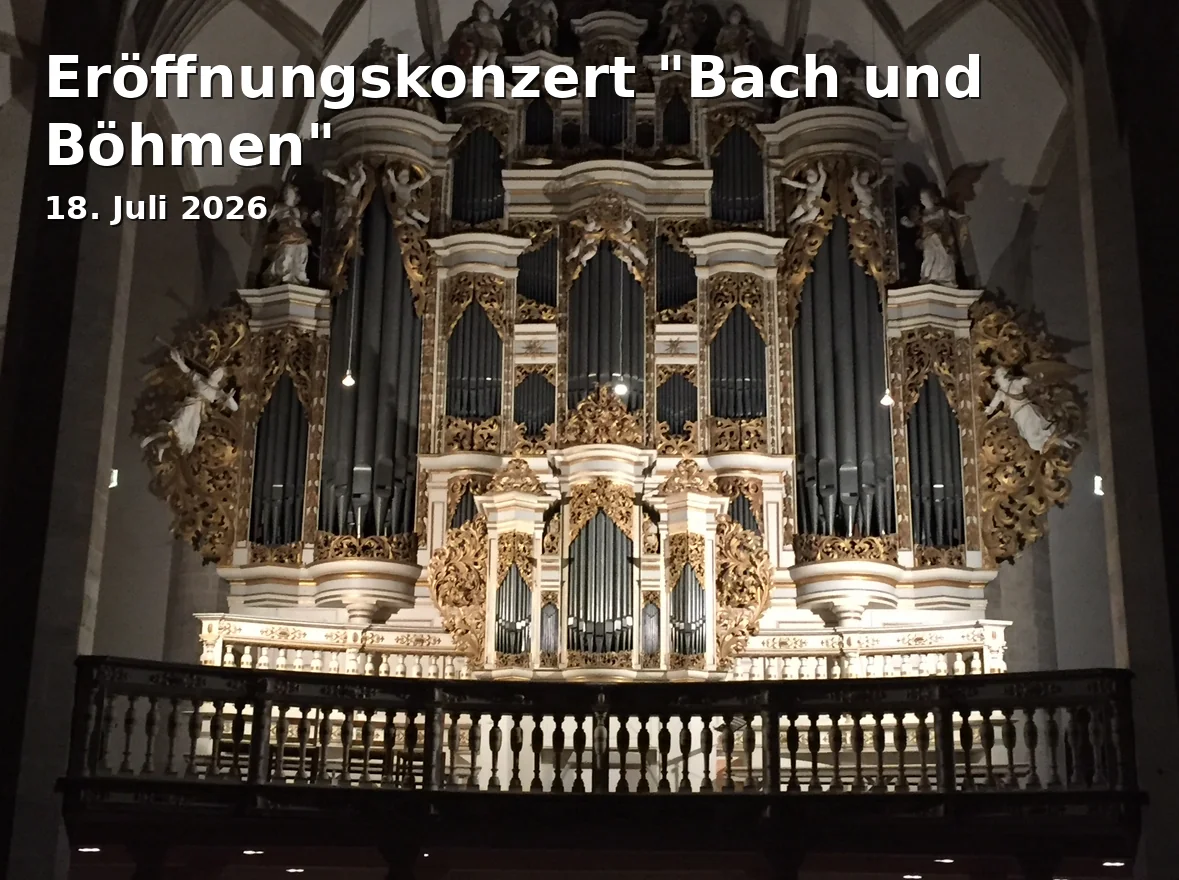
Gunther Rost opens the 38th Aschaffenburg Bach Days with an organ concert featuring works by Bach, Eben, and Reger.
Aschaffenburg Bach Days: Da pacem domine
Enjoy a concert with Vespers Psalms by Zelenka and Vivaldi in the historic Stiftsbasilika.
Frequently Asked Questions
Reviews
Carl Cencig
29. July 2023
Very cool to see this grandiose church situated on a slight hill. Gives it a bit of an imposing air. The inside is well decorated and clearly there is much history here. Enjoyed the quick visit.
Sergio Arganda Gomez
19. April 2025
Looks beautiful from the outside, however we could not get in as there is no easy access with baby strollers.
T S
12. September 2020
Pretty small cathedral. Parking available close by in a parking garage.
Willi oOI
9. July 2017
Today 🌤, Angels 👼👼 came to me as I met them unexpectedly. Please. 🤝 Information: Sunday Mass 11:30 AM after the Zu unserer Lieben Frau (to our lady) @ Sunday Mass time 10 AM. This information will help the travelers definitely.
Chris Orl
24. July 2023
Amazing church outside and inside! We spent a lot of time there in the platz with the whites lines.