
Aschaffenburg
Wermbachstraße 15, 63739 Aschaffenburg, Deutschland
City and Abbey Archive Aschaffenburg | Opening Hours & Photos
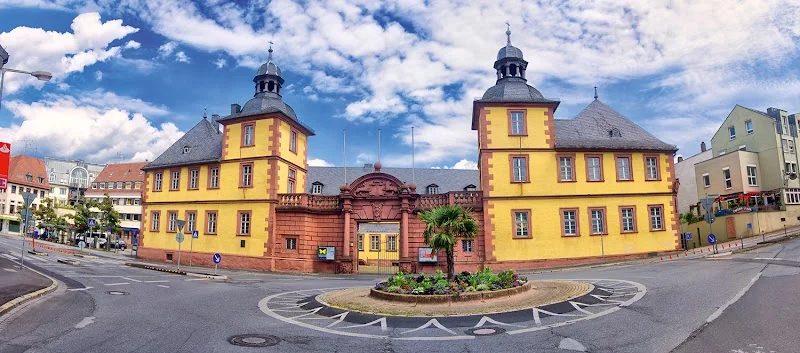
The City and Abbey Archive Aschaffenburg is much more than a classic municipal archive: it is a historical knowledge site, a research center, a cultural meeting place, and a significant repository of over 1000 years of city history. According to the official website, it is one of the oldest and largest historical archives in Lower Franconia, complemented by an extensive regional library and a growing digital offering. Interested parties can find the archive at Schönborner Hof, an address that stands for Aschaffenburg's city history, research, and mediation alike. Particularly exciting is the combination of archive, reading room, collections, publications, exhibitions, and digital formats, which makes the house attractive for both local research and curious visitors. Therefore, those looking for opening hours, photos, events, or announcements will not find a dry administrative office here, but an institution that makes history visible, readable, and usable. ([stadtarchiv-aschaffenburg.de](https://stadtarchiv-aschaffenburg.de/das-archiv))
Opening Hours of the City and Abbey Archive Aschaffenburg
The most important practical question for many visitors is: When is the archive open? The official contact page answers this very clearly, but with an important note: Visits are only possible by appointment, and this should be made at least 24 hours in advance. The reading room is open on Monday from 2 PM to 4 PM, Tuesday from 9 AM to 12 PM and 2 PM to 4 PM, Wednesday from 9 AM to 12 PM and 2 PM to 4 PM, and Thursday from 10 AM to 12 PM and 2 PM to 6 PM; it is closed on Fridays. This positions the archive consciously as a working and research place, not as a spontaneous walk-in location. Those wishing to view files, clarify genealogical questions, or research in the collections should therefore plan ahead and prepare the appointment thoroughly. This is also a plus: instead of short standard opening hours, users can expect a structured access with personal support. This fits with an archive whose tasks range from indexing to usage to advising. ([stadtarchiv-aschaffenburg.de](https://stadtarchiv-aschaffenburg.de/kontakt))
Contact also includes easy communication via phone, email, and even a city archive chat via WhatsApp during the reading room's opening hours. The website explicitly states that WhatsApp is only for contact purposes and not used as a newsletter. This is practical for users, as inquiries about usage, finding aids, collections, or appointments can be quickly clarified. Also relevant for SEO and visitor inquiries: The opening hours do not change randomly but are tied to the reading room's operation. So, anyone searching for keywords like opening hours, appointment, reading room, or contact will find a reliable structure in the archive. Additionally, it is worth looking at digital content and blog posts, as news, exhibitions, and project announcements regularly appear there. This makes the opening hours page not just a usage information but a starting point for the entire offerings of the house. Thus, a simple search term becomes a realistic visit plan. ([stadtarchiv-aschaffenburg.de](https://stadtarchiv-aschaffenburg.de/kontakt))
Directions, Accessibility, and Parking at Schönborner Hof
The City and Abbey Archive is located at Wermbachstraße 15 in 63739 Aschaffenburg. For the journey, the official contact page describes several routes very specifically: By train, the footpath from the main station initially goes via Frohsinnstraße, Weißenburger Straße, and Herstallstraße to Wermbachstraße. Those using public transport can get off at the Freihofsplatz or Löherstraße stops, depending on the line. This makes the archive easily accessible without a car, which is especially important for research appointments, short visits, or guests interested in city history. The location within the building ensemble of Schönborner Hof also ensures that one feels a historical atmosphere upon arrival. The building is not just a functional place but part of the experience. This is precisely why inquiries about directions and location fit so well with this institution: the journey there is part of the encounter with history. ([stadtarchiv-aschaffenburg.de](https://stadtarchiv-aschaffenburg.de/kontakt))
Particularly important is the note on barrier-free access: The website explicitly recommends the rear entrance of Schönborner Hof at the rock garden or Erbsengasse, where one should ring the bell. This is helpful and very specific information for people with mobility impairments, groups, or first-time visitors. Regarding parking, the city of Aschaffenburg refers to its official parking overview for the city area and the city center. For visitors, this means: Individual parking searches should be planned in advance using the city's information rather than relying on spontaneous random spots. This is particularly sensible in a city center location. The combination of train, bus, barrier-free access, and city parking overview makes the journey to the archive relatively transparent. Therefore, those searching for terms like directions, parking, or barrier-free access will receive clear guidance that significantly eases the visit. ([stadtarchiv-aschaffenburg.de](https://stadtarchiv-aschaffenburg.de/kontakt))
Photos, Reviews, and First Impressions
When searching for photos, the City and Abbey Archive showcases its strengths. The website features image material, the photo collection, historical and current image stocks, as well as an online audio guide to Schönborner Hof. Additionally, there are the photo volumes “People in Aschaffenburg,” which, according to the official description, document exactly 100 years of city history from 1865 to 1965 in three volumes. Therefore, anyone wanting to get a picture of the location will find not only general views of the building but also access to visual city history. This is particularly attractive for an archive because photos here are not just decoration but independent sources. They show how the city has grown, how people lived, and how the perception of Aschaffenburg has changed over decades. This connection of place, image, and memory makes the first impression of the house so special. ([stadtarchiv-aschaffenburg.de](https://stadtarchiv-aschaffenburg.de/das-archiv))
The reviews also reflect a positive public image. According to the transmitted location data, the rating is 4.8 stars from 12 reviews. While this is not a large data base, it is a very good indication that visitors appreciate the atmosphere, service, or professional support. For an institution like this archive, this is remarkable because good ratings here usually do not arise from event glamour but from competence, friendliness, and utility. Those wondering before a visit whether the journey is worth it receive a clear answer through the combination of photos, digital material, online audio guide, and positive feedback: Yes, this archive is not only functional but also interesting in content and atmosphere. Especially for people interested in city history, family research, or historical images, the first impression is therefore promising. The website does not convey the atmosphere of a closed government office but that of an open, research-oriented cultural place with visible history. ([stadtarchiv-aschaffenburg.de](https://stadtarchiv-aschaffenburg.de/das-archiv))
History, Tasks, and Collections of the Archive
The history of the house is closely intertwined with the history of Aschaffenburg. Officially, the historical archive of the city of Aschaffenburg has been run as an independent institution only since 1931; since the incorporation of the Abbey Archive in 1939, it has carried the dual name City and Abbey Archive. Previously, the municipal archive was located in the town hall for centuries. After several stations, including Johannisburg Castle, the Desch Villa on Grünewaldstraße, and the VHS building at the marketplace, the archive has found its place in Schönborner Hof since 1982. This change of locations is more than an administrative footnote: it shows how much the institution has grown with the city and how strongly it has inscribed itself in different historical spaces. Schönborner Hof itself is a former early modern noble palace of the Schönborn family, and the complex also includes a historical chapel that can be opened for groups upon request. Thus, a visit to the archive also becomes a small architectural and cultural journey. ([stadtarchiv-aschaffenburg.de](https://stadtarchiv-aschaffenburg.de/das-archiv))
In terms of content, the archive preserves sources related to over 1000 years of city history. These include centuries-old documents, selected official records of the city administration, as well as written materials from companies, associations, parties, public authorities, and private individuals, as long as they are relevant to city history. Image material, newspapers, and literature complement the records. According to the website, the original records range from the 10th century to the present day. Particularly impressive are the holdings of the Abbey Archive: about 4000 documents are preserved there, along with around 6000 inventory units from the 13th to 19th centuries. Additionally, free digitized materials are available via bavarikon, including official books, protocols, and manuscripts with document copies; the collection includes around 2500 items, with origins dating back to the 10th century. The oldest original document dates back to the year 982. Such numbers make it clear why the archive is of regional significance: here lies not only material for local memory but substantial historical records in rare depth. ([stadtarchiv-aschaffenburg.de](https://stadtarchiv-aschaffenburg.de/das-archiv))
The other holdings are also rich for research and the public. In the area of files and official books, as of June 2024, around 43 associations, federations, and corporations, about 87 estates, and around 32 companies are recorded. Additionally, there are collections of graphics, posters, printed materials, and autographs, a photo collection with historical and current image material, a newspaper collection, and a library with literature on Aschaffenburg, Spessart, Franconia, and neighboring regions. The official website also mentions the core tasks of the archive: evaluation and acquisition, indexing and making available, preservation of records, securing archival materials, and mediation work for the public, schools, and administration. This is where the real added value of the location arises. The house not only preserves but also organizes, explains, and opens up. Therefore, those searching for city history topics, family research, or archival research will find here a professionally maintained system of documents, images, and literature. ([stadtarchiv-aschaffenburg.de](https://stadtarchiv-aschaffenburg.de/bestaende-benutzung/akten-amtsbuecher))
Events, Digital Offerings, and Publications
The City and Abbey Archive does not see itself as a silent vault but as an active cultural place. The website explicitly lists exhibitions, events, and publications as part of the offerings. The blog shows that regular formats take place there that go far beyond classic archival research. These include, for example, the Door Opener Day with the Mouse, the Digital Day with projects around digitization and participation, as well as events as part of the Museum Night. In a recent example, a concert evening in Schönborner Hof was even announced. This illustrates how openly the archive works in cultural education: it connects historical holdings with modern mediation and creates occasions that appeal to various target groups. For visitors looking for events or programs, therefore, a rigid annual calendar is less important than the question of which topics are currently in focus. Here, the archive scores with a mix of history, contemporary relevance, and digital openness. ([stadtarchiv-aschaffenburg.de](https://stadtarchiv-aschaffenburg.de/das-archiv))
The digital offerings have now become a central component. The website refers to digital content, a second page for digital presentations, and a project like “Aschaffenburg 2.0 – our history, our future,” which makes city history participatory and accessible online. Additionally, there is the online audio guide, which allows for a tour of Schönborner Hof. These formats are strong in SEO because they bring together search queries for digital, online, tour, history, and image gallery. At the same time, they enhance practical utility: those who cannot be on-site immediately can still dive into the content. The archive is also well positioned for publications. The publishing series “Aschaffenburger Studien,” which has existed since 1988, now includes 20 volumes, divided into city historical contributions and documentation. This is supplemented by special publications, reprints, and the “Reports from the City and Abbey Archive Aschaffenburg,” which, according to the website, contain local historical and scientific essays and are also freely accessible digitally. Publications can be purchased in the archive shop or ordered by mail. Therefore, those searching for reports, books, or research literature will find here not only a collection but a journalistic offering with real depth. ([stadtarchiv-aschaffenburg.de](https://stadtarchiv-aschaffenburg.de/))
Sources:
- City & Abbey Archive Aschaffenburg - Homepage
- City & Abbey Archive Aschaffenburg - The Archive
- City & Abbey Archive Aschaffenburg - Contact & Directions
- City & Abbey Archive Aschaffenburg - Abbey Archive
- City & Abbey Archive Aschaffenburg - Events
- City & Abbey Archive Aschaffenburg - Publications
- City of Aschaffenburg - Parking in Aschaffenburg
Mehr anzeigenWeniger anzeigen
City and Abbey Archive Aschaffenburg | Opening Hours & Photos
The City and Abbey Archive Aschaffenburg is much more than a classic municipal archive: it is a historical knowledge site, a research center, a cultural meeting place, and a significant repository of over 1000 years of city history. According to the official website, it is one of the oldest and largest historical archives in Lower Franconia, complemented by an extensive regional library and a growing digital offering. Interested parties can find the archive at Schönborner Hof, an address that stands for Aschaffenburg's city history, research, and mediation alike. Particularly exciting is the combination of archive, reading room, collections, publications, exhibitions, and digital formats, which makes the house attractive for both local research and curious visitors. Therefore, those looking for opening hours, photos, events, or announcements will not find a dry administrative office here, but an institution that makes history visible, readable, and usable. ([stadtarchiv-aschaffenburg.de](https://stadtarchiv-aschaffenburg.de/das-archiv))
Opening Hours of the City and Abbey Archive Aschaffenburg
The most important practical question for many visitors is: When is the archive open? The official contact page answers this very clearly, but with an important note: Visits are only possible by appointment, and this should be made at least 24 hours in advance. The reading room is open on Monday from 2 PM to 4 PM, Tuesday from 9 AM to 12 PM and 2 PM to 4 PM, Wednesday from 9 AM to 12 PM and 2 PM to 4 PM, and Thursday from 10 AM to 12 PM and 2 PM to 6 PM; it is closed on Fridays. This positions the archive consciously as a working and research place, not as a spontaneous walk-in location. Those wishing to view files, clarify genealogical questions, or research in the collections should therefore plan ahead and prepare the appointment thoroughly. This is also a plus: instead of short standard opening hours, users can expect a structured access with personal support. This fits with an archive whose tasks range from indexing to usage to advising. ([stadtarchiv-aschaffenburg.de](https://stadtarchiv-aschaffenburg.de/kontakt))
Contact also includes easy communication via phone, email, and even a city archive chat via WhatsApp during the reading room's opening hours. The website explicitly states that WhatsApp is only for contact purposes and not used as a newsletter. This is practical for users, as inquiries about usage, finding aids, collections, or appointments can be quickly clarified. Also relevant for SEO and visitor inquiries: The opening hours do not change randomly but are tied to the reading room's operation. So, anyone searching for keywords like opening hours, appointment, reading room, or contact will find a reliable structure in the archive. Additionally, it is worth looking at digital content and blog posts, as news, exhibitions, and project announcements regularly appear there. This makes the opening hours page not just a usage information but a starting point for the entire offerings of the house. Thus, a simple search term becomes a realistic visit plan. ([stadtarchiv-aschaffenburg.de](https://stadtarchiv-aschaffenburg.de/kontakt))
Directions, Accessibility, and Parking at Schönborner Hof
The City and Abbey Archive is located at Wermbachstraße 15 in 63739 Aschaffenburg. For the journey, the official contact page describes several routes very specifically: By train, the footpath from the main station initially goes via Frohsinnstraße, Weißenburger Straße, and Herstallstraße to Wermbachstraße. Those using public transport can get off at the Freihofsplatz or Löherstraße stops, depending on the line. This makes the archive easily accessible without a car, which is especially important for research appointments, short visits, or guests interested in city history. The location within the building ensemble of Schönborner Hof also ensures that one feels a historical atmosphere upon arrival. The building is not just a functional place but part of the experience. This is precisely why inquiries about directions and location fit so well with this institution: the journey there is part of the encounter with history. ([stadtarchiv-aschaffenburg.de](https://stadtarchiv-aschaffenburg.de/kontakt))
Particularly important is the note on barrier-free access: The website explicitly recommends the rear entrance of Schönborner Hof at the rock garden or Erbsengasse, where one should ring the bell. This is helpful and very specific information for people with mobility impairments, groups, or first-time visitors. Regarding parking, the city of Aschaffenburg refers to its official parking overview for the city area and the city center. For visitors, this means: Individual parking searches should be planned in advance using the city's information rather than relying on spontaneous random spots. This is particularly sensible in a city center location. The combination of train, bus, barrier-free access, and city parking overview makes the journey to the archive relatively transparent. Therefore, those searching for terms like directions, parking, or barrier-free access will receive clear guidance that significantly eases the visit. ([stadtarchiv-aschaffenburg.de](https://stadtarchiv-aschaffenburg.de/kontakt))
Photos, Reviews, and First Impressions
When searching for photos, the City and Abbey Archive showcases its strengths. The website features image material, the photo collection, historical and current image stocks, as well as an online audio guide to Schönborner Hof. Additionally, there are the photo volumes “People in Aschaffenburg,” which, according to the official description, document exactly 100 years of city history from 1865 to 1965 in three volumes. Therefore, anyone wanting to get a picture of the location will find not only general views of the building but also access to visual city history. This is particularly attractive for an archive because photos here are not just decoration but independent sources. They show how the city has grown, how people lived, and how the perception of Aschaffenburg has changed over decades. This connection of place, image, and memory makes the first impression of the house so special. ([stadtarchiv-aschaffenburg.de](https://stadtarchiv-aschaffenburg.de/das-archiv))
The reviews also reflect a positive public image. According to the transmitted location data, the rating is 4.8 stars from 12 reviews. While this is not a large data base, it is a very good indication that visitors appreciate the atmosphere, service, or professional support. For an institution like this archive, this is remarkable because good ratings here usually do not arise from event glamour but from competence, friendliness, and utility. Those wondering before a visit whether the journey is worth it receive a clear answer through the combination of photos, digital material, online audio guide, and positive feedback: Yes, this archive is not only functional but also interesting in content and atmosphere. Especially for people interested in city history, family research, or historical images, the first impression is therefore promising. The website does not convey the atmosphere of a closed government office but that of an open, research-oriented cultural place with visible history. ([stadtarchiv-aschaffenburg.de](https://stadtarchiv-aschaffenburg.de/das-archiv))
History, Tasks, and Collections of the Archive
The history of the house is closely intertwined with the history of Aschaffenburg. Officially, the historical archive of the city of Aschaffenburg has been run as an independent institution only since 1931; since the incorporation of the Abbey Archive in 1939, it has carried the dual name City and Abbey Archive. Previously, the municipal archive was located in the town hall for centuries. After several stations, including Johannisburg Castle, the Desch Villa on Grünewaldstraße, and the VHS building at the marketplace, the archive has found its place in Schönborner Hof since 1982. This change of locations is more than an administrative footnote: it shows how much the institution has grown with the city and how strongly it has inscribed itself in different historical spaces. Schönborner Hof itself is a former early modern noble palace of the Schönborn family, and the complex also includes a historical chapel that can be opened for groups upon request. Thus, a visit to the archive also becomes a small architectural and cultural journey. ([stadtarchiv-aschaffenburg.de](https://stadtarchiv-aschaffenburg.de/das-archiv))
In terms of content, the archive preserves sources related to over 1000 years of city history. These include centuries-old documents, selected official records of the city administration, as well as written materials from companies, associations, parties, public authorities, and private individuals, as long as they are relevant to city history. Image material, newspapers, and literature complement the records. According to the website, the original records range from the 10th century to the present day. Particularly impressive are the holdings of the Abbey Archive: about 4000 documents are preserved there, along with around 6000 inventory units from the 13th to 19th centuries. Additionally, free digitized materials are available via bavarikon, including official books, protocols, and manuscripts with document copies; the collection includes around 2500 items, with origins dating back to the 10th century. The oldest original document dates back to the year 982. Such numbers make it clear why the archive is of regional significance: here lies not only material for local memory but substantial historical records in rare depth. ([stadtarchiv-aschaffenburg.de](https://stadtarchiv-aschaffenburg.de/das-archiv))
The other holdings are also rich for research and the public. In the area of files and official books, as of June 2024, around 43 associations, federations, and corporations, about 87 estates, and around 32 companies are recorded. Additionally, there are collections of graphics, posters, printed materials, and autographs, a photo collection with historical and current image material, a newspaper collection, and a library with literature on Aschaffenburg, Spessart, Franconia, and neighboring regions. The official website also mentions the core tasks of the archive: evaluation and acquisition, indexing and making available, preservation of records, securing archival materials, and mediation work for the public, schools, and administration. This is where the real added value of the location arises. The house not only preserves but also organizes, explains, and opens up. Therefore, those searching for city history topics, family research, or archival research will find here a professionally maintained system of documents, images, and literature. ([stadtarchiv-aschaffenburg.de](https://stadtarchiv-aschaffenburg.de/bestaende-benutzung/akten-amtsbuecher))
Events, Digital Offerings, and Publications
The City and Abbey Archive does not see itself as a silent vault but as an active cultural place. The website explicitly lists exhibitions, events, and publications as part of the offerings. The blog shows that regular formats take place there that go far beyond classic archival research. These include, for example, the Door Opener Day with the Mouse, the Digital Day with projects around digitization and participation, as well as events as part of the Museum Night. In a recent example, a concert evening in Schönborner Hof was even announced. This illustrates how openly the archive works in cultural education: it connects historical holdings with modern mediation and creates occasions that appeal to various target groups. For visitors looking for events or programs, therefore, a rigid annual calendar is less important than the question of which topics are currently in focus. Here, the archive scores with a mix of history, contemporary relevance, and digital openness. ([stadtarchiv-aschaffenburg.de](https://stadtarchiv-aschaffenburg.de/das-archiv))
The digital offerings have now become a central component. The website refers to digital content, a second page for digital presentations, and a project like “Aschaffenburg 2.0 – our history, our future,” which makes city history participatory and accessible online. Additionally, there is the online audio guide, which allows for a tour of Schönborner Hof. These formats are strong in SEO because they bring together search queries for digital, online, tour, history, and image gallery. At the same time, they enhance practical utility: those who cannot be on-site immediately can still dive into the content. The archive is also well positioned for publications. The publishing series “Aschaffenburger Studien,” which has existed since 1988, now includes 20 volumes, divided into city historical contributions and documentation. This is supplemented by special publications, reprints, and the “Reports from the City and Abbey Archive Aschaffenburg,” which, according to the website, contain local historical and scientific essays and are also freely accessible digitally. Publications can be purchased in the archive shop or ordered by mail. Therefore, those searching for reports, books, or research literature will find here not only a collection but a journalistic offering with real depth. ([stadtarchiv-aschaffenburg.de](https://stadtarchiv-aschaffenburg.de/))
Sources:
- City & Abbey Archive Aschaffenburg - Homepage
- City & Abbey Archive Aschaffenburg - The Archive
- City & Abbey Archive Aschaffenburg - Contact & Directions
- City & Abbey Archive Aschaffenburg - Abbey Archive
- City & Abbey Archive Aschaffenburg - Events
- City & Abbey Archive Aschaffenburg - Publications
- City of Aschaffenburg - Parking in Aschaffenburg
City and Abbey Archive Aschaffenburg | Opening Hours & Photos
The City and Abbey Archive Aschaffenburg is much more than a classic municipal archive: it is a historical knowledge site, a research center, a cultural meeting place, and a significant repository of over 1000 years of city history. According to the official website, it is one of the oldest and largest historical archives in Lower Franconia, complemented by an extensive regional library and a growing digital offering. Interested parties can find the archive at Schönborner Hof, an address that stands for Aschaffenburg's city history, research, and mediation alike. Particularly exciting is the combination of archive, reading room, collections, publications, exhibitions, and digital formats, which makes the house attractive for both local research and curious visitors. Therefore, those looking for opening hours, photos, events, or announcements will not find a dry administrative office here, but an institution that makes history visible, readable, and usable. ([stadtarchiv-aschaffenburg.de](https://stadtarchiv-aschaffenburg.de/das-archiv))
Opening Hours of the City and Abbey Archive Aschaffenburg
The most important practical question for many visitors is: When is the archive open? The official contact page answers this very clearly, but with an important note: Visits are only possible by appointment, and this should be made at least 24 hours in advance. The reading room is open on Monday from 2 PM to 4 PM, Tuesday from 9 AM to 12 PM and 2 PM to 4 PM, Wednesday from 9 AM to 12 PM and 2 PM to 4 PM, and Thursday from 10 AM to 12 PM and 2 PM to 6 PM; it is closed on Fridays. This positions the archive consciously as a working and research place, not as a spontaneous walk-in location. Those wishing to view files, clarify genealogical questions, or research in the collections should therefore plan ahead and prepare the appointment thoroughly. This is also a plus: instead of short standard opening hours, users can expect a structured access with personal support. This fits with an archive whose tasks range from indexing to usage to advising. ([stadtarchiv-aschaffenburg.de](https://stadtarchiv-aschaffenburg.de/kontakt))
Contact also includes easy communication via phone, email, and even a city archive chat via WhatsApp during the reading room's opening hours. The website explicitly states that WhatsApp is only for contact purposes and not used as a newsletter. This is practical for users, as inquiries about usage, finding aids, collections, or appointments can be quickly clarified. Also relevant for SEO and visitor inquiries: The opening hours do not change randomly but are tied to the reading room's operation. So, anyone searching for keywords like opening hours, appointment, reading room, or contact will find a reliable structure in the archive. Additionally, it is worth looking at digital content and blog posts, as news, exhibitions, and project announcements regularly appear there. This makes the opening hours page not just a usage information but a starting point for the entire offerings of the house. Thus, a simple search term becomes a realistic visit plan. ([stadtarchiv-aschaffenburg.de](https://stadtarchiv-aschaffenburg.de/kontakt))
Directions, Accessibility, and Parking at Schönborner Hof
The City and Abbey Archive is located at Wermbachstraße 15 in 63739 Aschaffenburg. For the journey, the official contact page describes several routes very specifically: By train, the footpath from the main station initially goes via Frohsinnstraße, Weißenburger Straße, and Herstallstraße to Wermbachstraße. Those using public transport can get off at the Freihofsplatz or Löherstraße stops, depending on the line. This makes the archive easily accessible without a car, which is especially important for research appointments, short visits, or guests interested in city history. The location within the building ensemble of Schönborner Hof also ensures that one feels a historical atmosphere upon arrival. The building is not just a functional place but part of the experience. This is precisely why inquiries about directions and location fit so well with this institution: the journey there is part of the encounter with history. ([stadtarchiv-aschaffenburg.de](https://stadtarchiv-aschaffenburg.de/kontakt))
Particularly important is the note on barrier-free access: The website explicitly recommends the rear entrance of Schönborner Hof at the rock garden or Erbsengasse, where one should ring the bell. This is helpful and very specific information for people with mobility impairments, groups, or first-time visitors. Regarding parking, the city of Aschaffenburg refers to its official parking overview for the city area and the city center. For visitors, this means: Individual parking searches should be planned in advance using the city's information rather than relying on spontaneous random spots. This is particularly sensible in a city center location. The combination of train, bus, barrier-free access, and city parking overview makes the journey to the archive relatively transparent. Therefore, those searching for terms like directions, parking, or barrier-free access will receive clear guidance that significantly eases the visit. ([stadtarchiv-aschaffenburg.de](https://stadtarchiv-aschaffenburg.de/kontakt))
Photos, Reviews, and First Impressions
When searching for photos, the City and Abbey Archive showcases its strengths. The website features image material, the photo collection, historical and current image stocks, as well as an online audio guide to Schönborner Hof. Additionally, there are the photo volumes “People in Aschaffenburg,” which, according to the official description, document exactly 100 years of city history from 1865 to 1965 in three volumes. Therefore, anyone wanting to get a picture of the location will find not only general views of the building but also access to visual city history. This is particularly attractive for an archive because photos here are not just decoration but independent sources. They show how the city has grown, how people lived, and how the perception of Aschaffenburg has changed over decades. This connection of place, image, and memory makes the first impression of the house so special. ([stadtarchiv-aschaffenburg.de](https://stadtarchiv-aschaffenburg.de/das-archiv))
The reviews also reflect a positive public image. According to the transmitted location data, the rating is 4.8 stars from 12 reviews. While this is not a large data base, it is a very good indication that visitors appreciate the atmosphere, service, or professional support. For an institution like this archive, this is remarkable because good ratings here usually do not arise from event glamour but from competence, friendliness, and utility. Those wondering before a visit whether the journey is worth it receive a clear answer through the combination of photos, digital material, online audio guide, and positive feedback: Yes, this archive is not only functional but also interesting in content and atmosphere. Especially for people interested in city history, family research, or historical images, the first impression is therefore promising. The website does not convey the atmosphere of a closed government office but that of an open, research-oriented cultural place with visible history. ([stadtarchiv-aschaffenburg.de](https://stadtarchiv-aschaffenburg.de/das-archiv))
History, Tasks, and Collections of the Archive
The history of the house is closely intertwined with the history of Aschaffenburg. Officially, the historical archive of the city of Aschaffenburg has been run as an independent institution only since 1931; since the incorporation of the Abbey Archive in 1939, it has carried the dual name City and Abbey Archive. Previously, the municipal archive was located in the town hall for centuries. After several stations, including Johannisburg Castle, the Desch Villa on Grünewaldstraße, and the VHS building at the marketplace, the archive has found its place in Schönborner Hof since 1982. This change of locations is more than an administrative footnote: it shows how much the institution has grown with the city and how strongly it has inscribed itself in different historical spaces. Schönborner Hof itself is a former early modern noble palace of the Schönborn family, and the complex also includes a historical chapel that can be opened for groups upon request. Thus, a visit to the archive also becomes a small architectural and cultural journey. ([stadtarchiv-aschaffenburg.de](https://stadtarchiv-aschaffenburg.de/das-archiv))
In terms of content, the archive preserves sources related to over 1000 years of city history. These include centuries-old documents, selected official records of the city administration, as well as written materials from companies, associations, parties, public authorities, and private individuals, as long as they are relevant to city history. Image material, newspapers, and literature complement the records. According to the website, the original records range from the 10th century to the present day. Particularly impressive are the holdings of the Abbey Archive: about 4000 documents are preserved there, along with around 6000 inventory units from the 13th to 19th centuries. Additionally, free digitized materials are available via bavarikon, including official books, protocols, and manuscripts with document copies; the collection includes around 2500 items, with origins dating back to the 10th century. The oldest original document dates back to the year 982. Such numbers make it clear why the archive is of regional significance: here lies not only material for local memory but substantial historical records in rare depth. ([stadtarchiv-aschaffenburg.de](https://stadtarchiv-aschaffenburg.de/das-archiv))
The other holdings are also rich for research and the public. In the area of files and official books, as of June 2024, around 43 associations, federations, and corporations, about 87 estates, and around 32 companies are recorded. Additionally, there are collections of graphics, posters, printed materials, and autographs, a photo collection with historical and current image material, a newspaper collection, and a library with literature on Aschaffenburg, Spessart, Franconia, and neighboring regions. The official website also mentions the core tasks of the archive: evaluation and acquisition, indexing and making available, preservation of records, securing archival materials, and mediation work for the public, schools, and administration. This is where the real added value of the location arises. The house not only preserves but also organizes, explains, and opens up. Therefore, those searching for city history topics, family research, or archival research will find here a professionally maintained system of documents, images, and literature. ([stadtarchiv-aschaffenburg.de](https://stadtarchiv-aschaffenburg.de/bestaende-benutzung/akten-amtsbuecher))
Events, Digital Offerings, and Publications
The City and Abbey Archive does not see itself as a silent vault but as an active cultural place. The website explicitly lists exhibitions, events, and publications as part of the offerings. The blog shows that regular formats take place there that go far beyond classic archival research. These include, for example, the Door Opener Day with the Mouse, the Digital Day with projects around digitization and participation, as well as events as part of the Museum Night. In a recent example, a concert evening in Schönborner Hof was even announced. This illustrates how openly the archive works in cultural education: it connects historical holdings with modern mediation and creates occasions that appeal to various target groups. For visitors looking for events or programs, therefore, a rigid annual calendar is less important than the question of which topics are currently in focus. Here, the archive scores with a mix of history, contemporary relevance, and digital openness. ([stadtarchiv-aschaffenburg.de](https://stadtarchiv-aschaffenburg.de/das-archiv))
The digital offerings have now become a central component. The website refers to digital content, a second page for digital presentations, and a project like “Aschaffenburg 2.0 – our history, our future,” which makes city history participatory and accessible online. Additionally, there is the online audio guide, which allows for a tour of Schönborner Hof. These formats are strong in SEO because they bring together search queries for digital, online, tour, history, and image gallery. At the same time, they enhance practical utility: those who cannot be on-site immediately can still dive into the content. The archive is also well positioned for publications. The publishing series “Aschaffenburger Studien,” which has existed since 1988, now includes 20 volumes, divided into city historical contributions and documentation. This is supplemented by special publications, reprints, and the “Reports from the City and Abbey Archive Aschaffenburg,” which, according to the website, contain local historical and scientific essays and are also freely accessible digitally. Publications can be purchased in the archive shop or ordered by mail. Therefore, those searching for reports, books, or research literature will find here not only a collection but a journalistic offering with real depth. ([stadtarchiv-aschaffenburg.de](https://stadtarchiv-aschaffenburg.de/))
Sources:
- City & Abbey Archive Aschaffenburg - Homepage
- City & Abbey Archive Aschaffenburg - The Archive
- City & Abbey Archive Aschaffenburg - Contact & Directions
- City & Abbey Archive Aschaffenburg - Abbey Archive
- City & Abbey Archive Aschaffenburg - Events
- City & Abbey Archive Aschaffenburg - Publications
- City of Aschaffenburg - Parking in Aschaffenburg
Frequently Asked Questions
Reviews
Henrik Schucker
23. March 2021
Very beautiful building that, in my opinion, doesn't get enough attention. The small chapel is also very nice to look at, but unfortunately, it's only visible during guided tours.
Thomas Müller
6. August 2020
As so often, great exhibitions on very interesting topics are shown here. Currently: Paper is not patient.
Jonathan Ullrich
1. May 2019
Very interesting files, pictures, and documents. The staff is always friendly and helpful!
RealTK
16. March 2023
Beautiful old building right at the roundabout.
Steffen W. Schilke (sws)
7. May 2018
Very nice people and it's developing towards #archive20