
Alzenau
Wasserlos, 63755 Alzenau, Deutschland
Schloßpark Wasserlos | History & Access
The Schloßpark in Wasserlos is not an ordinary city park, but a historically grown ensemble around Schloss Wasserlos, which today serves as the site of the Aschaffenburg-Alzenau Clinic. Those who come here do not experience a detached place, but a landscape where history, medical use, nature, and neighborhood identity are closely intertwined. The city of Alzenau refers to the establishment of the castle in 1767/68 on the site of a medieval castle, and that remnants of this castle are still visible in the park. The local history and heritage association also describes the castle park as a place that allows convalescents, visitors, and the public to enjoy relaxing walks. This mixture of past and present is what makes Wasserlos appealing: The area tells not only of a castle but also of changing owners, renovations, a garden ideal of the 19th century, and a facility that continues to integrate into local life today. Therefore, those who view the Schloßpark today see not only green spaces and buildings but a piece of Alzenau's city history that has remained effective to the present day. ([alzenau.de](https://www.alzenau.de/B%C3%BCrger/Leben-in-Alzenau/Stadtportrait-Unsere-Stadt-/Sehensw%C3%BCrdigkeiten/Schloss-Wasserlos/?utm_source=openai))
History of Schloss Wasserlos and the Schloßpark
The historical depth of the place begins with the castle itself. According to the city of Alzenau, Schloss Wasserlos was built in 1767/68 on a site where a medieval castle once stood; remnants of it are still visible in the park today. This connection of an old fortification, later residence, and today's clinic site explains why the place is more than just a green space. The municipal information also mentions Ludovica Freifrau von des Bordes, known as Lulu Brentano, as a significant castle owner. She appeared not only as an owner but also as a benefactor of the community, facilitating the construction of the Katharinenkirche in the Wasserlos district, among other things. Additionally, the city describes Schloss Wasserlos in an event contribution as a property of European significance, where prominent owners like the Prince of Württemberg and Lulu Brentano left their mark. This historical continuity is important because it shows that the estate has had social, cultural, and landscape significance over generations. Therefore, those who view the current park area see not just a pretty ensemble but a historical network of power, charity, landscape design, and local memory that can still be read in the Wasserlos district today. ([alzenau.de](https://www.alzenau.de/B%C3%BCrger/Leben-in-Alzenau/Stadtportrait-Unsere-Stadt-/Sehensw%C3%BCrdigkeiten/Schloss-Wasserlos/?utm_source=openai))
The later use of the castle also contributes to the special effect of the place. Today, the castle houses the Aschaffenburg-Alzenau Clinic, Alzenau-Wasserlos site, with an attached geriatrics department. Thus, a modern healthcare site has developed from the former noble residence, without the historical shell disappearing. This repurposing is noticeable to visitors because different layers of time overlap in the park and on the buildings: medieval remnants, the architecture of the castle, subsequent adaptations, and the medical function of the 20th and 21st centuries. The official historical overview of the clinic also points out that the place was previously medically influenced, for example, when wounded soldiers found help in an emergency hospital at Schloss Wasserlos during the brother war of 1866. Such references make it clear that Wasserlos was not only a place of residence and power but also became a place of care. This is a significant part of its appeal: The Schloßpark in Wasserlos tells of power and landscape, but also of healing, adaptation, and public use. ([alzenau.de](https://www.alzenau.de/B%C3%BCrger/Leben-in-Alzenau/Stadtportrait-Unsere-Stadt-/Sehensw%C3%BCrdigkeiten/Schloss-Wasserlos/?utm_source=openai))
English Landscape Garden, Pavilion, and Special Park Images
The official city description makes it clear that the park was designed in the style of an English landscape garden. This form of garden design is important because it does not rely on strict axes and representative demarcation but on paths, sightlines, groups of trees, and a landscape image that appears as natural as possible. This is precisely how Schloss Wasserlos in Alzenau is staged: The park with its giant sequoia and the pavilion in the opposite cherry garden completes the picture of a 19th-century estate, according to the city. The pavilion, which previously served as the castle's tea house, is more than just a decorative building. It creates its own viewpoint and opens the space wide into the Rhine-Main plain. Those who stand there do not experience the park as a closed facility but as a transition between architecture, garden art, and broader landscape. Additionally, the place is connected in municipal event texts with an English landscape garden designed by Marquise du Chasteler. This shows that the facility did not grow randomly but was deliberately shaped according to a contemporary ideal. ([alzenau.de](https://www.alzenau.de/B%C3%BCrger/Leben-in-Alzenau/Stadtportrait-Unsere-Stadt-/Sehensw%C3%BCrdigkeiten/Schloss-Wasserlos/?utm_source=openai))
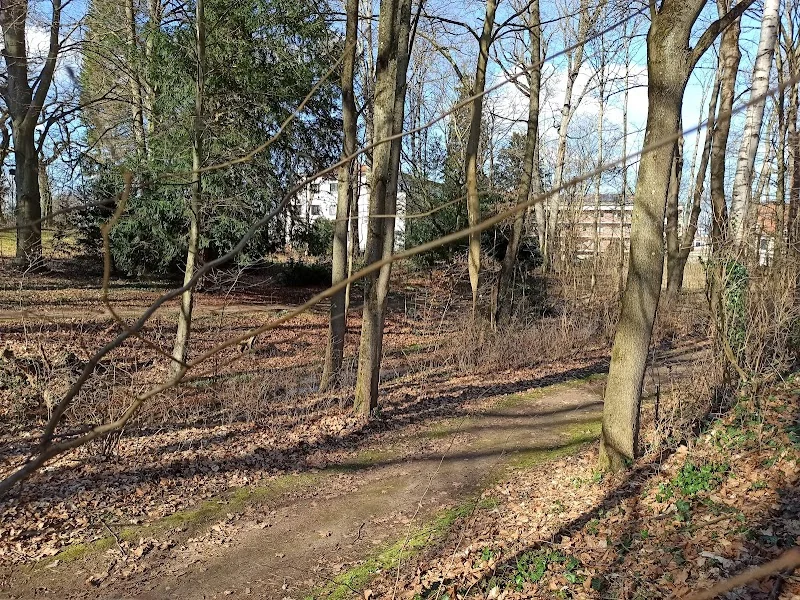
For today's perception, it is also important that the park is not just historical decor but remains a living landscape. The local history and heritage association Alzenau describes the castle park as a place that, after several redesigns and replantings, offers convalescents from the hospital, visitors, and the public relaxing walks. This makes it clear that the facility has not been frozen in a museum-like state but has retained its function as a walking and recreational area. The combination of old tree stock, renewed plantings, and visible history creates precisely the kind of atmosphere that many people appreciate in historical parks: tranquility, spatial expanse, a certain respect for the past, and at the same time enough openness for everyday life and movement. When the Schloßpark Wasserlos appears today as a search term, it is often precisely because of this tension between landscape, clinic, and culture. In Wasserlos, it is not just individual sights that impress but the way they interact. The pavilion, the cherry garden, and the sightlines give the place its own dramaturgy, which remains present in the municipal memory and in everyday use. ([geschichtsverein-alzenau.de](https://www.geschichtsverein-alzenau.de/Heimatgeschichte/Wasserlos/?utm_source=openai))
The Aschaffenburg-Alzenau Clinic as Today's Site in the Castle
The Schloßpark Wasserlos cannot be separated from the Aschaffenburg-Alzenau Clinic today, as the hospital is directly connected to the historical facility. The municipal attraction explicitly describes the castle as the current site of the clinic with an attached geriatrics department. On the official hospital page, Alzenau-Wasserlos is listed as a location with its own connection and infrastructure. This is practically relevant for visitors and relatives but also for the perception of the place: A former castle has become a medical site where historical architecture and modern care coexist. The clinic also describes its facility as a medical site with a view of the castle park, and for geriatric rehabilitation, modern single and double rooms with views of the castle park are mentioned. Thus, the park location is not only historically significant but also functionally important. Nature, tranquility, and orientation are part of the quality of stay at the facility without needing to romanticize the past. ([alzenau.de](https://www.alzenau.de/B%C3%BCrger/Leben-in-Alzenau/Stadtportrait-Unsere-Stadt-/Sehensw%C3%BCrdigkeiten/Schloss-Wasserlos/?utm_source=openai))
This mixture makes Wasserlos remarkable for many people. The park serves not only as a historical framework but also as part of an everyday medical environment. Patients, relatives, and staff experience the place in different roles: as a clinic address, as a walking area, and as a historically significant space. The clinic also mentions Alzenau-Wasserlos in the context of its access and bus connections, which shows that the location is firmly anchored in regional mobility. For SEO and for genuine user inquiries, this is important because many search queries are not only about history but also about practical information. People want to know if the place is accessible, how parking works, and if there is orientation on-site for relatives and visitors. Wasserlos meets these expectations without losing its historical identity. The combination of inpatient care, a focus on geriatrics, and parkland gives the Schloßpark an unusual profile. It is neither merely a museum nor just a hospital site but a grown place of public significance where the history of the place can be very concretely found in everyday life. ([klinikum-ab-alz.de](https://www.klinikum-ab-alz.de/anfahrt-parken?utm_source=openai))
Access, Bus, and Parking in Wasserlos
For visitors, the location of the Schloßpark Wasserlos is surprisingly well organized, as the Aschaffenburg-Alzenau Clinic provides clear information about accessibility. The Alzenau location is served by City Bus lines 31 and 32 on the official page. Those arriving by public transport will find the bus stops directly in front of the main entrance of the clinic. For the Alzenau-Wasserlos location, the clinic also provides the address Schlosshof 1, 63755 Alzenau-Wasserlos. This is helpful because seekers often inquire not only about a park but also about a specific route, the nearest stop, or practical orientation for relatives and visitors. Additionally, it is important for everyday life that the clinic designates a free visitor parking lot behind the clinic. Thus, a historically demanding place does not become an inaccessible backdrop but an accessible location with understandable visiting logic. ([klinikum-ab-alz.de](https://www.klinikum-ab-alz.de/anfahrt-parken?utm_source=openai))
The same information also helps in classifying the entire environment. Those visiting the Schloßpark Wasserlos as a destination, cultural site, or meeting point for an event do not have to ponder long about how to arrive or where to leave the car. Especially in conjunction with bus lines 31 and 32, the location is well integrated for people from Alzenau and the region. This is more than a trivial matter, as good accessibility often determines whether a place only appears on the internet or is actually visited. The Schloßpark benefits from the fact that historical charm and practical infrastructure do not exclude each other. For SEO content, this means: Questions about access and parking are among the most important topics because they are closely aligned with user intent. Those searching for Wasserlos often want to know not only how old the castle is but whether they can arrive comfortably, get out, and start a peaceful walk. The official clinic page answers these questions with a combination of public transport, parking, and clear address information. ([klinikum-ab-alz.de](https://www.klinikum-ab-alz.de/anfahrt-parken?utm_source=openai))
Lulu Brentano, Women’s Place Bavaria, and Cultural Significance
One of the most influential personalities of Schloss Wasserlos is Ludovica Freifrau von des Bordes, better known as Lulu Brentano. The city of Alzenau honored her in 2026 as part of the Women’s Places Bavaria project as a significant woman whose life path is closely linked to Wasserlos. In the official announcement, she is described as a former castle owner, a clever businesswoman, a benefactor, and a poet who forged her own path despite famous siblings and two marriages. For the cultural classification of the Schloßpark, this is of great importance because Wasserlos thus becomes visible not only as a historical facility but also as a place of female biography. Particularly interesting is that the city refers to the research work of Walter Scharwies and makes it clear that Lulu Brentano has been included in the ranks of women who have shaped Bavaria's history. This gives the place an additional layer: It stands not only for architecture and garden art but also for memory culture and the visibility of women in regional history. ([alzenau.de](https://www.alzenau.de/Quicknavigation/Startseite/Lulu-Brentano-als-pr%C3%A4gende-Pers%C3%B6nlichkeit-gew%C3%BCrdigt-Schloss-Wasserlos-wird-FrauenOrt-Bayern-.php?FID=2413.7469.1&ModID=7&NavID=2413.44&object=tx%2C2413.4&utm_source=openai))
That this cultural significance does not exist only on paper is also shown by the event situation on-site. The city of Alzenau announced the award ceremony for Women’s Places Bavaria for May 10, 2026, in the Schloßpark Wasserlos. At the same time, there have already been events that were explicitly scheduled at the Schloßpark Wasserlos or at the pavilion. In an earlier contribution to a reading with music, the Schloßpark Wasserlos was even mentioned as a meeting point at the fountain Hahnenkammstraße. This shows that the park functions as a public cultural site and not just as a backdrop. For visitors, this creates an exciting impression: Wasserlos is simultaneously a place of remembrance, an event venue, and a historical landscape space. The story of Lulu Brentano makes this connection particularly tangible because it receives a personal face. She stands as a representative for a time when the castle, park, and common good were closely linked. Today, the city consciously connects to this tradition with the Women’s Place award and anchors it in a modern form of historical communication. Therefore, those visiting the Schloßpark Wasserlos also encounter a narrative about independence, impact, and regional identity. ([alzenau.de](https://www.alzenau.de/Freizeit-G%C3%A4ste/Kunst-Kultur-Events/Weinkultur/Veranstaltungen-rund-um-den-Wein/Auszeichnungsfeier-FrauenOrte-Bayern-Alzenau-Lulu-Brentano-die-Eigenst%C3%A4ndige.php?FID=2413.7096.1&La=1&ModID=11&NavID=2413.364&object=tx%2C2413.29&utm_source=openai))
Walks, Events, and Today's Visitor Experience
The current visitor experience in the Schloßpark Wasserlos arises not only from the historical background but also from the way the place is used. The local history and heritage association describes the castle park as a facility that, after several redesigns and replantings, allows convalescents from the hospital, visitors, and the public to enjoy relaxing walks. This is precisely what many people find appealing: One does not enter a rigid monument zone but a park designed for movement, tranquility, and perspective. Together with the historical remnants of the former castle, the English landscape garden, and the pavilion, a setting is created that is suitable for both short visits and longer stays. The place invites one to change perspective: first reading the architecture, then experiencing the park as a landscape, and finally considering the present of the clinic. This complexity makes Wasserlos a destination that is relevant for both culture enthusiasts and walkers and relatives. ([geschichtsverein-alzenau.de](https://www.geschichtsverein-alzenau.de/Heimatgeschichte/Wasserlos/?utm_source=openai))
The event level is also remarkable. The city of Alzenau has already utilized the Schloßpark Wasserlos for cultural formats, such as the reading with music in the context of Lulu Brentano or the award ceremony for Women’s Places Bavaria. In a municipal contribution to the historical walking series, the pavilion in the Schloßpark was named as the first station and meeting point. This underscores how much the place is understood as an open cultural and memory space. For visitors, this is important because such events make the park visible and open new access points. The Schloßpark Wasserlos is thus not only an object for photos or a pretty backdrop but a space where history is conveyed and currently lived. Those interested in access, parking, history, or current use find surprisingly many overlaps here. It is precisely these overlaps that also explain why search queries related to Schloßpark, Schloss Wasserlos, Women’s Place Bavaria, pavilion, parking, and access fit together so well. Wasserlos is a place where one not only collects information but recognizes connections. ([alzenau.de](https://www.alzenau.de/Freizeit-G%C3%A4ste/Kunst-Kultur-Events/Veranstaltungen/Lesung-mit-Musik-Lulu-Brentano-eine-curiose-Lebensgeschichte-erz%C3%A4hlt-in-Briefen-bereits-ausverkauft-.php?FID=2413.4308.1&ModID=11&NavID=2413.18&object=tx%2C2468.13.1&utm_source=openai))
Sources:
Mehr anzeigenWeniger anzeigen
Schloßpark Wasserlos | History & Access
The Schloßpark in Wasserlos is not an ordinary city park, but a historically grown ensemble around Schloss Wasserlos, which today serves as the site of the Aschaffenburg-Alzenau Clinic. Those who come here do not experience a detached place, but a landscape where history, medical use, nature, and neighborhood identity are closely intertwined. The city of Alzenau refers to the establishment of the castle in 1767/68 on the site of a medieval castle, and that remnants of this castle are still visible in the park. The local history and heritage association also describes the castle park as a place that allows convalescents, visitors, and the public to enjoy relaxing walks. This mixture of past and present is what makes Wasserlos appealing: The area tells not only of a castle but also of changing owners, renovations, a garden ideal of the 19th century, and a facility that continues to integrate into local life today. Therefore, those who view the Schloßpark today see not only green spaces and buildings but a piece of Alzenau's city history that has remained effective to the present day. ([alzenau.de](https://www.alzenau.de/B%C3%BCrger/Leben-in-Alzenau/Stadtportrait-Unsere-Stadt-/Sehensw%C3%BCrdigkeiten/Schloss-Wasserlos/?utm_source=openai))
History of Schloss Wasserlos and the Schloßpark
The historical depth of the place begins with the castle itself. According to the city of Alzenau, Schloss Wasserlos was built in 1767/68 on a site where a medieval castle once stood; remnants of it are still visible in the park today. This connection of an old fortification, later residence, and today's clinic site explains why the place is more than just a green space. The municipal information also mentions Ludovica Freifrau von des Bordes, known as Lulu Brentano, as a significant castle owner. She appeared not only as an owner but also as a benefactor of the community, facilitating the construction of the Katharinenkirche in the Wasserlos district, among other things. Additionally, the city describes Schloss Wasserlos in an event contribution as a property of European significance, where prominent owners like the Prince of Württemberg and Lulu Brentano left their mark. This historical continuity is important because it shows that the estate has had social, cultural, and landscape significance over generations. Therefore, those who view the current park area see not just a pretty ensemble but a historical network of power, charity, landscape design, and local memory that can still be read in the Wasserlos district today. ([alzenau.de](https://www.alzenau.de/B%C3%BCrger/Leben-in-Alzenau/Stadtportrait-Unsere-Stadt-/Sehensw%C3%BCrdigkeiten/Schloss-Wasserlos/?utm_source=openai))
The later use of the castle also contributes to the special effect of the place. Today, the castle houses the Aschaffenburg-Alzenau Clinic, Alzenau-Wasserlos site, with an attached geriatrics department. Thus, a modern healthcare site has developed from the former noble residence, without the historical shell disappearing. This repurposing is noticeable to visitors because different layers of time overlap in the park and on the buildings: medieval remnants, the architecture of the castle, subsequent adaptations, and the medical function of the 20th and 21st centuries. The official historical overview of the clinic also points out that the place was previously medically influenced, for example, when wounded soldiers found help in an emergency hospital at Schloss Wasserlos during the brother war of 1866. Such references make it clear that Wasserlos was not only a place of residence and power but also became a place of care. This is a significant part of its appeal: The Schloßpark in Wasserlos tells of power and landscape, but also of healing, adaptation, and public use. ([alzenau.de](https://www.alzenau.de/B%C3%BCrger/Leben-in-Alzenau/Stadtportrait-Unsere-Stadt-/Sehensw%C3%BCrdigkeiten/Schloss-Wasserlos/?utm_source=openai))
English Landscape Garden, Pavilion, and Special Park Images
The official city description makes it clear that the park was designed in the style of an English landscape garden. This form of garden design is important because it does not rely on strict axes and representative demarcation but on paths, sightlines, groups of trees, and a landscape image that appears as natural as possible. This is precisely how Schloss Wasserlos in Alzenau is staged: The park with its giant sequoia and the pavilion in the opposite cherry garden completes the picture of a 19th-century estate, according to the city. The pavilion, which previously served as the castle's tea house, is more than just a decorative building. It creates its own viewpoint and opens the space wide into the Rhine-Main plain. Those who stand there do not experience the park as a closed facility but as a transition between architecture, garden art, and broader landscape. Additionally, the place is connected in municipal event texts with an English landscape garden designed by Marquise du Chasteler. This shows that the facility did not grow randomly but was deliberately shaped according to a contemporary ideal. ([alzenau.de](https://www.alzenau.de/B%C3%BCrger/Leben-in-Alzenau/Stadtportrait-Unsere-Stadt-/Sehensw%C3%BCrdigkeiten/Schloss-Wasserlos/?utm_source=openai))
For today's perception, it is also important that the park is not just historical decor but remains a living landscape. The local history and heritage association Alzenau describes the castle park as a place that, after several redesigns and replantings, offers convalescents from the hospital, visitors, and the public relaxing walks. This makes it clear that the facility has not been frozen in a museum-like state but has retained its function as a walking and recreational area. The combination of old tree stock, renewed plantings, and visible history creates precisely the kind of atmosphere that many people appreciate in historical parks: tranquility, spatial expanse, a certain respect for the past, and at the same time enough openness for everyday life and movement. When the Schloßpark Wasserlos appears today as a search term, it is often precisely because of this tension between landscape, clinic, and culture. In Wasserlos, it is not just individual sights that impress but the way they interact. The pavilion, the cherry garden, and the sightlines give the place its own dramaturgy, which remains present in the municipal memory and in everyday use. ([geschichtsverein-alzenau.de](https://www.geschichtsverein-alzenau.de/Heimatgeschichte/Wasserlos/?utm_source=openai))
The Aschaffenburg-Alzenau Clinic as Today's Site in the Castle
The Schloßpark Wasserlos cannot be separated from the Aschaffenburg-Alzenau Clinic today, as the hospital is directly connected to the historical facility. The municipal attraction explicitly describes the castle as the current site of the clinic with an attached geriatrics department. On the official hospital page, Alzenau-Wasserlos is listed as a location with its own connection and infrastructure. This is practically relevant for visitors and relatives but also for the perception of the place: A former castle has become a medical site where historical architecture and modern care coexist. The clinic also describes its facility as a medical site with a view of the castle park, and for geriatric rehabilitation, modern single and double rooms with views of the castle park are mentioned. Thus, the park location is not only historically significant but also functionally important. Nature, tranquility, and orientation are part of the quality of stay at the facility without needing to romanticize the past. ([alzenau.de](https://www.alzenau.de/B%C3%BCrger/Leben-in-Alzenau/Stadtportrait-Unsere-Stadt-/Sehensw%C3%BCrdigkeiten/Schloss-Wasserlos/?utm_source=openai))
This mixture makes Wasserlos remarkable for many people. The park serves not only as a historical framework but also as part of an everyday medical environment. Patients, relatives, and staff experience the place in different roles: as a clinic address, as a walking area, and as a historically significant space. The clinic also mentions Alzenau-Wasserlos in the context of its access and bus connections, which shows that the location is firmly anchored in regional mobility. For SEO and for genuine user inquiries, this is important because many search queries are not only about history but also about practical information. People want to know if the place is accessible, how parking works, and if there is orientation on-site for relatives and visitors. Wasserlos meets these expectations without losing its historical identity. The combination of inpatient care, a focus on geriatrics, and parkland gives the Schloßpark an unusual profile. It is neither merely a museum nor just a hospital site but a grown place of public significance where the history of the place can be very concretely found in everyday life. ([klinikum-ab-alz.de](https://www.klinikum-ab-alz.de/anfahrt-parken?utm_source=openai))
Access, Bus, and Parking in Wasserlos
For visitors, the location of the Schloßpark Wasserlos is surprisingly well organized, as the Aschaffenburg-Alzenau Clinic provides clear information about accessibility. The Alzenau location is served by City Bus lines 31 and 32 on the official page. Those arriving by public transport will find the bus stops directly in front of the main entrance of the clinic. For the Alzenau-Wasserlos location, the clinic also provides the address Schlosshof 1, 63755 Alzenau-Wasserlos. This is helpful because seekers often inquire not only about a park but also about a specific route, the nearest stop, or practical orientation for relatives and visitors. Additionally, it is important for everyday life that the clinic designates a free visitor parking lot behind the clinic. Thus, a historically demanding place does not become an inaccessible backdrop but an accessible location with understandable visiting logic. ([klinikum-ab-alz.de](https://www.klinikum-ab-alz.de/anfahrt-parken?utm_source=openai))
The same information also helps in classifying the entire environment. Those visiting the Schloßpark Wasserlos as a destination, cultural site, or meeting point for an event do not have to ponder long about how to arrive or where to leave the car. Especially in conjunction with bus lines 31 and 32, the location is well integrated for people from Alzenau and the region. This is more than a trivial matter, as good accessibility often determines whether a place only appears on the internet or is actually visited. The Schloßpark benefits from the fact that historical charm and practical infrastructure do not exclude each other. For SEO content, this means: Questions about access and parking are among the most important topics because they are closely aligned with user intent. Those searching for Wasserlos often want to know not only how old the castle is but whether they can arrive comfortably, get out, and start a peaceful walk. The official clinic page answers these questions with a combination of public transport, parking, and clear address information. ([klinikum-ab-alz.de](https://www.klinikum-ab-alz.de/anfahrt-parken?utm_source=openai))
Lulu Brentano, Women’s Place Bavaria, and Cultural Significance
One of the most influential personalities of Schloss Wasserlos is Ludovica Freifrau von des Bordes, better known as Lulu Brentano. The city of Alzenau honored her in 2026 as part of the Women’s Places Bavaria project as a significant woman whose life path is closely linked to Wasserlos. In the official announcement, she is described as a former castle owner, a clever businesswoman, a benefactor, and a poet who forged her own path despite famous siblings and two marriages. For the cultural classification of the Schloßpark, this is of great importance because Wasserlos thus becomes visible not only as a historical facility but also as a place of female biography. Particularly interesting is that the city refers to the research work of Walter Scharwies and makes it clear that Lulu Brentano has been included in the ranks of women who have shaped Bavaria's history. This gives the place an additional layer: It stands not only for architecture and garden art but also for memory culture and the visibility of women in regional history. ([alzenau.de](https://www.alzenau.de/Quicknavigation/Startseite/Lulu-Brentano-als-pr%C3%A4gende-Pers%C3%B6nlichkeit-gew%C3%BCrdigt-Schloss-Wasserlos-wird-FrauenOrt-Bayern-.php?FID=2413.7469.1&ModID=7&NavID=2413.44&object=tx%2C2413.4&utm_source=openai))
That this cultural significance does not exist only on paper is also shown by the event situation on-site. The city of Alzenau announced the award ceremony for Women’s Places Bavaria for May 10, 2026, in the Schloßpark Wasserlos. At the same time, there have already been events that were explicitly scheduled at the Schloßpark Wasserlos or at the pavilion. In an earlier contribution to a reading with music, the Schloßpark Wasserlos was even mentioned as a meeting point at the fountain Hahnenkammstraße. This shows that the park functions as a public cultural site and not just as a backdrop. For visitors, this creates an exciting impression: Wasserlos is simultaneously a place of remembrance, an event venue, and a historical landscape space. The story of Lulu Brentano makes this connection particularly tangible because it receives a personal face. She stands as a representative for a time when the castle, park, and common good were closely linked. Today, the city consciously connects to this tradition with the Women’s Place award and anchors it in a modern form of historical communication. Therefore, those visiting the Schloßpark Wasserlos also encounter a narrative about independence, impact, and regional identity. ([alzenau.de](https://www.alzenau.de/Freizeit-G%C3%A4ste/Kunst-Kultur-Events/Weinkultur/Veranstaltungen-rund-um-den-Wein/Auszeichnungsfeier-FrauenOrte-Bayern-Alzenau-Lulu-Brentano-die-Eigenst%C3%A4ndige.php?FID=2413.7096.1&La=1&ModID=11&NavID=2413.364&object=tx%2C2413.29&utm_source=openai))
Walks, Events, and Today's Visitor Experience
The current visitor experience in the Schloßpark Wasserlos arises not only from the historical background but also from the way the place is used. The local history and heritage association describes the castle park as a facility that, after several redesigns and replantings, allows convalescents from the hospital, visitors, and the public to enjoy relaxing walks. This is precisely what many people find appealing: One does not enter a rigid monument zone but a park designed for movement, tranquility, and perspective. Together with the historical remnants of the former castle, the English landscape garden, and the pavilion, a setting is created that is suitable for both short visits and longer stays. The place invites one to change perspective: first reading the architecture, then experiencing the park as a landscape, and finally considering the present of the clinic. This complexity makes Wasserlos a destination that is relevant for both culture enthusiasts and walkers and relatives. ([geschichtsverein-alzenau.de](https://www.geschichtsverein-alzenau.de/Heimatgeschichte/Wasserlos/?utm_source=openai))
The event level is also remarkable. The city of Alzenau has already utilized the Schloßpark Wasserlos for cultural formats, such as the reading with music in the context of Lulu Brentano or the award ceremony for Women’s Places Bavaria. In a municipal contribution to the historical walking series, the pavilion in the Schloßpark was named as the first station and meeting point. This underscores how much the place is understood as an open cultural and memory space. For visitors, this is important because such events make the park visible and open new access points. The Schloßpark Wasserlos is thus not only an object for photos or a pretty backdrop but a space where history is conveyed and currently lived. Those interested in access, parking, history, or current use find surprisingly many overlaps here. It is precisely these overlaps that also explain why search queries related to Schloßpark, Schloss Wasserlos, Women’s Place Bavaria, pavilion, parking, and access fit together so well. Wasserlos is a place where one not only collects information but recognizes connections. ([alzenau.de](https://www.alzenau.de/Freizeit-G%C3%A4ste/Kunst-Kultur-Events/Veranstaltungen/Lesung-mit-Musik-Lulu-Brentano-eine-curiose-Lebensgeschichte-erz%C3%A4hlt-in-Briefen-bereits-ausverkauft-.php?FID=2413.4308.1&ModID=11&NavID=2413.18&object=tx%2C2468.13.1&utm_source=openai))
Sources:
Schloßpark Wasserlos | History & Access
The Schloßpark in Wasserlos is not an ordinary city park, but a historically grown ensemble around Schloss Wasserlos, which today serves as the site of the Aschaffenburg-Alzenau Clinic. Those who come here do not experience a detached place, but a landscape where history, medical use, nature, and neighborhood identity are closely intertwined. The city of Alzenau refers to the establishment of the castle in 1767/68 on the site of a medieval castle, and that remnants of this castle are still visible in the park. The local history and heritage association also describes the castle park as a place that allows convalescents, visitors, and the public to enjoy relaxing walks. This mixture of past and present is what makes Wasserlos appealing: The area tells not only of a castle but also of changing owners, renovations, a garden ideal of the 19th century, and a facility that continues to integrate into local life today. Therefore, those who view the Schloßpark today see not only green spaces and buildings but a piece of Alzenau's city history that has remained effective to the present day. ([alzenau.de](https://www.alzenau.de/B%C3%BCrger/Leben-in-Alzenau/Stadtportrait-Unsere-Stadt-/Sehensw%C3%BCrdigkeiten/Schloss-Wasserlos/?utm_source=openai))
History of Schloss Wasserlos and the Schloßpark
The historical depth of the place begins with the castle itself. According to the city of Alzenau, Schloss Wasserlos was built in 1767/68 on a site where a medieval castle once stood; remnants of it are still visible in the park today. This connection of an old fortification, later residence, and today's clinic site explains why the place is more than just a green space. The municipal information also mentions Ludovica Freifrau von des Bordes, known as Lulu Brentano, as a significant castle owner. She appeared not only as an owner but also as a benefactor of the community, facilitating the construction of the Katharinenkirche in the Wasserlos district, among other things. Additionally, the city describes Schloss Wasserlos in an event contribution as a property of European significance, where prominent owners like the Prince of Württemberg and Lulu Brentano left their mark. This historical continuity is important because it shows that the estate has had social, cultural, and landscape significance over generations. Therefore, those who view the current park area see not just a pretty ensemble but a historical network of power, charity, landscape design, and local memory that can still be read in the Wasserlos district today. ([alzenau.de](https://www.alzenau.de/B%C3%BCrger/Leben-in-Alzenau/Stadtportrait-Unsere-Stadt-/Sehensw%C3%BCrdigkeiten/Schloss-Wasserlos/?utm_source=openai))
The later use of the castle also contributes to the special effect of the place. Today, the castle houses the Aschaffenburg-Alzenau Clinic, Alzenau-Wasserlos site, with an attached geriatrics department. Thus, a modern healthcare site has developed from the former noble residence, without the historical shell disappearing. This repurposing is noticeable to visitors because different layers of time overlap in the park and on the buildings: medieval remnants, the architecture of the castle, subsequent adaptations, and the medical function of the 20th and 21st centuries. The official historical overview of the clinic also points out that the place was previously medically influenced, for example, when wounded soldiers found help in an emergency hospital at Schloss Wasserlos during the brother war of 1866. Such references make it clear that Wasserlos was not only a place of residence and power but also became a place of care. This is a significant part of its appeal: The Schloßpark in Wasserlos tells of power and landscape, but also of healing, adaptation, and public use. ([alzenau.de](https://www.alzenau.de/B%C3%BCrger/Leben-in-Alzenau/Stadtportrait-Unsere-Stadt-/Sehensw%C3%BCrdigkeiten/Schloss-Wasserlos/?utm_source=openai))
English Landscape Garden, Pavilion, and Special Park Images
The official city description makes it clear that the park was designed in the style of an English landscape garden. This form of garden design is important because it does not rely on strict axes and representative demarcation but on paths, sightlines, groups of trees, and a landscape image that appears as natural as possible. This is precisely how Schloss Wasserlos in Alzenau is staged: The park with its giant sequoia and the pavilion in the opposite cherry garden completes the picture of a 19th-century estate, according to the city. The pavilion, which previously served as the castle's tea house, is more than just a decorative building. It creates its own viewpoint and opens the space wide into the Rhine-Main plain. Those who stand there do not experience the park as a closed facility but as a transition between architecture, garden art, and broader landscape. Additionally, the place is connected in municipal event texts with an English landscape garden designed by Marquise du Chasteler. This shows that the facility did not grow randomly but was deliberately shaped according to a contemporary ideal. ([alzenau.de](https://www.alzenau.de/B%C3%BCrger/Leben-in-Alzenau/Stadtportrait-Unsere-Stadt-/Sehensw%C3%BCrdigkeiten/Schloss-Wasserlos/?utm_source=openai))
For today's perception, it is also important that the park is not just historical decor but remains a living landscape. The local history and heritage association Alzenau describes the castle park as a place that, after several redesigns and replantings, offers convalescents from the hospital, visitors, and the public relaxing walks. This makes it clear that the facility has not been frozen in a museum-like state but has retained its function as a walking and recreational area. The combination of old tree stock, renewed plantings, and visible history creates precisely the kind of atmosphere that many people appreciate in historical parks: tranquility, spatial expanse, a certain respect for the past, and at the same time enough openness for everyday life and movement. When the Schloßpark Wasserlos appears today as a search term, it is often precisely because of this tension between landscape, clinic, and culture. In Wasserlos, it is not just individual sights that impress but the way they interact. The pavilion, the cherry garden, and the sightlines give the place its own dramaturgy, which remains present in the municipal memory and in everyday use. ([geschichtsverein-alzenau.de](https://www.geschichtsverein-alzenau.de/Heimatgeschichte/Wasserlos/?utm_source=openai))
The Aschaffenburg-Alzenau Clinic as Today's Site in the Castle
The Schloßpark Wasserlos cannot be separated from the Aschaffenburg-Alzenau Clinic today, as the hospital is directly connected to the historical facility. The municipal attraction explicitly describes the castle as the current site of the clinic with an attached geriatrics department. On the official hospital page, Alzenau-Wasserlos is listed as a location with its own connection and infrastructure. This is practically relevant for visitors and relatives but also for the perception of the place: A former castle has become a medical site where historical architecture and modern care coexist. The clinic also describes its facility as a medical site with a view of the castle park, and for geriatric rehabilitation, modern single and double rooms with views of the castle park are mentioned. Thus, the park location is not only historically significant but also functionally important. Nature, tranquility, and orientation are part of the quality of stay at the facility without needing to romanticize the past. ([alzenau.de](https://www.alzenau.de/B%C3%BCrger/Leben-in-Alzenau/Stadtportrait-Unsere-Stadt-/Sehensw%C3%BCrdigkeiten/Schloss-Wasserlos/?utm_source=openai))
This mixture makes Wasserlos remarkable for many people. The park serves not only as a historical framework but also as part of an everyday medical environment. Patients, relatives, and staff experience the place in different roles: as a clinic address, as a walking area, and as a historically significant space. The clinic also mentions Alzenau-Wasserlos in the context of its access and bus connections, which shows that the location is firmly anchored in regional mobility. For SEO and for genuine user inquiries, this is important because many search queries are not only about history but also about practical information. People want to know if the place is accessible, how parking works, and if there is orientation on-site for relatives and visitors. Wasserlos meets these expectations without losing its historical identity. The combination of inpatient care, a focus on geriatrics, and parkland gives the Schloßpark an unusual profile. It is neither merely a museum nor just a hospital site but a grown place of public significance where the history of the place can be very concretely found in everyday life. ([klinikum-ab-alz.de](https://www.klinikum-ab-alz.de/anfahrt-parken?utm_source=openai))
Access, Bus, and Parking in Wasserlos
For visitors, the location of the Schloßpark Wasserlos is surprisingly well organized, as the Aschaffenburg-Alzenau Clinic provides clear information about accessibility. The Alzenau location is served by City Bus lines 31 and 32 on the official page. Those arriving by public transport will find the bus stops directly in front of the main entrance of the clinic. For the Alzenau-Wasserlos location, the clinic also provides the address Schlosshof 1, 63755 Alzenau-Wasserlos. This is helpful because seekers often inquire not only about a park but also about a specific route, the nearest stop, or practical orientation for relatives and visitors. Additionally, it is important for everyday life that the clinic designates a free visitor parking lot behind the clinic. Thus, a historically demanding place does not become an inaccessible backdrop but an accessible location with understandable visiting logic. ([klinikum-ab-alz.de](https://www.klinikum-ab-alz.de/anfahrt-parken?utm_source=openai))
The same information also helps in classifying the entire environment. Those visiting the Schloßpark Wasserlos as a destination, cultural site, or meeting point for an event do not have to ponder long about how to arrive or where to leave the car. Especially in conjunction with bus lines 31 and 32, the location is well integrated for people from Alzenau and the region. This is more than a trivial matter, as good accessibility often determines whether a place only appears on the internet or is actually visited. The Schloßpark benefits from the fact that historical charm and practical infrastructure do not exclude each other. For SEO content, this means: Questions about access and parking are among the most important topics because they are closely aligned with user intent. Those searching for Wasserlos often want to know not only how old the castle is but whether they can arrive comfortably, get out, and start a peaceful walk. The official clinic page answers these questions with a combination of public transport, parking, and clear address information. ([klinikum-ab-alz.de](https://www.klinikum-ab-alz.de/anfahrt-parken?utm_source=openai))
Lulu Brentano, Women’s Place Bavaria, and Cultural Significance
One of the most influential personalities of Schloss Wasserlos is Ludovica Freifrau von des Bordes, better known as Lulu Brentano. The city of Alzenau honored her in 2026 as part of the Women’s Places Bavaria project as a significant woman whose life path is closely linked to Wasserlos. In the official announcement, she is described as a former castle owner, a clever businesswoman, a benefactor, and a poet who forged her own path despite famous siblings and two marriages. For the cultural classification of the Schloßpark, this is of great importance because Wasserlos thus becomes visible not only as a historical facility but also as a place of female biography. Particularly interesting is that the city refers to the research work of Walter Scharwies and makes it clear that Lulu Brentano has been included in the ranks of women who have shaped Bavaria's history. This gives the place an additional layer: It stands not only for architecture and garden art but also for memory culture and the visibility of women in regional history. ([alzenau.de](https://www.alzenau.de/Quicknavigation/Startseite/Lulu-Brentano-als-pr%C3%A4gende-Pers%C3%B6nlichkeit-gew%C3%BCrdigt-Schloss-Wasserlos-wird-FrauenOrt-Bayern-.php?FID=2413.7469.1&ModID=7&NavID=2413.44&object=tx%2C2413.4&utm_source=openai))
That this cultural significance does not exist only on paper is also shown by the event situation on-site. The city of Alzenau announced the award ceremony for Women’s Places Bavaria for May 10, 2026, in the Schloßpark Wasserlos. At the same time, there have already been events that were explicitly scheduled at the Schloßpark Wasserlos or at the pavilion. In an earlier contribution to a reading with music, the Schloßpark Wasserlos was even mentioned as a meeting point at the fountain Hahnenkammstraße. This shows that the park functions as a public cultural site and not just as a backdrop. For visitors, this creates an exciting impression: Wasserlos is simultaneously a place of remembrance, an event venue, and a historical landscape space. The story of Lulu Brentano makes this connection particularly tangible because it receives a personal face. She stands as a representative for a time when the castle, park, and common good were closely linked. Today, the city consciously connects to this tradition with the Women’s Place award and anchors it in a modern form of historical communication. Therefore, those visiting the Schloßpark Wasserlos also encounter a narrative about independence, impact, and regional identity. ([alzenau.de](https://www.alzenau.de/Freizeit-G%C3%A4ste/Kunst-Kultur-Events/Weinkultur/Veranstaltungen-rund-um-den-Wein/Auszeichnungsfeier-FrauenOrte-Bayern-Alzenau-Lulu-Brentano-die-Eigenst%C3%A4ndige.php?FID=2413.7096.1&La=1&ModID=11&NavID=2413.364&object=tx%2C2413.29&utm_source=openai))
Walks, Events, and Today's Visitor Experience
The current visitor experience in the Schloßpark Wasserlos arises not only from the historical background but also from the way the place is used. The local history and heritage association describes the castle park as a facility that, after several redesigns and replantings, allows convalescents from the hospital, visitors, and the public to enjoy relaxing walks. This is precisely what many people find appealing: One does not enter a rigid monument zone but a park designed for movement, tranquility, and perspective. Together with the historical remnants of the former castle, the English landscape garden, and the pavilion, a setting is created that is suitable for both short visits and longer stays. The place invites one to change perspective: first reading the architecture, then experiencing the park as a landscape, and finally considering the present of the clinic. This complexity makes Wasserlos a destination that is relevant for both culture enthusiasts and walkers and relatives. ([geschichtsverein-alzenau.de](https://www.geschichtsverein-alzenau.de/Heimatgeschichte/Wasserlos/?utm_source=openai))
The event level is also remarkable. The city of Alzenau has already utilized the Schloßpark Wasserlos for cultural formats, such as the reading with music in the context of Lulu Brentano or the award ceremony for Women’s Places Bavaria. In a municipal contribution to the historical walking series, the pavilion in the Schloßpark was named as the first station and meeting point. This underscores how much the place is understood as an open cultural and memory space. For visitors, this is important because such events make the park visible and open new access points. The Schloßpark Wasserlos is thus not only an object for photos or a pretty backdrop but a space where history is conveyed and currently lived. Those interested in access, parking, history, or current use find surprisingly many overlaps here. It is precisely these overlaps that also explain why search queries related to Schloßpark, Schloss Wasserlos, Women’s Place Bavaria, pavilion, parking, and access fit together so well. Wasserlos is a place where one not only collects information but recognizes connections. ([alzenau.de](https://www.alzenau.de/Freizeit-G%C3%A4ste/Kunst-Kultur-Events/Veranstaltungen/Lesung-mit-Musik-Lulu-Brentano-eine-curiose-Lebensgeschichte-erz%C3%A4hlt-in-Briefen-bereits-ausverkauft-.php?FID=2413.4308.1&ModID=11&NavID=2413.18&object=tx%2C2468.13.1&utm_source=openai))
Sources:
Upcoming Events
No events found
Frequently Asked Questions
Reviews
No reviews found