
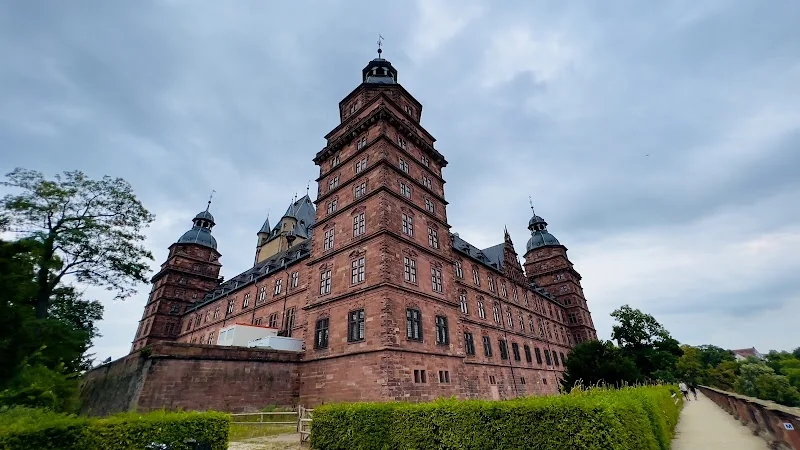
Aschaffenburg
Schloßpl. 4, 63739 Aschaffenburg, Deutschland
Schlossmuseum Aschaffenburg | Opening Hours & History
The Schlossmuseum Aschaffenburg is one of those places where city history, architecture, and culture not only complement each other but also reinforce one another. It is located in the Schloss Johannisburg at Schloßplatz in the center of Aschaffenburg, thus directly connected to one of the most significant castle buildings of the German late Renaissance. Anyone visiting the museum enters not only exhibition rooms but also a historical context in which power, representation, artistic sensibility, and urban identity have interacted for centuries. The Schloss Johannisburg was until 1803 the second residence of the Mainz Electorate Archbishops; the current four-wing structure was built between 1605 and 1614, rebuilt after severe war destruction, and reopened in 1964 with the first exhibition rooms. Today, the building houses not only state collections but also the Municipal Schlossmuseum, which, with its focus on city history, craftsmanship, and regional culture, offers a unique perspective on Aschaffenburg. This connection of castle, museum, and city makes the place so compelling for visitors who want not only to see but also to understand. ([schloesser.bayern.de](https://www.schloesser.bayern.de/deutsch/schloss/objekte/as_joh.htm))
History of Schloss Johannisburg and the Schlossmuseum
The historical depth of the Schlossmuseum begins with Schloss Johannisburg itself. The building was constructed under Elector Archbishop Johann Schweikard von Kronberg and continues to shape the silhouette of the city on the Main to this day. After its destruction in World War II, the exterior had to be restored first before the first exhibition rooms and collections with salvaged furnishings could be reopened in 1964. This history is particularly important for the Schlossmuseum because the house does not function as an isolated museum showcase but as part of a multifaceted monument that has transformed over centuries. The Bavarian Palace Administration describes several central areas in Schloss Johannisburg, including the painting gallery with works by Lucas Cranach the Elder, the castle chapel with Renaissance altar and portal sculptures by Hans Juncker, the paraments room, the cork model collection of ancient buildings, the princely living quarters, and the Municipal Schlossmuseum. This diversity is a crucial advantage for anyone seeking a museum experience that goes beyond a single era. The Schlossmuseum benefits from this environment because visitors can connect their journey through city history with memories of princely representation, spiritual culture, and castle architecture. Aschaffenburg has been the preferred residence of the Mainz Archbishops since the Middle Ages; this explains the dense historical atmosphere of the place. The museum thus represents the transition from courtly history to civic memory culture and makes the development of the city visible in an authentic architectural context. ([schloesser.bayern.de](https://www.schloesser.bayern.de/deutsch/schloss/objekte/as_joh.htm))
Opening Hours, Admission, and Accessibility
Anyone wishing to visit the Schlossmuseum Aschaffenburg should keep an eye on the official opening hours, as they follow a seasonal rhythm. The museum information states that from April to September, it is open daily from 9 AM to 6 PM and from October to March from 10 AM to 4 PM. It is closed on Mondays as well as on January 1, Shrove Tuesday, December 24, December 25, and December 31. This is particularly important for planning a city trip, as the museum is often combined with a tour of Schloss Johannisburg, Schloßplatz, and the old town. The staggered opening hours are also practical for day visitors, as they allow enough time for a visit in the morning or early afternoon. The official museum information also refers to accessible access, which facilitates visits for many target groups and underscores the openness of the house. This is a remarkable advantage, especially for a museum in a historical castle complex. Those visiting with children, elderly relatives, or individuals who require comfortable pathways can therefore plan their visit better. Since temporary changes can always occur, such as special openings or holiday regulations, it is advisable to check the current information again before arrival. The museums of the city of Aschaffenburg also refer to their own website and the event calendar of the Förderverein Stadtmarketing Aschaffenburg e.V. for current dates, guided tours, or special formats. This way, the Schlossmuseum remains not only a place for classic museum days but also for flexible cultural planning around Aschaffenburg. ([museen-aschaffenburg.de](https://www.museen-aschaffenburg.de/dokumente/MSA_Flyer_2019_web.pdf?utm_source=openai))
City History, Craftsmanship, and Special Exhibitions
The content profile of the Schlossmuseum is clearly focused on the history of the city and its cultural development. The official museum documents describe the collection as a presentation of city history, craftsmanship, painting, sculpture, contemporary artists from Aschaffenburg, and special exhibitions. This profile is complemented by the indication that around 1,400 square meters showcase artworks and historical artifacts from six centuries. This range makes the house interesting for different visitor groups: those interested in local history will find a well-founded selection here; those seeking art and applied arts will also discover a wide array; and those interested in the development of Aschaffenburg from a princely site to a modern city will receive a comprehensible thread. The museum description also emphasizes the enhancement of the collections through regularly changing special exhibitions by regional artists and themes of applied arts. This keeps the Schlossmuseum lively and connected to current cultural debates. Particularly exciting is that the collection not only documents courtly representation but also incorporates the city and industrial history of the 19th century. This creates a multifaceted picture of a region that has developed between residence culture, craftsmanship, industry, and modern urban culture. For visitors, this means: A tour through the Schlossmuseum is not a brief glance at selected exhibits but a cultural-historical journey through epochs, materials, and living environments. Those visiting the house experience the city not only as a place but as a historically grown narrative. ([museen-aschaffenburg.de](https://www.museen-aschaffenburg.de/dokumente/MSA_Flyer_2019_web.pdf?utm_source=openai))
Directions and Parking at Schloßplatz
The location of the Schlossmuseum is one of its greatest practical advantages. The address Schloßplatz 4 in 63739 Aschaffenburg leads visitors directly to the historical center, allowing the museum visit to be easily combined with a walk through the old town or with other sights. The city parking overview indicates that the parking lot at Schloßplatz has 27 parking spaces; additionally, Schloßplatz is also listed as a bus parking area for a maximum of two buses. This is particularly interesting for groups, school classes, or guided tours, as access can be organized relatively easily. At the same time, the location in the heart of the city shows that the Schlossmuseum is not a remote specialized place but part of a vibrant city center. Other cultural and recreational spots are in close proximity, making the visit easy to integrate into a longer stay. Aschaffenburg particularly benefits from the short distance between the castle, old town, and the banks of the Main: The way to the museum is not only a practical transfer but also part of the city experience. Those arriving by car should consider the limited number of parking spaces and plan enough time for parking search during higher visitor traffic. The bus arrangement at Schloßplatz is helpful for groups, while individual visitors are advised to arrive early or use other central parking options in the city. This way, the visit remains relaxed, and the historical location of the castle can have an effect from the very beginning. ([mein.aschaffenburg.de](https://mein.aschaffenburg.de/schlossmuseum/))
Guided Tours, Event Calendar, and Practical Visit Tips
The Schlossmuseum is not only a place for quiet contemplation but also a starting point for changing cultural programs and complementary experiences. The city website explicitly refers to the detailed event calendar of the Förderverein Stadtmarketing Aschaffenburg e.V., which shows that regular dates, activities, and cultural offerings are organized around the museum. This is important for many guests, as it makes a museum visit more manageable and simultaneously more varied. Those wishing to delve deeper into history can meaningfully connect a tour with the further castle ensemble, as Schloss Johannisburg includes, in addition to the Schlossmuseum, other significant areas such as the painting gallery, castle chapel, paraments room, cork model collection, and princely living quarters. The famous cork models of ancient buildings are a highlight that adds additional radiance to the entire castle character and surprises many visitors. The Bavarian Palace Administration describes this collection as the largest of its kind in the world; this makes the stay in the castle environment a journey from city history to antiquity. Practically, this means: Those visiting the Schlossmuseum should bring enough time, as the charm lies not only in individual exhibits but in the interplay of place, architecture, and exhibition. It is also recommended to combine the visit with a walk over Schloßplatz and through the historical center, as this better reveals the location of the museum. Good preparation is also worthwhile for groups, as opening hours, special dates, and seasonal differences can play a role. The Schlossmuseum thus remains a reliable yet lively cultural venue that meets classic museum expectations while also transcending them. ([mein.aschaffenburg.de](https://mein.aschaffenburg.de/schlossmuseum/))
The Schlossmuseum in the Context of the Old Town and the River Main
To understand the Schlossmuseum Aschaffenburg, one should not only view it as a standalone institution but as part of a historical urban space. Schloss Johannisburg is located in the center of the city on the banks of the Main, thus connecting residence history, urban spaces, and landscape. The city of Aschaffenburg describes Schloss Johannisburg as a landmark and also refers in its city portrait to the Pompejanum as a building closely associated with the city. This proximity of the castle, old town, and riverbank makes the location so attractive: A museum visit can be easily combined with a walk through the city center, with photo stops at the castle, and with a break in the historical surroundings. The Schlossmuseum provides the content core, as it tells the history of the city from an art and cultural historical perspective. It shows how a residence city has developed, what role craftsmanship and art played, and how courtly representation became a contemporary place of memory. The special appeal lies in the fact that no abstract city history is conveyed here, but a concrete, spatially experienceable one. Those moving through the castle navigate places that intertwine historical power, collection culture, and civic identity. This is precisely where the lasting fascination of this museum arises: It is a place where one does not just read history but experiences it in space. This makes the Schlossmuseum a strong address for cultural travelers, school classes, architecture enthusiasts, and anyone wishing to learn about Aschaffenburg through its most significant historical sites. ([schloesser.bayern.de](https://www.schloesser.bayern.de/deutsch/schloss/objekte/as_joh.htm))
Sources:
Mehr anzeigenWeniger anzeigen
Schlossmuseum Aschaffenburg | Opening Hours & History
The Schlossmuseum Aschaffenburg is one of those places where city history, architecture, and culture not only complement each other but also reinforce one another. It is located in the Schloss Johannisburg at Schloßplatz in the center of Aschaffenburg, thus directly connected to one of the most significant castle buildings of the German late Renaissance. Anyone visiting the museum enters not only exhibition rooms but also a historical context in which power, representation, artistic sensibility, and urban identity have interacted for centuries. The Schloss Johannisburg was until 1803 the second residence of the Mainz Electorate Archbishops; the current four-wing structure was built between 1605 and 1614, rebuilt after severe war destruction, and reopened in 1964 with the first exhibition rooms. Today, the building houses not only state collections but also the Municipal Schlossmuseum, which, with its focus on city history, craftsmanship, and regional culture, offers a unique perspective on Aschaffenburg. This connection of castle, museum, and city makes the place so compelling for visitors who want not only to see but also to understand. ([schloesser.bayern.de](https://www.schloesser.bayern.de/deutsch/schloss/objekte/as_joh.htm))
History of Schloss Johannisburg and the Schlossmuseum
The historical depth of the Schlossmuseum begins with Schloss Johannisburg itself. The building was constructed under Elector Archbishop Johann Schweikard von Kronberg and continues to shape the silhouette of the city on the Main to this day. After its destruction in World War II, the exterior had to be restored first before the first exhibition rooms and collections with salvaged furnishings could be reopened in 1964. This history is particularly important for the Schlossmuseum because the house does not function as an isolated museum showcase but as part of a multifaceted monument that has transformed over centuries. The Bavarian Palace Administration describes several central areas in Schloss Johannisburg, including the painting gallery with works by Lucas Cranach the Elder, the castle chapel with Renaissance altar and portal sculptures by Hans Juncker, the paraments room, the cork model collection of ancient buildings, the princely living quarters, and the Municipal Schlossmuseum. This diversity is a crucial advantage for anyone seeking a museum experience that goes beyond a single era. The Schlossmuseum benefits from this environment because visitors can connect their journey through city history with memories of princely representation, spiritual culture, and castle architecture. Aschaffenburg has been the preferred residence of the Mainz Archbishops since the Middle Ages; this explains the dense historical atmosphere of the place. The museum thus represents the transition from courtly history to civic memory culture and makes the development of the city visible in an authentic architectural context. ([schloesser.bayern.de](https://www.schloesser.bayern.de/deutsch/schloss/objekte/as_joh.htm))
Opening Hours, Admission, and Accessibility
Anyone wishing to visit the Schlossmuseum Aschaffenburg should keep an eye on the official opening hours, as they follow a seasonal rhythm. The museum information states that from April to September, it is open daily from 9 AM to 6 PM and from October to March from 10 AM to 4 PM. It is closed on Mondays as well as on January 1, Shrove Tuesday, December 24, December 25, and December 31. This is particularly important for planning a city trip, as the museum is often combined with a tour of Schloss Johannisburg, Schloßplatz, and the old town. The staggered opening hours are also practical for day visitors, as they allow enough time for a visit in the morning or early afternoon. The official museum information also refers to accessible access, which facilitates visits for many target groups and underscores the openness of the house. This is a remarkable advantage, especially for a museum in a historical castle complex. Those visiting with children, elderly relatives, or individuals who require comfortable pathways can therefore plan their visit better. Since temporary changes can always occur, such as special openings or holiday regulations, it is advisable to check the current information again before arrival. The museums of the city of Aschaffenburg also refer to their own website and the event calendar of the Förderverein Stadtmarketing Aschaffenburg e.V. for current dates, guided tours, or special formats. This way, the Schlossmuseum remains not only a place for classic museum days but also for flexible cultural planning around Aschaffenburg. ([museen-aschaffenburg.de](https://www.museen-aschaffenburg.de/dokumente/MSA_Flyer_2019_web.pdf?utm_source=openai))
City History, Craftsmanship, and Special Exhibitions
The content profile of the Schlossmuseum is clearly focused on the history of the city and its cultural development. The official museum documents describe the collection as a presentation of city history, craftsmanship, painting, sculpture, contemporary artists from Aschaffenburg, and special exhibitions. This profile is complemented by the indication that around 1,400 square meters showcase artworks and historical artifacts from six centuries. This range makes the house interesting for different visitor groups: those interested in local history will find a well-founded selection here; those seeking art and applied arts will also discover a wide array; and those interested in the development of Aschaffenburg from a princely site to a modern city will receive a comprehensible thread. The museum description also emphasizes the enhancement of the collections through regularly changing special exhibitions by regional artists and themes of applied arts. This keeps the Schlossmuseum lively and connected to current cultural debates. Particularly exciting is that the collection not only documents courtly representation but also incorporates the city and industrial history of the 19th century. This creates a multifaceted picture of a region that has developed between residence culture, craftsmanship, industry, and modern urban culture. For visitors, this means: A tour through the Schlossmuseum is not a brief glance at selected exhibits but a cultural-historical journey through epochs, materials, and living environments. Those visiting the house experience the city not only as a place but as a historically grown narrative. ([museen-aschaffenburg.de](https://www.museen-aschaffenburg.de/dokumente/MSA_Flyer_2019_web.pdf?utm_source=openai))
Directions and Parking at Schloßplatz
The location of the Schlossmuseum is one of its greatest practical advantages. The address Schloßplatz 4 in 63739 Aschaffenburg leads visitors directly to the historical center, allowing the museum visit to be easily combined with a walk through the old town or with other sights. The city parking overview indicates that the parking lot at Schloßplatz has 27 parking spaces; additionally, Schloßplatz is also listed as a bus parking area for a maximum of two buses. This is particularly interesting for groups, school classes, or guided tours, as access can be organized relatively easily. At the same time, the location in the heart of the city shows that the Schlossmuseum is not a remote specialized place but part of a vibrant city center. Other cultural and recreational spots are in close proximity, making the visit easy to integrate into a longer stay. Aschaffenburg particularly benefits from the short distance between the castle, old town, and the banks of the Main: The way to the museum is not only a practical transfer but also part of the city experience. Those arriving by car should consider the limited number of parking spaces and plan enough time for parking search during higher visitor traffic. The bus arrangement at Schloßplatz is helpful for groups, while individual visitors are advised to arrive early or use other central parking options in the city. This way, the visit remains relaxed, and the historical location of the castle can have an effect from the very beginning. ([mein.aschaffenburg.de](https://mein.aschaffenburg.de/schlossmuseum/))
Guided Tours, Event Calendar, and Practical Visit Tips
The Schlossmuseum is not only a place for quiet contemplation but also a starting point for changing cultural programs and complementary experiences. The city website explicitly refers to the detailed event calendar of the Förderverein Stadtmarketing Aschaffenburg e.V., which shows that regular dates, activities, and cultural offerings are organized around the museum. This is important for many guests, as it makes a museum visit more manageable and simultaneously more varied. Those wishing to delve deeper into history can meaningfully connect a tour with the further castle ensemble, as Schloss Johannisburg includes, in addition to the Schlossmuseum, other significant areas such as the painting gallery, castle chapel, paraments room, cork model collection, and princely living quarters. The famous cork models of ancient buildings are a highlight that adds additional radiance to the entire castle character and surprises many visitors. The Bavarian Palace Administration describes this collection as the largest of its kind in the world; this makes the stay in the castle environment a journey from city history to antiquity. Practically, this means: Those visiting the Schlossmuseum should bring enough time, as the charm lies not only in individual exhibits but in the interplay of place, architecture, and exhibition. It is also recommended to combine the visit with a walk over Schloßplatz and through the historical center, as this better reveals the location of the museum. Good preparation is also worthwhile for groups, as opening hours, special dates, and seasonal differences can play a role. The Schlossmuseum thus remains a reliable yet lively cultural venue that meets classic museum expectations while also transcending them. ([mein.aschaffenburg.de](https://mein.aschaffenburg.de/schlossmuseum/))
The Schlossmuseum in the Context of the Old Town and the River Main
To understand the Schlossmuseum Aschaffenburg, one should not only view it as a standalone institution but as part of a historical urban space. Schloss Johannisburg is located in the center of the city on the banks of the Main, thus connecting residence history, urban spaces, and landscape. The city of Aschaffenburg describes Schloss Johannisburg as a landmark and also refers in its city portrait to the Pompejanum as a building closely associated with the city. This proximity of the castle, old town, and riverbank makes the location so attractive: A museum visit can be easily combined with a walk through the city center, with photo stops at the castle, and with a break in the historical surroundings. The Schlossmuseum provides the content core, as it tells the history of the city from an art and cultural historical perspective. It shows how a residence city has developed, what role craftsmanship and art played, and how courtly representation became a contemporary place of memory. The special appeal lies in the fact that no abstract city history is conveyed here, but a concrete, spatially experienceable one. Those moving through the castle navigate places that intertwine historical power, collection culture, and civic identity. This is precisely where the lasting fascination of this museum arises: It is a place where one does not just read history but experiences it in space. This makes the Schlossmuseum a strong address for cultural travelers, school classes, architecture enthusiasts, and anyone wishing to learn about Aschaffenburg through its most significant historical sites. ([schloesser.bayern.de](https://www.schloesser.bayern.de/deutsch/schloss/objekte/as_joh.htm))
Sources:
Schlossmuseum Aschaffenburg | Opening Hours & History
The Schlossmuseum Aschaffenburg is one of those places where city history, architecture, and culture not only complement each other but also reinforce one another. It is located in the Schloss Johannisburg at Schloßplatz in the center of Aschaffenburg, thus directly connected to one of the most significant castle buildings of the German late Renaissance. Anyone visiting the museum enters not only exhibition rooms but also a historical context in which power, representation, artistic sensibility, and urban identity have interacted for centuries. The Schloss Johannisburg was until 1803 the second residence of the Mainz Electorate Archbishops; the current four-wing structure was built between 1605 and 1614, rebuilt after severe war destruction, and reopened in 1964 with the first exhibition rooms. Today, the building houses not only state collections but also the Municipal Schlossmuseum, which, with its focus on city history, craftsmanship, and regional culture, offers a unique perspective on Aschaffenburg. This connection of castle, museum, and city makes the place so compelling for visitors who want not only to see but also to understand. ([schloesser.bayern.de](https://www.schloesser.bayern.de/deutsch/schloss/objekte/as_joh.htm))
History of Schloss Johannisburg and the Schlossmuseum
The historical depth of the Schlossmuseum begins with Schloss Johannisburg itself. The building was constructed under Elector Archbishop Johann Schweikard von Kronberg and continues to shape the silhouette of the city on the Main to this day. After its destruction in World War II, the exterior had to be restored first before the first exhibition rooms and collections with salvaged furnishings could be reopened in 1964. This history is particularly important for the Schlossmuseum because the house does not function as an isolated museum showcase but as part of a multifaceted monument that has transformed over centuries. The Bavarian Palace Administration describes several central areas in Schloss Johannisburg, including the painting gallery with works by Lucas Cranach the Elder, the castle chapel with Renaissance altar and portal sculptures by Hans Juncker, the paraments room, the cork model collection of ancient buildings, the princely living quarters, and the Municipal Schlossmuseum. This diversity is a crucial advantage for anyone seeking a museum experience that goes beyond a single era. The Schlossmuseum benefits from this environment because visitors can connect their journey through city history with memories of princely representation, spiritual culture, and castle architecture. Aschaffenburg has been the preferred residence of the Mainz Archbishops since the Middle Ages; this explains the dense historical atmosphere of the place. The museum thus represents the transition from courtly history to civic memory culture and makes the development of the city visible in an authentic architectural context. ([schloesser.bayern.de](https://www.schloesser.bayern.de/deutsch/schloss/objekte/as_joh.htm))
Opening Hours, Admission, and Accessibility
Anyone wishing to visit the Schlossmuseum Aschaffenburg should keep an eye on the official opening hours, as they follow a seasonal rhythm. The museum information states that from April to September, it is open daily from 9 AM to 6 PM and from October to March from 10 AM to 4 PM. It is closed on Mondays as well as on January 1, Shrove Tuesday, December 24, December 25, and December 31. This is particularly important for planning a city trip, as the museum is often combined with a tour of Schloss Johannisburg, Schloßplatz, and the old town. The staggered opening hours are also practical for day visitors, as they allow enough time for a visit in the morning or early afternoon. The official museum information also refers to accessible access, which facilitates visits for many target groups and underscores the openness of the house. This is a remarkable advantage, especially for a museum in a historical castle complex. Those visiting with children, elderly relatives, or individuals who require comfortable pathways can therefore plan their visit better. Since temporary changes can always occur, such as special openings or holiday regulations, it is advisable to check the current information again before arrival. The museums of the city of Aschaffenburg also refer to their own website and the event calendar of the Förderverein Stadtmarketing Aschaffenburg e.V. for current dates, guided tours, or special formats. This way, the Schlossmuseum remains not only a place for classic museum days but also for flexible cultural planning around Aschaffenburg. ([museen-aschaffenburg.de](https://www.museen-aschaffenburg.de/dokumente/MSA_Flyer_2019_web.pdf?utm_source=openai))
City History, Craftsmanship, and Special Exhibitions
The content profile of the Schlossmuseum is clearly focused on the history of the city and its cultural development. The official museum documents describe the collection as a presentation of city history, craftsmanship, painting, sculpture, contemporary artists from Aschaffenburg, and special exhibitions. This profile is complemented by the indication that around 1,400 square meters showcase artworks and historical artifacts from six centuries. This range makes the house interesting for different visitor groups: those interested in local history will find a well-founded selection here; those seeking art and applied arts will also discover a wide array; and those interested in the development of Aschaffenburg from a princely site to a modern city will receive a comprehensible thread. The museum description also emphasizes the enhancement of the collections through regularly changing special exhibitions by regional artists and themes of applied arts. This keeps the Schlossmuseum lively and connected to current cultural debates. Particularly exciting is that the collection not only documents courtly representation but also incorporates the city and industrial history of the 19th century. This creates a multifaceted picture of a region that has developed between residence culture, craftsmanship, industry, and modern urban culture. For visitors, this means: A tour through the Schlossmuseum is not a brief glance at selected exhibits but a cultural-historical journey through epochs, materials, and living environments. Those visiting the house experience the city not only as a place but as a historically grown narrative. ([museen-aschaffenburg.de](https://www.museen-aschaffenburg.de/dokumente/MSA_Flyer_2019_web.pdf?utm_source=openai))
Directions and Parking at Schloßplatz
The location of the Schlossmuseum is one of its greatest practical advantages. The address Schloßplatz 4 in 63739 Aschaffenburg leads visitors directly to the historical center, allowing the museum visit to be easily combined with a walk through the old town or with other sights. The city parking overview indicates that the parking lot at Schloßplatz has 27 parking spaces; additionally, Schloßplatz is also listed as a bus parking area for a maximum of two buses. This is particularly interesting for groups, school classes, or guided tours, as access can be organized relatively easily. At the same time, the location in the heart of the city shows that the Schlossmuseum is not a remote specialized place but part of a vibrant city center. Other cultural and recreational spots are in close proximity, making the visit easy to integrate into a longer stay. Aschaffenburg particularly benefits from the short distance between the castle, old town, and the banks of the Main: The way to the museum is not only a practical transfer but also part of the city experience. Those arriving by car should consider the limited number of parking spaces and plan enough time for parking search during higher visitor traffic. The bus arrangement at Schloßplatz is helpful for groups, while individual visitors are advised to arrive early or use other central parking options in the city. This way, the visit remains relaxed, and the historical location of the castle can have an effect from the very beginning. ([mein.aschaffenburg.de](https://mein.aschaffenburg.de/schlossmuseum/))
Guided Tours, Event Calendar, and Practical Visit Tips
The Schlossmuseum is not only a place for quiet contemplation but also a starting point for changing cultural programs and complementary experiences. The city website explicitly refers to the detailed event calendar of the Förderverein Stadtmarketing Aschaffenburg e.V., which shows that regular dates, activities, and cultural offerings are organized around the museum. This is important for many guests, as it makes a museum visit more manageable and simultaneously more varied. Those wishing to delve deeper into history can meaningfully connect a tour with the further castle ensemble, as Schloss Johannisburg includes, in addition to the Schlossmuseum, other significant areas such as the painting gallery, castle chapel, paraments room, cork model collection, and princely living quarters. The famous cork models of ancient buildings are a highlight that adds additional radiance to the entire castle character and surprises many visitors. The Bavarian Palace Administration describes this collection as the largest of its kind in the world; this makes the stay in the castle environment a journey from city history to antiquity. Practically, this means: Those visiting the Schlossmuseum should bring enough time, as the charm lies not only in individual exhibits but in the interplay of place, architecture, and exhibition. It is also recommended to combine the visit with a walk over Schloßplatz and through the historical center, as this better reveals the location of the museum. Good preparation is also worthwhile for groups, as opening hours, special dates, and seasonal differences can play a role. The Schlossmuseum thus remains a reliable yet lively cultural venue that meets classic museum expectations while also transcending them. ([mein.aschaffenburg.de](https://mein.aschaffenburg.de/schlossmuseum/))
The Schlossmuseum in the Context of the Old Town and the River Main
To understand the Schlossmuseum Aschaffenburg, one should not only view it as a standalone institution but as part of a historical urban space. Schloss Johannisburg is located in the center of the city on the banks of the Main, thus connecting residence history, urban spaces, and landscape. The city of Aschaffenburg describes Schloss Johannisburg as a landmark and also refers in its city portrait to the Pompejanum as a building closely associated with the city. This proximity of the castle, old town, and riverbank makes the location so attractive: A museum visit can be easily combined with a walk through the city center, with photo stops at the castle, and with a break in the historical surroundings. The Schlossmuseum provides the content core, as it tells the history of the city from an art and cultural historical perspective. It shows how a residence city has developed, what role craftsmanship and art played, and how courtly representation became a contemporary place of memory. The special appeal lies in the fact that no abstract city history is conveyed here, but a concrete, spatially experienceable one. Those moving through the castle navigate places that intertwine historical power, collection culture, and civic identity. This is precisely where the lasting fascination of this museum arises: It is a place where one does not just read history but experiences it in space. This makes the Schlossmuseum a strong address for cultural travelers, school classes, architecture enthusiasts, and anyone wishing to learn about Aschaffenburg through its most significant historical sites. ([schloesser.bayern.de](https://www.schloesser.bayern.de/deutsch/schloss/objekte/as_joh.htm))
Sources:
Frequently Asked Questions
Reviews
No reviews found