
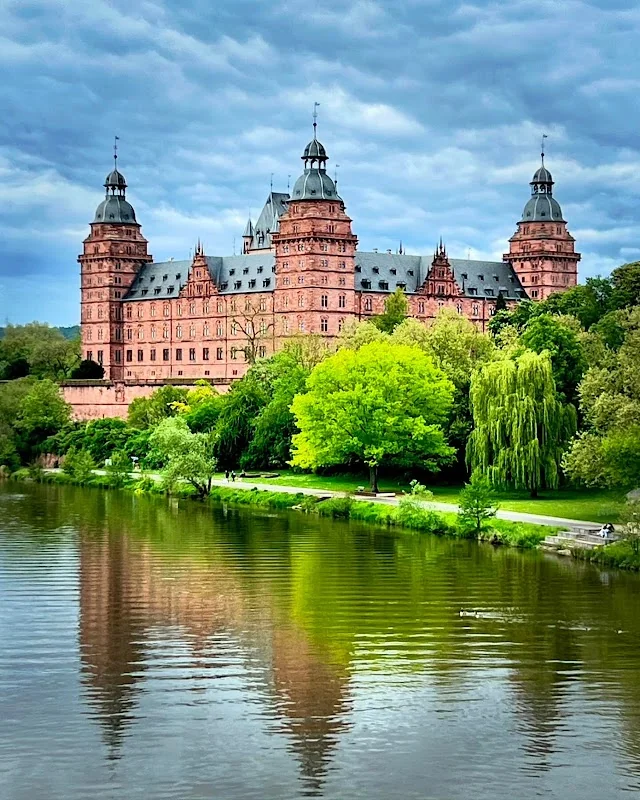
Aschaffenburg
Schloßpl. 4, 63739 Aschaffenburg, Deutschland
Schloss Johannisburg Aschaffenburg | Opening Hours & Admission
Schloss Johannisburg shapes the cityscape of Aschaffenburg with its distinctive towers and facade made of red Main sandstone, located directly on the banks of the Main River. This impressive building of the German Late Renaissance was constructed between 1605 and 1614 under Elector Johann Schweikard von Kronberg and is now considered one of the most significant castle complexes of its era. Managed by the Bavarian Palace Administration, it combines high-quality art collections and unique architecture with impressive exhibition areas: the State Gallery featuring masterpieces by Lucas Cranach the Elder, the castle chapel with the high altar and pulpit by sculptor Hans Juncker, the paraments room with vestments from the former Mainz cathedral treasure, the princely living quarters, and the world's largest cork model collection of ancient Roman buildings. After extensive renovation of the Main wing between 2016 and 2023, central areas have been reopened and made accessible through a modern tour. Thanks to its central location, good accessibility, and rentable spaces from the Ridingersaal to the castle courtyard, Schloss Johannisburg is also a special venue for cultural events, receptions, and outdoor formats with large capacities.
Opening Hours and Admission at Schloss Johannisburg Aschaffenburg
A visit to the castle can be planned year-round – however, with seasonally changing times and clearly regulated entry. From April to October 3, the exhibition rooms are open daily from 9 AM to 6 PM; the last entry is at 5:30 PM. From October 4 to the end of March, shorter hours apply: daily from 10 AM to 4 PM with the last entry at 3:30 PM. The castle is closed on Mondays, except for certain holidays such as January 6, Easter Monday, May 1, Whit Monday, Assumption Day on August 15, German Unity Day on October 3, and All Saints' Day on November 1. It is completely closed on selected days: January 1, Shrove Tuesday, and December 24, 25, and 31. These precise details help to reliably plan the tour, especially during holiday periods or long weekends when demand is particularly high. For pricing, a clear, visitor-friendly structure applies in 2026: The regular admission price is 7 euros, reduced 6 euros. Those who want to gaze over the Main while experiencing ancient residential flair can use the combination ticket: For 10 euros (regular) or 8 euros (reduced), it grants entry to both Schloss Johannisburg and the nearby Pompejanum, the idealized reconstruction of a Roman villa. Children and teenagers up to the age of 18 receive free admission – a strong argument for family outings and school trips. A practical note for travel preparation: Card payments are not possible at the ticket counters of Schloss Johannisburg and Pompejanum; it is therefore advisable to carry cash. Those who want to remain flexible should plan their visit early in the day to avoid waiting times and combine the exhibition with a walk through the castle garden towards Pompejanum. Thanks to free Wi-Fi in the building, visitors also stay well connected and can conveniently look up information about the collections.
Guided Tours of Schloss Johannisburg: How to Enjoy the Interior Rooms
The tour through Schloss Johannisburg can be explored independently – however, it is particularly impressive in the company of knowledgeable guides. The VHS Aschaffenburg's guiding network organizes open tours for individual visitors as well as themed tours and group offers tailored to adults, families, and children. This allows for flexible focus: from the castle chapel with the outstanding high altar by Hans Juncker created between 1609 and 1613, to the classicist princely living quarters, to the treasures of the State Gallery. The world's largest cork model collection of ancient Roman buildings is also included in many tours – a favorite among the audience that vividly demonstrates how accurately architects and artists mapped and scaled the ruins of Rome in the late 18th and early 19th centuries. Groups can book tours at desired times and in various languages; the modular structure allows for adjusting duration and focus according to travel times, age groups, and prior knowledge. The guides not only convey art historical knowledge but also contextualize the eventful history of the complex – from the late medieval predecessor castle to the new construction by Strasbourg architect Georg Ridinger to the modernization in the late 18th century by Emanuel Joseph von Herigoyen and the reconstruction after the destruction of World War II. For people with mobility restrictions, it is worthwhile to check the current information on accessibility and pathways in advance; the large complex with courtyards, stairs, and historical passages is well signposted, although some areas require short detours. Those who want to experience the full program in one day should realistically plan for two to three hours of stay at Schloss Johannisburg, plus the walk to Pompejanum depending on interest, with additional time for its interior rooms. Tip for families: Open tours and action formats for children are regularly advertised and provide a lively approach to art, architecture, and city history.
Castle Museum and State Gallery: Highlights from Cranach to the Parament Room
The collections presented at Schloss Johannisburg combine electoral representation with Bavarian museum history. The centerpiece is the State Gallery of Aschaffenburg, a branch presentation of the Bavarian State Painting Collections. Its core consists of holdings that trace back to the last Mainz Elector and Archbishop Friedrich Karl von Erthal; around 1802/03, the famous paintings by Lucas Cranach the Elder were added. Today, visitors encounter central works from the Cranach workshop as well as views by Christian Georg Schütz that impressively document Mainz and Aschaffenburg in the newly designed rooms. In addition to Old German panel paintings and Flemish landscapes, the hanging reveals art historical connections without overshadowing the aura of the individual works. A special ensemble forms the castle chapel: The monumental altar by Hans Juncker, with 31 alabaster sculptures and nearly 150 relief figures, is one of the highlights of German Late Renaissance sculpture. Portal figures, pulpit, and sculptural details complement a spatial artwork whose lighting and sound installation introduces today's visitors to the theological and liturgical program. The parament room, on the other hand, preserves vestments from the former Mainz cathedral treasure; fine embroideries and fabrics tell of piety culture, diplomatic networks, and courtly representation. The castle tour is rounded off by the princely living quarters, which have been made accessible again in a classicist style after the renovation of the Main wing (2016–2023). Historical furniture, wall hangings, and bourgeois comfort elements show how residential rooms became museum narrative spaces. Together, the areas create a panorama that makes the political shifts of the early 19th century – from secularization to the transition of Aschaffenburg into the Kingdom of Bavaria – as tangible as the restoration efforts of the post-war period.
Cork Model Collection of Ancient Buildings in Rome: Why Rome is Unique Beyond the Alps
A specialty of Schloss Johannisburg is the internationally unique cork model collection, which is considered the largest of its kind in the world. Between 1792 and 1854, court confectioner Carl May and his son Georg May created detailed architectural models of ancient Roman buildings – from cork, a material that convincingly replicates the weathered surfaces of Roman ruins. The collection was founded by the last Mainz Archbishop Carl Theodor von Dalberg; after the transition of Aschaffenburg to the Kingdom of Bavaria in 1814, Crown Prince Ludwig, the later King Ludwig I, purposefully continued the acquisitions. In the current presentation, 45 miniature buildings can be seen, including prominent icons of antiquity such as the Colosseum, the Pantheon, the Pyramid of Cestius, and the triumphal arches of Titus, Septimius Severus, and Constantine. The exhibition makes clear how much the image of ancient Rome in the 18th and 19th centuries was fed by travel reports, surveying studies, and models – and how such objects circulated in court collections. For families and school classes, the cork models provide a vivid bridge between archaeology and architectural history: Floor plans and sections are easy to understand, proportions and spatial effects become tangible, and the juxtaposition of different building types opens views on the technology, religion, and everyday culture of the Romans. Those who combine the exhibition with a visit to the Pompejanum receive an imaginative double tour: While the cork models show Rome's monuments in miniature, the Pompejanum, as an idealized Roman villa, conveys the living environment, colorfulness, and residential culture. This very complementarity underlines the popularity of the combination ticket, which is shared by both houses. For photography enthusiasts, a look at details such as vaults, beams, or wall textures is worthwhile; the material effect of cork particularly stands out in lateral light. Here too, information signs, updated room texts, and a restrained design allow the exhibits to take center stage. Those who want to delve deeper will find literature on the origins of the collection and research on the presentation of Rome beyond the Alps in the museum shop.
Access and Parking at Schloss Johannisburg: Routes, Bus & Parking Spaces
Schloss Johannisburg and the Pompejanum are located in the city center of Aschaffenburg and are therefore excellently connected to public transport and the road network. Those arriving by bus can use the Stadthalle stop; from there, it is just a few steps to the castle courtyard and the main entrance. For those arriving by car, parking spaces are available in close proximity, particularly at Schloßplatz and Suicardusstraße. These spots are ideal if you are planning only a compact tour or additionally want to include the banks of the Main and the castle garden. Schloss and Park Schönbusch are about four kilometers to the west and are a good addition, especially for longer stays – here, the parking lot at Kleine Schönbuschallee 1 is recommended. For groups, it is advisable to time the arrival: Buses let guests disembark near the Stadthalle, and designated areas are available in the city center. Those who combine train and bus benefit from short distances in the city center. The signage is clear, and the topography aids in orientation: The castle sits on a slight hill above the Main, in view of the Pompejanum, which is accessible on foot through the castle garden. For people with limited mobility, current information on accessibility is helpful; a barrier-free access in the vicinity of Schloßberg and Ridingerstraße is explicitly mentioned. Due to its central location, it is advisable to combine the castle visit with other cultural sites in the city – Stiftsbasilika and Stiftsmuseum, city theater, or the riverside promenade. Those traveling in summer can play with daylight: In the evening, the red sandstone glows particularly warmly; in the morning, the interior rooms and courtyards benefit from a calm atmosphere and lower frequency. It is advisable to keep an eye on the parking ticket and reserve generous time slots for tours; the exhibits and room sequences deserve attention and leisure.
Ridingersaal, Castle Chapel & Castle Courtyard: Rooms and Capacities for Events
Schloss Johannisburg is not only a museum but also a versatile event location with historical rooms. The Ridingersaal is suitable for concerts, lectures, exhibitions, receptions, and seated meals. It accommodates up to 199 people (theater seating 198 places; banquet 112 places) and features a permanently installed stage measuring approximately 5.15 x 8 meters. The pure hall area is around 218 square meters; a foyer of about 71 square meters complements the infrastructure. Chairs and tables are available, as well as ancillary rooms such as artist dressing rooms. For larger formats, the Ridingersaal can be combined with the Turmzimmer. Those seeking a festive atmosphere will find an impressive setting in the castle chapel, which is designed for services, Catholic weddings, and concerts for up to 112 people. Representative yet flexible is the stair hall, which allows standing receptions for up to 120 people. The Turmzimmer offers space for up to 70 people for smaller, intimate gatherings. A special asset of the complex is the spacious castle courtyard: Here, open-air formats such as concerts, markets, wine festivals, and receptions for up to 2400 people can be realized – a rare capacity in a historical setting right in the city. The rental and organizational details are handled by the Schloss- und Gartenverwaltung Aschaffenburg; inquiries clarify usage times, setups, and technology. In addition to object-related requirements, it should be noted that all historical rooms are subject to monument protection regulations. Thoughtful logistics and early planning are therefore a must. Those who want to scenically utilize the architectural ambiance benefit from a clear room concept: The Ridingersaal impresses acoustically and visually; the chapel sets spiritual, sculpturally influenced accents; the stair hall is ideal for reception situations with dynamic processes; the courtyard opens the backdrop to the Main, towers, and facades. In total, a modular set of possibilities for culture, science, civic engagement, and festive occasions emerges – always in dialogue with the history of the place.
History and Architecture: Red Sandstone, Castle Church, and Reconstruction
The new construction of Schloss Johannisburg took place between 1605 and 1614 under the Mainz Elector and Archbishop Johann Schweikard von Kronberg. The architect Georg Ridinger, who worked in Strasbourg, was commissioned to create a strictly symmetrical four-wing complex with a square inner courtyard in place of the largely destroyed medieval castle. He integrated the medieval keep as a fifth tower – a distinctive feature that still shapes the silhouette today. The building material, red regional sandstone, gives the complex its unmistakable color and robustness. The exterior and courtyard facades display rich architectural ornamentation; the triangular gables set representative accents. A special eye-catcher is the portal to the castle chapel, highlighted with sculptures by Hans Juncker. At the end of the 18th century, the interior underwent profound changes: Under the Mainz Elector Friedrich Karl Joseph von Erthal, Emanuel Joseph von Herigoyen modernized the rooms in the spirit of classicism. The arcade in the courtyard was removed, a third access was created in the city wing, and a balcony was added above the main portal. World War II brought severe destruction; between 1954 and 1964, the exterior was reconstructed faithfully. Inside, the room layout was adapted for museum and administrative use. Since 2016, a comprehensive renovation has been underway in phases, with an important milestone reached in 2023 with the reopening of the Main wing. Today, the tour includes the State Gallery with works by Lucas Cranach the Elder, the parament room, the castle chapel with the high altar and pulpit by Hans Juncker, the princely living quarters, and the cork model collection. The Hofbibliothek Aschaffenburg also has its place in the castle. These layers of history are visible: Renaissance in stone, classicist modernization, destruction and reconstruction, and the conservational responsibility of the present. Standing in front of the castle church, one perceives the interplay of architecture and sculpture particularly intensely: The monumental altar in the chapel, created between 1609 and 1613, is one of the most precious artworks of its time; a light-sound installation reveals details and connections and makes the space newly experienceable for today's visitors. The historical context extends beyond the residence function: Until 1803, the castle served as the second residence of the Mainz Electors, and after 1814, it belonged to the Kingdom of Bavaria – stations that are reflected in the collections and furnishings.
Schloss Johannisburg and Pompejanum: Two Houses, One Experience
Only a few minutes' walk separate Schloss Johannisburg from the Pompejanum, the idealized reconstruction of a Roman house high above the Main. The spatial proximity also makes the combination ticket content-wise plausible: Those who experience ancient Roman architecture in miniature and as an artistic fascination of the 18th and 19th centuries in the castle find themselves in the colorful everyday life of a Roman villa in the Pompejanum. Both houses are managed by the Bavarian Palace Administration; both are located in the city center and are connected by the castle garden. For a combined visit, it is advisable to stagger the timing: first the large collections in Schloss Johannisburg, then the walk through the garden and the ascent to Pompejanum with a view back at the red sandstone facades of the castle. In summer, this creates appealing light changes between interiors and the open landscape terrace, which brings together Aschaffenburg's urban axes. Travel groups benefit doubly: A single ticket covers two significant attractions that open both art historical and cultural historical perspectives. Last but not least, the central location supports convenient logistics – from parking spaces and public transport to short distances to gastronomy and other museums in the city. Those who want to extend the experience should additionally plan time for Schloss Schönbusch, whose parklands are historically related to Schloss Johannisburg. Overall, a multifaceted cultural program emerges that makes Aschaffenburg visible as a travel destination far beyond the region.
Sources:
- Bavarian Palace Administration – Schloss Johannisburg: Opening Hours, Admission, Overview
- Bavarian Palace Administration – Cork Model Collection at Schloss Johannisburg
- Bavarian Palace Administration – Construction History of Schloss Johannisburg
- Bavarian Palace Administration – Event Rooms at Schloss Johannisburg
- Bavarian Palace Administration – Ridingersaal Details, Capacities, and Stage
- Bavarian Palace Administration – Access and Parking Aschaffenburg, Parking Spaces and Bus
Show moreShow less
Schloss Johannisburg Aschaffenburg | Opening Hours & Admission
Schloss Johannisburg shapes the cityscape of Aschaffenburg with its distinctive towers and facade made of red Main sandstone, located directly on the banks of the Main River. This impressive building of the German Late Renaissance was constructed between 1605 and 1614 under Elector Johann Schweikard von Kronberg and is now considered one of the most significant castle complexes of its era. Managed by the Bavarian Palace Administration, it combines high-quality art collections and unique architecture with impressive exhibition areas: the State Gallery featuring masterpieces by Lucas Cranach the Elder, the castle chapel with the high altar and pulpit by sculptor Hans Juncker, the paraments room with vestments from the former Mainz cathedral treasure, the princely living quarters, and the world's largest cork model collection of ancient Roman buildings. After extensive renovation of the Main wing between 2016 and 2023, central areas have been reopened and made accessible through a modern tour. Thanks to its central location, good accessibility, and rentable spaces from the Ridingersaal to the castle courtyard, Schloss Johannisburg is also a special venue for cultural events, receptions, and outdoor formats with large capacities.
Opening Hours and Admission at Schloss Johannisburg Aschaffenburg
A visit to the castle can be planned year-round – however, with seasonally changing times and clearly regulated entry. From April to October 3, the exhibition rooms are open daily from 9 AM to 6 PM; the last entry is at 5:30 PM. From October 4 to the end of March, shorter hours apply: daily from 10 AM to 4 PM with the last entry at 3:30 PM. The castle is closed on Mondays, except for certain holidays such as January 6, Easter Monday, May 1, Whit Monday, Assumption Day on August 15, German Unity Day on October 3, and All Saints' Day on November 1. It is completely closed on selected days: January 1, Shrove Tuesday, and December 24, 25, and 31. These precise details help to reliably plan the tour, especially during holiday periods or long weekends when demand is particularly high. For pricing, a clear, visitor-friendly structure applies in 2026: The regular admission price is 7 euros, reduced 6 euros. Those who want to gaze over the Main while experiencing ancient residential flair can use the combination ticket: For 10 euros (regular) or 8 euros (reduced), it grants entry to both Schloss Johannisburg and the nearby Pompejanum, the idealized reconstruction of a Roman villa. Children and teenagers up to the age of 18 receive free admission – a strong argument for family outings and school trips. A practical note for travel preparation: Card payments are not possible at the ticket counters of Schloss Johannisburg and Pompejanum; it is therefore advisable to carry cash. Those who want to remain flexible should plan their visit early in the day to avoid waiting times and combine the exhibition with a walk through the castle garden towards Pompejanum. Thanks to free Wi-Fi in the building, visitors also stay well connected and can conveniently look up information about the collections.
Guided Tours of Schloss Johannisburg: How to Enjoy the Interior Rooms
The tour through Schloss Johannisburg can be explored independently – however, it is particularly impressive in the company of knowledgeable guides. The VHS Aschaffenburg's guiding network organizes open tours for individual visitors as well as themed tours and group offers tailored to adults, families, and children. This allows for flexible focus: from the castle chapel with the outstanding high altar by Hans Juncker created between 1609 and 1613, to the classicist princely living quarters, to the treasures of the State Gallery. The world's largest cork model collection of ancient Roman buildings is also included in many tours – a favorite among the audience that vividly demonstrates how accurately architects and artists mapped and scaled the ruins of Rome in the late 18th and early 19th centuries. Groups can book tours at desired times and in various languages; the modular structure allows for adjusting duration and focus according to travel times, age groups, and prior knowledge. The guides not only convey art historical knowledge but also contextualize the eventful history of the complex – from the late medieval predecessor castle to the new construction by Strasbourg architect Georg Ridinger to the modernization in the late 18th century by Emanuel Joseph von Herigoyen and the reconstruction after the destruction of World War II. For people with mobility restrictions, it is worthwhile to check the current information on accessibility and pathways in advance; the large complex with courtyards, stairs, and historical passages is well signposted, although some areas require short detours. Those who want to experience the full program in one day should realistically plan for two to three hours of stay at Schloss Johannisburg, plus the walk to Pompejanum depending on interest, with additional time for its interior rooms. Tip for families: Open tours and action formats for children are regularly advertised and provide a lively approach to art, architecture, and city history.
Castle Museum and State Gallery: Highlights from Cranach to the Parament Room
The collections presented at Schloss Johannisburg combine electoral representation with Bavarian museum history. The centerpiece is the State Gallery of Aschaffenburg, a branch presentation of the Bavarian State Painting Collections. Its core consists of holdings that trace back to the last Mainz Elector and Archbishop Friedrich Karl von Erthal; around 1802/03, the famous paintings by Lucas Cranach the Elder were added. Today, visitors encounter central works from the Cranach workshop as well as views by Christian Georg Schütz that impressively document Mainz and Aschaffenburg in the newly designed rooms. In addition to Old German panel paintings and Flemish landscapes, the hanging reveals art historical connections without overshadowing the aura of the individual works. A special ensemble forms the castle chapel: The monumental altar by Hans Juncker, with 31 alabaster sculptures and nearly 150 relief figures, is one of the highlights of German Late Renaissance sculpture. Portal figures, pulpit, and sculptural details complement a spatial artwork whose lighting and sound installation introduces today's visitors to the theological and liturgical program. The parament room, on the other hand, preserves vestments from the former Mainz cathedral treasure; fine embroideries and fabrics tell of piety culture, diplomatic networks, and courtly representation. The castle tour is rounded off by the princely living quarters, which have been made accessible again in a classicist style after the renovation of the Main wing (2016–2023). Historical furniture, wall hangings, and bourgeois comfort elements show how residential rooms became museum narrative spaces. Together, the areas create a panorama that makes the political shifts of the early 19th century – from secularization to the transition of Aschaffenburg into the Kingdom of Bavaria – as tangible as the restoration efforts of the post-war period.
Cork Model Collection of Ancient Buildings in Rome: Why Rome is Unique Beyond the Alps
A specialty of Schloss Johannisburg is the internationally unique cork model collection, which is considered the largest of its kind in the world. Between 1792 and 1854, court confectioner Carl May and his son Georg May created detailed architectural models of ancient Roman buildings – from cork, a material that convincingly replicates the weathered surfaces of Roman ruins. The collection was founded by the last Mainz Archbishop Carl Theodor von Dalberg; after the transition of Aschaffenburg to the Kingdom of Bavaria in 1814, Crown Prince Ludwig, the later King Ludwig I, purposefully continued the acquisitions. In the current presentation, 45 miniature buildings can be seen, including prominent icons of antiquity such as the Colosseum, the Pantheon, the Pyramid of Cestius, and the triumphal arches of Titus, Septimius Severus, and Constantine. The exhibition makes clear how much the image of ancient Rome in the 18th and 19th centuries was fed by travel reports, surveying studies, and models – and how such objects circulated in court collections. For families and school classes, the cork models provide a vivid bridge between archaeology and architectural history: Floor plans and sections are easy to understand, proportions and spatial effects become tangible, and the juxtaposition of different building types opens views on the technology, religion, and everyday culture of the Romans. Those who combine the exhibition with a visit to the Pompejanum receive an imaginative double tour: While the cork models show Rome's monuments in miniature, the Pompejanum, as an idealized Roman villa, conveys the living environment, colorfulness, and residential culture. This very complementarity underlines the popularity of the combination ticket, which is shared by both houses. For photography enthusiasts, a look at details such as vaults, beams, or wall textures is worthwhile; the material effect of cork particularly stands out in lateral light. Here too, information signs, updated room texts, and a restrained design allow the exhibits to take center stage. Those who want to delve deeper will find literature on the origins of the collection and research on the presentation of Rome beyond the Alps in the museum shop.
Access and Parking at Schloss Johannisburg: Routes, Bus & Parking Spaces
Schloss Johannisburg and the Pompejanum are located in the city center of Aschaffenburg and are therefore excellently connected to public transport and the road network. Those arriving by bus can use the Stadthalle stop; from there, it is just a few steps to the castle courtyard and the main entrance. For those arriving by car, parking spaces are available in close proximity, particularly at Schloßplatz and Suicardusstraße. These spots are ideal if you are planning only a compact tour or additionally want to include the banks of the Main and the castle garden. Schloss and Park Schönbusch are about four kilometers to the west and are a good addition, especially for longer stays – here, the parking lot at Kleine Schönbuschallee 1 is recommended. For groups, it is advisable to time the arrival: Buses let guests disembark near the Stadthalle, and designated areas are available in the city center. Those who combine train and bus benefit from short distances in the city center. The signage is clear, and the topography aids in orientation: The castle sits on a slight hill above the Main, in view of the Pompejanum, which is accessible on foot through the castle garden. For people with limited mobility, current information on accessibility is helpful; a barrier-free access in the vicinity of Schloßberg and Ridingerstraße is explicitly mentioned. Due to its central location, it is advisable to combine the castle visit with other cultural sites in the city – Stiftsbasilika and Stiftsmuseum, city theater, or the riverside promenade. Those traveling in summer can play with daylight: In the evening, the red sandstone glows particularly warmly; in the morning, the interior rooms and courtyards benefit from a calm atmosphere and lower frequency. It is advisable to keep an eye on the parking ticket and reserve generous time slots for tours; the exhibits and room sequences deserve attention and leisure.
Ridingersaal, Castle Chapel & Castle Courtyard: Rooms and Capacities for Events
Schloss Johannisburg is not only a museum but also a versatile event location with historical rooms. The Ridingersaal is suitable for concerts, lectures, exhibitions, receptions, and seated meals. It accommodates up to 199 people (theater seating 198 places; banquet 112 places) and features a permanently installed stage measuring approximately 5.15 x 8 meters. The pure hall area is around 218 square meters; a foyer of about 71 square meters complements the infrastructure. Chairs and tables are available, as well as ancillary rooms such as artist dressing rooms. For larger formats, the Ridingersaal can be combined with the Turmzimmer. Those seeking a festive atmosphere will find an impressive setting in the castle chapel, which is designed for services, Catholic weddings, and concerts for up to 112 people. Representative yet flexible is the stair hall, which allows standing receptions for up to 120 people. The Turmzimmer offers space for up to 70 people for smaller, intimate gatherings. A special asset of the complex is the spacious castle courtyard: Here, open-air formats such as concerts, markets, wine festivals, and receptions for up to 2400 people can be realized – a rare capacity in a historical setting right in the city. The rental and organizational details are handled by the Schloss- und Gartenverwaltung Aschaffenburg; inquiries clarify usage times, setups, and technology. In addition to object-related requirements, it should be noted that all historical rooms are subject to monument protection regulations. Thoughtful logistics and early planning are therefore a must. Those who want to scenically utilize the architectural ambiance benefit from a clear room concept: The Ridingersaal impresses acoustically and visually; the chapel sets spiritual, sculpturally influenced accents; the stair hall is ideal for reception situations with dynamic processes; the courtyard opens the backdrop to the Main, towers, and facades. In total, a modular set of possibilities for culture, science, civic engagement, and festive occasions emerges – always in dialogue with the history of the place.
History and Architecture: Red Sandstone, Castle Church, and Reconstruction
The new construction of Schloss Johannisburg took place between 1605 and 1614 under the Mainz Elector and Archbishop Johann Schweikard von Kronberg. The architect Georg Ridinger, who worked in Strasbourg, was commissioned to create a strictly symmetrical four-wing complex with a square inner courtyard in place of the largely destroyed medieval castle. He integrated the medieval keep as a fifth tower – a distinctive feature that still shapes the silhouette today. The building material, red regional sandstone, gives the complex its unmistakable color and robustness. The exterior and courtyard facades display rich architectural ornamentation; the triangular gables set representative accents. A special eye-catcher is the portal to the castle chapel, highlighted with sculptures by Hans Juncker. At the end of the 18th century, the interior underwent profound changes: Under the Mainz Elector Friedrich Karl Joseph von Erthal, Emanuel Joseph von Herigoyen modernized the rooms in the spirit of classicism. The arcade in the courtyard was removed, a third access was created in the city wing, and a balcony was added above the main portal. World War II brought severe destruction; between 1954 and 1964, the exterior was reconstructed faithfully. Inside, the room layout was adapted for museum and administrative use. Since 2016, a comprehensive renovation has been underway in phases, with an important milestone reached in 2023 with the reopening of the Main wing. Today, the tour includes the State Gallery with works by Lucas Cranach the Elder, the parament room, the castle chapel with the high altar and pulpit by Hans Juncker, the princely living quarters, and the cork model collection. The Hofbibliothek Aschaffenburg also has its place in the castle. These layers of history are visible: Renaissance in stone, classicist modernization, destruction and reconstruction, and the conservational responsibility of the present. Standing in front of the castle church, one perceives the interplay of architecture and sculpture particularly intensely: The monumental altar in the chapel, created between 1609 and 1613, is one of the most precious artworks of its time; a light-sound installation reveals details and connections and makes the space newly experienceable for today's visitors. The historical context extends beyond the residence function: Until 1803, the castle served as the second residence of the Mainz Electors, and after 1814, it belonged to the Kingdom of Bavaria – stations that are reflected in the collections and furnishings.
Schloss Johannisburg and Pompejanum: Two Houses, One Experience
Only a few minutes' walk separate Schloss Johannisburg from the Pompejanum, the idealized reconstruction of a Roman house high above the Main. The spatial proximity also makes the combination ticket content-wise plausible: Those who experience ancient Roman architecture in miniature and as an artistic fascination of the 18th and 19th centuries in the castle find themselves in the colorful everyday life of a Roman villa in the Pompejanum. Both houses are managed by the Bavarian Palace Administration; both are located in the city center and are connected by the castle garden. For a combined visit, it is advisable to stagger the timing: first the large collections in Schloss Johannisburg, then the walk through the garden and the ascent to Pompejanum with a view back at the red sandstone facades of the castle. In summer, this creates appealing light changes between interiors and the open landscape terrace, which brings together Aschaffenburg's urban axes. Travel groups benefit doubly: A single ticket covers two significant attractions that open both art historical and cultural historical perspectives. Last but not least, the central location supports convenient logistics – from parking spaces and public transport to short distances to gastronomy and other museums in the city. Those who want to extend the experience should additionally plan time for Schloss Schönbusch, whose parklands are historically related to Schloss Johannisburg. Overall, a multifaceted cultural program emerges that makes Aschaffenburg visible as a travel destination far beyond the region.
Sources:
- Bavarian Palace Administration – Schloss Johannisburg: Opening Hours, Admission, Overview
- Bavarian Palace Administration – Cork Model Collection at Schloss Johannisburg
- Bavarian Palace Administration – Construction History of Schloss Johannisburg
- Bavarian Palace Administration – Event Rooms at Schloss Johannisburg
- Bavarian Palace Administration – Ridingersaal Details, Capacities, and Stage
- Bavarian Palace Administration – Access and Parking Aschaffenburg, Parking Spaces and Bus
Schloss Johannisburg Aschaffenburg | Opening Hours & Admission
Schloss Johannisburg shapes the cityscape of Aschaffenburg with its distinctive towers and facade made of red Main sandstone, located directly on the banks of the Main River. This impressive building of the German Late Renaissance was constructed between 1605 and 1614 under Elector Johann Schweikard von Kronberg and is now considered one of the most significant castle complexes of its era. Managed by the Bavarian Palace Administration, it combines high-quality art collections and unique architecture with impressive exhibition areas: the State Gallery featuring masterpieces by Lucas Cranach the Elder, the castle chapel with the high altar and pulpit by sculptor Hans Juncker, the paraments room with vestments from the former Mainz cathedral treasure, the princely living quarters, and the world's largest cork model collection of ancient Roman buildings. After extensive renovation of the Main wing between 2016 and 2023, central areas have been reopened and made accessible through a modern tour. Thanks to its central location, good accessibility, and rentable spaces from the Ridingersaal to the castle courtyard, Schloss Johannisburg is also a special venue for cultural events, receptions, and outdoor formats with large capacities.
Opening Hours and Admission at Schloss Johannisburg Aschaffenburg
A visit to the castle can be planned year-round – however, with seasonally changing times and clearly regulated entry. From April to October 3, the exhibition rooms are open daily from 9 AM to 6 PM; the last entry is at 5:30 PM. From October 4 to the end of March, shorter hours apply: daily from 10 AM to 4 PM with the last entry at 3:30 PM. The castle is closed on Mondays, except for certain holidays such as January 6, Easter Monday, May 1, Whit Monday, Assumption Day on August 15, German Unity Day on October 3, and All Saints' Day on November 1. It is completely closed on selected days: January 1, Shrove Tuesday, and December 24, 25, and 31. These precise details help to reliably plan the tour, especially during holiday periods or long weekends when demand is particularly high. For pricing, a clear, visitor-friendly structure applies in 2026: The regular admission price is 7 euros, reduced 6 euros. Those who want to gaze over the Main while experiencing ancient residential flair can use the combination ticket: For 10 euros (regular) or 8 euros (reduced), it grants entry to both Schloss Johannisburg and the nearby Pompejanum, the idealized reconstruction of a Roman villa. Children and teenagers up to the age of 18 receive free admission – a strong argument for family outings and school trips. A practical note for travel preparation: Card payments are not possible at the ticket counters of Schloss Johannisburg and Pompejanum; it is therefore advisable to carry cash. Those who want to remain flexible should plan their visit early in the day to avoid waiting times and combine the exhibition with a walk through the castle garden towards Pompejanum. Thanks to free Wi-Fi in the building, visitors also stay well connected and can conveniently look up information about the collections.
Guided Tours of Schloss Johannisburg: How to Enjoy the Interior Rooms
The tour through Schloss Johannisburg can be explored independently – however, it is particularly impressive in the company of knowledgeable guides. The VHS Aschaffenburg's guiding network organizes open tours for individual visitors as well as themed tours and group offers tailored to adults, families, and children. This allows for flexible focus: from the castle chapel with the outstanding high altar by Hans Juncker created between 1609 and 1613, to the classicist princely living quarters, to the treasures of the State Gallery. The world's largest cork model collection of ancient Roman buildings is also included in many tours – a favorite among the audience that vividly demonstrates how accurately architects and artists mapped and scaled the ruins of Rome in the late 18th and early 19th centuries. Groups can book tours at desired times and in various languages; the modular structure allows for adjusting duration and focus according to travel times, age groups, and prior knowledge. The guides not only convey art historical knowledge but also contextualize the eventful history of the complex – from the late medieval predecessor castle to the new construction by Strasbourg architect Georg Ridinger to the modernization in the late 18th century by Emanuel Joseph von Herigoyen and the reconstruction after the destruction of World War II. For people with mobility restrictions, it is worthwhile to check the current information on accessibility and pathways in advance; the large complex with courtyards, stairs, and historical passages is well signposted, although some areas require short detours. Those who want to experience the full program in one day should realistically plan for two to three hours of stay at Schloss Johannisburg, plus the walk to Pompejanum depending on interest, with additional time for its interior rooms. Tip for families: Open tours and action formats for children are regularly advertised and provide a lively approach to art, architecture, and city history.
Castle Museum and State Gallery: Highlights from Cranach to the Parament Room
The collections presented at Schloss Johannisburg combine electoral representation with Bavarian museum history. The centerpiece is the State Gallery of Aschaffenburg, a branch presentation of the Bavarian State Painting Collections. Its core consists of holdings that trace back to the last Mainz Elector and Archbishop Friedrich Karl von Erthal; around 1802/03, the famous paintings by Lucas Cranach the Elder were added. Today, visitors encounter central works from the Cranach workshop as well as views by Christian Georg Schütz that impressively document Mainz and Aschaffenburg in the newly designed rooms. In addition to Old German panel paintings and Flemish landscapes, the hanging reveals art historical connections without overshadowing the aura of the individual works. A special ensemble forms the castle chapel: The monumental altar by Hans Juncker, with 31 alabaster sculptures and nearly 150 relief figures, is one of the highlights of German Late Renaissance sculpture. Portal figures, pulpit, and sculptural details complement a spatial artwork whose lighting and sound installation introduces today's visitors to the theological and liturgical program. The parament room, on the other hand, preserves vestments from the former Mainz cathedral treasure; fine embroideries and fabrics tell of piety culture, diplomatic networks, and courtly representation. The castle tour is rounded off by the princely living quarters, which have been made accessible again in a classicist style after the renovation of the Main wing (2016–2023). Historical furniture, wall hangings, and bourgeois comfort elements show how residential rooms became museum narrative spaces. Together, the areas create a panorama that makes the political shifts of the early 19th century – from secularization to the transition of Aschaffenburg into the Kingdom of Bavaria – as tangible as the restoration efforts of the post-war period.
Cork Model Collection of Ancient Buildings in Rome: Why Rome is Unique Beyond the Alps
A specialty of Schloss Johannisburg is the internationally unique cork model collection, which is considered the largest of its kind in the world. Between 1792 and 1854, court confectioner Carl May and his son Georg May created detailed architectural models of ancient Roman buildings – from cork, a material that convincingly replicates the weathered surfaces of Roman ruins. The collection was founded by the last Mainz Archbishop Carl Theodor von Dalberg; after the transition of Aschaffenburg to the Kingdom of Bavaria in 1814, Crown Prince Ludwig, the later King Ludwig I, purposefully continued the acquisitions. In the current presentation, 45 miniature buildings can be seen, including prominent icons of antiquity such as the Colosseum, the Pantheon, the Pyramid of Cestius, and the triumphal arches of Titus, Septimius Severus, and Constantine. The exhibition makes clear how much the image of ancient Rome in the 18th and 19th centuries was fed by travel reports, surveying studies, and models – and how such objects circulated in court collections. For families and school classes, the cork models provide a vivid bridge between archaeology and architectural history: Floor plans and sections are easy to understand, proportions and spatial effects become tangible, and the juxtaposition of different building types opens views on the technology, religion, and everyday culture of the Romans. Those who combine the exhibition with a visit to the Pompejanum receive an imaginative double tour: While the cork models show Rome's monuments in miniature, the Pompejanum, as an idealized Roman villa, conveys the living environment, colorfulness, and residential culture. This very complementarity underlines the popularity of the combination ticket, which is shared by both houses. For photography enthusiasts, a look at details such as vaults, beams, or wall textures is worthwhile; the material effect of cork particularly stands out in lateral light. Here too, information signs, updated room texts, and a restrained design allow the exhibits to take center stage. Those who want to delve deeper will find literature on the origins of the collection and research on the presentation of Rome beyond the Alps in the museum shop.
Access and Parking at Schloss Johannisburg: Routes, Bus & Parking Spaces
Schloss Johannisburg and the Pompejanum are located in the city center of Aschaffenburg and are therefore excellently connected to public transport and the road network. Those arriving by bus can use the Stadthalle stop; from there, it is just a few steps to the castle courtyard and the main entrance. For those arriving by car, parking spaces are available in close proximity, particularly at Schloßplatz and Suicardusstraße. These spots are ideal if you are planning only a compact tour or additionally want to include the banks of the Main and the castle garden. Schloss and Park Schönbusch are about four kilometers to the west and are a good addition, especially for longer stays – here, the parking lot at Kleine Schönbuschallee 1 is recommended. For groups, it is advisable to time the arrival: Buses let guests disembark near the Stadthalle, and designated areas are available in the city center. Those who combine train and bus benefit from short distances in the city center. The signage is clear, and the topography aids in orientation: The castle sits on a slight hill above the Main, in view of the Pompejanum, which is accessible on foot through the castle garden. For people with limited mobility, current information on accessibility is helpful; a barrier-free access in the vicinity of Schloßberg and Ridingerstraße is explicitly mentioned. Due to its central location, it is advisable to combine the castle visit with other cultural sites in the city – Stiftsbasilika and Stiftsmuseum, city theater, or the riverside promenade. Those traveling in summer can play with daylight: In the evening, the red sandstone glows particularly warmly; in the morning, the interior rooms and courtyards benefit from a calm atmosphere and lower frequency. It is advisable to keep an eye on the parking ticket and reserve generous time slots for tours; the exhibits and room sequences deserve attention and leisure.
Ridingersaal, Castle Chapel & Castle Courtyard: Rooms and Capacities for Events
Schloss Johannisburg is not only a museum but also a versatile event location with historical rooms. The Ridingersaal is suitable for concerts, lectures, exhibitions, receptions, and seated meals. It accommodates up to 199 people (theater seating 198 places; banquet 112 places) and features a permanently installed stage measuring approximately 5.15 x 8 meters. The pure hall area is around 218 square meters; a foyer of about 71 square meters complements the infrastructure. Chairs and tables are available, as well as ancillary rooms such as artist dressing rooms. For larger formats, the Ridingersaal can be combined with the Turmzimmer. Those seeking a festive atmosphere will find an impressive setting in the castle chapel, which is designed for services, Catholic weddings, and concerts for up to 112 people. Representative yet flexible is the stair hall, which allows standing receptions for up to 120 people. The Turmzimmer offers space for up to 70 people for smaller, intimate gatherings. A special asset of the complex is the spacious castle courtyard: Here, open-air formats such as concerts, markets, wine festivals, and receptions for up to 2400 people can be realized – a rare capacity in a historical setting right in the city. The rental and organizational details are handled by the Schloss- und Gartenverwaltung Aschaffenburg; inquiries clarify usage times, setups, and technology. In addition to object-related requirements, it should be noted that all historical rooms are subject to monument protection regulations. Thoughtful logistics and early planning are therefore a must. Those who want to scenically utilize the architectural ambiance benefit from a clear room concept: The Ridingersaal impresses acoustically and visually; the chapel sets spiritual, sculpturally influenced accents; the stair hall is ideal for reception situations with dynamic processes; the courtyard opens the backdrop to the Main, towers, and facades. In total, a modular set of possibilities for culture, science, civic engagement, and festive occasions emerges – always in dialogue with the history of the place.
History and Architecture: Red Sandstone, Castle Church, and Reconstruction
The new construction of Schloss Johannisburg took place between 1605 and 1614 under the Mainz Elector and Archbishop Johann Schweikard von Kronberg. The architect Georg Ridinger, who worked in Strasbourg, was commissioned to create a strictly symmetrical four-wing complex with a square inner courtyard in place of the largely destroyed medieval castle. He integrated the medieval keep as a fifth tower – a distinctive feature that still shapes the silhouette today. The building material, red regional sandstone, gives the complex its unmistakable color and robustness. The exterior and courtyard facades display rich architectural ornamentation; the triangular gables set representative accents. A special eye-catcher is the portal to the castle chapel, highlighted with sculptures by Hans Juncker. At the end of the 18th century, the interior underwent profound changes: Under the Mainz Elector Friedrich Karl Joseph von Erthal, Emanuel Joseph von Herigoyen modernized the rooms in the spirit of classicism. The arcade in the courtyard was removed, a third access was created in the city wing, and a balcony was added above the main portal. World War II brought severe destruction; between 1954 and 1964, the exterior was reconstructed faithfully. Inside, the room layout was adapted for museum and administrative use. Since 2016, a comprehensive renovation has been underway in phases, with an important milestone reached in 2023 with the reopening of the Main wing. Today, the tour includes the State Gallery with works by Lucas Cranach the Elder, the parament room, the castle chapel with the high altar and pulpit by Hans Juncker, the princely living quarters, and the cork model collection. The Hofbibliothek Aschaffenburg also has its place in the castle. These layers of history are visible: Renaissance in stone, classicist modernization, destruction and reconstruction, and the conservational responsibility of the present. Standing in front of the castle church, one perceives the interplay of architecture and sculpture particularly intensely: The monumental altar in the chapel, created between 1609 and 1613, is one of the most precious artworks of its time; a light-sound installation reveals details and connections and makes the space newly experienceable for today's visitors. The historical context extends beyond the residence function: Until 1803, the castle served as the second residence of the Mainz Electors, and after 1814, it belonged to the Kingdom of Bavaria – stations that are reflected in the collections and furnishings.
Schloss Johannisburg and Pompejanum: Two Houses, One Experience
Only a few minutes' walk separate Schloss Johannisburg from the Pompejanum, the idealized reconstruction of a Roman house high above the Main. The spatial proximity also makes the combination ticket content-wise plausible: Those who experience ancient Roman architecture in miniature and as an artistic fascination of the 18th and 19th centuries in the castle find themselves in the colorful everyday life of a Roman villa in the Pompejanum. Both houses are managed by the Bavarian Palace Administration; both are located in the city center and are connected by the castle garden. For a combined visit, it is advisable to stagger the timing: first the large collections in Schloss Johannisburg, then the walk through the garden and the ascent to Pompejanum with a view back at the red sandstone facades of the castle. In summer, this creates appealing light changes between interiors and the open landscape terrace, which brings together Aschaffenburg's urban axes. Travel groups benefit doubly: A single ticket covers two significant attractions that open both art historical and cultural historical perspectives. Last but not least, the central location supports convenient logistics – from parking spaces and public transport to short distances to gastronomy and other museums in the city. Those who want to extend the experience should additionally plan time for Schloss Schönbusch, whose parklands are historically related to Schloss Johannisburg. Overall, a multifaceted cultural program emerges that makes Aschaffenburg visible as a travel destination far beyond the region.
Sources:
- Bavarian Palace Administration – Schloss Johannisburg: Opening Hours, Admission, Overview
- Bavarian Palace Administration – Cork Model Collection at Schloss Johannisburg
- Bavarian Palace Administration – Construction History of Schloss Johannisburg
- Bavarian Palace Administration – Event Rooms at Schloss Johannisburg
- Bavarian Palace Administration – Ridingersaal Details, Capacities, and Stage
- Bavarian Palace Administration – Access and Parking Aschaffenburg, Parking Spaces and Bus
Upcoming Events
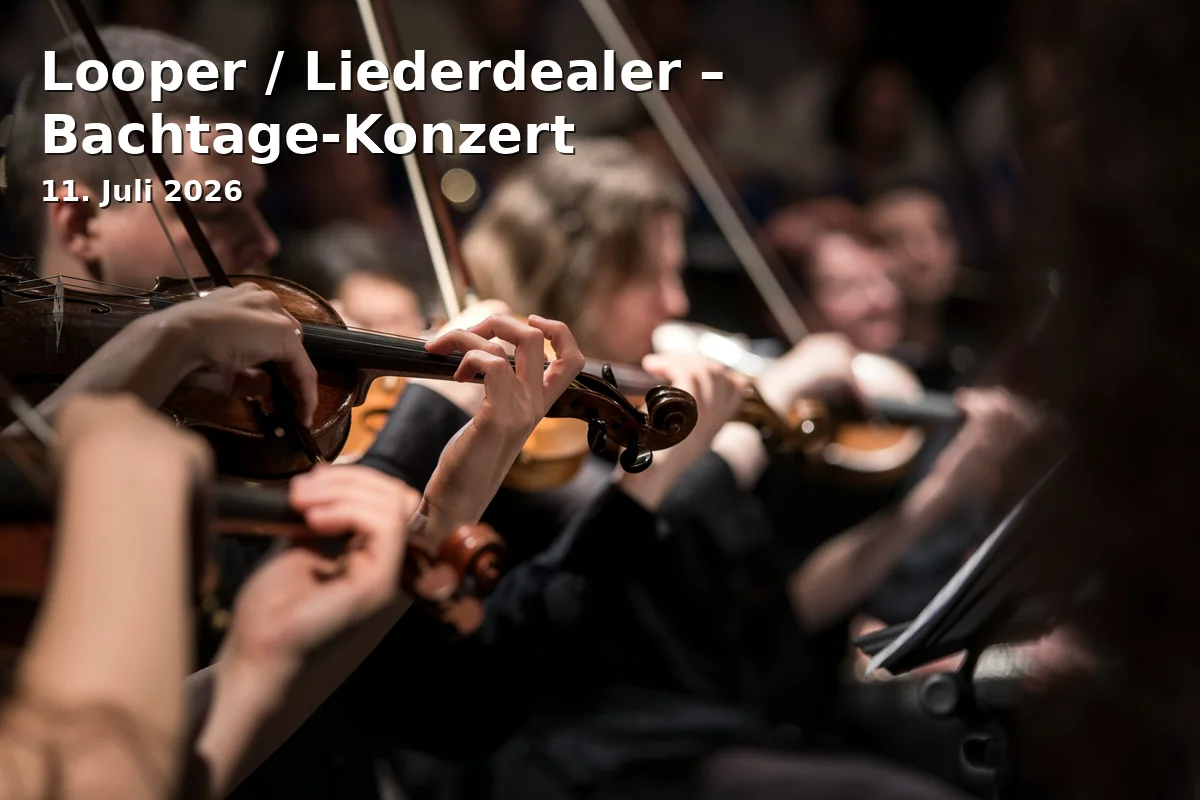
Looper / Liederdealer – Bach Days Concert
Visit the Aschaffenburg Bach Days to experience a unique musical connection of Bach and Bohemian influences.
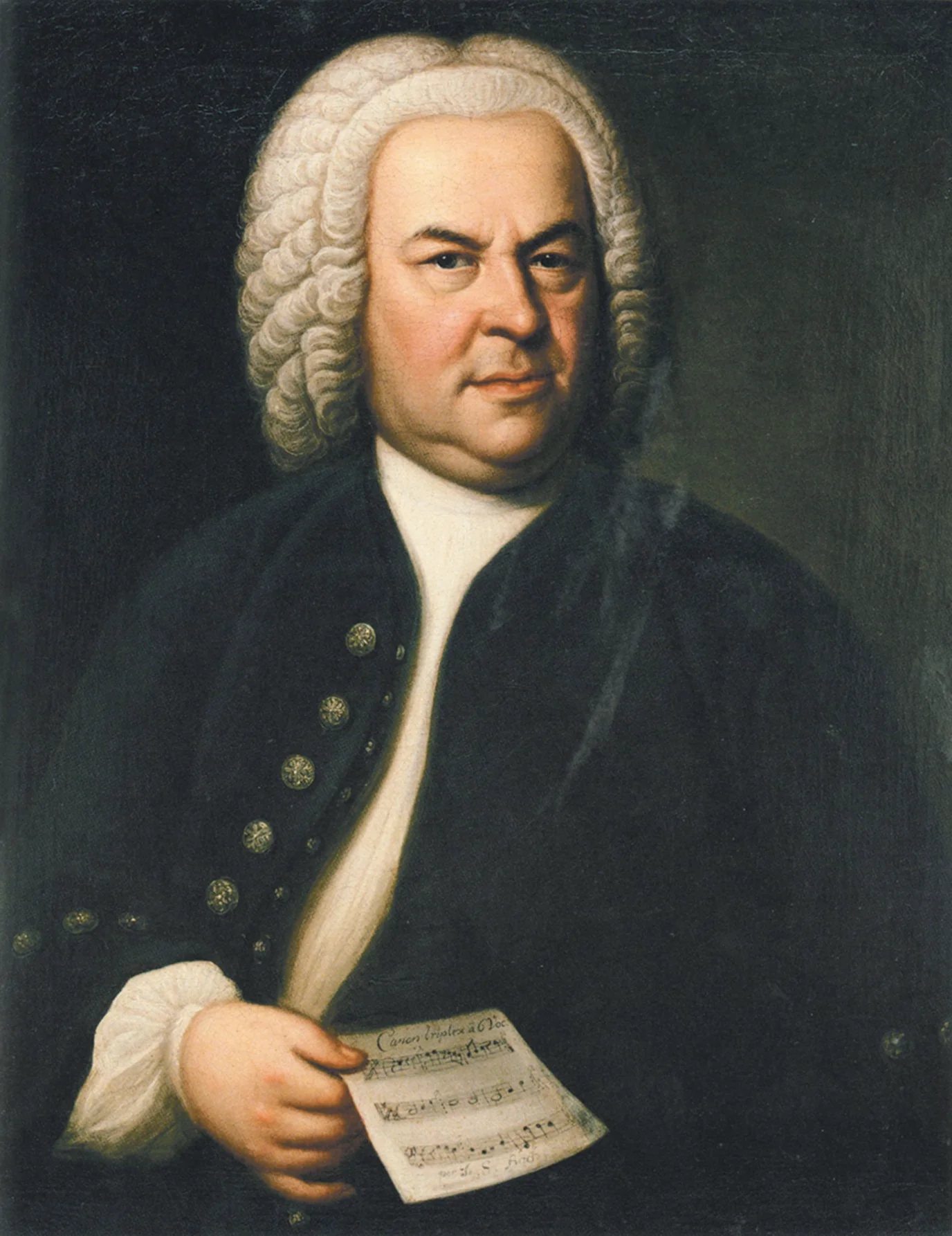
Aschaffenburg Bach Days 2026
Experience the diversity of classical music with “Bach & Bohemia” at the Aschaffenburg Bach Days 2026. A celebration for all music lovers.
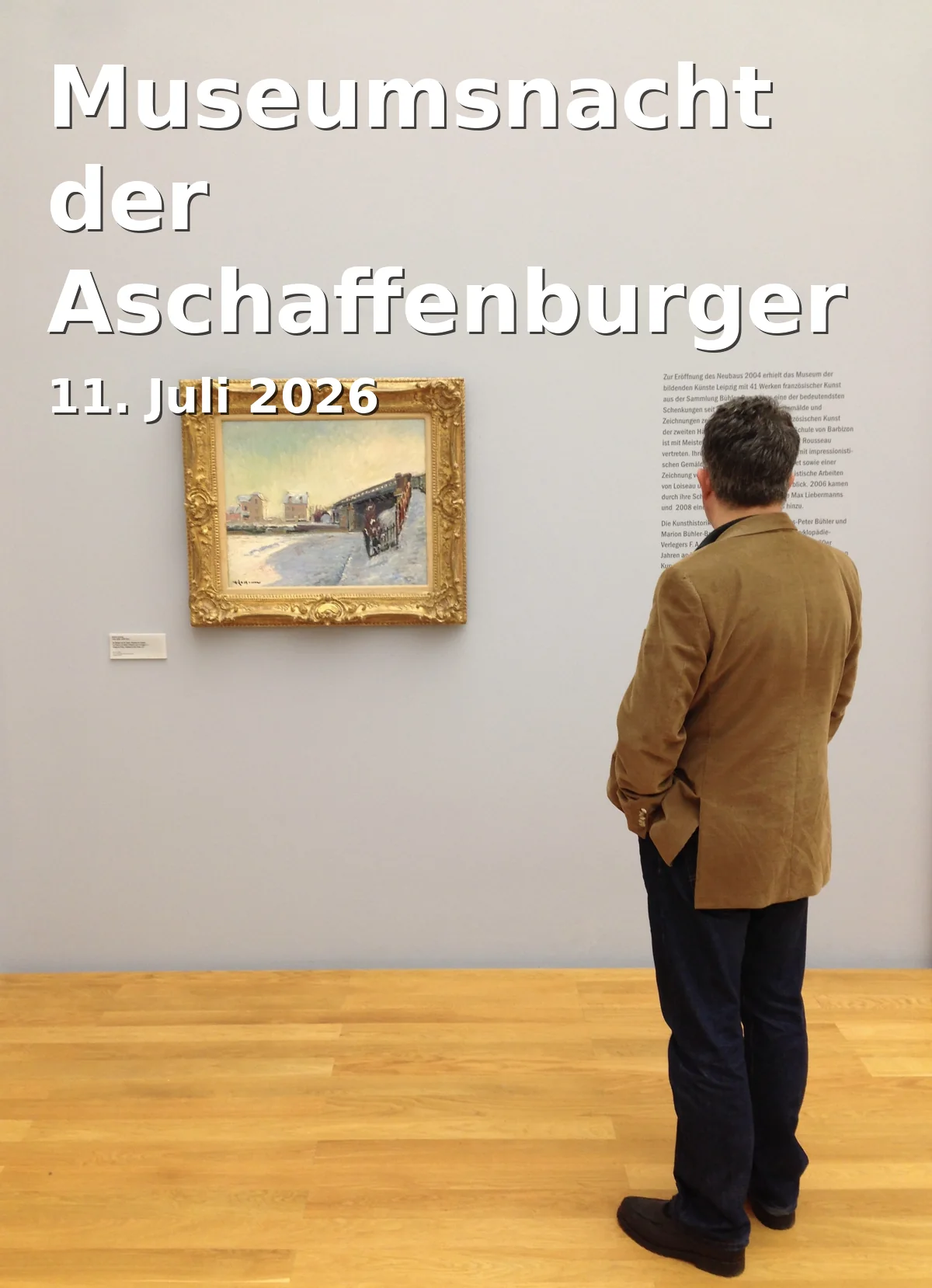
Museum Night of the Aschaffenburg Cultural Days
Don't miss the museum night in Aschaffenburg! Experience art and music late into the night.

Museums Night Aschaffenburg 2026
Let yourself be carried away in Aschaffenburg's Museums Night: exhibitions, live acts, short tours. 11.07.2026, free travel to and from the event in VAB with MN ticket. Experience pure community feeling – secure your ticket. #MuseumsNightAschaffenburg
Frequently Asked Questions
Reviews
No reviews found