
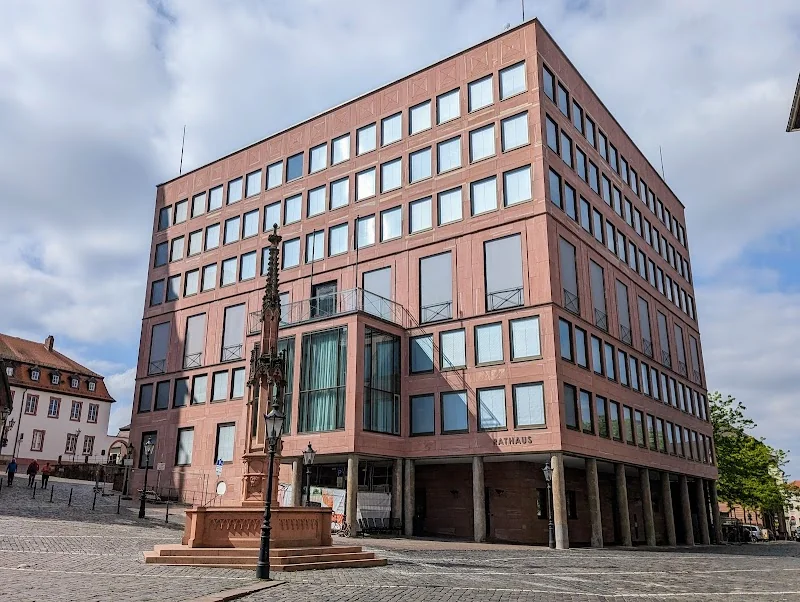
Aschaffenburg
Dalbergstraße 15, 63739 Aschaffenburg, Deutschland
Town Hall City of Aschaffenburg | Opening Hours & Citizens' Office
The Town Hall City of Aschaffenburg at Dalbergstraße 15 is much more than just an administrative address. It is the seat of the city administration and the city council, a central place for citizens' concerns, and at the same time a significant building in the historical cityscape. Those looking for the town hall will find themselves in the heart of the old town on the Stiftsberg, where the romantic city center opens up around the building up to Johannisburg Castle. This mix of function, history, and location makes the place interesting for many inquiries: people want to know the opening hours, where the citizens' office is located, how to book an appointment, and what routes are available for access, parking, and weddings. The town hall thus serves as a service center, wedding venue, and urban landmark. It is particularly helpful for visitors that many processes are clearly organized and that the city provides official information about the citizens' office, appointment booking, and special rooms such as the wedding hall. ([aschaffenburg.de](https://www.aschaffenburg.de/dokumente/Kultur-und-Tourismus/Stadtportrait/Rathaus---Informationen-zu-Diez-Brandi-und-Hermann-Kaspar.pdf))
The search for the Town Hall Aschaffenburg also shows how strongly the place is anchored in the everyday life of the city. The citizens' office consolidates important standard concerns of daily life, while the registry office, appointment allocation, and other offices are located in the same building complex. At the same time, the building has an architectural and historical dimension that goes far beyond a typical office. The old town hall was destroyed in World War II, after which a new building was constructed that continues to shape the city's identity today. In the official city description, the town hall is highlighted as the center of urban administration and as part of the romantic old town. For this reason, thorough orientation is worthwhile: those who come here want not only to complete a form but often also to understand how the place functions, where to arrive, how to park, and what makes this building special. ([aschaffenburg.de](https://www.aschaffenburg.de/dokumente/Kultur-und-Tourismus/Stadtportrait/Kinderrathaus_web.pdf))
Opening Hours of the Town Hall and Appointment Booking
For many visitors, the most important question is first about the opening hours of the citizens' office in the town hall. Officially, the citizens' office is open on Mondays, Wednesdays, and Fridays from 07:30 to 13:00. On Tuesdays and Thursdays, longer service hours apply until 17:30. Additionally, the city points out that appointments in the town hall can be made starting at 07:30 and that two terminals for appointment booking are available on the ground floor. One terminal is even located in the entrance area, allowing appointments to be booked independently of regular opening hours. This structure is very practical for visitors as it alleviates congestion and makes the stay more manageable. Anyone wishing to address a concern at the citizens' office should also note that without an appointment, no processing will take place. This clear appointment logic is particularly relevant for search behavior regarding opening hours, appointment booking, and the citizens' office. ([aschaffenburg.de](https://www.aschaffenburg.de/Verwaltung/Dienststellen-von-A-Z/Buergeramt/?utm_source=openai))
General accessibility is also important for planning visits. The city states that general service hours are Monday to Thursday from 08:00 to 16:00 and Friday from 08:00 to 13:00. If someone is unsure whether the citizens' office is responsible for a specific concern, they can contact the city’s telephone center. It is also practical that citizens can start the appointment process not only on the computer but also directly on site. The town hall is thus an example of a modern administrative location that combines digital and analog access. For SEO inquiries such as opening hours Town Hall Aschaffenburg, citizens' office appointments, or Town Hall Aschaffenburg appointment booking, this combination of fixed service hours and flexible booking is crucial. Those who need to come early in the morning or require a longer appointment in the afternoon can specifically adjust the times to their own concerns. Therefore, especially for personal documents, inquiries, or registration issues, it is always worthwhile to take a quick look at the current appointment process of the city. ([aschaffenburg.de](https://www.aschaffenburg.de/termine%2C))
Citizens' Office, Registry Office, and Digital Services in the Town Hall
The Town Hall City of Aschaffenburg is in high demand primarily because many citizens' concerns are consolidated here. According to the city, the citizens' office handles matters such as registration, identity card and passport issuance, vehicle registration, desired license plates, police clearance certificates, cultural passes, certifications, and resident parking permits. The authority also mentions further responsibilities such as residence permits, registration certificates, or eID cards. For users, this means: Many tasks can be completed in one building without having to visit various offices in the city. This significantly increases the practical value of the location and explains why there are frequent searches for citizens' office, opening hours, and appointment booking. In daily use, the town hall is therefore not only a symbolic address but a highly frequented service point for various life situations. ([aschaffenburg.de](https://www.aschaffenburg.de/Buergerbuero?utm_source=openai))
The registry office is also located at Dalbergstraße 15. The city points out that registry office matters are usually processed in writing or by phone, and that personal appointments are only necessary when a legally required personal declaration is requested. This is relevant for many inquiries regarding marriage, birth, or death, as the processes become clearer. The wedding hall in the town hall complements this offer with a representative space for weddings. This connects the building's administrative routine with special life moments. Additionally, the digital aspect: Appointment booking works online, via the app cleverQ, and through terminals on site. For content planning around Registry Office Aschaffenburg, appointment booking Town Hall, and Town Hall services, this bundling of services is a central theme because it precisely meets both search intent and actual use. ([aschaffenburg.de](https://www.aschaffenburg.de/termine%2C))
Directions to the Town Hall at Dalbergstraße 15
The location of the town hall is one of the major advantages of the site. The building is located at Dalbergstraße 15 in 63739 Aschaffenburg, and the city describes the romantic old town on the Stiftsberg as an area that extends around the town hall up to Johannisburg Castle. Thus, the town hall is situated in an architecturally significant and historically dense environment. For visitors, this is especially important when a visit to the town hall is to be combined with a stroll through the old town, an appointment at the castle, or a walk down Dalbergstraße. The city explicitly highlights the alleys, half-timbered houses, as well as the pubs and bistros in this area. Therefore, those searching for directions to Town Hall Aschaffenburg or Town Hall Dalbergstraße usually want not only to know the address but also to understand the orientation in the historical center. This is where the location of the building shows its strengths. ([aschaffenburg.de](https://www.aschaffenburg.de/dokumente/Kultur-und-Tourismus/Stadtportrait/Rathaus---Informationen-zu-Diez-Brandi-und-Hermann-Kaspar.pdf))
For practical route planning, it is useful to see the town hall as part of a closely interconnected city center area. It is not isolated but situated in a neighborhood where administration, pedestrian paths, the old town, and culture closely intertwine. The official pages also state that appointments in the town hall can already be made starting at 07:30 and that telephone inquiries can be handled through the city’s central number. This is helpful for anyone aiming for a specific time or wanting to check in advance whether their concern can be processed at the citizens' office. First-time visitors can use the address directly for navigation and orient themselves with the understanding that the town hall is located not at the edge but deliberately in the heart of the urban structure. For search intents such as directions Town Hall Aschaffenburg, address Town Hall Aschaffenburg, or Dalbergstraße 15 Aschaffenburg, this combination of location, accessibility, and urban integration is particularly relevant. ([aschaffenburg.de](https://www.aschaffenburg.de/termine%2C))
Parking at the Town Hall and Wedding Hall
When it comes to parking around the town hall, the official information from the city regarding the wedding hall is particularly enlightening. It states that there is a parking space for the bridal vehicle directly under the wedding hall. Guests are directed to the surrounding parking garages Theaterplatz in Dalbergstraße and Löhergraben as parking options. At the same time, the city notes that due to construction work around the town hall, there are currently no separate parking spaces available for the bridal couple. These details are valuable for users because they do not have to rely on general assumptions but receive concrete guidance. Those planning a wedding or expecting guests can realistically prepare for the parking situation and arrive earlier if necessary. For inquiries regarding parking Town Hall Aschaffenburg or parking lot wedding hall, this official information is particularly important. ([aschaffenburg.de](https://www.aschaffenburg.de/dokumente/Infoblatt-Trausaal.pdf))
Even outside the wedding venue, the parking question around the town hall is a classic search topic. This is due to the fact that the location in the city center is very attractive but also characterized by typical old town conditions in everyday life. Anyone visiting the town hall on their way to an appointment should therefore plan enough time for arrival, especially if several official visits coincide on one day. The official wedding hall note makes it clear that guests should rather use the surrounding parking garages instead of hoping for spontaneous parking spaces. At the same time, the proximity to Theaterplatz and Löhergraben is practical, as both options are located in the immediate city center. For the search intent parking Town Hall Aschaffenburg, it is therefore not only the mere question of a parking space that is relevant but also the realistic assessment of routes, availability, and the current construction situation. Especially for wedding appointments or appointments with guests, these hints should definitely be taken into account. ([aschaffenburg.de](https://www.aschaffenburg.de/dokumente/Infoblatt-Trausaal.pdf))
History, Architecture, and Special Rooms
The town hall has a remarkable history that clearly distinguishes it from an ordinary administrative building. The official brochure of the city explains that the old town hall was destroyed in World War II, necessitating the construction of a new building. The later construction was erected in 1956/57, following an architectural competition won by Professor Diez Brandi. Another city brochure describes the new building as a project from 1956 to 1958 and describes it as a three-part building complex with a seven-story main building, a glass-covered hall, a central section, and a meeting room building. This is important because the building was conceived not only functionally but also urbanistically. The city emphasizes that the town hall in the heart of the old town should be a building worthy of the past, present, and future of the city. This attitude explains why the town hall is still perceived as a defining building today. ([aschaffenburg.de](https://www.aschaffenburg.de/dokumente/Kultur-und-Tourismus/Stadtportrait/Kinderrathaus_web.pdf))
Particularly well-known are the interior decorations by Hermann Kaspar, including murals in the large meeting room and the wedding hall, as well as the central light court with an astronomical clock. The city points out that these works date from 1957 to 1963 and are among the special features of the building. The wedding hall itself is located in a two-story, fully glazed bay window overlooking Stiftsplatz; this spatial effect also makes it an extraordinary place for weddings. The brochure about the town hall also describes an underground connecting corridor between the main building and the large meeting room. Such architectural details show that the town hall is not only administrative space but a carefully composed place. For search queries regarding history Town Hall Aschaffenburg, architecture Town Hall Aschaffenburg, or wedding hall Aschaffenburg, this mix of post-war modernism, art, and city history is particularly relevant. ([aschaffenburg.de](https://www.aschaffenburg.de/dokumente/Kultur-und-Tourismus/Stadtportrait/Kinderrathaus_web.pdf))
Photos, Reviews, and Visit Tips for Planning
The keywords for photos and reviews show that many interested parties want to understand the town hall not only functionally but also visually. This is understandable, as the building is located in a particularly photogenic old town setting and features several motifs, such as its light court, wedding hall, and distinctive facade language, that are suitable for preliminary orientation. The city itself refers in its city portrait to the romantic old town around the town hall, to historical half-timbered houses, and to Dalbergstraße as a vibrant urban space. Therefore, those searching for Town Hall Aschaffenburg photos usually want to understand how the building works in context. Additionally, the wedding hall with its glazed bay window solution and wall paintings remains an interesting space even without an event reference. For visitors, it is sensible to view pictures and experiences as a complement to the official facts, as they do not replace the concrete information about appointments, opening hours, and responsibilities. For this reason, search terms such as photos, reviews, and opening hours should always be considered together. ([aschaffenburg.de](https://www.aschaffenburg.de/dokumente/Kultur-und-Tourismus/Stadtportrait/50_jahre_rathaus.pdf))
With the available Google data, the town hall has a rating of 3.9 stars based on 156 reviews, which serves as an additional orientation signal for many users. However, for actual planning, the official information is decisive: citizens' office only with an appointment, fixed opening hours, digital booking, and clearly designated parking options for the wedding hall. Those who prepare their visit calmly save time and avoid unnecessary trips. This is especially true when multiple concerns arise at once, such as ID, registration issues, and registry office matters. At the same time, a quick look at the historical side of the building is worthwhile, as this contrast makes the place unique: a modern administrative center in a historically and urbanistically significant context. For SEO and for real users, the Town Hall Aschaffenburg is therefore a location that remarkably combines practical information, cultural significance, and visual presence. ([aschaffenburg.de](https://www.aschaffenburg.de/Verwaltung/Dienststellen-von-A-Z/Buergeramt/?utm_source=openai))
Sources:
- City of Aschaffenburg – Citizens' Office and Opening Hours ([aschaffenburg.de](https://www.aschaffenburg.de/Verwaltung/Dienststellen-von-A-Z/Buergeramt/?utm_source=openai))
- City of Aschaffenburg – City Portrait and Town Hall Information ([aschaffenburg.de](https://www.aschaffenburg.de/dokumente/Kultur-und-Tourismus/Stadtportrait/Rathaus---Informationen-zu-Diez-Brandi-und-Hermann-Kaspar.pdf))
- City of Aschaffenburg – Wedding Hall in the Town Hall ([traukalender.aschaffenburg.de](https://traukalender.aschaffenburg.de/de/Trausaal-im-Rathaus-51.html))
- City of Aschaffenburg – Parking in Aschaffenburg ([aschaffenburg.de](https://www.aschaffenburg.de/Leben-in-Aschaffenburg/KFZ-Stra%C3%9Fe-und-Verkehr/Stra%C3%9Fe-Verkehr/Parken-in-Aschaffenburg/))
Mehr anzeigenWeniger anzeigen
Town Hall City of Aschaffenburg | Opening Hours & Citizens' Office
The Town Hall City of Aschaffenburg at Dalbergstraße 15 is much more than just an administrative address. It is the seat of the city administration and the city council, a central place for citizens' concerns, and at the same time a significant building in the historical cityscape. Those looking for the town hall will find themselves in the heart of the old town on the Stiftsberg, where the romantic city center opens up around the building up to Johannisburg Castle. This mix of function, history, and location makes the place interesting for many inquiries: people want to know the opening hours, where the citizens' office is located, how to book an appointment, and what routes are available for access, parking, and weddings. The town hall thus serves as a service center, wedding venue, and urban landmark. It is particularly helpful for visitors that many processes are clearly organized and that the city provides official information about the citizens' office, appointment booking, and special rooms such as the wedding hall. ([aschaffenburg.de](https://www.aschaffenburg.de/dokumente/Kultur-und-Tourismus/Stadtportrait/Rathaus---Informationen-zu-Diez-Brandi-und-Hermann-Kaspar.pdf))
The search for the Town Hall Aschaffenburg also shows how strongly the place is anchored in the everyday life of the city. The citizens' office consolidates important standard concerns of daily life, while the registry office, appointment allocation, and other offices are located in the same building complex. At the same time, the building has an architectural and historical dimension that goes far beyond a typical office. The old town hall was destroyed in World War II, after which a new building was constructed that continues to shape the city's identity today. In the official city description, the town hall is highlighted as the center of urban administration and as part of the romantic old town. For this reason, thorough orientation is worthwhile: those who come here want not only to complete a form but often also to understand how the place functions, where to arrive, how to park, and what makes this building special. ([aschaffenburg.de](https://www.aschaffenburg.de/dokumente/Kultur-und-Tourismus/Stadtportrait/Kinderrathaus_web.pdf))
Opening Hours of the Town Hall and Appointment Booking
For many visitors, the most important question is first about the opening hours of the citizens' office in the town hall. Officially, the citizens' office is open on Mondays, Wednesdays, and Fridays from 07:30 to 13:00. On Tuesdays and Thursdays, longer service hours apply until 17:30. Additionally, the city points out that appointments in the town hall can be made starting at 07:30 and that two terminals for appointment booking are available on the ground floor. One terminal is even located in the entrance area, allowing appointments to be booked independently of regular opening hours. This structure is very practical for visitors as it alleviates congestion and makes the stay more manageable. Anyone wishing to address a concern at the citizens' office should also note that without an appointment, no processing will take place. This clear appointment logic is particularly relevant for search behavior regarding opening hours, appointment booking, and the citizens' office. ([aschaffenburg.de](https://www.aschaffenburg.de/Verwaltung/Dienststellen-von-A-Z/Buergeramt/?utm_source=openai))
General accessibility is also important for planning visits. The city states that general service hours are Monday to Thursday from 08:00 to 16:00 and Friday from 08:00 to 13:00. If someone is unsure whether the citizens' office is responsible for a specific concern, they can contact the city’s telephone center. It is also practical that citizens can start the appointment process not only on the computer but also directly on site. The town hall is thus an example of a modern administrative location that combines digital and analog access. For SEO inquiries such as opening hours Town Hall Aschaffenburg, citizens' office appointments, or Town Hall Aschaffenburg appointment booking, this combination of fixed service hours and flexible booking is crucial. Those who need to come early in the morning or require a longer appointment in the afternoon can specifically adjust the times to their own concerns. Therefore, especially for personal documents, inquiries, or registration issues, it is always worthwhile to take a quick look at the current appointment process of the city. ([aschaffenburg.de](https://www.aschaffenburg.de/termine%2C))
Citizens' Office, Registry Office, and Digital Services in the Town Hall
The Town Hall City of Aschaffenburg is in high demand primarily because many citizens' concerns are consolidated here. According to the city, the citizens' office handles matters such as registration, identity card and passport issuance, vehicle registration, desired license plates, police clearance certificates, cultural passes, certifications, and resident parking permits. The authority also mentions further responsibilities such as residence permits, registration certificates, or eID cards. For users, this means: Many tasks can be completed in one building without having to visit various offices in the city. This significantly increases the practical value of the location and explains why there are frequent searches for citizens' office, opening hours, and appointment booking. In daily use, the town hall is therefore not only a symbolic address but a highly frequented service point for various life situations. ([aschaffenburg.de](https://www.aschaffenburg.de/Buergerbuero?utm_source=openai))
The registry office is also located at Dalbergstraße 15. The city points out that registry office matters are usually processed in writing or by phone, and that personal appointments are only necessary when a legally required personal declaration is requested. This is relevant for many inquiries regarding marriage, birth, or death, as the processes become clearer. The wedding hall in the town hall complements this offer with a representative space for weddings. This connects the building's administrative routine with special life moments. Additionally, the digital aspect: Appointment booking works online, via the app cleverQ, and through terminals on site. For content planning around Registry Office Aschaffenburg, appointment booking Town Hall, and Town Hall services, this bundling of services is a central theme because it precisely meets both search intent and actual use. ([aschaffenburg.de](https://www.aschaffenburg.de/termine%2C))
Directions to the Town Hall at Dalbergstraße 15
The location of the town hall is one of the major advantages of the site. The building is located at Dalbergstraße 15 in 63739 Aschaffenburg, and the city describes the romantic old town on the Stiftsberg as an area that extends around the town hall up to Johannisburg Castle. Thus, the town hall is situated in an architecturally significant and historically dense environment. For visitors, this is especially important when a visit to the town hall is to be combined with a stroll through the old town, an appointment at the castle, or a walk down Dalbergstraße. The city explicitly highlights the alleys, half-timbered houses, as well as the pubs and bistros in this area. Therefore, those searching for directions to Town Hall Aschaffenburg or Town Hall Dalbergstraße usually want not only to know the address but also to understand the orientation in the historical center. This is where the location of the building shows its strengths. ([aschaffenburg.de](https://www.aschaffenburg.de/dokumente/Kultur-und-Tourismus/Stadtportrait/Rathaus---Informationen-zu-Diez-Brandi-und-Hermann-Kaspar.pdf))
For practical route planning, it is useful to see the town hall as part of a closely interconnected city center area. It is not isolated but situated in a neighborhood where administration, pedestrian paths, the old town, and culture closely intertwine. The official pages also state that appointments in the town hall can already be made starting at 07:30 and that telephone inquiries can be handled through the city’s central number. This is helpful for anyone aiming for a specific time or wanting to check in advance whether their concern can be processed at the citizens' office. First-time visitors can use the address directly for navigation and orient themselves with the understanding that the town hall is located not at the edge but deliberately in the heart of the urban structure. For search intents such as directions Town Hall Aschaffenburg, address Town Hall Aschaffenburg, or Dalbergstraße 15 Aschaffenburg, this combination of location, accessibility, and urban integration is particularly relevant. ([aschaffenburg.de](https://www.aschaffenburg.de/termine%2C))
Parking at the Town Hall and Wedding Hall
When it comes to parking around the town hall, the official information from the city regarding the wedding hall is particularly enlightening. It states that there is a parking space for the bridal vehicle directly under the wedding hall. Guests are directed to the surrounding parking garages Theaterplatz in Dalbergstraße and Löhergraben as parking options. At the same time, the city notes that due to construction work around the town hall, there are currently no separate parking spaces available for the bridal couple. These details are valuable for users because they do not have to rely on general assumptions but receive concrete guidance. Those planning a wedding or expecting guests can realistically prepare for the parking situation and arrive earlier if necessary. For inquiries regarding parking Town Hall Aschaffenburg or parking lot wedding hall, this official information is particularly important. ([aschaffenburg.de](https://www.aschaffenburg.de/dokumente/Infoblatt-Trausaal.pdf))
Even outside the wedding venue, the parking question around the town hall is a classic search topic. This is due to the fact that the location in the city center is very attractive but also characterized by typical old town conditions in everyday life. Anyone visiting the town hall on their way to an appointment should therefore plan enough time for arrival, especially if several official visits coincide on one day. The official wedding hall note makes it clear that guests should rather use the surrounding parking garages instead of hoping for spontaneous parking spaces. At the same time, the proximity to Theaterplatz and Löhergraben is practical, as both options are located in the immediate city center. For the search intent parking Town Hall Aschaffenburg, it is therefore not only the mere question of a parking space that is relevant but also the realistic assessment of routes, availability, and the current construction situation. Especially for wedding appointments or appointments with guests, these hints should definitely be taken into account. ([aschaffenburg.de](https://www.aschaffenburg.de/dokumente/Infoblatt-Trausaal.pdf))
History, Architecture, and Special Rooms
The town hall has a remarkable history that clearly distinguishes it from an ordinary administrative building. The official brochure of the city explains that the old town hall was destroyed in World War II, necessitating the construction of a new building. The later construction was erected in 1956/57, following an architectural competition won by Professor Diez Brandi. Another city brochure describes the new building as a project from 1956 to 1958 and describes it as a three-part building complex with a seven-story main building, a glass-covered hall, a central section, and a meeting room building. This is important because the building was conceived not only functionally but also urbanistically. The city emphasizes that the town hall in the heart of the old town should be a building worthy of the past, present, and future of the city. This attitude explains why the town hall is still perceived as a defining building today. ([aschaffenburg.de](https://www.aschaffenburg.de/dokumente/Kultur-und-Tourismus/Stadtportrait/Kinderrathaus_web.pdf))
Particularly well-known are the interior decorations by Hermann Kaspar, including murals in the large meeting room and the wedding hall, as well as the central light court with an astronomical clock. The city points out that these works date from 1957 to 1963 and are among the special features of the building. The wedding hall itself is located in a two-story, fully glazed bay window overlooking Stiftsplatz; this spatial effect also makes it an extraordinary place for weddings. The brochure about the town hall also describes an underground connecting corridor between the main building and the large meeting room. Such architectural details show that the town hall is not only administrative space but a carefully composed place. For search queries regarding history Town Hall Aschaffenburg, architecture Town Hall Aschaffenburg, or wedding hall Aschaffenburg, this mix of post-war modernism, art, and city history is particularly relevant. ([aschaffenburg.de](https://www.aschaffenburg.de/dokumente/Kultur-und-Tourismus/Stadtportrait/Kinderrathaus_web.pdf))
Photos, Reviews, and Visit Tips for Planning
The keywords for photos and reviews show that many interested parties want to understand the town hall not only functionally but also visually. This is understandable, as the building is located in a particularly photogenic old town setting and features several motifs, such as its light court, wedding hall, and distinctive facade language, that are suitable for preliminary orientation. The city itself refers in its city portrait to the romantic old town around the town hall, to historical half-timbered houses, and to Dalbergstraße as a vibrant urban space. Therefore, those searching for Town Hall Aschaffenburg photos usually want to understand how the building works in context. Additionally, the wedding hall with its glazed bay window solution and wall paintings remains an interesting space even without an event reference. For visitors, it is sensible to view pictures and experiences as a complement to the official facts, as they do not replace the concrete information about appointments, opening hours, and responsibilities. For this reason, search terms such as photos, reviews, and opening hours should always be considered together. ([aschaffenburg.de](https://www.aschaffenburg.de/dokumente/Kultur-und-Tourismus/Stadtportrait/50_jahre_rathaus.pdf))
With the available Google data, the town hall has a rating of 3.9 stars based on 156 reviews, which serves as an additional orientation signal for many users. However, for actual planning, the official information is decisive: citizens' office only with an appointment, fixed opening hours, digital booking, and clearly designated parking options for the wedding hall. Those who prepare their visit calmly save time and avoid unnecessary trips. This is especially true when multiple concerns arise at once, such as ID, registration issues, and registry office matters. At the same time, a quick look at the historical side of the building is worthwhile, as this contrast makes the place unique: a modern administrative center in a historically and urbanistically significant context. For SEO and for real users, the Town Hall Aschaffenburg is therefore a location that remarkably combines practical information, cultural significance, and visual presence. ([aschaffenburg.de](https://www.aschaffenburg.de/Verwaltung/Dienststellen-von-A-Z/Buergeramt/?utm_source=openai))
Sources:
- City of Aschaffenburg – Citizens' Office and Opening Hours ([aschaffenburg.de](https://www.aschaffenburg.de/Verwaltung/Dienststellen-von-A-Z/Buergeramt/?utm_source=openai))
- City of Aschaffenburg – City Portrait and Town Hall Information ([aschaffenburg.de](https://www.aschaffenburg.de/dokumente/Kultur-und-Tourismus/Stadtportrait/Rathaus---Informationen-zu-Diez-Brandi-und-Hermann-Kaspar.pdf))
- City of Aschaffenburg – Wedding Hall in the Town Hall ([traukalender.aschaffenburg.de](https://traukalender.aschaffenburg.de/de/Trausaal-im-Rathaus-51.html))
- City of Aschaffenburg – Parking in Aschaffenburg ([aschaffenburg.de](https://www.aschaffenburg.de/Leben-in-Aschaffenburg/KFZ-Stra%C3%9Fe-und-Verkehr/Stra%C3%9Fe-Verkehr/Parken-in-Aschaffenburg/))
Town Hall City of Aschaffenburg | Opening Hours & Citizens' Office
The Town Hall City of Aschaffenburg at Dalbergstraße 15 is much more than just an administrative address. It is the seat of the city administration and the city council, a central place for citizens' concerns, and at the same time a significant building in the historical cityscape. Those looking for the town hall will find themselves in the heart of the old town on the Stiftsberg, where the romantic city center opens up around the building up to Johannisburg Castle. This mix of function, history, and location makes the place interesting for many inquiries: people want to know the opening hours, where the citizens' office is located, how to book an appointment, and what routes are available for access, parking, and weddings. The town hall thus serves as a service center, wedding venue, and urban landmark. It is particularly helpful for visitors that many processes are clearly organized and that the city provides official information about the citizens' office, appointment booking, and special rooms such as the wedding hall. ([aschaffenburg.de](https://www.aschaffenburg.de/dokumente/Kultur-und-Tourismus/Stadtportrait/Rathaus---Informationen-zu-Diez-Brandi-und-Hermann-Kaspar.pdf))
The search for the Town Hall Aschaffenburg also shows how strongly the place is anchored in the everyday life of the city. The citizens' office consolidates important standard concerns of daily life, while the registry office, appointment allocation, and other offices are located in the same building complex. At the same time, the building has an architectural and historical dimension that goes far beyond a typical office. The old town hall was destroyed in World War II, after which a new building was constructed that continues to shape the city's identity today. In the official city description, the town hall is highlighted as the center of urban administration and as part of the romantic old town. For this reason, thorough orientation is worthwhile: those who come here want not only to complete a form but often also to understand how the place functions, where to arrive, how to park, and what makes this building special. ([aschaffenburg.de](https://www.aschaffenburg.de/dokumente/Kultur-und-Tourismus/Stadtportrait/Kinderrathaus_web.pdf))
Opening Hours of the Town Hall and Appointment Booking
For many visitors, the most important question is first about the opening hours of the citizens' office in the town hall. Officially, the citizens' office is open on Mondays, Wednesdays, and Fridays from 07:30 to 13:00. On Tuesdays and Thursdays, longer service hours apply until 17:30. Additionally, the city points out that appointments in the town hall can be made starting at 07:30 and that two terminals for appointment booking are available on the ground floor. One terminal is even located in the entrance area, allowing appointments to be booked independently of regular opening hours. This structure is very practical for visitors as it alleviates congestion and makes the stay more manageable. Anyone wishing to address a concern at the citizens' office should also note that without an appointment, no processing will take place. This clear appointment logic is particularly relevant for search behavior regarding opening hours, appointment booking, and the citizens' office. ([aschaffenburg.de](https://www.aschaffenburg.de/Verwaltung/Dienststellen-von-A-Z/Buergeramt/?utm_source=openai))
General accessibility is also important for planning visits. The city states that general service hours are Monday to Thursday from 08:00 to 16:00 and Friday from 08:00 to 13:00. If someone is unsure whether the citizens' office is responsible for a specific concern, they can contact the city’s telephone center. It is also practical that citizens can start the appointment process not only on the computer but also directly on site. The town hall is thus an example of a modern administrative location that combines digital and analog access. For SEO inquiries such as opening hours Town Hall Aschaffenburg, citizens' office appointments, or Town Hall Aschaffenburg appointment booking, this combination of fixed service hours and flexible booking is crucial. Those who need to come early in the morning or require a longer appointment in the afternoon can specifically adjust the times to their own concerns. Therefore, especially for personal documents, inquiries, or registration issues, it is always worthwhile to take a quick look at the current appointment process of the city. ([aschaffenburg.de](https://www.aschaffenburg.de/termine%2C))
Citizens' Office, Registry Office, and Digital Services in the Town Hall
The Town Hall City of Aschaffenburg is in high demand primarily because many citizens' concerns are consolidated here. According to the city, the citizens' office handles matters such as registration, identity card and passport issuance, vehicle registration, desired license plates, police clearance certificates, cultural passes, certifications, and resident parking permits. The authority also mentions further responsibilities such as residence permits, registration certificates, or eID cards. For users, this means: Many tasks can be completed in one building without having to visit various offices in the city. This significantly increases the practical value of the location and explains why there are frequent searches for citizens' office, opening hours, and appointment booking. In daily use, the town hall is therefore not only a symbolic address but a highly frequented service point for various life situations. ([aschaffenburg.de](https://www.aschaffenburg.de/Buergerbuero?utm_source=openai))
The registry office is also located at Dalbergstraße 15. The city points out that registry office matters are usually processed in writing or by phone, and that personal appointments are only necessary when a legally required personal declaration is requested. This is relevant for many inquiries regarding marriage, birth, or death, as the processes become clearer. The wedding hall in the town hall complements this offer with a representative space for weddings. This connects the building's administrative routine with special life moments. Additionally, the digital aspect: Appointment booking works online, via the app cleverQ, and through terminals on site. For content planning around Registry Office Aschaffenburg, appointment booking Town Hall, and Town Hall services, this bundling of services is a central theme because it precisely meets both search intent and actual use. ([aschaffenburg.de](https://www.aschaffenburg.de/termine%2C))
Directions to the Town Hall at Dalbergstraße 15
The location of the town hall is one of the major advantages of the site. The building is located at Dalbergstraße 15 in 63739 Aschaffenburg, and the city describes the romantic old town on the Stiftsberg as an area that extends around the town hall up to Johannisburg Castle. Thus, the town hall is situated in an architecturally significant and historically dense environment. For visitors, this is especially important when a visit to the town hall is to be combined with a stroll through the old town, an appointment at the castle, or a walk down Dalbergstraße. The city explicitly highlights the alleys, half-timbered houses, as well as the pubs and bistros in this area. Therefore, those searching for directions to Town Hall Aschaffenburg or Town Hall Dalbergstraße usually want not only to know the address but also to understand the orientation in the historical center. This is where the location of the building shows its strengths. ([aschaffenburg.de](https://www.aschaffenburg.de/dokumente/Kultur-und-Tourismus/Stadtportrait/Rathaus---Informationen-zu-Diez-Brandi-und-Hermann-Kaspar.pdf))
For practical route planning, it is useful to see the town hall as part of a closely interconnected city center area. It is not isolated but situated in a neighborhood where administration, pedestrian paths, the old town, and culture closely intertwine. The official pages also state that appointments in the town hall can already be made starting at 07:30 and that telephone inquiries can be handled through the city’s central number. This is helpful for anyone aiming for a specific time or wanting to check in advance whether their concern can be processed at the citizens' office. First-time visitors can use the address directly for navigation and orient themselves with the understanding that the town hall is located not at the edge but deliberately in the heart of the urban structure. For search intents such as directions Town Hall Aschaffenburg, address Town Hall Aschaffenburg, or Dalbergstraße 15 Aschaffenburg, this combination of location, accessibility, and urban integration is particularly relevant. ([aschaffenburg.de](https://www.aschaffenburg.de/termine%2C))
Parking at the Town Hall and Wedding Hall
When it comes to parking around the town hall, the official information from the city regarding the wedding hall is particularly enlightening. It states that there is a parking space for the bridal vehicle directly under the wedding hall. Guests are directed to the surrounding parking garages Theaterplatz in Dalbergstraße and Löhergraben as parking options. At the same time, the city notes that due to construction work around the town hall, there are currently no separate parking spaces available for the bridal couple. These details are valuable for users because they do not have to rely on general assumptions but receive concrete guidance. Those planning a wedding or expecting guests can realistically prepare for the parking situation and arrive earlier if necessary. For inquiries regarding parking Town Hall Aschaffenburg or parking lot wedding hall, this official information is particularly important. ([aschaffenburg.de](https://www.aschaffenburg.de/dokumente/Infoblatt-Trausaal.pdf))
Even outside the wedding venue, the parking question around the town hall is a classic search topic. This is due to the fact that the location in the city center is very attractive but also characterized by typical old town conditions in everyday life. Anyone visiting the town hall on their way to an appointment should therefore plan enough time for arrival, especially if several official visits coincide on one day. The official wedding hall note makes it clear that guests should rather use the surrounding parking garages instead of hoping for spontaneous parking spaces. At the same time, the proximity to Theaterplatz and Löhergraben is practical, as both options are located in the immediate city center. For the search intent parking Town Hall Aschaffenburg, it is therefore not only the mere question of a parking space that is relevant but also the realistic assessment of routes, availability, and the current construction situation. Especially for wedding appointments or appointments with guests, these hints should definitely be taken into account. ([aschaffenburg.de](https://www.aschaffenburg.de/dokumente/Infoblatt-Trausaal.pdf))
History, Architecture, and Special Rooms
The town hall has a remarkable history that clearly distinguishes it from an ordinary administrative building. The official brochure of the city explains that the old town hall was destroyed in World War II, necessitating the construction of a new building. The later construction was erected in 1956/57, following an architectural competition won by Professor Diez Brandi. Another city brochure describes the new building as a project from 1956 to 1958 and describes it as a three-part building complex with a seven-story main building, a glass-covered hall, a central section, and a meeting room building. This is important because the building was conceived not only functionally but also urbanistically. The city emphasizes that the town hall in the heart of the old town should be a building worthy of the past, present, and future of the city. This attitude explains why the town hall is still perceived as a defining building today. ([aschaffenburg.de](https://www.aschaffenburg.de/dokumente/Kultur-und-Tourismus/Stadtportrait/Kinderrathaus_web.pdf))
Particularly well-known are the interior decorations by Hermann Kaspar, including murals in the large meeting room and the wedding hall, as well as the central light court with an astronomical clock. The city points out that these works date from 1957 to 1963 and are among the special features of the building. The wedding hall itself is located in a two-story, fully glazed bay window overlooking Stiftsplatz; this spatial effect also makes it an extraordinary place for weddings. The brochure about the town hall also describes an underground connecting corridor between the main building and the large meeting room. Such architectural details show that the town hall is not only administrative space but a carefully composed place. For search queries regarding history Town Hall Aschaffenburg, architecture Town Hall Aschaffenburg, or wedding hall Aschaffenburg, this mix of post-war modernism, art, and city history is particularly relevant. ([aschaffenburg.de](https://www.aschaffenburg.de/dokumente/Kultur-und-Tourismus/Stadtportrait/Kinderrathaus_web.pdf))
Photos, Reviews, and Visit Tips for Planning
The keywords for photos and reviews show that many interested parties want to understand the town hall not only functionally but also visually. This is understandable, as the building is located in a particularly photogenic old town setting and features several motifs, such as its light court, wedding hall, and distinctive facade language, that are suitable for preliminary orientation. The city itself refers in its city portrait to the romantic old town around the town hall, to historical half-timbered houses, and to Dalbergstraße as a vibrant urban space. Therefore, those searching for Town Hall Aschaffenburg photos usually want to understand how the building works in context. Additionally, the wedding hall with its glazed bay window solution and wall paintings remains an interesting space even without an event reference. For visitors, it is sensible to view pictures and experiences as a complement to the official facts, as they do not replace the concrete information about appointments, opening hours, and responsibilities. For this reason, search terms such as photos, reviews, and opening hours should always be considered together. ([aschaffenburg.de](https://www.aschaffenburg.de/dokumente/Kultur-und-Tourismus/Stadtportrait/50_jahre_rathaus.pdf))
With the available Google data, the town hall has a rating of 3.9 stars based on 156 reviews, which serves as an additional orientation signal for many users. However, for actual planning, the official information is decisive: citizens' office only with an appointment, fixed opening hours, digital booking, and clearly designated parking options for the wedding hall. Those who prepare their visit calmly save time and avoid unnecessary trips. This is especially true when multiple concerns arise at once, such as ID, registration issues, and registry office matters. At the same time, a quick look at the historical side of the building is worthwhile, as this contrast makes the place unique: a modern administrative center in a historically and urbanistically significant context. For SEO and for real users, the Town Hall Aschaffenburg is therefore a location that remarkably combines practical information, cultural significance, and visual presence. ([aschaffenburg.de](https://www.aschaffenburg.de/Verwaltung/Dienststellen-von-A-Z/Buergeramt/?utm_source=openai))
Sources:
- City of Aschaffenburg – Citizens' Office and Opening Hours ([aschaffenburg.de](https://www.aschaffenburg.de/Verwaltung/Dienststellen-von-A-Z/Buergeramt/?utm_source=openai))
- City of Aschaffenburg – City Portrait and Town Hall Information ([aschaffenburg.de](https://www.aschaffenburg.de/dokumente/Kultur-und-Tourismus/Stadtportrait/Rathaus---Informationen-zu-Diez-Brandi-und-Hermann-Kaspar.pdf))
- City of Aschaffenburg – Wedding Hall in the Town Hall ([traukalender.aschaffenburg.de](https://traukalender.aschaffenburg.de/de/Trausaal-im-Rathaus-51.html))
- City of Aschaffenburg – Parking in Aschaffenburg ([aschaffenburg.de](https://www.aschaffenburg.de/Leben-in-Aschaffenburg/KFZ-Stra%C3%9Fe-und-Verkehr/Stra%C3%9Fe-Verkehr/Parken-in-Aschaffenburg/))
Upcoming Events
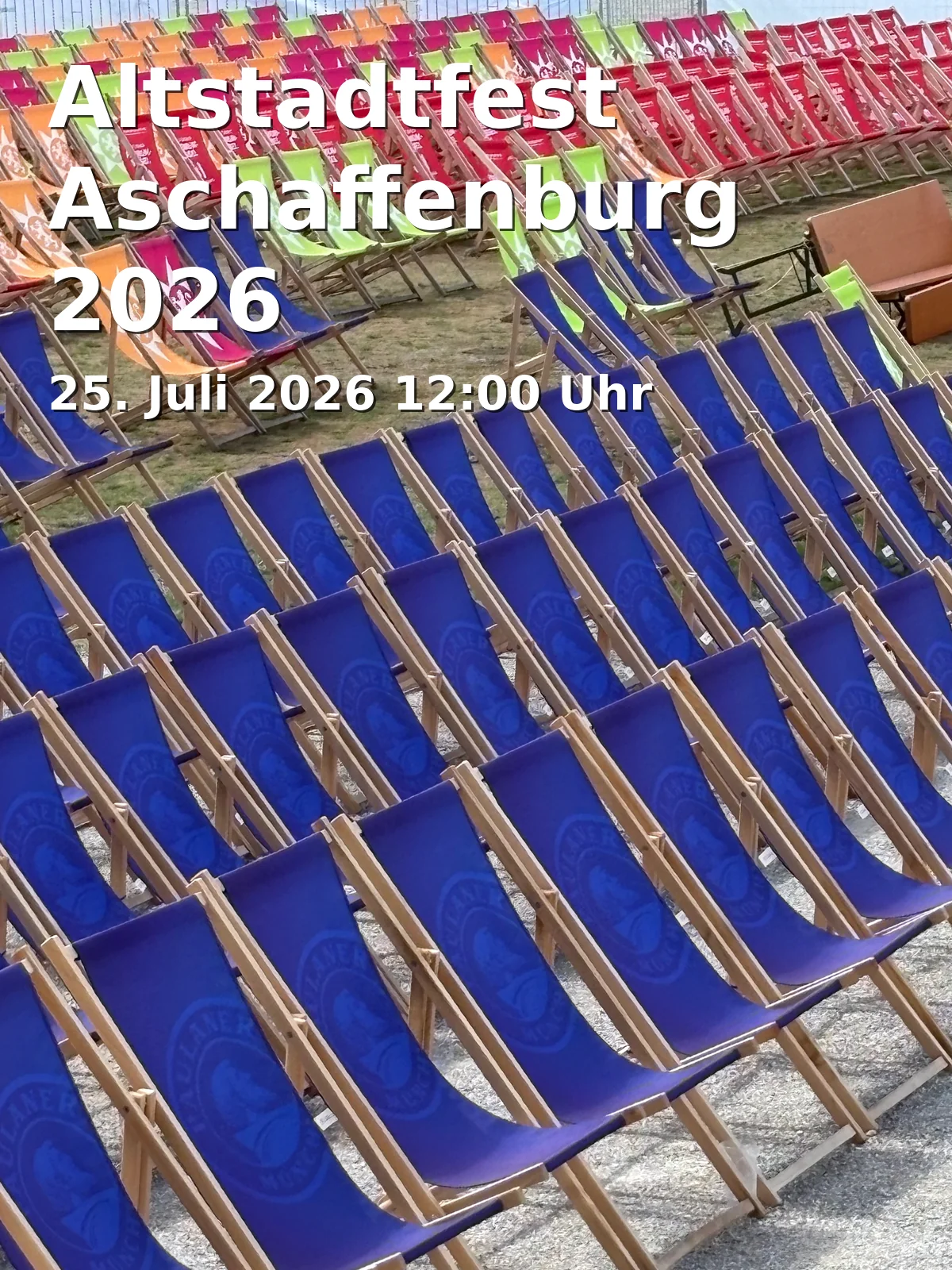
Old Town Festival Aschaffenburg 2026
Two summer days, four stages, a wine mile, and street art: The Old Town Festival Aschaffenburg brings the old town to life. Free entry. #Aschaffenburg #OldTownFestival
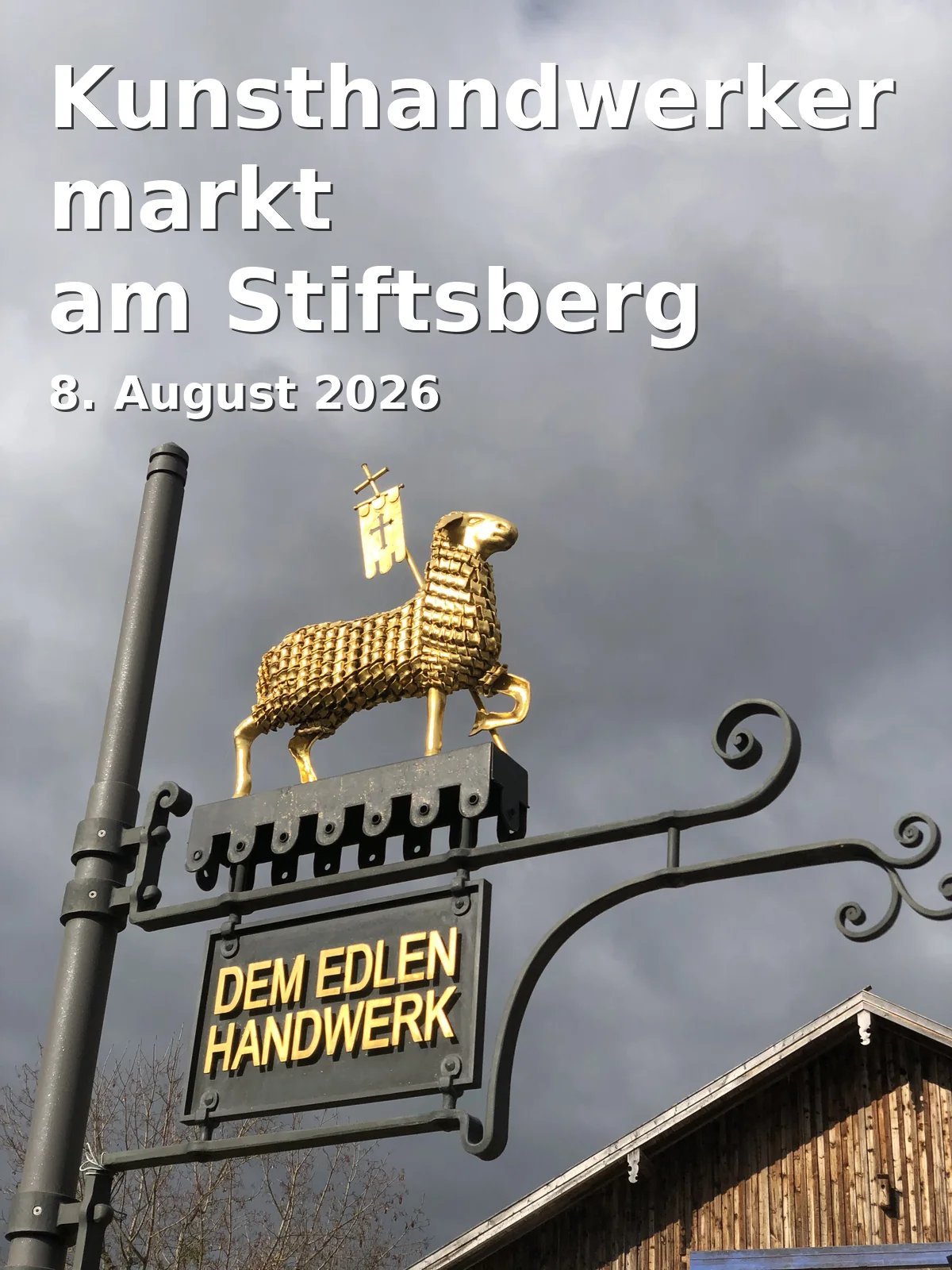
Artisan Market at Stiftsberg
Experience live crafts at Stiftsberg in Aschaffenburg. Jewelry, ceramics, glass, and more. Free admission!
Frequently Asked Questions
Reviews
No reviews found