
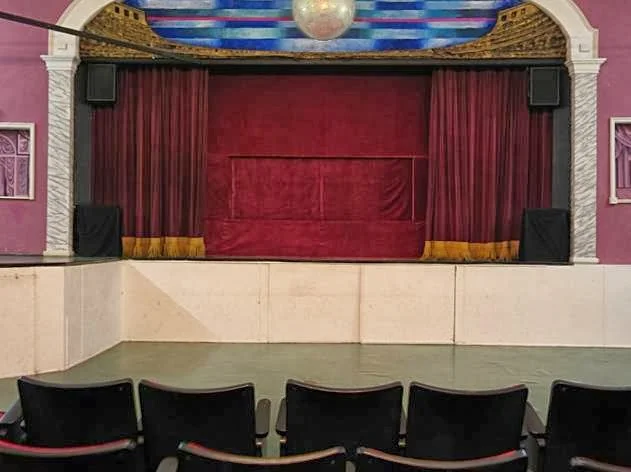
Mainaschaff
Schulstraße 3, 63814 Mainaschaff, Deutschland
Marionette Theater The Puppet Ship | Program & Tickets
The Puppet Ship in Mainaschaff is one of those stages that you not only visit but experience. Located at Schulstraße 3, directly in the Theater in der Krone e. V., the venue combines lovingly crafted puppet theater with a clear local character, much volunteer engagement, and a repertoire that appeals to children, teenagers, and adults. Those looking for a small, personal cultural address in the Aschaffenburg area will find here not an anonymous large stage, but a theater with a personal touch, a workshop feel, and a palpable closeness to the figures on stage. The house describes itself as a puppet theater and marionette theater near Aschaffenburg, right in the Rhine-Main area, and it is precisely this mix of regional anchoring and supra-regional appeal that makes it attractive. The current note on the website also states that there will be a summer break in June 2026 and that the new season will begin in September 2026. This means: The Puppet Ship thrives on its performance schedule throughout the year, but also on the breaks in between, during which building, rehearsing, and preparing take place. ([puppenschiff.de](https://www.puppenschiff.de/))
The search queries surrounding this location mainly revolve around the clear identity of the house, the performance schedule, tickets and prices, as well as directions and parking. This gives rise to the logic of this text: first the program, then the practical orientation, followed by the pieces themselves, the history, and finally insights behind the scenes. The Puppet Ship is not only a place for fairy tales but also for literary works, cabaret evenings, and guest performances by other artists. This creates a cultural venue that is family-friendly on one hand and offers enough depth and uniqueness for adults to avoid stagnating in nostalgia. The impression of craftsmanship and community is particularly strong: the association works on a voluntary basis, taking care of ticket sales, admission, drinks, puppetry, technology, repairs, and new productions. This mix of passion and organization is an essential part of the special character of the Puppet Ship. ([puppenschiff.de](https://www.puppenschiff.de/mitarbeit))
Current Program, Performance Schedule, and Shows
The program of the Puppet Ship is organized seasonally and is continuously updated on the website. For June 2026, the official program page shows no performances and refers to the summer break, while the homepage simultaneously states that the next season begins in September 2026. This is important for visitors because the Puppet Ship does not operate like a daily city theater, but rather like a lovingly curated venue with clear performance blocks and selected dates. Therefore, anyone interested in the current program should first check the program page and then possibly the guest performance page. There, not only the own puppet pieces appear, but also special guest appearances by musicians and other artists. This gives the house an additional content openness that goes beyond classic puppet theater without losing its identity. It is precisely this mix of own programming and guest performances that ensures that the stage never appears one-dimensional. It is a family venue, a cultural address, and an experimental space at the same time. ([puppenschiff.de](https://www.puppenschiff.de/programm))
The repertoire page makes it clear how broad the Puppet Ship's thinking is. The children's pieces include, among others, Cinderella, Puss in Boots, The Caliph Stork, Sleeping Beauty, A Magic Flute for Children, Jamu and his Dromedary, Snow White and Rose Red, as well as Snow White and the Seven Dwarfs. For adults and older teenagers, there are among others, Frankenstein's Hamster, All Quiet on the Western Front, What Makes the Sausage Skin on My Coffin Lid? or Who Stepped in My Mess? Additionally, there are literary adaptations such as 20,000 Leagues Under the Sea, The Old Puppet Play of Doctor Faust, The Odyssey according to Homer, The Snow Queen, A Midsummer Night's Dream, or Macbeth. Even the titles show that the Puppet Ship is not a purely children's theater, but works with fairy tales, classics, humor, and literary adaptations. This is central for search queries regarding the program, performance schedule, and pieces, as the website offers not only dates but also materials and aesthetic directions. Visitors get an early sense of whether they can expect a family fairy tale, a literary puppet play, or a satirical evening. ([puppenschiff.de](https://www.puppenschiff.de/stuecke))
Those looking for the Puppet Ship will not simply find a stage with changing titles, but a clearly recognizable program concept. According to the website, children's pieces are primarily aimed at children aged 6 to 11, while adults mainly see literary adaptations or cabaret comedies. This is very helpful information for families, school groups, and adults who are specifically looking for suitable performances. At the same time, the selection shows that the theater does not treat the classic marionette as a museum object, but as a living narrative form. Particularly with works like Faust, Odyssey, or A Midsummer Night's Dream, one can observe how familiar literature takes on a new tone through puppetry: more direct, more poetic, sometimes more humorous, and sometimes surprisingly concentrated. This range is one reason why the Puppet Ship often appears in search queries alongside terms like pieces, program, and photos. Those searching for images are usually looking for more than just a poster; they are looking for atmosphere. This atmosphere is created here from the repertoire, stage, figures, and the special scale of a small, focused theater. ([puppenschiff.de](https://www.puppenschiff.de/stuecke))
Tickets, Prices, and Reservations without Seat Selection
For ticket organization, the Puppet Ship offers a clear and uncomplicated way. Through online ticket reservation, visitors can reserve tickets for all offered pieces. The reserved tickets are available at the box office until 15 minutes before the performance begins. It is important to note: seat reservations are not accepted. This means that those who book secure entry, but not a fixed seat. For many small theaters, this is a very typical model, and the Puppet Ship communicates it transparently on the reservation page. Additionally, the box office opens 30 minutes before the performance begins, so spontaneous guests also have a fair chance. This handy logic is good for families as it reduces the booking process while still allowing for reliable planning. Especially for a house with limited performances, the combination of online reservation and box office is a sensible middle ground between comfort and spontaneity. ([puppenschiff.de](https://www.puppenschiff.de/kartenbestellung))
The theater also shows itself to be pragmatic regarding the conditions. Discounts are available for children, students, and students, holders of a disability ID, and federal volunteers. Those wishing to order more than ten tickets should contact the Puppet Ship by phone or email. Vouchers are also available and can be exchanged at the box office for reserved tickets. For advance sales, the website also lists fixed locations, including the Hench bakery in Mainaschaff and the Café Krèm in Aschaffenburg. This is especially practical for people who prefer to secure their tickets on-site rather than online. At the same time, the house refers to its contact options and the theater pub Krone, so that the visit to the Puppet Ship can be organized not just as a performance visit, but as a small outing. For the search intent surrounding tickets and prices, it is important that the theater clearly communicates its rules: no seat selection, fixed reservation deadline, early opening box office, and additional advance sales routes. This creates orientation and prevents disappointments on the evening of the performance. ([puppenschiff.de](https://www.puppenschiff.de/kartenbestellung))
Additionally, the personal accessibility of the house is highlighted. The contact page states that phone hours are Thursdays from 6 to 7 PM, and the theater invites questions, requests, or special performances to be addressed directly. This can be helpful for groups, school classes, or larger bookings, as one can not only reserve in a standardized way but also consult directly if needed. This openness fits the character of the association: it is not about distant processing, but about a direct, human form of communication. Therefore, those searching for Puppet Ship tickets, prices, or contact will not find a complicated booking architecture, but a clear process with personal support. This is a real plus for a volunteer-run theater. The ticket page also conveys a high degree of reliability, as it not only explains the reservation but also deadlines, discounts, and vouchers clearly. For those seeking to be sure before a visit, this is a strong signal. ([puppenschiff.de](https://www.puppenschiff.de/kontakt?utm_source=openai))
Directions, Address, and Parking in Mainaschaff
The address of the Puppet Ship is clear and easy to find: Schulstraße 3, 63814 Mainaschaff. The Theater in der Krone e. V. is thus located in the town center or in an area that is easily accessible for visitors from Aschaffenburg and the Rhine-Main area. The official homepage describes the house as a puppet theater near Aschaffenburg, close to Frankfurt, in Bavaria at the border with Hesse. This location explains why search queries often include not only the name of the stage but also the locality addition Mainaschaff or the street Schulstraße. This is particularly relevant for SEO, as users often search for the exact address as soon as they plan a visit. The Puppet Ship meets this need very directly by clearly stating the address on both the contact and directions pages. So, anyone searching for Marionette Theater The Puppet Ship Mainaschaff or for Schulstraße 3 will quickly land at the right stage. ([puppenschiff.de](https://www.puppenschiff.de/))
The directions are explained on the website in two directions. Coming from Würzburg or Frankfurt, one should exit the A3 at Mainaschaff, then drive a short distance on the B8 and turn directly at the Mainaschaff exit. The route then leads past the company Frankenstolz, over Industriestraße and further over Behring-, Robert-Koch- and Stockstädter Straße. Coming from Aschaffenburg, one should follow the signs to Mainaschaff, turn right before the multi-lane highway begins, go under the fast road, and then at the next traffic light head towards Mainaschaff. In both cases, the description ends with the same practical orientation: turn at the town hall or at the anchor point. There are parking options at the anchor point and by the Main. This is the most important information for visitors as it directly answers where to park the car and how to orient oneself in the town. This clarity is especially important for evening performances. The website also makes it clear that the directions are not complicated if one follows the local main axes. ([puppenschiff.de](https://www.puppenschiff.de/anfahrt))
The location in the town is not only practical but also atmospherically interesting. Mainaschaff is located in a conveniently accessible area between the Untermainebene, Vorspessart, Aschaffenburg, and the Rhine-Main area. The Puppet Ship thus benefits from a catchment area that extends beyond the municipal boundaries. Those coming from the region often combine their theater visit with an evening in the surroundings or a visit to the theater pub Krone. This makes the directions as a search topic so important: it is not only about streets but about the entire visitor experience. For people who do not yet know the house, the keywords parking lot, anchor point, Main, B8, and A3 are therefore crucial. The theater does not answer these questions briefly but very concretely, which is particularly valuable for visitor friendliness. In combination with the exact address, this creates a clear picture of a well-accessible, yet consciously small cultural venue with local charm. ([puppenschiff.de](https://www.puppenschiff.de/anfahrt))
Children's Pieces, Adult Pieces, and Literary Adaptations
The Puppet Ship works programmatically in three clear areas: children's pieces, adult pieces, and literary adaptations. According to the official website, the children's pieces are primarily aimed at children aged 6 to 11. This is a precise hint for families, schools, and grandparents looking for a suitable offer. The titles showcase the strength of the house in well-known fairy tale materials that are lovingly and independently staged. Cinderella, Puss in Boots, Sleeping Beauty, Snow White and Rose Red, Snow White and the Seven Dwarfs, or The Caliph Stork are classic tales that take on new colors in puppet form. The Puppet Ship utilizes the familiarity of the stories without copying them bluntly. Rather, a small stage world is created from the well-known fairy tale with its own rhythm, its own imagery, and often a humorous touch. This is interesting for search queries regarding pieces and performance schedules because the name of a piece at this theater often carries the expectation of a certain atmosphere. ([puppenschiff.de](https://www.puppenschiff.de/stuecke))
The adult pieces and literary adaptations make it clear that the Puppet Ship should not be reduced to children's entertainment. Frankenstein's Hamster, All Quiet on the Western Front, What Makes the Sausage Skin on My Coffin Lid? or Who Stepped in My Mess? show a clear inclination towards cabaret and satirical forms. Additionally, there are adaptations of great texts such as The Old Puppet Play of Doctor Faust, The Odyssey according to Homer, A Midsummer Night's Dream, or Macbeth. It becomes evident with these works that the theater works with literary tradition but does not freeze in reverence. In the Faust adaptation, for example, the Puppet Ship version deliberately reaches back to the pre-Goethe period and transforms the material into a mix of burlesque and late medieval mystery play. This is not only stylistically exciting for a puppet theater but also intellectually clever, as the form of the marionette translates large texts into a more precise, concentrated mode of play. Therefore, those searching for the Puppet Ship and its pieces quickly discover that here fairy tales and literature are not separated but thought of side by side and often with wit. ([puppenschiff.de](https://www.puppenschiff.de/stuecke))
The performance durations and age indications also show how carefully the repertoire is managed. The Puppet Ship provides the playing time and target audience for many pieces, which is enormously helpful for planning a theater visit. Cinderella, for example, is a fairy tale for children with a length of about 70 minutes plus intermission; The Old Puppet Play of Doctor Faust is significantly longer and more intended for teenagers and adults. This differentiation is important as it prevents the house from being perceived solely through the term puppet theater. The Puppet Ship is rather a stage where childhood material, literature, and satire overlap. The special appeal arises precisely from this: an evening of fairy tales can also be a craft experience, a classic template can appear in a new scenic language, and a seemingly comedic evening can go surprisingly deep. This is why the repertoire fits so well with search queries containing the terms pieces, program, children, adults, and literature. ([puppenschiff.de](https://www.puppenschiff.de/stuecke/aschenputtel?utm_source=openai))
History, Volunteering, and Behind the Scenes
The history of the Puppet Ship dates back far according to available sources. A community source notes that since 1988, the marionette theater Puppet Ship has been advertising performances in the hall above the Gasthaus Krone. An older press article also describes that the house has been working at its fixed location in Mainaschaff for years and looks back on a long development as a touring theater. This is important for classification because a fixed cultural venue has developed from a mobile theater group. The Puppet Ship is thus not a short-lived project but a grown institution in local cultural life. The connection to the Theater in der Krone e. V. also shows that the stage is organizationally anchored in an association, not in a purely commercial structure. This origin also explains the special tone of many texts: it is about passion, continuity, and improvisational spirit. For search queries regarding history and background, the house thus provides not only a date but the narrative of a long, steadily grown commitment. ([mainaschaff.de](https://www.mainaschaff.de/fileadmin/Dateien/Website/Dateien/01_Unsere-Gemeinde/B.INSEKVU_IMA_a.pdf?utm_source=openai))
Particularly formative is the voluntary character of the theater. The website emphasizes that the Puppet Ship has lived off the engagement of voluntary workers for over 30 years. The members take care of ticket pre-sales, admission, beverage sales, puppetry, stage technology, repairs, rehearsals, and the development of new pieces in the theater's own workshops. The older press article also describes the structure as teamwork without hierarchies and speaks of a bunch of people with different talents, from electrical work to organization to craftsmanship. This craftsmanship core is an essential part of the fascination: the art appears light on stage, but behind it lies considerable organizational and technical effort. For this reason, the website has the section Behind the Scenes. There, not only production steps are explained, but also bloopers during sound recordings are shown, for example, for The Odyssey according to Homer, Cinderella, or The Caliph Stork. Such content is particularly valuable for keyword searches for photos and insights as they allow a rare glimpse into the creation of the performances. The Puppet Ship thus presents itself not only as a finished product but as a workspace. ([puppenschiff.de](https://www.puppenschiff.de/hinter-den-kulissen))
From this perspective, it becomes understandable why the theater can build such a strong bond with its visitors. When a house is supported by voluntary work for years and decades, each performance is also a small community project. This is reflected in the tone of the website, but also in the maintenance of sponsorships, in the workshop culture, and in the willingness to welcome new helpers. The sponsorship gallery documents numerous figures that have already found support and thus refers to a lively, sometimes very personal relationship between the audience and the ensemble. At the same time, the participation page makes it clear that no special prior knowledge is required, but primarily a desire for theater, team spirit, and reliability. Thus, the history of the house connects with its present: from a long tradition of craftsmanship, an open, modern volunteer model emerges. Therefore, those searching for genuine insights behind the scenes will find not only images and outtakes but above all the self-understanding of a theater that perceives its figures, its stage, and its community as interconnected. ([puppenschiff.de](https://www.puppenschiff.de/patenschaften))
Guest Performances, Theater Pub Krone, and Participation
The Puppet Ship is not only a place for puppet pieces but also an open stage for guest performances. The official guest performance page explicitly states that the house opens its stage for musicians and other artists to diversify the program. For search queries regarding program diversity and cultural offerings, this is an important point as it shows that the theater does not only think within its own genre. In addition to puppetry, concerts, cabaret, or other stage formats can also appear here. The guest performance page also lists specific dates, such as a benefit concert against violence against women, an Irish program, and a cabaret evening. This is attractive for visitors as it keeps the stage diverse and extends beyond the puppet world. For the SEO profile, this openness is particularly relevant: the Puppet Ship is not just a puppet theater but a small cultural venue with a changing program. ([puppenschiff.de](https://www.puppenschiff.de/gastspiele))
Additionally, the theater pub Krone is part of the theater experience. The Puppet Ship invites visitors to round off their visit with a stay there; reservations are possible by phone. This note is more than just service, as it shows that the theater evening is thought through further at the house itself. Those arriving before the performance or wanting to stay afterward are thus provided with a place for conversations and breaks. This can make the visit more pleasant for families and groups as the evening does not end abruptly. The immediate spatial proximity between the theater and the pub also strengthens the feeling of a cohesive cultural venue. For those searching for theater pub, stay, or food around the Puppet Ship, this information is particularly helpful. The house thus does not remain limited to the stage space but offers a small overall package of anticipation, performance, and afterglow. ([puppenschiff.de](https://www.puppenschiff.de/))
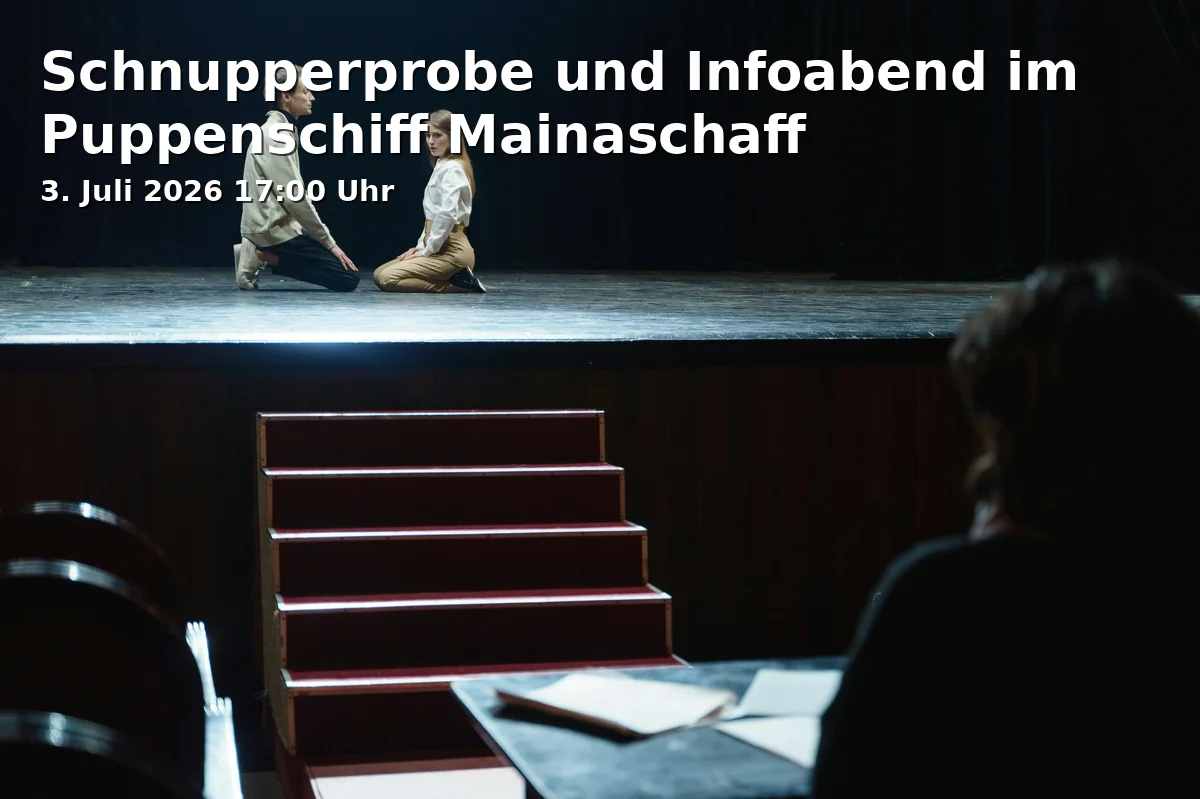
Finally, the possibility of participating oneself is particularly interesting. On the participation page, the Puppet Ship describes itself as a purely volunteer-run theater that is constantly looking for people to support ticket pre-sales, admission, technology, cleaning, bar, stage construction, or repairs. Taster rehearsals and information evenings give interested parties the opportunity to try out puppetry and get to know the team; no prior knowledge is required, and the minimum age is 14 years. This openness is more than just a recruitment topic for Mainaschaff and the region, as it shows how cultural work is organized in the association. The theater thus offers not only performances but also participation. Therefore, those searching for participation, contact, taster rehearsal, or information evening will find a house that explicitly welcomes new helpers. This is precisely where the strength of the Puppet Ship lies: it is not only a place to watch but also to belong. This makes the location lively beyond its address and explains why it is so present in the local memory. ([puppenschiff.de](https://www.puppenschiff.de/mitarbeit))
Sources:
- Official website of the Marionette Theater The Puppet Ship. ([puppenschiff.de](https://www.puppenschiff.de/))
- Community Mainaschaff event calendar and location pages. ([mainaschaff.de](https://www.mainaschaff.de/kultur-tourismus/veranstaltungskalender?cHash=c9bf1789c2fac91f50fe70b36d25b9ab&tx_hwveranstaltung_hwveranstalt%5Baction%5D=show&tx_hwveranstaltung_hwveranstalt%5Bcontroller%5D=VeranstaltungFrontend&tx_hwveranstaltung_hwveranstalt%5Bid%5D=536&tx_hwveranstaltung_hwveranstalt%5BlistAction%5D=list&tx_hwveranstaltung_hwveranstalt%5Btid%5D=3043&utm_source=openai))
- Community Mainaschaff historical overview and sights. ([mainaschaff.de](https://www.mainaschaff.de/unsere-gemeinde/geschichte/historischer-rueckblick?utm_source=openai))
- Cultural initiative Rhine Main portal to The Puppet Ship. ([kirm.de](https://kirm.de/en/portal/Das%20Puppenschiff%20Theater%20in%20der%20Krone?utm_source=openai))
- Archive and press pages of The Puppet Ship. ([puppenschiff.de](https://www.puppenschiff.de/presse/prfritz.html?utm_source=openai))
Show moreShow less
Marionette Theater The Puppet Ship | Program & Tickets
The Puppet Ship in Mainaschaff is one of those stages that you not only visit but experience. Located at Schulstraße 3, directly in the Theater in der Krone e. V., the venue combines lovingly crafted puppet theater with a clear local character, much volunteer engagement, and a repertoire that appeals to children, teenagers, and adults. Those looking for a small, personal cultural address in the Aschaffenburg area will find here not an anonymous large stage, but a theater with a personal touch, a workshop feel, and a palpable closeness to the figures on stage. The house describes itself as a puppet theater and marionette theater near Aschaffenburg, right in the Rhine-Main area, and it is precisely this mix of regional anchoring and supra-regional appeal that makes it attractive. The current note on the website also states that there will be a summer break in June 2026 and that the new season will begin in September 2026. This means: The Puppet Ship thrives on its performance schedule throughout the year, but also on the breaks in between, during which building, rehearsing, and preparing take place. ([puppenschiff.de](https://www.puppenschiff.de/))
The search queries surrounding this location mainly revolve around the clear identity of the house, the performance schedule, tickets and prices, as well as directions and parking. This gives rise to the logic of this text: first the program, then the practical orientation, followed by the pieces themselves, the history, and finally insights behind the scenes. The Puppet Ship is not only a place for fairy tales but also for literary works, cabaret evenings, and guest performances by other artists. This creates a cultural venue that is family-friendly on one hand and offers enough depth and uniqueness for adults to avoid stagnating in nostalgia. The impression of craftsmanship and community is particularly strong: the association works on a voluntary basis, taking care of ticket sales, admission, drinks, puppetry, technology, repairs, and new productions. This mix of passion and organization is an essential part of the special character of the Puppet Ship. ([puppenschiff.de](https://www.puppenschiff.de/mitarbeit))
Current Program, Performance Schedule, and Shows
The program of the Puppet Ship is organized seasonally and is continuously updated on the website. For June 2026, the official program page shows no performances and refers to the summer break, while the homepage simultaneously states that the next season begins in September 2026. This is important for visitors because the Puppet Ship does not operate like a daily city theater, but rather like a lovingly curated venue with clear performance blocks and selected dates. Therefore, anyone interested in the current program should first check the program page and then possibly the guest performance page. There, not only the own puppet pieces appear, but also special guest appearances by musicians and other artists. This gives the house an additional content openness that goes beyond classic puppet theater without losing its identity. It is precisely this mix of own programming and guest performances that ensures that the stage never appears one-dimensional. It is a family venue, a cultural address, and an experimental space at the same time. ([puppenschiff.de](https://www.puppenschiff.de/programm))
The repertoire page makes it clear how broad the Puppet Ship's thinking is. The children's pieces include, among others, Cinderella, Puss in Boots, The Caliph Stork, Sleeping Beauty, A Magic Flute for Children, Jamu and his Dromedary, Snow White and Rose Red, as well as Snow White and the Seven Dwarfs. For adults and older teenagers, there are among others, Frankenstein's Hamster, All Quiet on the Western Front, What Makes the Sausage Skin on My Coffin Lid? or Who Stepped in My Mess? Additionally, there are literary adaptations such as 20,000 Leagues Under the Sea, The Old Puppet Play of Doctor Faust, The Odyssey according to Homer, The Snow Queen, A Midsummer Night's Dream, or Macbeth. Even the titles show that the Puppet Ship is not a purely children's theater, but works with fairy tales, classics, humor, and literary adaptations. This is central for search queries regarding the program, performance schedule, and pieces, as the website offers not only dates but also materials and aesthetic directions. Visitors get an early sense of whether they can expect a family fairy tale, a literary puppet play, or a satirical evening. ([puppenschiff.de](https://www.puppenschiff.de/stuecke))
Those looking for the Puppet Ship will not simply find a stage with changing titles, but a clearly recognizable program concept. According to the website, children's pieces are primarily aimed at children aged 6 to 11, while adults mainly see literary adaptations or cabaret comedies. This is very helpful information for families, school groups, and adults who are specifically looking for suitable performances. At the same time, the selection shows that the theater does not treat the classic marionette as a museum object, but as a living narrative form. Particularly with works like Faust, Odyssey, or A Midsummer Night's Dream, one can observe how familiar literature takes on a new tone through puppetry: more direct, more poetic, sometimes more humorous, and sometimes surprisingly concentrated. This range is one reason why the Puppet Ship often appears in search queries alongside terms like pieces, program, and photos. Those searching for images are usually looking for more than just a poster; they are looking for atmosphere. This atmosphere is created here from the repertoire, stage, figures, and the special scale of a small, focused theater. ([puppenschiff.de](https://www.puppenschiff.de/stuecke))
Tickets, Prices, and Reservations without Seat Selection
For ticket organization, the Puppet Ship offers a clear and uncomplicated way. Through online ticket reservation, visitors can reserve tickets for all offered pieces. The reserved tickets are available at the box office until 15 minutes before the performance begins. It is important to note: seat reservations are not accepted. This means that those who book secure entry, but not a fixed seat. For many small theaters, this is a very typical model, and the Puppet Ship communicates it transparently on the reservation page. Additionally, the box office opens 30 minutes before the performance begins, so spontaneous guests also have a fair chance. This handy logic is good for families as it reduces the booking process while still allowing for reliable planning. Especially for a house with limited performances, the combination of online reservation and box office is a sensible middle ground between comfort and spontaneity. ([puppenschiff.de](https://www.puppenschiff.de/kartenbestellung))
The theater also shows itself to be pragmatic regarding the conditions. Discounts are available for children, students, and students, holders of a disability ID, and federal volunteers. Those wishing to order more than ten tickets should contact the Puppet Ship by phone or email. Vouchers are also available and can be exchanged at the box office for reserved tickets. For advance sales, the website also lists fixed locations, including the Hench bakery in Mainaschaff and the Café Krèm in Aschaffenburg. This is especially practical for people who prefer to secure their tickets on-site rather than online. At the same time, the house refers to its contact options and the theater pub Krone, so that the visit to the Puppet Ship can be organized not just as a performance visit, but as a small outing. For the search intent surrounding tickets and prices, it is important that the theater clearly communicates its rules: no seat selection, fixed reservation deadline, early opening box office, and additional advance sales routes. This creates orientation and prevents disappointments on the evening of the performance. ([puppenschiff.de](https://www.puppenschiff.de/kartenbestellung))
Additionally, the personal accessibility of the house is highlighted. The contact page states that phone hours are Thursdays from 6 to 7 PM, and the theater invites questions, requests, or special performances to be addressed directly. This can be helpful for groups, school classes, or larger bookings, as one can not only reserve in a standardized way but also consult directly if needed. This openness fits the character of the association: it is not about distant processing, but about a direct, human form of communication. Therefore, those searching for Puppet Ship tickets, prices, or contact will not find a complicated booking architecture, but a clear process with personal support. This is a real plus for a volunteer-run theater. The ticket page also conveys a high degree of reliability, as it not only explains the reservation but also deadlines, discounts, and vouchers clearly. For those seeking to be sure before a visit, this is a strong signal. ([puppenschiff.de](https://www.puppenschiff.de/kontakt?utm_source=openai))
Directions, Address, and Parking in Mainaschaff
The address of the Puppet Ship is clear and easy to find: Schulstraße 3, 63814 Mainaschaff. The Theater in der Krone e. V. is thus located in the town center or in an area that is easily accessible for visitors from Aschaffenburg and the Rhine-Main area. The official homepage describes the house as a puppet theater near Aschaffenburg, close to Frankfurt, in Bavaria at the border with Hesse. This location explains why search queries often include not only the name of the stage but also the locality addition Mainaschaff or the street Schulstraße. This is particularly relevant for SEO, as users often search for the exact address as soon as they plan a visit. The Puppet Ship meets this need very directly by clearly stating the address on both the contact and directions pages. So, anyone searching for Marionette Theater The Puppet Ship Mainaschaff or for Schulstraße 3 will quickly land at the right stage. ([puppenschiff.de](https://www.puppenschiff.de/))
The directions are explained on the website in two directions. Coming from Würzburg or Frankfurt, one should exit the A3 at Mainaschaff, then drive a short distance on the B8 and turn directly at the Mainaschaff exit. The route then leads past the company Frankenstolz, over Industriestraße and further over Behring-, Robert-Koch- and Stockstädter Straße. Coming from Aschaffenburg, one should follow the signs to Mainaschaff, turn right before the multi-lane highway begins, go under the fast road, and then at the next traffic light head towards Mainaschaff. In both cases, the description ends with the same practical orientation: turn at the town hall or at the anchor point. There are parking options at the anchor point and by the Main. This is the most important information for visitors as it directly answers where to park the car and how to orient oneself in the town. This clarity is especially important for evening performances. The website also makes it clear that the directions are not complicated if one follows the local main axes. ([puppenschiff.de](https://www.puppenschiff.de/anfahrt))
The location in the town is not only practical but also atmospherically interesting. Mainaschaff is located in a conveniently accessible area between the Untermainebene, Vorspessart, Aschaffenburg, and the Rhine-Main area. The Puppet Ship thus benefits from a catchment area that extends beyond the municipal boundaries. Those coming from the region often combine their theater visit with an evening in the surroundings or a visit to the theater pub Krone. This makes the directions as a search topic so important: it is not only about streets but about the entire visitor experience. For people who do not yet know the house, the keywords parking lot, anchor point, Main, B8, and A3 are therefore crucial. The theater does not answer these questions briefly but very concretely, which is particularly valuable for visitor friendliness. In combination with the exact address, this creates a clear picture of a well-accessible, yet consciously small cultural venue with local charm. ([puppenschiff.de](https://www.puppenschiff.de/anfahrt))
Children's Pieces, Adult Pieces, and Literary Adaptations
The Puppet Ship works programmatically in three clear areas: children's pieces, adult pieces, and literary adaptations. According to the official website, the children's pieces are primarily aimed at children aged 6 to 11. This is a precise hint for families, schools, and grandparents looking for a suitable offer. The titles showcase the strength of the house in well-known fairy tale materials that are lovingly and independently staged. Cinderella, Puss in Boots, Sleeping Beauty, Snow White and Rose Red, Snow White and the Seven Dwarfs, or The Caliph Stork are classic tales that take on new colors in puppet form. The Puppet Ship utilizes the familiarity of the stories without copying them bluntly. Rather, a small stage world is created from the well-known fairy tale with its own rhythm, its own imagery, and often a humorous touch. This is interesting for search queries regarding pieces and performance schedules because the name of a piece at this theater often carries the expectation of a certain atmosphere. ([puppenschiff.de](https://www.puppenschiff.de/stuecke))
The adult pieces and literary adaptations make it clear that the Puppet Ship should not be reduced to children's entertainment. Frankenstein's Hamster, All Quiet on the Western Front, What Makes the Sausage Skin on My Coffin Lid? or Who Stepped in My Mess? show a clear inclination towards cabaret and satirical forms. Additionally, there are adaptations of great texts such as The Old Puppet Play of Doctor Faust, The Odyssey according to Homer, A Midsummer Night's Dream, or Macbeth. It becomes evident with these works that the theater works with literary tradition but does not freeze in reverence. In the Faust adaptation, for example, the Puppet Ship version deliberately reaches back to the pre-Goethe period and transforms the material into a mix of burlesque and late medieval mystery play. This is not only stylistically exciting for a puppet theater but also intellectually clever, as the form of the marionette translates large texts into a more precise, concentrated mode of play. Therefore, those searching for the Puppet Ship and its pieces quickly discover that here fairy tales and literature are not separated but thought of side by side and often with wit. ([puppenschiff.de](https://www.puppenschiff.de/stuecke))
The performance durations and age indications also show how carefully the repertoire is managed. The Puppet Ship provides the playing time and target audience for many pieces, which is enormously helpful for planning a theater visit. Cinderella, for example, is a fairy tale for children with a length of about 70 minutes plus intermission; The Old Puppet Play of Doctor Faust is significantly longer and more intended for teenagers and adults. This differentiation is important as it prevents the house from being perceived solely through the term puppet theater. The Puppet Ship is rather a stage where childhood material, literature, and satire overlap. The special appeal arises precisely from this: an evening of fairy tales can also be a craft experience, a classic template can appear in a new scenic language, and a seemingly comedic evening can go surprisingly deep. This is why the repertoire fits so well with search queries containing the terms pieces, program, children, adults, and literature. ([puppenschiff.de](https://www.puppenschiff.de/stuecke/aschenputtel?utm_source=openai))
History, Volunteering, and Behind the Scenes
The history of the Puppet Ship dates back far according to available sources. A community source notes that since 1988, the marionette theater Puppet Ship has been advertising performances in the hall above the Gasthaus Krone. An older press article also describes that the house has been working at its fixed location in Mainaschaff for years and looks back on a long development as a touring theater. This is important for classification because a fixed cultural venue has developed from a mobile theater group. The Puppet Ship is thus not a short-lived project but a grown institution in local cultural life. The connection to the Theater in der Krone e. V. also shows that the stage is organizationally anchored in an association, not in a purely commercial structure. This origin also explains the special tone of many texts: it is about passion, continuity, and improvisational spirit. For search queries regarding history and background, the house thus provides not only a date but the narrative of a long, steadily grown commitment. ([mainaschaff.de](https://www.mainaschaff.de/fileadmin/Dateien/Website/Dateien/01_Unsere-Gemeinde/B.INSEKVU_IMA_a.pdf?utm_source=openai))
Particularly formative is the voluntary character of the theater. The website emphasizes that the Puppet Ship has lived off the engagement of voluntary workers for over 30 years. The members take care of ticket pre-sales, admission, beverage sales, puppetry, stage technology, repairs, rehearsals, and the development of new pieces in the theater's own workshops. The older press article also describes the structure as teamwork without hierarchies and speaks of a bunch of people with different talents, from electrical work to organization to craftsmanship. This craftsmanship core is an essential part of the fascination: the art appears light on stage, but behind it lies considerable organizational and technical effort. For this reason, the website has the section Behind the Scenes. There, not only production steps are explained, but also bloopers during sound recordings are shown, for example, for The Odyssey according to Homer, Cinderella, or The Caliph Stork. Such content is particularly valuable for keyword searches for photos and insights as they allow a rare glimpse into the creation of the performances. The Puppet Ship thus presents itself not only as a finished product but as a workspace. ([puppenschiff.de](https://www.puppenschiff.de/hinter-den-kulissen))
From this perspective, it becomes understandable why the theater can build such a strong bond with its visitors. When a house is supported by voluntary work for years and decades, each performance is also a small community project. This is reflected in the tone of the website, but also in the maintenance of sponsorships, in the workshop culture, and in the willingness to welcome new helpers. The sponsorship gallery documents numerous figures that have already found support and thus refers to a lively, sometimes very personal relationship between the audience and the ensemble. At the same time, the participation page makes it clear that no special prior knowledge is required, but primarily a desire for theater, team spirit, and reliability. Thus, the history of the house connects with its present: from a long tradition of craftsmanship, an open, modern volunteer model emerges. Therefore, those searching for genuine insights behind the scenes will find not only images and outtakes but above all the self-understanding of a theater that perceives its figures, its stage, and its community as interconnected. ([puppenschiff.de](https://www.puppenschiff.de/patenschaften))
Guest Performances, Theater Pub Krone, and Participation
The Puppet Ship is not only a place for puppet pieces but also an open stage for guest performances. The official guest performance page explicitly states that the house opens its stage for musicians and other artists to diversify the program. For search queries regarding program diversity and cultural offerings, this is an important point as it shows that the theater does not only think within its own genre. In addition to puppetry, concerts, cabaret, or other stage formats can also appear here. The guest performance page also lists specific dates, such as a benefit concert against violence against women, an Irish program, and a cabaret evening. This is attractive for visitors as it keeps the stage diverse and extends beyond the puppet world. For the SEO profile, this openness is particularly relevant: the Puppet Ship is not just a puppet theater but a small cultural venue with a changing program. ([puppenschiff.de](https://www.puppenschiff.de/gastspiele))
Additionally, the theater pub Krone is part of the theater experience. The Puppet Ship invites visitors to round off their visit with a stay there; reservations are possible by phone. This note is more than just service, as it shows that the theater evening is thought through further at the house itself. Those arriving before the performance or wanting to stay afterward are thus provided with a place for conversations and breaks. This can make the visit more pleasant for families and groups as the evening does not end abruptly. The immediate spatial proximity between the theater and the pub also strengthens the feeling of a cohesive cultural venue. For those searching for theater pub, stay, or food around the Puppet Ship, this information is particularly helpful. The house thus does not remain limited to the stage space but offers a small overall package of anticipation, performance, and afterglow. ([puppenschiff.de](https://www.puppenschiff.de/))
Finally, the possibility of participating oneself is particularly interesting. On the participation page, the Puppet Ship describes itself as a purely volunteer-run theater that is constantly looking for people to support ticket pre-sales, admission, technology, cleaning, bar, stage construction, or repairs. Taster rehearsals and information evenings give interested parties the opportunity to try out puppetry and get to know the team; no prior knowledge is required, and the minimum age is 14 years. This openness is more than just a recruitment topic for Mainaschaff and the region, as it shows how cultural work is organized in the association. The theater thus offers not only performances but also participation. Therefore, those searching for participation, contact, taster rehearsal, or information evening will find a house that explicitly welcomes new helpers. This is precisely where the strength of the Puppet Ship lies: it is not only a place to watch but also to belong. This makes the location lively beyond its address and explains why it is so present in the local memory. ([puppenschiff.de](https://www.puppenschiff.de/mitarbeit))
Sources:
- Official website of the Marionette Theater The Puppet Ship. ([puppenschiff.de](https://www.puppenschiff.de/))
- Community Mainaschaff event calendar and location pages. ([mainaschaff.de](https://www.mainaschaff.de/kultur-tourismus/veranstaltungskalender?cHash=c9bf1789c2fac91f50fe70b36d25b9ab&tx_hwveranstaltung_hwveranstalt%5Baction%5D=show&tx_hwveranstaltung_hwveranstalt%5Bcontroller%5D=VeranstaltungFrontend&tx_hwveranstaltung_hwveranstalt%5Bid%5D=536&tx_hwveranstaltung_hwveranstalt%5BlistAction%5D=list&tx_hwveranstaltung_hwveranstalt%5Btid%5D=3043&utm_source=openai))
- Community Mainaschaff historical overview and sights. ([mainaschaff.de](https://www.mainaschaff.de/unsere-gemeinde/geschichte/historischer-rueckblick?utm_source=openai))
- Cultural initiative Rhine Main portal to The Puppet Ship. ([kirm.de](https://kirm.de/en/portal/Das%20Puppenschiff%20Theater%20in%20der%20Krone?utm_source=openai))
- Archive and press pages of The Puppet Ship. ([puppenschiff.de](https://www.puppenschiff.de/presse/prfritz.html?utm_source=openai))
Marionette Theater The Puppet Ship | Program & Tickets
The Puppet Ship in Mainaschaff is one of those stages that you not only visit but experience. Located at Schulstraße 3, directly in the Theater in der Krone e. V., the venue combines lovingly crafted puppet theater with a clear local character, much volunteer engagement, and a repertoire that appeals to children, teenagers, and adults. Those looking for a small, personal cultural address in the Aschaffenburg area will find here not an anonymous large stage, but a theater with a personal touch, a workshop feel, and a palpable closeness to the figures on stage. The house describes itself as a puppet theater and marionette theater near Aschaffenburg, right in the Rhine-Main area, and it is precisely this mix of regional anchoring and supra-regional appeal that makes it attractive. The current note on the website also states that there will be a summer break in June 2026 and that the new season will begin in September 2026. This means: The Puppet Ship thrives on its performance schedule throughout the year, but also on the breaks in between, during which building, rehearsing, and preparing take place. ([puppenschiff.de](https://www.puppenschiff.de/))
The search queries surrounding this location mainly revolve around the clear identity of the house, the performance schedule, tickets and prices, as well as directions and parking. This gives rise to the logic of this text: first the program, then the practical orientation, followed by the pieces themselves, the history, and finally insights behind the scenes. The Puppet Ship is not only a place for fairy tales but also for literary works, cabaret evenings, and guest performances by other artists. This creates a cultural venue that is family-friendly on one hand and offers enough depth and uniqueness for adults to avoid stagnating in nostalgia. The impression of craftsmanship and community is particularly strong: the association works on a voluntary basis, taking care of ticket sales, admission, drinks, puppetry, technology, repairs, and new productions. This mix of passion and organization is an essential part of the special character of the Puppet Ship. ([puppenschiff.de](https://www.puppenschiff.de/mitarbeit))
Current Program, Performance Schedule, and Shows
The program of the Puppet Ship is organized seasonally and is continuously updated on the website. For June 2026, the official program page shows no performances and refers to the summer break, while the homepage simultaneously states that the next season begins in September 2026. This is important for visitors because the Puppet Ship does not operate like a daily city theater, but rather like a lovingly curated venue with clear performance blocks and selected dates. Therefore, anyone interested in the current program should first check the program page and then possibly the guest performance page. There, not only the own puppet pieces appear, but also special guest appearances by musicians and other artists. This gives the house an additional content openness that goes beyond classic puppet theater without losing its identity. It is precisely this mix of own programming and guest performances that ensures that the stage never appears one-dimensional. It is a family venue, a cultural address, and an experimental space at the same time. ([puppenschiff.de](https://www.puppenschiff.de/programm))
The repertoire page makes it clear how broad the Puppet Ship's thinking is. The children's pieces include, among others, Cinderella, Puss in Boots, The Caliph Stork, Sleeping Beauty, A Magic Flute for Children, Jamu and his Dromedary, Snow White and Rose Red, as well as Snow White and the Seven Dwarfs. For adults and older teenagers, there are among others, Frankenstein's Hamster, All Quiet on the Western Front, What Makes the Sausage Skin on My Coffin Lid? or Who Stepped in My Mess? Additionally, there are literary adaptations such as 20,000 Leagues Under the Sea, The Old Puppet Play of Doctor Faust, The Odyssey according to Homer, The Snow Queen, A Midsummer Night's Dream, or Macbeth. Even the titles show that the Puppet Ship is not a purely children's theater, but works with fairy tales, classics, humor, and literary adaptations. This is central for search queries regarding the program, performance schedule, and pieces, as the website offers not only dates but also materials and aesthetic directions. Visitors get an early sense of whether they can expect a family fairy tale, a literary puppet play, or a satirical evening. ([puppenschiff.de](https://www.puppenschiff.de/stuecke))
Those looking for the Puppet Ship will not simply find a stage with changing titles, but a clearly recognizable program concept. According to the website, children's pieces are primarily aimed at children aged 6 to 11, while adults mainly see literary adaptations or cabaret comedies. This is very helpful information for families, school groups, and adults who are specifically looking for suitable performances. At the same time, the selection shows that the theater does not treat the classic marionette as a museum object, but as a living narrative form. Particularly with works like Faust, Odyssey, or A Midsummer Night's Dream, one can observe how familiar literature takes on a new tone through puppetry: more direct, more poetic, sometimes more humorous, and sometimes surprisingly concentrated. This range is one reason why the Puppet Ship often appears in search queries alongside terms like pieces, program, and photos. Those searching for images are usually looking for more than just a poster; they are looking for atmosphere. This atmosphere is created here from the repertoire, stage, figures, and the special scale of a small, focused theater. ([puppenschiff.de](https://www.puppenschiff.de/stuecke))
Tickets, Prices, and Reservations without Seat Selection
For ticket organization, the Puppet Ship offers a clear and uncomplicated way. Through online ticket reservation, visitors can reserve tickets for all offered pieces. The reserved tickets are available at the box office until 15 minutes before the performance begins. It is important to note: seat reservations are not accepted. This means that those who book secure entry, but not a fixed seat. For many small theaters, this is a very typical model, and the Puppet Ship communicates it transparently on the reservation page. Additionally, the box office opens 30 minutes before the performance begins, so spontaneous guests also have a fair chance. This handy logic is good for families as it reduces the booking process while still allowing for reliable planning. Especially for a house with limited performances, the combination of online reservation and box office is a sensible middle ground between comfort and spontaneity. ([puppenschiff.de](https://www.puppenschiff.de/kartenbestellung))
The theater also shows itself to be pragmatic regarding the conditions. Discounts are available for children, students, and students, holders of a disability ID, and federal volunteers. Those wishing to order more than ten tickets should contact the Puppet Ship by phone or email. Vouchers are also available and can be exchanged at the box office for reserved tickets. For advance sales, the website also lists fixed locations, including the Hench bakery in Mainaschaff and the Café Krèm in Aschaffenburg. This is especially practical for people who prefer to secure their tickets on-site rather than online. At the same time, the house refers to its contact options and the theater pub Krone, so that the visit to the Puppet Ship can be organized not just as a performance visit, but as a small outing. For the search intent surrounding tickets and prices, it is important that the theater clearly communicates its rules: no seat selection, fixed reservation deadline, early opening box office, and additional advance sales routes. This creates orientation and prevents disappointments on the evening of the performance. ([puppenschiff.de](https://www.puppenschiff.de/kartenbestellung))
Additionally, the personal accessibility of the house is highlighted. The contact page states that phone hours are Thursdays from 6 to 7 PM, and the theater invites questions, requests, or special performances to be addressed directly. This can be helpful for groups, school classes, or larger bookings, as one can not only reserve in a standardized way but also consult directly if needed. This openness fits the character of the association: it is not about distant processing, but about a direct, human form of communication. Therefore, those searching for Puppet Ship tickets, prices, or contact will not find a complicated booking architecture, but a clear process with personal support. This is a real plus for a volunteer-run theater. The ticket page also conveys a high degree of reliability, as it not only explains the reservation but also deadlines, discounts, and vouchers clearly. For those seeking to be sure before a visit, this is a strong signal. ([puppenschiff.de](https://www.puppenschiff.de/kontakt?utm_source=openai))
Directions, Address, and Parking in Mainaschaff
The address of the Puppet Ship is clear and easy to find: Schulstraße 3, 63814 Mainaschaff. The Theater in der Krone e. V. is thus located in the town center or in an area that is easily accessible for visitors from Aschaffenburg and the Rhine-Main area. The official homepage describes the house as a puppet theater near Aschaffenburg, close to Frankfurt, in Bavaria at the border with Hesse. This location explains why search queries often include not only the name of the stage but also the locality addition Mainaschaff or the street Schulstraße. This is particularly relevant for SEO, as users often search for the exact address as soon as they plan a visit. The Puppet Ship meets this need very directly by clearly stating the address on both the contact and directions pages. So, anyone searching for Marionette Theater The Puppet Ship Mainaschaff or for Schulstraße 3 will quickly land at the right stage. ([puppenschiff.de](https://www.puppenschiff.de/))
The directions are explained on the website in two directions. Coming from Würzburg or Frankfurt, one should exit the A3 at Mainaschaff, then drive a short distance on the B8 and turn directly at the Mainaschaff exit. The route then leads past the company Frankenstolz, over Industriestraße and further over Behring-, Robert-Koch- and Stockstädter Straße. Coming from Aschaffenburg, one should follow the signs to Mainaschaff, turn right before the multi-lane highway begins, go under the fast road, and then at the next traffic light head towards Mainaschaff. In both cases, the description ends with the same practical orientation: turn at the town hall or at the anchor point. There are parking options at the anchor point and by the Main. This is the most important information for visitors as it directly answers where to park the car and how to orient oneself in the town. This clarity is especially important for evening performances. The website also makes it clear that the directions are not complicated if one follows the local main axes. ([puppenschiff.de](https://www.puppenschiff.de/anfahrt))
The location in the town is not only practical but also atmospherically interesting. Mainaschaff is located in a conveniently accessible area between the Untermainebene, Vorspessart, Aschaffenburg, and the Rhine-Main area. The Puppet Ship thus benefits from a catchment area that extends beyond the municipal boundaries. Those coming from the region often combine their theater visit with an evening in the surroundings or a visit to the theater pub Krone. This makes the directions as a search topic so important: it is not only about streets but about the entire visitor experience. For people who do not yet know the house, the keywords parking lot, anchor point, Main, B8, and A3 are therefore crucial. The theater does not answer these questions briefly but very concretely, which is particularly valuable for visitor friendliness. In combination with the exact address, this creates a clear picture of a well-accessible, yet consciously small cultural venue with local charm. ([puppenschiff.de](https://www.puppenschiff.de/anfahrt))
Children's Pieces, Adult Pieces, and Literary Adaptations
The Puppet Ship works programmatically in three clear areas: children's pieces, adult pieces, and literary adaptations. According to the official website, the children's pieces are primarily aimed at children aged 6 to 11. This is a precise hint for families, schools, and grandparents looking for a suitable offer. The titles showcase the strength of the house in well-known fairy tale materials that are lovingly and independently staged. Cinderella, Puss in Boots, Sleeping Beauty, Snow White and Rose Red, Snow White and the Seven Dwarfs, or The Caliph Stork are classic tales that take on new colors in puppet form. The Puppet Ship utilizes the familiarity of the stories without copying them bluntly. Rather, a small stage world is created from the well-known fairy tale with its own rhythm, its own imagery, and often a humorous touch. This is interesting for search queries regarding pieces and performance schedules because the name of a piece at this theater often carries the expectation of a certain atmosphere. ([puppenschiff.de](https://www.puppenschiff.de/stuecke))
The adult pieces and literary adaptations make it clear that the Puppet Ship should not be reduced to children's entertainment. Frankenstein's Hamster, All Quiet on the Western Front, What Makes the Sausage Skin on My Coffin Lid? or Who Stepped in My Mess? show a clear inclination towards cabaret and satirical forms. Additionally, there are adaptations of great texts such as The Old Puppet Play of Doctor Faust, The Odyssey according to Homer, A Midsummer Night's Dream, or Macbeth. It becomes evident with these works that the theater works with literary tradition but does not freeze in reverence. In the Faust adaptation, for example, the Puppet Ship version deliberately reaches back to the pre-Goethe period and transforms the material into a mix of burlesque and late medieval mystery play. This is not only stylistically exciting for a puppet theater but also intellectually clever, as the form of the marionette translates large texts into a more precise, concentrated mode of play. Therefore, those searching for the Puppet Ship and its pieces quickly discover that here fairy tales and literature are not separated but thought of side by side and often with wit. ([puppenschiff.de](https://www.puppenschiff.de/stuecke))
The performance durations and age indications also show how carefully the repertoire is managed. The Puppet Ship provides the playing time and target audience for many pieces, which is enormously helpful for planning a theater visit. Cinderella, for example, is a fairy tale for children with a length of about 70 minutes plus intermission; The Old Puppet Play of Doctor Faust is significantly longer and more intended for teenagers and adults. This differentiation is important as it prevents the house from being perceived solely through the term puppet theater. The Puppet Ship is rather a stage where childhood material, literature, and satire overlap. The special appeal arises precisely from this: an evening of fairy tales can also be a craft experience, a classic template can appear in a new scenic language, and a seemingly comedic evening can go surprisingly deep. This is why the repertoire fits so well with search queries containing the terms pieces, program, children, adults, and literature. ([puppenschiff.de](https://www.puppenschiff.de/stuecke/aschenputtel?utm_source=openai))
History, Volunteering, and Behind the Scenes
The history of the Puppet Ship dates back far according to available sources. A community source notes that since 1988, the marionette theater Puppet Ship has been advertising performances in the hall above the Gasthaus Krone. An older press article also describes that the house has been working at its fixed location in Mainaschaff for years and looks back on a long development as a touring theater. This is important for classification because a fixed cultural venue has developed from a mobile theater group. The Puppet Ship is thus not a short-lived project but a grown institution in local cultural life. The connection to the Theater in der Krone e. V. also shows that the stage is organizationally anchored in an association, not in a purely commercial structure. This origin also explains the special tone of many texts: it is about passion, continuity, and improvisational spirit. For search queries regarding history and background, the house thus provides not only a date but the narrative of a long, steadily grown commitment. ([mainaschaff.de](https://www.mainaschaff.de/fileadmin/Dateien/Website/Dateien/01_Unsere-Gemeinde/B.INSEKVU_IMA_a.pdf?utm_source=openai))
Particularly formative is the voluntary character of the theater. The website emphasizes that the Puppet Ship has lived off the engagement of voluntary workers for over 30 years. The members take care of ticket pre-sales, admission, beverage sales, puppetry, stage technology, repairs, rehearsals, and the development of new pieces in the theater's own workshops. The older press article also describes the structure as teamwork without hierarchies and speaks of a bunch of people with different talents, from electrical work to organization to craftsmanship. This craftsmanship core is an essential part of the fascination: the art appears light on stage, but behind it lies considerable organizational and technical effort. For this reason, the website has the section Behind the Scenes. There, not only production steps are explained, but also bloopers during sound recordings are shown, for example, for The Odyssey according to Homer, Cinderella, or The Caliph Stork. Such content is particularly valuable for keyword searches for photos and insights as they allow a rare glimpse into the creation of the performances. The Puppet Ship thus presents itself not only as a finished product but as a workspace. ([puppenschiff.de](https://www.puppenschiff.de/hinter-den-kulissen))
From this perspective, it becomes understandable why the theater can build such a strong bond with its visitors. When a house is supported by voluntary work for years and decades, each performance is also a small community project. This is reflected in the tone of the website, but also in the maintenance of sponsorships, in the workshop culture, and in the willingness to welcome new helpers. The sponsorship gallery documents numerous figures that have already found support and thus refers to a lively, sometimes very personal relationship between the audience and the ensemble. At the same time, the participation page makes it clear that no special prior knowledge is required, but primarily a desire for theater, team spirit, and reliability. Thus, the history of the house connects with its present: from a long tradition of craftsmanship, an open, modern volunteer model emerges. Therefore, those searching for genuine insights behind the scenes will find not only images and outtakes but above all the self-understanding of a theater that perceives its figures, its stage, and its community as interconnected. ([puppenschiff.de](https://www.puppenschiff.de/patenschaften))
Guest Performances, Theater Pub Krone, and Participation
The Puppet Ship is not only a place for puppet pieces but also an open stage for guest performances. The official guest performance page explicitly states that the house opens its stage for musicians and other artists to diversify the program. For search queries regarding program diversity and cultural offerings, this is an important point as it shows that the theater does not only think within its own genre. In addition to puppetry, concerts, cabaret, or other stage formats can also appear here. The guest performance page also lists specific dates, such as a benefit concert against violence against women, an Irish program, and a cabaret evening. This is attractive for visitors as it keeps the stage diverse and extends beyond the puppet world. For the SEO profile, this openness is particularly relevant: the Puppet Ship is not just a puppet theater but a small cultural venue with a changing program. ([puppenschiff.de](https://www.puppenschiff.de/gastspiele))
Additionally, the theater pub Krone is part of the theater experience. The Puppet Ship invites visitors to round off their visit with a stay there; reservations are possible by phone. This note is more than just service, as it shows that the theater evening is thought through further at the house itself. Those arriving before the performance or wanting to stay afterward are thus provided with a place for conversations and breaks. This can make the visit more pleasant for families and groups as the evening does not end abruptly. The immediate spatial proximity between the theater and the pub also strengthens the feeling of a cohesive cultural venue. For those searching for theater pub, stay, or food around the Puppet Ship, this information is particularly helpful. The house thus does not remain limited to the stage space but offers a small overall package of anticipation, performance, and afterglow. ([puppenschiff.de](https://www.puppenschiff.de/))
Finally, the possibility of participating oneself is particularly interesting. On the participation page, the Puppet Ship describes itself as a purely volunteer-run theater that is constantly looking for people to support ticket pre-sales, admission, technology, cleaning, bar, stage construction, or repairs. Taster rehearsals and information evenings give interested parties the opportunity to try out puppetry and get to know the team; no prior knowledge is required, and the minimum age is 14 years. This openness is more than just a recruitment topic for Mainaschaff and the region, as it shows how cultural work is organized in the association. The theater thus offers not only performances but also participation. Therefore, those searching for participation, contact, taster rehearsal, or information evening will find a house that explicitly welcomes new helpers. This is precisely where the strength of the Puppet Ship lies: it is not only a place to watch but also to belong. This makes the location lively beyond its address and explains why it is so present in the local memory. ([puppenschiff.de](https://www.puppenschiff.de/mitarbeit))
Sources:
- Official website of the Marionette Theater The Puppet Ship. ([puppenschiff.de](https://www.puppenschiff.de/))
- Community Mainaschaff event calendar and location pages. ([mainaschaff.de](https://www.mainaschaff.de/kultur-tourismus/veranstaltungskalender?cHash=c9bf1789c2fac91f50fe70b36d25b9ab&tx_hwveranstaltung_hwveranstalt%5Baction%5D=show&tx_hwveranstaltung_hwveranstalt%5Bcontroller%5D=VeranstaltungFrontend&tx_hwveranstaltung_hwveranstalt%5Bid%5D=536&tx_hwveranstaltung_hwveranstalt%5BlistAction%5D=list&tx_hwveranstaltung_hwveranstalt%5Btid%5D=3043&utm_source=openai))
- Community Mainaschaff historical overview and sights. ([mainaschaff.de](https://www.mainaschaff.de/unsere-gemeinde/geschichte/historischer-rueckblick?utm_source=openai))
- Cultural initiative Rhine Main portal to The Puppet Ship. ([kirm.de](https://kirm.de/en/portal/Das%20Puppenschiff%20Theater%20in%20der%20Krone?utm_source=openai))
- Archive and press pages of The Puppet Ship. ([puppenschiff.de](https://www.puppenschiff.de/presse/prfritz.html?utm_source=openai))
Frequently Asked Questions
Reviews
Martin “Therto”
27. December 2019
Ok
Alexander Müller
5. January 2020
Quirky little mini theater.
Janina E.
17. January 2026
I used to go to the puppet ship regularly with my parents as a child, and now, after about 30 years, I'm back for an evening performance. It's beautifully designed and executed. The puppets and the sets are super cute. The puppet ship is kept alive by volunteers. Respect, your effort is worth it and is appreciated :)
Marco Greiner
25. October 2020
Today was the first time I came here with my 6-year-old daughter. It was just super nice and something different. It's great that you can enjoy it without a 'screen' and at a fair price. There's also a small selection of drinks; the prices here are good too. The puppeteers really put in a lot of effort, and it was super funny.
Peter Kolb
17. March 2025
An evening with "Between the lines" was wonderful again. Irish and Scottish songs. And Guinness. We'll be back.