

Aschaffenburg
Lufthofweg, 63739 Aschaffenburg, Deutschland
Lufthofweg | Bicycle Street & Lufthof
The Lufthofweg in Aschaffenburg is a place where several search intentions overlap: Many people search for the street itself, others for the Lufthof as a club area, and still others for the connection to the Fasanerie, to the bicycle street, or to events in the vicinity. That is exactly why the Lufthofweg is not just a point on the map, but a piece of lived urban structure between the city center, green space, and club life. The city of Aschaffenburg clearly incorporates the Lufthofweg into its cycling traffic planning, the Carnival Club Kakadu uses the Lufthof as a fixed address, and the city archive reminds us that the place has been reinterpreted repeatedly over decades. Therefore, those searching for Lufthofweg Aschaffenburg are usually looking for not just a street, but orientation, history, mobility, and a unique piece of Aschaffenburg identity. ([aschaffenburg.de](https://www.aschaffenburg.de/Leben-in-Aschaffenburg/KFZ-Stra%C3%9Fe-und-Verkehr/Stra%C3%9Fe-Verkehr/Radverkehr/Fahrradstra%C3%9Fen-und-Radschnellwege/))
This page consolidates the most important information so that users quickly understand what the Lufthofweg stands for: for a location on the edge of the green east of Aschaffenburg, for the connection to the rapid cycling route Aschafftal, for the club house of the Carnival Club Kakadu, and for events that still have a fixed place in city life today. This is particularly important because the Lufthofweg can appear very differently depending on the search context. For some, it is a bicycle street, for others, the way to the Lufthof, and for others still, a name associated with the surroundings of Fasanerie, allotment gardens, and historical courtyard facilities. The following text neatly categorizes these facets while sticking to verifiable facts. ([aschaffenburg.de](https://www.aschaffenburg.de/Leben-in-Aschaffenburg/KFZ-Stra%C3%9Fe-und-Verkehr/Stra%C3%9Fe-Verkehr/Radverkehr/Fahrradstra%C3%9Fen-und-Radschnellwege/))
Location and Orientation between City Center, Fasanerie, and Surroundings
The Lufthofweg is located in 63739 Aschaffenburg and is assigned to the city district of the city center in the street directory. The street environment is closely linked with other paths and streets, including Gartenhofer Weg, An der Lache, Mollebuschallee, Kirchnerstraße, Ritterweg, Österreicher Straße, and Lothringer Straße. This neighborhood shows that it is not an isolated peripheral location but an area clearly integrated into the urban road network. For visitors, this is helpful because search queries like directions to Lufthofweg or Lufthofweg Aschaffenburg often target this spatial classification. To understand the place, one should not only read it as a name but as part of a grown urban structure where living, traffic, and club use intersect. ([onlinestreet.de](https://onlinestreet.de/strassen/Lufthofweg.Aschaffenburg.147354.html))
The urban planning classification becomes even more vivid in the city archive: There, the Lufthof is described as a place at the beginning of Schmerlenbacher Straße, after the armory and the subsequent upper Fasanerie woods with the Luginsland, towards Schellenmühle and Schmerlenbach, on the left side at Lufthofweg. This description is particularly valuable for orientation because it anchors the place in the topographical reality. Thus, the Lufthofweg is not randomly located somewhere but at an intersection between the inner-city edge, green belt, and a route leading towards the Fasanerie. For search engines as well as for people, this means: The Lufthofweg is an address that is understood through urban spaces, not through mere administrative data. ([aschaffenburgzweinull.stadtarchiv-digital.de](https://aschaffenburgzweinull.stadtarchiv-digital.de/bubengeschichten-vom-godelsberg-der-lufthof/))
The larger environment is also important for perception. According to the city and city history, the Aschaffenburg Fasanerie extends spatially to the Lufthofweg, and the area around the Lufthof thus belongs to a landscape-shaped section that is traditionally perceived in Aschaffenburg as a nearby recreational area. This explains why the Lufthofweg often appears in search queries together with Fasanerie, bike path, walk, or club house. The place is indeed where urban accessibility and green surroundings meet. This combination makes its relevance: It is simultaneously an address, connecting path, and access to a part of the city that radiates more tranquility and more open space than the pure city center. ([de.wikipedia.org](https://de.wikipedia.org/wiki/Fasanerie_%28Aschaffenburg%29))
Bicycle Street and Rapid Cycling Route Aschafftal
A central theme surrounding the Lufthofweg is the cycling traffic planning of the city of Aschaffenburg. The city explicitly names the Lufthofweg as part of the rapid cycling route Aschafftal. The basis was a feasibility study from 2019, on which the city council decided to implement it on the intended route. According to the city, this route includes Platanenallee, Deschstraße, Deutsche Straße, and indeed the Lufthofweg. Thus, the Lufthofweg is not only a local street but part of a larger mobility project. Therefore, those searching for bicycle street Lufthofweg are looking for a real urban measure intended to make cycling traffic more visible, safer, and more efficient. ([aschaffenburg.de](https://www.aschaffenburg.de/Leben-in-Aschaffenburg/KFZ-Stra%C3%9Fe-und-Verkehr/Stra%C3%9Fe-Verkehr/Radverkehr/Fahrradstra%C3%9Fen-und-Radschnellwege/))
Particularly important is the extension of the bicycle street into the Lufthofweg up to Goldbach in October 2022. This measure shows that the Lufthofweg does not end at its own street edge in traffic planning but is part of a longer connection. The city also describes other measures already implemented along the route, such as the designation of Deschstraße and Deutsche Straße as bicycle streets, changes to the traffic light control at Hohenzollernring, a bike counting station, and changes to right-of-way. For the Lufthofweg, this primarily means one thing: It is anchored in an area where cycling traffic is not only considered but systematically strengthened. This makes the place interesting for all those looking for safe connections, organized guidance, and modern mobility infrastructure. ([aschaffenburg.de](https://www.aschaffenburg.de/Leben-in-Aschaffenburg/KFZ-Stra%C3%9Fe-und-Verkehr/Stra%C3%9Fe-Verkehr/Radverkehr/Fahrradstra%C3%9Fen-und-Radschnellwege/))
The city defines the term rapid cycling route as the highest network category in cycling traffic. The goal is to bundle everyday cyclists on efficient routes; characteristics include wide, comfortable, and high-quality pathways, as few conflicts with other road users as possible, and prioritized crossings. For the Lufthofweg, this classification is significant because it changes the street image and shapes the use. Those traveling on the Lufthofweg experience it not only as a thoroughfare but as part of a deliberately designed cycling axis. This perspective is not merely theoretical but directly follows from municipal planning. Therefore, search queries for Lufthofweg and bicycle street are also always search queries for a contemporary form of transport that Aschaffenburg has implemented here. ([aschaffenburg.de](https://www.aschaffenburg.de/Leben-in-Aschaffenburg/KFZ-Stra%C3%9Fe-und-Verkehr/Stra%C3%9Fe-Verkehr/Radverkehr/Fahrradstra%C3%9Fen-und-Radschnellwege/))
The Lufthof as Club House, Meeting Point, and Event Venue
The Lufthof is the second major area of significance behind the street name. The official address of the Carnival Club Kakadu is Bismarckallee 9 or Bismarckallee 9 with the addition of Lufthofweg, 63739 Aschaffenburg. This shows that the street and the club area closely overlap in everyday life. The city archive contribution notes that the courtyard was saved by the city of Aschaffenburg as the owner before demolition and has been restored and renovated by the Carnival Club Kakadu as the current tenant since 1982. The club's page adds that the Lufthof, threatened by decay, was taken over in 1981 and subsequently transformed into its own club house through self-help and with the support of the city administration. For the search for Lufthof Aschaffenburg, this is a core piece of information: Here lies a developed club life with a clear address and documented development. ([aschaffenburgzweinull.stadtarchiv-digital.de](https://aschaffenburgzweinull.stadtarchiv-digital.de/bubengeschichten-vom-godelsberg-der-lufthof/))
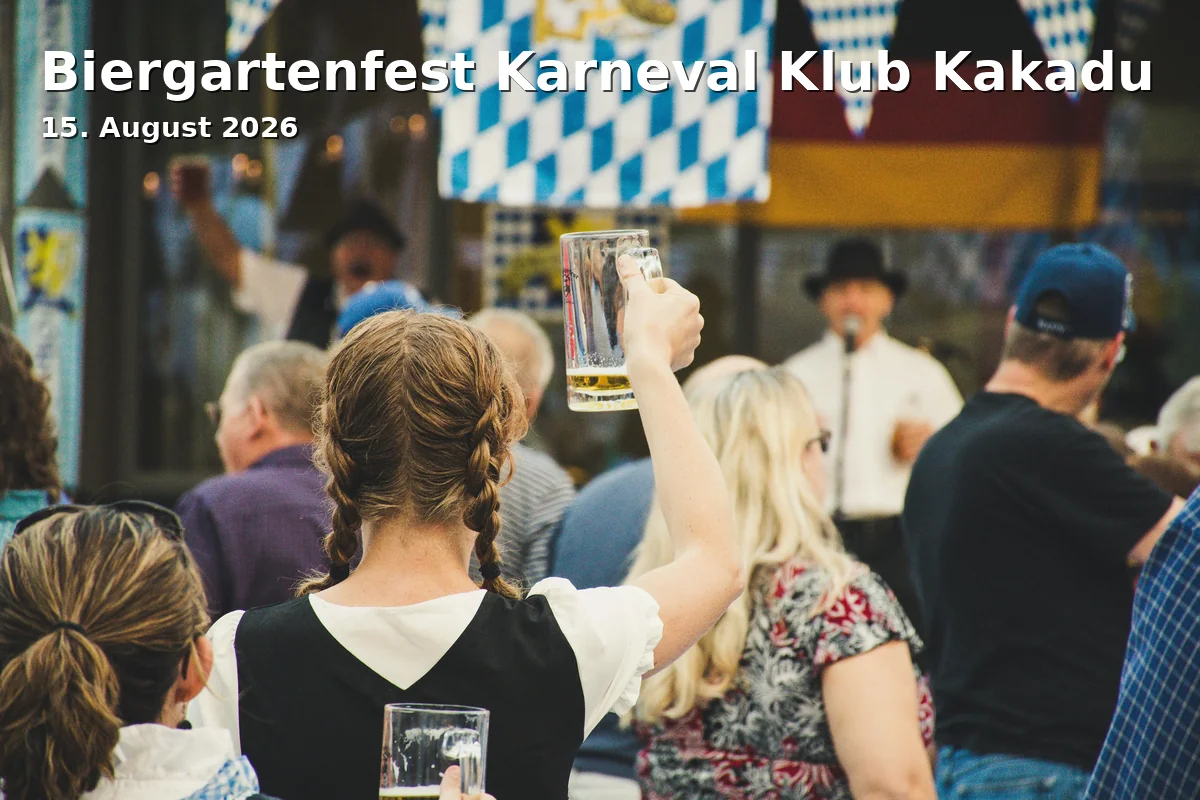
According to the club's page, two larger festivals take place regularly on this site, namely the Lufthoffest in June and the Weinfest in September. Additionally, the club's event pages show that other formats such as mulled wine festivals, grill and quiz nights, committee evenings, or youth meetings have also taken place at the Lufthof. The official event logic is thus not coincidental but part of a recurring club calendar. For people searching for events at Lufthof or Lufthoffest, it is clear: The place is not only passively used but actively utilized as an event space and meeting place. This mix of tradition, community, and a fixed location gives the name Lufthofweg an additional emotional depth. ([karneval-klub-kakadu.de](https://karneval-klub-kakadu.de/?page_id=338&utm_source=openai))
Moreover, the Carnival Club Kakadu uses the Lufthof not only for large festivals but also as a club house and for youth work. The youth group has existed since December 3, 2007, and the youth page explicitly names the Lufthof as the club house. This is relevant for SEO because it explains why Lufthofweg is associated online with terms like carnival, club house, youth group, wine festival, and Lufthoffest. Those entering this search do not land at just any street but at a place with a lot of social density. The Lufthofweg is thus also a key term for local culture, volunteer work, and intergenerational club life in Aschaffenburg. ([karneval-klub-kakadu.de](https://karneval-klub-kakadu.de/?page_id=25&utm_source=openai))
History and Change of the Lufthof
The history of the Lufthof is closely linked to change. The city archive contribution describes a courtyard that was saved from demolition, indicating a phase of decay and uncertainty. At the same time, the same contribution shows that the place was subsequently restored and renovated. From the sum of this information, it can be concluded that the Lufthof is not a static monument but a place that has had to continually assert its identity. This makes it historically interesting: It exemplifies many places whose survival was not a given but had to be secured through ownership, clubs, and commitment. In today's perception, the history of a rescue is therefore always resonant. ([aschaffenburgzweinull.stadtarchiv-digital.de](https://aschaffenburgzweinull.stadtarchiv-digital.de/bubengeschichten-vom-godelsberg-der-lufthof/))
The city archive page also documents the Lufthof with images, including a view postcard from the 1930s and a photo from 1980. Even this selection of images shows that the place has been present in various eras and holds a fixed place in urban memory. For content focusing on history and peculiarities, this is crucial because it does not reduce the place to its current use. Instead, it becomes visible that the Lufthofweg and the Lufthof must be understood from a longer historical context. Therefore, those interested in Lufthofweg Aschaffenburg are usually also interested in the traces of an old courtyard that continues to live in the urban space, even though its function has changed. ([aschaffenburgzweinull.stadtarchiv-digital.de](https://aschaffenburgzweinull.stadtarchiv-digital.de/bubengeschichten-vom-godelsberg-der-lufthof/))
The club history of the Carnival Club Kakadu also underscores this change. It describes that the club searched for suitable spaces for years and finally received its own club house with the takeover of the dilapidated Lufthof in 1981. Additionally, it states that a new center for club work has been created through self-help and with financial support from the city administration. From an SEO perspective, this story is particularly valuable because it brings together the search terms history, peculiarity, club, and tradition. The Lufthofweg thus stands not only for an address but for a successful transformation from a threatened courtyard to a vibrant center of carnival and festival culture. ([karneval-klub-kakadu.de](https://karneval-klub-kakadu.de/?page_id=338&utm_source=openai))
This development also explains why the place is still emotionally charged today. Those searching for Lufthofweg or Lufthof are often not just looking for directions but for a piece of Aschaffenburg memory. This concerns club members as well as guests attending a festival or people wanting to learn about the historical character of the area. The Lufthof is thus a good example of how a formerly agricultural or economically shaped place can transform into a cultural club center without losing its local identity. This mix of old and new, of courtyard and festival, makes the Lufthofweg particularly attractive for search and for storytelling about the place. ([aschaffenburgzweinull.stadtarchiv-digital.de](https://aschaffenburgzweinull.stadtarchiv-digital.de/bubengeschichten-vom-godelsberg-der-lufthof/))
Directions, Surroundings, and Practical Classification
For practical classification, it is important that the Lufthofweg is clearly findable in official and semi-official sources. The city’s event calendar names the Lufthof as an event venue with the address Lufthofweg in 63739 Aschaffenburg, and the club pages of the Carnival Club Kakadu list the same place as a fixed location. For users, this means: The path is not a vague location but a reliable address that appears both in club communication and in city event notices. Therefore, those searching for directions to Lufthofweg are looking for a place that is documented, used, and regularly published. ([info-aschaffenburg.de](https://info-aschaffenburg.de/veranstaltungskalender/details.html?id=3a1015e2-7b86-11f1-91b4-128948bb441f%2B2026-08-16T11%3A00%3A00&utm_source=openai))
The surroundings reinforce this impression of a clearly readable urban space. The street directory names, among others, Gartenhofer Weg, An der Lache, and Mollebuschallee in the immediate vicinity, while the city archive text locates the Lufthof towards the allotment garden Fasanerie. This creates an image of residential, green, and pathway areas, which speaks for a quiet but by no means remote location. This combination is particularly interesting for festival visitors or cyclists because it shows that the place is integrated into an urban context while maintaining a certain distance from the bustling city center. This balance of accessibility and atmosphere is one of the reasons why search queries for this place are often combined with directions, bicycle street, and Fasanerie. ([onlinestreet.de](https://onlinestreet.de/strassen/Lufthofweg.Aschaffenburg.147354.html))
The official city image of Aschaffenburg also aids understanding. The city describes the Fasanerie as a nature-friendly managed park forest and a popular local recreation area that forms the transition to the open landscape and offers a lot of quality of stay with walking paths, playgrounds, and beer gardens. In this context, the Lufthofweg lies at a threshold between urban route and green recreational area. For users, this means: Those arriving here are not simply traveling on a street but in an area that connects traffic, leisure, and club life. The result is a location with high local recognizability and clear search relevance, even if it is formally a street. ([aschaffenburg.de](https://www.aschaffenburg.de/Freizeit-Tourismus/Sport-und-Freizeit/index.php?FID=4173.12292.1&La=1&ModID=7&NavID=4173.871&object=tx%7C4173.5.1&utm_source=openai))
In practice, one should always think of the Lufthofweg as a double address: as a traffic space in the cycling and urban structure and as the home of the Lufthof with its festivals and club activities. This dual role is particularly strong for SEO because it bundles several search intentions. Those searching for an event venue land at the Lufthof. Those looking for a cycling connection come across the rapid cycling route Aschafftal. Those searching for history and city character find the city archive's reference to a saved and renovated courtyard. The Lufthofweg is thus not an interchangeable street name but a locally precise term with multiple layers. This should also be reflected in the content strategy. ([aschaffenburg.de](https://www.aschaffenburg.de/Leben-in-Aschaffenburg/KFZ-Stra%C3%9Fe-und-Verkehr/Stra%C3%9Fe-Verkehr/Radverkehr/Fahrradstra%C3%9Fen-und-Radschnellwege/))
Why the Lufthofweg Stands Out in Search Queries
The Lufthofweg stands out in search queries because it unites several content clusters that reinforce each other. One cluster is mobility: bicycle street, rapid cycling route, right-of-way changes, and Goldbach extension. A second cluster is club culture: Carnival Club Kakadu, Lufthoffest, Weinfest, and youth group. A third cluster is local history: saved courtyard, renovation, archive material, and urban memory. From these three levels, a strong semantic density arises that works very well in local searches. Those entering the name Lufthofweg are not just looking for a number on the city map but a connection between several themes that converge at exactly this place in Aschaffenburg. ([aschaffenburg.de](https://www.aschaffenburg.de/Leben-in-Aschaffenburg/KFZ-Stra%C3%9Fe-und-Verkehr/Stra%C3%9Fe-Verkehr/Radverkehr/Fahrradstra%C3%9Fen-und-Radschnellwege/))
For content representation, it is therefore important not to view the street in isolation. The Lufthofweg is neither just a thoroughfare nor just a festival site and not just a historical name. It is an example of how a place can be relevant simultaneously in everyday life, urban planning, and local culture. This complexity should be made visible in SEO texts because users have different expectations depending on their search query. Some want to know where the place is located. Others are interested in the current program. Still, others are looking for a cycling connection or the background of the Lufthof. The best content answers these questions together rather than tearing them apart. ([onlinestreet.de](https://onlinestreet.de/strassen/Lufthofweg.Aschaffenburg.147354.html))
Those discovering the Lufthofweg also discover a piece of urban continuity. The street is now part of modern bicycle planning, the Lufthof is an active club house with festivals, and the city archive documents the former and later history of the place. This results in clear added value for visitors and search engines: The Lufthofweg is a real, verifiable, and narratable place. Therefore, it is not limited to the map but becomes a term with recognizability in the local network of Aschaffenburg. Particularly in a city where green belts, culture, and club life are closely intertwined, this connection is particularly strong. ([aschaffenburgzweinull.stadtarchiv-digital.de](https://aschaffenburgzweinull.stadtarchiv-digital.de/bubengeschichten-vom-godelsberg-der-lufthof/))
Sources and further orientation help to secure this complexity. For current traffic planning, the city page on the rapid cycling route is crucial, for club and festival culture the pages of the Carnival Club Kakadu, for historical classification the city archive contribution, and for spatial proximity the street directory. This creates a robust overall picture that requires no imagination yet is rich in context. This is how a local SEO text should function: precise, well-readable, search-intelligent, and based on real sources. ([aschaffenburg.de](https://www.aschaffenburg.de/Leben-in-Aschaffenburg/KFZ-Stra%C3%9Fe-und-Verkehr/Stra%C3%9Fe-Verkehr/Radverkehr/Fahrradstra%C3%9Fen-und-Radschnellwege/))
Sources:
- City of Aschaffenburg - Bicycle Streets and Rapid Cycling Routes
- City and Abbey Archive Aschaffenburg - Bubengeschichten vom Godelsberg - the Lufthof
- CCC Carnival Club Concordia e.V. Aschaffenburg - Contact and Imprint
- CCC Carnival Club Concordia e.V. Aschaffenburg - Dates
- Carnival Club Kakadu 1966 e.V. - About Us
- Onlinestreet - Lufthofweg in 63739 Aschaffenburg City Center
- City of Aschaffenburg - Green Areas and Parks
Mehr anzeigenWeniger anzeigen
Lufthofweg | Bicycle Street & Lufthof
The Lufthofweg in Aschaffenburg is a place where several search intentions overlap: Many people search for the street itself, others for the Lufthof as a club area, and still others for the connection to the Fasanerie, to the bicycle street, or to events in the vicinity. That is exactly why the Lufthofweg is not just a point on the map, but a piece of lived urban structure between the city center, green space, and club life. The city of Aschaffenburg clearly incorporates the Lufthofweg into its cycling traffic planning, the Carnival Club Kakadu uses the Lufthof as a fixed address, and the city archive reminds us that the place has been reinterpreted repeatedly over decades. Therefore, those searching for Lufthofweg Aschaffenburg are usually looking for not just a street, but orientation, history, mobility, and a unique piece of Aschaffenburg identity. ([aschaffenburg.de](https://www.aschaffenburg.de/Leben-in-Aschaffenburg/KFZ-Stra%C3%9Fe-und-Verkehr/Stra%C3%9Fe-Verkehr/Radverkehr/Fahrradstra%C3%9Fen-und-Radschnellwege/))
This page consolidates the most important information so that users quickly understand what the Lufthofweg stands for: for a location on the edge of the green east of Aschaffenburg, for the connection to the rapid cycling route Aschafftal, for the club house of the Carnival Club Kakadu, and for events that still have a fixed place in city life today. This is particularly important because the Lufthofweg can appear very differently depending on the search context. For some, it is a bicycle street, for others, the way to the Lufthof, and for others still, a name associated with the surroundings of Fasanerie, allotment gardens, and historical courtyard facilities. The following text neatly categorizes these facets while sticking to verifiable facts. ([aschaffenburg.de](https://www.aschaffenburg.de/Leben-in-Aschaffenburg/KFZ-Stra%C3%9Fe-und-Verkehr/Stra%C3%9Fe-Verkehr/Radverkehr/Fahrradstra%C3%9Fen-und-Radschnellwege/))
Location and Orientation between City Center, Fasanerie, and Surroundings
The Lufthofweg is located in 63739 Aschaffenburg and is assigned to the city district of the city center in the street directory. The street environment is closely linked with other paths and streets, including Gartenhofer Weg, An der Lache, Mollebuschallee, Kirchnerstraße, Ritterweg, Österreicher Straße, and Lothringer Straße. This neighborhood shows that it is not an isolated peripheral location but an area clearly integrated into the urban road network. For visitors, this is helpful because search queries like directions to Lufthofweg or Lufthofweg Aschaffenburg often target this spatial classification. To understand the place, one should not only read it as a name but as part of a grown urban structure where living, traffic, and club use intersect. ([onlinestreet.de](https://onlinestreet.de/strassen/Lufthofweg.Aschaffenburg.147354.html))
The urban planning classification becomes even more vivid in the city archive: There, the Lufthof is described as a place at the beginning of Schmerlenbacher Straße, after the armory and the subsequent upper Fasanerie woods with the Luginsland, towards Schellenmühle and Schmerlenbach, on the left side at Lufthofweg. This description is particularly valuable for orientation because it anchors the place in the topographical reality. Thus, the Lufthofweg is not randomly located somewhere but at an intersection between the inner-city edge, green belt, and a route leading towards the Fasanerie. For search engines as well as for people, this means: The Lufthofweg is an address that is understood through urban spaces, not through mere administrative data. ([aschaffenburgzweinull.stadtarchiv-digital.de](https://aschaffenburgzweinull.stadtarchiv-digital.de/bubengeschichten-vom-godelsberg-der-lufthof/))
The larger environment is also important for perception. According to the city and city history, the Aschaffenburg Fasanerie extends spatially to the Lufthofweg, and the area around the Lufthof thus belongs to a landscape-shaped section that is traditionally perceived in Aschaffenburg as a nearby recreational area. This explains why the Lufthofweg often appears in search queries together with Fasanerie, bike path, walk, or club house. The place is indeed where urban accessibility and green surroundings meet. This combination makes its relevance: It is simultaneously an address, connecting path, and access to a part of the city that radiates more tranquility and more open space than the pure city center. ([de.wikipedia.org](https://de.wikipedia.org/wiki/Fasanerie_%28Aschaffenburg%29))
Bicycle Street and Rapid Cycling Route Aschafftal
A central theme surrounding the Lufthofweg is the cycling traffic planning of the city of Aschaffenburg. The city explicitly names the Lufthofweg as part of the rapid cycling route Aschafftal. The basis was a feasibility study from 2019, on which the city council decided to implement it on the intended route. According to the city, this route includes Platanenallee, Deschstraße, Deutsche Straße, and indeed the Lufthofweg. Thus, the Lufthofweg is not only a local street but part of a larger mobility project. Therefore, those searching for bicycle street Lufthofweg are looking for a real urban measure intended to make cycling traffic more visible, safer, and more efficient. ([aschaffenburg.de](https://www.aschaffenburg.de/Leben-in-Aschaffenburg/KFZ-Stra%C3%9Fe-und-Verkehr/Stra%C3%9Fe-Verkehr/Radverkehr/Fahrradstra%C3%9Fen-und-Radschnellwege/))
Particularly important is the extension of the bicycle street into the Lufthofweg up to Goldbach in October 2022. This measure shows that the Lufthofweg does not end at its own street edge in traffic planning but is part of a longer connection. The city also describes other measures already implemented along the route, such as the designation of Deschstraße and Deutsche Straße as bicycle streets, changes to the traffic light control at Hohenzollernring, a bike counting station, and changes to right-of-way. For the Lufthofweg, this primarily means one thing: It is anchored in an area where cycling traffic is not only considered but systematically strengthened. This makes the place interesting for all those looking for safe connections, organized guidance, and modern mobility infrastructure. ([aschaffenburg.de](https://www.aschaffenburg.de/Leben-in-Aschaffenburg/KFZ-Stra%C3%9Fe-und-Verkehr/Stra%C3%9Fe-Verkehr/Radverkehr/Fahrradstra%C3%9Fen-und-Radschnellwege/))
The city defines the term rapid cycling route as the highest network category in cycling traffic. The goal is to bundle everyday cyclists on efficient routes; characteristics include wide, comfortable, and high-quality pathways, as few conflicts with other road users as possible, and prioritized crossings. For the Lufthofweg, this classification is significant because it changes the street image and shapes the use. Those traveling on the Lufthofweg experience it not only as a thoroughfare but as part of a deliberately designed cycling axis. This perspective is not merely theoretical but directly follows from municipal planning. Therefore, search queries for Lufthofweg and bicycle street are also always search queries for a contemporary form of transport that Aschaffenburg has implemented here. ([aschaffenburg.de](https://www.aschaffenburg.de/Leben-in-Aschaffenburg/KFZ-Stra%C3%9Fe-und-Verkehr/Stra%C3%9Fe-Verkehr/Radverkehr/Fahrradstra%C3%9Fen-und-Radschnellwege/))
The Lufthof as Club House, Meeting Point, and Event Venue
The Lufthof is the second major area of significance behind the street name. The official address of the Carnival Club Kakadu is Bismarckallee 9 or Bismarckallee 9 with the addition of Lufthofweg, 63739 Aschaffenburg. This shows that the street and the club area closely overlap in everyday life. The city archive contribution notes that the courtyard was saved by the city of Aschaffenburg as the owner before demolition and has been restored and renovated by the Carnival Club Kakadu as the current tenant since 1982. The club's page adds that the Lufthof, threatened by decay, was taken over in 1981 and subsequently transformed into its own club house through self-help and with the support of the city administration. For the search for Lufthof Aschaffenburg, this is a core piece of information: Here lies a developed club life with a clear address and documented development. ([aschaffenburgzweinull.stadtarchiv-digital.de](https://aschaffenburgzweinull.stadtarchiv-digital.de/bubengeschichten-vom-godelsberg-der-lufthof/))
According to the club's page, two larger festivals take place regularly on this site, namely the Lufthoffest in June and the Weinfest in September. Additionally, the club's event pages show that other formats such as mulled wine festivals, grill and quiz nights, committee evenings, or youth meetings have also taken place at the Lufthof. The official event logic is thus not coincidental but part of a recurring club calendar. For people searching for events at Lufthof or Lufthoffest, it is clear: The place is not only passively used but actively utilized as an event space and meeting place. This mix of tradition, community, and a fixed location gives the name Lufthofweg an additional emotional depth. ([karneval-klub-kakadu.de](https://karneval-klub-kakadu.de/?page_id=338&utm_source=openai))
Moreover, the Carnival Club Kakadu uses the Lufthof not only for large festivals but also as a club house and for youth work. The youth group has existed since December 3, 2007, and the youth page explicitly names the Lufthof as the club house. This is relevant for SEO because it explains why Lufthofweg is associated online with terms like carnival, club house, youth group, wine festival, and Lufthoffest. Those entering this search do not land at just any street but at a place with a lot of social density. The Lufthofweg is thus also a key term for local culture, volunteer work, and intergenerational club life in Aschaffenburg. ([karneval-klub-kakadu.de](https://karneval-klub-kakadu.de/?page_id=25&utm_source=openai))
History and Change of the Lufthof
The history of the Lufthof is closely linked to change. The city archive contribution describes a courtyard that was saved from demolition, indicating a phase of decay and uncertainty. At the same time, the same contribution shows that the place was subsequently restored and renovated. From the sum of this information, it can be concluded that the Lufthof is not a static monument but a place that has had to continually assert its identity. This makes it historically interesting: It exemplifies many places whose survival was not a given but had to be secured through ownership, clubs, and commitment. In today's perception, the history of a rescue is therefore always resonant. ([aschaffenburgzweinull.stadtarchiv-digital.de](https://aschaffenburgzweinull.stadtarchiv-digital.de/bubengeschichten-vom-godelsberg-der-lufthof/))
The city archive page also documents the Lufthof with images, including a view postcard from the 1930s and a photo from 1980. Even this selection of images shows that the place has been present in various eras and holds a fixed place in urban memory. For content focusing on history and peculiarities, this is crucial because it does not reduce the place to its current use. Instead, it becomes visible that the Lufthofweg and the Lufthof must be understood from a longer historical context. Therefore, those interested in Lufthofweg Aschaffenburg are usually also interested in the traces of an old courtyard that continues to live in the urban space, even though its function has changed. ([aschaffenburgzweinull.stadtarchiv-digital.de](https://aschaffenburgzweinull.stadtarchiv-digital.de/bubengeschichten-vom-godelsberg-der-lufthof/))
The club history of the Carnival Club Kakadu also underscores this change. It describes that the club searched for suitable spaces for years and finally received its own club house with the takeover of the dilapidated Lufthof in 1981. Additionally, it states that a new center for club work has been created through self-help and with financial support from the city administration. From an SEO perspective, this story is particularly valuable because it brings together the search terms history, peculiarity, club, and tradition. The Lufthofweg thus stands not only for an address but for a successful transformation from a threatened courtyard to a vibrant center of carnival and festival culture. ([karneval-klub-kakadu.de](https://karneval-klub-kakadu.de/?page_id=338&utm_source=openai))
This development also explains why the place is still emotionally charged today. Those searching for Lufthofweg or Lufthof are often not just looking for directions but for a piece of Aschaffenburg memory. This concerns club members as well as guests attending a festival or people wanting to learn about the historical character of the area. The Lufthof is thus a good example of how a formerly agricultural or economically shaped place can transform into a cultural club center without losing its local identity. This mix of old and new, of courtyard and festival, makes the Lufthofweg particularly attractive for search and for storytelling about the place. ([aschaffenburgzweinull.stadtarchiv-digital.de](https://aschaffenburgzweinull.stadtarchiv-digital.de/bubengeschichten-vom-godelsberg-der-lufthof/))
Directions, Surroundings, and Practical Classification
For practical classification, it is important that the Lufthofweg is clearly findable in official and semi-official sources. The city’s event calendar names the Lufthof as an event venue with the address Lufthofweg in 63739 Aschaffenburg, and the club pages of the Carnival Club Kakadu list the same place as a fixed location. For users, this means: The path is not a vague location but a reliable address that appears both in club communication and in city event notices. Therefore, those searching for directions to Lufthofweg are looking for a place that is documented, used, and regularly published. ([info-aschaffenburg.de](https://info-aschaffenburg.de/veranstaltungskalender/details.html?id=3a1015e2-7b86-11f1-91b4-128948bb441f%2B2026-08-16T11%3A00%3A00&utm_source=openai))
The surroundings reinforce this impression of a clearly readable urban space. The street directory names, among others, Gartenhofer Weg, An der Lache, and Mollebuschallee in the immediate vicinity, while the city archive text locates the Lufthof towards the allotment garden Fasanerie. This creates an image of residential, green, and pathway areas, which speaks for a quiet but by no means remote location. This combination is particularly interesting for festival visitors or cyclists because it shows that the place is integrated into an urban context while maintaining a certain distance from the bustling city center. This balance of accessibility and atmosphere is one of the reasons why search queries for this place are often combined with directions, bicycle street, and Fasanerie. ([onlinestreet.de](https://onlinestreet.de/strassen/Lufthofweg.Aschaffenburg.147354.html))
The official city image of Aschaffenburg also aids understanding. The city describes the Fasanerie as a nature-friendly managed park forest and a popular local recreation area that forms the transition to the open landscape and offers a lot of quality of stay with walking paths, playgrounds, and beer gardens. In this context, the Lufthofweg lies at a threshold between urban route and green recreational area. For users, this means: Those arriving here are not simply traveling on a street but in an area that connects traffic, leisure, and club life. The result is a location with high local recognizability and clear search relevance, even if it is formally a street. ([aschaffenburg.de](https://www.aschaffenburg.de/Freizeit-Tourismus/Sport-und-Freizeit/index.php?FID=4173.12292.1&La=1&ModID=7&NavID=4173.871&object=tx%7C4173.5.1&utm_source=openai))
In practice, one should always think of the Lufthofweg as a double address: as a traffic space in the cycling and urban structure and as the home of the Lufthof with its festivals and club activities. This dual role is particularly strong for SEO because it bundles several search intentions. Those searching for an event venue land at the Lufthof. Those looking for a cycling connection come across the rapid cycling route Aschafftal. Those searching for history and city character find the city archive's reference to a saved and renovated courtyard. The Lufthofweg is thus not an interchangeable street name but a locally precise term with multiple layers. This should also be reflected in the content strategy. ([aschaffenburg.de](https://www.aschaffenburg.de/Leben-in-Aschaffenburg/KFZ-Stra%C3%9Fe-und-Verkehr/Stra%C3%9Fe-Verkehr/Radverkehr/Fahrradstra%C3%9Fen-und-Radschnellwege/))
Why the Lufthofweg Stands Out in Search Queries
The Lufthofweg stands out in search queries because it unites several content clusters that reinforce each other. One cluster is mobility: bicycle street, rapid cycling route, right-of-way changes, and Goldbach extension. A second cluster is club culture: Carnival Club Kakadu, Lufthoffest, Weinfest, and youth group. A third cluster is local history: saved courtyard, renovation, archive material, and urban memory. From these three levels, a strong semantic density arises that works very well in local searches. Those entering the name Lufthofweg are not just looking for a number on the city map but a connection between several themes that converge at exactly this place in Aschaffenburg. ([aschaffenburg.de](https://www.aschaffenburg.de/Leben-in-Aschaffenburg/KFZ-Stra%C3%9Fe-und-Verkehr/Stra%C3%9Fe-Verkehr/Radverkehr/Fahrradstra%C3%9Fen-und-Radschnellwege/))
For content representation, it is therefore important not to view the street in isolation. The Lufthofweg is neither just a thoroughfare nor just a festival site and not just a historical name. It is an example of how a place can be relevant simultaneously in everyday life, urban planning, and local culture. This complexity should be made visible in SEO texts because users have different expectations depending on their search query. Some want to know where the place is located. Others are interested in the current program. Still, others are looking for a cycling connection or the background of the Lufthof. The best content answers these questions together rather than tearing them apart. ([onlinestreet.de](https://onlinestreet.de/strassen/Lufthofweg.Aschaffenburg.147354.html))
Those discovering the Lufthofweg also discover a piece of urban continuity. The street is now part of modern bicycle planning, the Lufthof is an active club house with festivals, and the city archive documents the former and later history of the place. This results in clear added value for visitors and search engines: The Lufthofweg is a real, verifiable, and narratable place. Therefore, it is not limited to the map but becomes a term with recognizability in the local network of Aschaffenburg. Particularly in a city where green belts, culture, and club life are closely intertwined, this connection is particularly strong. ([aschaffenburgzweinull.stadtarchiv-digital.de](https://aschaffenburgzweinull.stadtarchiv-digital.de/bubengeschichten-vom-godelsberg-der-lufthof/))
Sources and further orientation help to secure this complexity. For current traffic planning, the city page on the rapid cycling route is crucial, for club and festival culture the pages of the Carnival Club Kakadu, for historical classification the city archive contribution, and for spatial proximity the street directory. This creates a robust overall picture that requires no imagination yet is rich in context. This is how a local SEO text should function: precise, well-readable, search-intelligent, and based on real sources. ([aschaffenburg.de](https://www.aschaffenburg.de/Leben-in-Aschaffenburg/KFZ-Stra%C3%9Fe-und-Verkehr/Stra%C3%9Fe-Verkehr/Radverkehr/Fahrradstra%C3%9Fen-und-Radschnellwege/))
Sources:
- City of Aschaffenburg - Bicycle Streets and Rapid Cycling Routes
- City and Abbey Archive Aschaffenburg - Bubengeschichten vom Godelsberg - the Lufthof
- CCC Carnival Club Concordia e.V. Aschaffenburg - Contact and Imprint
- CCC Carnival Club Concordia e.V. Aschaffenburg - Dates
- Carnival Club Kakadu 1966 e.V. - About Us
- Onlinestreet - Lufthofweg in 63739 Aschaffenburg City Center
- City of Aschaffenburg - Green Areas and Parks
Lufthofweg | Bicycle Street & Lufthof
The Lufthofweg in Aschaffenburg is a place where several search intentions overlap: Many people search for the street itself, others for the Lufthof as a club area, and still others for the connection to the Fasanerie, to the bicycle street, or to events in the vicinity. That is exactly why the Lufthofweg is not just a point on the map, but a piece of lived urban structure between the city center, green space, and club life. The city of Aschaffenburg clearly incorporates the Lufthofweg into its cycling traffic planning, the Carnival Club Kakadu uses the Lufthof as a fixed address, and the city archive reminds us that the place has been reinterpreted repeatedly over decades. Therefore, those searching for Lufthofweg Aschaffenburg are usually looking for not just a street, but orientation, history, mobility, and a unique piece of Aschaffenburg identity. ([aschaffenburg.de](https://www.aschaffenburg.de/Leben-in-Aschaffenburg/KFZ-Stra%C3%9Fe-und-Verkehr/Stra%C3%9Fe-Verkehr/Radverkehr/Fahrradstra%C3%9Fen-und-Radschnellwege/))
This page consolidates the most important information so that users quickly understand what the Lufthofweg stands for: for a location on the edge of the green east of Aschaffenburg, for the connection to the rapid cycling route Aschafftal, for the club house of the Carnival Club Kakadu, and for events that still have a fixed place in city life today. This is particularly important because the Lufthofweg can appear very differently depending on the search context. For some, it is a bicycle street, for others, the way to the Lufthof, and for others still, a name associated with the surroundings of Fasanerie, allotment gardens, and historical courtyard facilities. The following text neatly categorizes these facets while sticking to verifiable facts. ([aschaffenburg.de](https://www.aschaffenburg.de/Leben-in-Aschaffenburg/KFZ-Stra%C3%9Fe-und-Verkehr/Stra%C3%9Fe-Verkehr/Radverkehr/Fahrradstra%C3%9Fen-und-Radschnellwege/))
Location and Orientation between City Center, Fasanerie, and Surroundings
The Lufthofweg is located in 63739 Aschaffenburg and is assigned to the city district of the city center in the street directory. The street environment is closely linked with other paths and streets, including Gartenhofer Weg, An der Lache, Mollebuschallee, Kirchnerstraße, Ritterweg, Österreicher Straße, and Lothringer Straße. This neighborhood shows that it is not an isolated peripheral location but an area clearly integrated into the urban road network. For visitors, this is helpful because search queries like directions to Lufthofweg or Lufthofweg Aschaffenburg often target this spatial classification. To understand the place, one should not only read it as a name but as part of a grown urban structure where living, traffic, and club use intersect. ([onlinestreet.de](https://onlinestreet.de/strassen/Lufthofweg.Aschaffenburg.147354.html))
The urban planning classification becomes even more vivid in the city archive: There, the Lufthof is described as a place at the beginning of Schmerlenbacher Straße, after the armory and the subsequent upper Fasanerie woods with the Luginsland, towards Schellenmühle and Schmerlenbach, on the left side at Lufthofweg. This description is particularly valuable for orientation because it anchors the place in the topographical reality. Thus, the Lufthofweg is not randomly located somewhere but at an intersection between the inner-city edge, green belt, and a route leading towards the Fasanerie. For search engines as well as for people, this means: The Lufthofweg is an address that is understood through urban spaces, not through mere administrative data. ([aschaffenburgzweinull.stadtarchiv-digital.de](https://aschaffenburgzweinull.stadtarchiv-digital.de/bubengeschichten-vom-godelsberg-der-lufthof/))
The larger environment is also important for perception. According to the city and city history, the Aschaffenburg Fasanerie extends spatially to the Lufthofweg, and the area around the Lufthof thus belongs to a landscape-shaped section that is traditionally perceived in Aschaffenburg as a nearby recreational area. This explains why the Lufthofweg often appears in search queries together with Fasanerie, bike path, walk, or club house. The place is indeed where urban accessibility and green surroundings meet. This combination makes its relevance: It is simultaneously an address, connecting path, and access to a part of the city that radiates more tranquility and more open space than the pure city center. ([de.wikipedia.org](https://de.wikipedia.org/wiki/Fasanerie_%28Aschaffenburg%29))
Bicycle Street and Rapid Cycling Route Aschafftal
A central theme surrounding the Lufthofweg is the cycling traffic planning of the city of Aschaffenburg. The city explicitly names the Lufthofweg as part of the rapid cycling route Aschafftal. The basis was a feasibility study from 2019, on which the city council decided to implement it on the intended route. According to the city, this route includes Platanenallee, Deschstraße, Deutsche Straße, and indeed the Lufthofweg. Thus, the Lufthofweg is not only a local street but part of a larger mobility project. Therefore, those searching for bicycle street Lufthofweg are looking for a real urban measure intended to make cycling traffic more visible, safer, and more efficient. ([aschaffenburg.de](https://www.aschaffenburg.de/Leben-in-Aschaffenburg/KFZ-Stra%C3%9Fe-und-Verkehr/Stra%C3%9Fe-Verkehr/Radverkehr/Fahrradstra%C3%9Fen-und-Radschnellwege/))
Particularly important is the extension of the bicycle street into the Lufthofweg up to Goldbach in October 2022. This measure shows that the Lufthofweg does not end at its own street edge in traffic planning but is part of a longer connection. The city also describes other measures already implemented along the route, such as the designation of Deschstraße and Deutsche Straße as bicycle streets, changes to the traffic light control at Hohenzollernring, a bike counting station, and changes to right-of-way. For the Lufthofweg, this primarily means one thing: It is anchored in an area where cycling traffic is not only considered but systematically strengthened. This makes the place interesting for all those looking for safe connections, organized guidance, and modern mobility infrastructure. ([aschaffenburg.de](https://www.aschaffenburg.de/Leben-in-Aschaffenburg/KFZ-Stra%C3%9Fe-und-Verkehr/Stra%C3%9Fe-Verkehr/Radverkehr/Fahrradstra%C3%9Fen-und-Radschnellwege/))
The city defines the term rapid cycling route as the highest network category in cycling traffic. The goal is to bundle everyday cyclists on efficient routes; characteristics include wide, comfortable, and high-quality pathways, as few conflicts with other road users as possible, and prioritized crossings. For the Lufthofweg, this classification is significant because it changes the street image and shapes the use. Those traveling on the Lufthofweg experience it not only as a thoroughfare but as part of a deliberately designed cycling axis. This perspective is not merely theoretical but directly follows from municipal planning. Therefore, search queries for Lufthofweg and bicycle street are also always search queries for a contemporary form of transport that Aschaffenburg has implemented here. ([aschaffenburg.de](https://www.aschaffenburg.de/Leben-in-Aschaffenburg/KFZ-Stra%C3%9Fe-und-Verkehr/Stra%C3%9Fe-Verkehr/Radverkehr/Fahrradstra%C3%9Fen-und-Radschnellwege/))
The Lufthof as Club House, Meeting Point, and Event Venue
The Lufthof is the second major area of significance behind the street name. The official address of the Carnival Club Kakadu is Bismarckallee 9 or Bismarckallee 9 with the addition of Lufthofweg, 63739 Aschaffenburg. This shows that the street and the club area closely overlap in everyday life. The city archive contribution notes that the courtyard was saved by the city of Aschaffenburg as the owner before demolition and has been restored and renovated by the Carnival Club Kakadu as the current tenant since 1982. The club's page adds that the Lufthof, threatened by decay, was taken over in 1981 and subsequently transformed into its own club house through self-help and with the support of the city administration. For the search for Lufthof Aschaffenburg, this is a core piece of information: Here lies a developed club life with a clear address and documented development. ([aschaffenburgzweinull.stadtarchiv-digital.de](https://aschaffenburgzweinull.stadtarchiv-digital.de/bubengeschichten-vom-godelsberg-der-lufthof/))
According to the club's page, two larger festivals take place regularly on this site, namely the Lufthoffest in June and the Weinfest in September. Additionally, the club's event pages show that other formats such as mulled wine festivals, grill and quiz nights, committee evenings, or youth meetings have also taken place at the Lufthof. The official event logic is thus not coincidental but part of a recurring club calendar. For people searching for events at Lufthof or Lufthoffest, it is clear: The place is not only passively used but actively utilized as an event space and meeting place. This mix of tradition, community, and a fixed location gives the name Lufthofweg an additional emotional depth. ([karneval-klub-kakadu.de](https://karneval-klub-kakadu.de/?page_id=338&utm_source=openai))
Moreover, the Carnival Club Kakadu uses the Lufthof not only for large festivals but also as a club house and for youth work. The youth group has existed since December 3, 2007, and the youth page explicitly names the Lufthof as the club house. This is relevant for SEO because it explains why Lufthofweg is associated online with terms like carnival, club house, youth group, wine festival, and Lufthoffest. Those entering this search do not land at just any street but at a place with a lot of social density. The Lufthofweg is thus also a key term for local culture, volunteer work, and intergenerational club life in Aschaffenburg. ([karneval-klub-kakadu.de](https://karneval-klub-kakadu.de/?page_id=25&utm_source=openai))
History and Change of the Lufthof
The history of the Lufthof is closely linked to change. The city archive contribution describes a courtyard that was saved from demolition, indicating a phase of decay and uncertainty. At the same time, the same contribution shows that the place was subsequently restored and renovated. From the sum of this information, it can be concluded that the Lufthof is not a static monument but a place that has had to continually assert its identity. This makes it historically interesting: It exemplifies many places whose survival was not a given but had to be secured through ownership, clubs, and commitment. In today's perception, the history of a rescue is therefore always resonant. ([aschaffenburgzweinull.stadtarchiv-digital.de](https://aschaffenburgzweinull.stadtarchiv-digital.de/bubengeschichten-vom-godelsberg-der-lufthof/))
The city archive page also documents the Lufthof with images, including a view postcard from the 1930s and a photo from 1980. Even this selection of images shows that the place has been present in various eras and holds a fixed place in urban memory. For content focusing on history and peculiarities, this is crucial because it does not reduce the place to its current use. Instead, it becomes visible that the Lufthofweg and the Lufthof must be understood from a longer historical context. Therefore, those interested in Lufthofweg Aschaffenburg are usually also interested in the traces of an old courtyard that continues to live in the urban space, even though its function has changed. ([aschaffenburgzweinull.stadtarchiv-digital.de](https://aschaffenburgzweinull.stadtarchiv-digital.de/bubengeschichten-vom-godelsberg-der-lufthof/))
The club history of the Carnival Club Kakadu also underscores this change. It describes that the club searched for suitable spaces for years and finally received its own club house with the takeover of the dilapidated Lufthof in 1981. Additionally, it states that a new center for club work has been created through self-help and with financial support from the city administration. From an SEO perspective, this story is particularly valuable because it brings together the search terms history, peculiarity, club, and tradition. The Lufthofweg thus stands not only for an address but for a successful transformation from a threatened courtyard to a vibrant center of carnival and festival culture. ([karneval-klub-kakadu.de](https://karneval-klub-kakadu.de/?page_id=338&utm_source=openai))
This development also explains why the place is still emotionally charged today. Those searching for Lufthofweg or Lufthof are often not just looking for directions but for a piece of Aschaffenburg memory. This concerns club members as well as guests attending a festival or people wanting to learn about the historical character of the area. The Lufthof is thus a good example of how a formerly agricultural or economically shaped place can transform into a cultural club center without losing its local identity. This mix of old and new, of courtyard and festival, makes the Lufthofweg particularly attractive for search and for storytelling about the place. ([aschaffenburgzweinull.stadtarchiv-digital.de](https://aschaffenburgzweinull.stadtarchiv-digital.de/bubengeschichten-vom-godelsberg-der-lufthof/))
Directions, Surroundings, and Practical Classification
For practical classification, it is important that the Lufthofweg is clearly findable in official and semi-official sources. The city’s event calendar names the Lufthof as an event venue with the address Lufthofweg in 63739 Aschaffenburg, and the club pages of the Carnival Club Kakadu list the same place as a fixed location. For users, this means: The path is not a vague location but a reliable address that appears both in club communication and in city event notices. Therefore, those searching for directions to Lufthofweg are looking for a place that is documented, used, and regularly published. ([info-aschaffenburg.de](https://info-aschaffenburg.de/veranstaltungskalender/details.html?id=3a1015e2-7b86-11f1-91b4-128948bb441f%2B2026-08-16T11%3A00%3A00&utm_source=openai))
The surroundings reinforce this impression of a clearly readable urban space. The street directory names, among others, Gartenhofer Weg, An der Lache, and Mollebuschallee in the immediate vicinity, while the city archive text locates the Lufthof towards the allotment garden Fasanerie. This creates an image of residential, green, and pathway areas, which speaks for a quiet but by no means remote location. This combination is particularly interesting for festival visitors or cyclists because it shows that the place is integrated into an urban context while maintaining a certain distance from the bustling city center. This balance of accessibility and atmosphere is one of the reasons why search queries for this place are often combined with directions, bicycle street, and Fasanerie. ([onlinestreet.de](https://onlinestreet.de/strassen/Lufthofweg.Aschaffenburg.147354.html))
The official city image of Aschaffenburg also aids understanding. The city describes the Fasanerie as a nature-friendly managed park forest and a popular local recreation area that forms the transition to the open landscape and offers a lot of quality of stay with walking paths, playgrounds, and beer gardens. In this context, the Lufthofweg lies at a threshold between urban route and green recreational area. For users, this means: Those arriving here are not simply traveling on a street but in an area that connects traffic, leisure, and club life. The result is a location with high local recognizability and clear search relevance, even if it is formally a street. ([aschaffenburg.de](https://www.aschaffenburg.de/Freizeit-Tourismus/Sport-und-Freizeit/index.php?FID=4173.12292.1&La=1&ModID=7&NavID=4173.871&object=tx%7C4173.5.1&utm_source=openai))
In practice, one should always think of the Lufthofweg as a double address: as a traffic space in the cycling and urban structure and as the home of the Lufthof with its festivals and club activities. This dual role is particularly strong for SEO because it bundles several search intentions. Those searching for an event venue land at the Lufthof. Those looking for a cycling connection come across the rapid cycling route Aschafftal. Those searching for history and city character find the city archive's reference to a saved and renovated courtyard. The Lufthofweg is thus not an interchangeable street name but a locally precise term with multiple layers. This should also be reflected in the content strategy. ([aschaffenburg.de](https://www.aschaffenburg.de/Leben-in-Aschaffenburg/KFZ-Stra%C3%9Fe-und-Verkehr/Stra%C3%9Fe-Verkehr/Radverkehr/Fahrradstra%C3%9Fen-und-Radschnellwege/))
Why the Lufthofweg Stands Out in Search Queries
The Lufthofweg stands out in search queries because it unites several content clusters that reinforce each other. One cluster is mobility: bicycle street, rapid cycling route, right-of-way changes, and Goldbach extension. A second cluster is club culture: Carnival Club Kakadu, Lufthoffest, Weinfest, and youth group. A third cluster is local history: saved courtyard, renovation, archive material, and urban memory. From these three levels, a strong semantic density arises that works very well in local searches. Those entering the name Lufthofweg are not just looking for a number on the city map but a connection between several themes that converge at exactly this place in Aschaffenburg. ([aschaffenburg.de](https://www.aschaffenburg.de/Leben-in-Aschaffenburg/KFZ-Stra%C3%9Fe-und-Verkehr/Stra%C3%9Fe-Verkehr/Radverkehr/Fahrradstra%C3%9Fen-und-Radschnellwege/))
For content representation, it is therefore important not to view the street in isolation. The Lufthofweg is neither just a thoroughfare nor just a festival site and not just a historical name. It is an example of how a place can be relevant simultaneously in everyday life, urban planning, and local culture. This complexity should be made visible in SEO texts because users have different expectations depending on their search query. Some want to know where the place is located. Others are interested in the current program. Still, others are looking for a cycling connection or the background of the Lufthof. The best content answers these questions together rather than tearing them apart. ([onlinestreet.de](https://onlinestreet.de/strassen/Lufthofweg.Aschaffenburg.147354.html))
Those discovering the Lufthofweg also discover a piece of urban continuity. The street is now part of modern bicycle planning, the Lufthof is an active club house with festivals, and the city archive documents the former and later history of the place. This results in clear added value for visitors and search engines: The Lufthofweg is a real, verifiable, and narratable place. Therefore, it is not limited to the map but becomes a term with recognizability in the local network of Aschaffenburg. Particularly in a city where green belts, culture, and club life are closely intertwined, this connection is particularly strong. ([aschaffenburgzweinull.stadtarchiv-digital.de](https://aschaffenburgzweinull.stadtarchiv-digital.de/bubengeschichten-vom-godelsberg-der-lufthof/))
Sources and further orientation help to secure this complexity. For current traffic planning, the city page on the rapid cycling route is crucial, for club and festival culture the pages of the Carnival Club Kakadu, for historical classification the city archive contribution, and for spatial proximity the street directory. This creates a robust overall picture that requires no imagination yet is rich in context. This is how a local SEO text should function: precise, well-readable, search-intelligent, and based on real sources. ([aschaffenburg.de](https://www.aschaffenburg.de/Leben-in-Aschaffenburg/KFZ-Stra%C3%9Fe-und-Verkehr/Stra%C3%9Fe-Verkehr/Radverkehr/Fahrradstra%C3%9Fen-und-Radschnellwege/))
Sources:
- City of Aschaffenburg - Bicycle Streets and Rapid Cycling Routes
- City and Abbey Archive Aschaffenburg - Bubengeschichten vom Godelsberg - the Lufthof
- CCC Carnival Club Concordia e.V. Aschaffenburg - Contact and Imprint
- CCC Carnival Club Concordia e.V. Aschaffenburg - Dates
- Carnival Club Kakadu 1966 e.V. - About Us
- Onlinestreet - Lufthofweg in 63739 Aschaffenburg City Center
- City of Aschaffenburg - Green Areas and Parks
Frequently Asked Questions
Reviews
No reviews found