
Großostheim
Niedernberger Str. 11, 63762 Großostheim, Deutschland
Cross Chapel | History & Tours in Bachgau
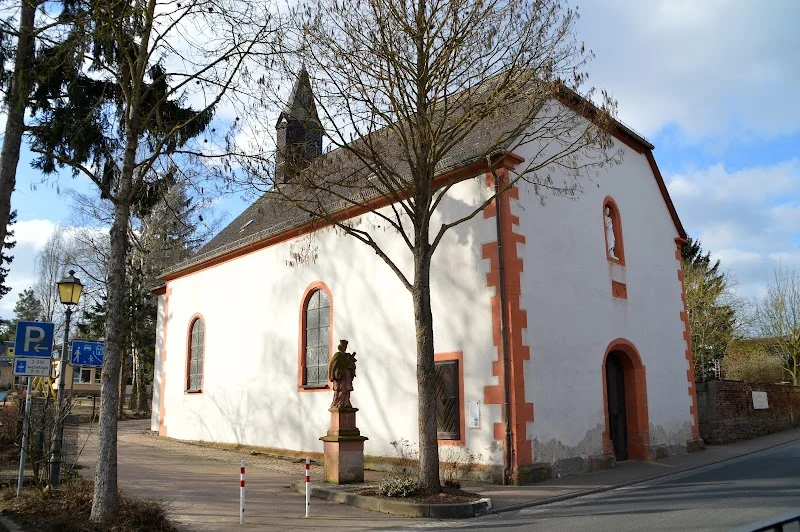
The Cross Chapel in Großostheim is not a loud event venue, but a quiet space of remembrance with great impact. Those interested in sacred art, regional history, and the special places of Bachgau will find here a destination that appears simple at first glance and reveals remarkable depth upon closer inspection. The official representation of the market town of Großostheim describes the chapel as a former pilgrimage site for the entire surrounding area; at the same time, it emphasizes that its exterior appears quite plain, while inside lies an art-historically outstanding work. This very contrast makes the Cross Chapel so exciting: modest on the outside, rich in meaning, craftsmanship, and historical memory on the inside. For visitors who do not just want to check off sights but truly experience history, the Cross Chapel is a place where religious tradition, regional identity, and art history overlap in a special way. It also plays an important role in the current tour offerings of the market town of Großostheim, as it is repeatedly mentioned as a central reference point in the church history of the place. ([grossostheim.de](https://www.grossostheim.de/Gro-Besuch/Bauwerke.html?utm_source=openai))
History of the Cross Chapel: Construction in 1513 and Renovation in 1743
The historical classification of the Cross Chapel is closely linked to the development of Großostheim as a church and culturally shaped market community. According to the official pages of the market town of Großostheim, the smaller Cross Chapel was built in 1513. Thus, it belongs to that generation of late medieval sacred buildings that served not only for worship but also expressed local piety, the will to endow, and societal self-affirmation. Particularly noteworthy is that the chapel was previously a significant pilgrimage site for the entire surrounding area, according to official accounts. This is important for understanding the place, as a pilgrimage site is never just a building: it is always also a path, a destination, and a social meeting point. People came here to pray, give thanks, speak intercessions, and experience the religious significance of the place. The visually simple exterior fits many historical chapels that gain significance not through architectural splendor but through their interior furnishings, symbolism, and usage. Another important turning point was the addition of the choir in 1743. This architectural redesign shows that the chapel should not be understood as a rigid monument but as a grown place that has been adapted, expanded, and liturgically redefined over centuries. It is precisely this historical layering that creates the charm: 1513 as the founding year, 1743 as the year of change, and to this day as a testament to a vibrant local culture of memory. Therefore, when visiting the Cross Chapel, one reads not only a space but a timeline. And this is exactly what the market town of Großostheim conveys very clearly in its building and history pages. ([grossostheim.de](https://www.grossostheim.de/Gro-Besuch/Bauwerke.html?utm_source=openai))
The Crucifixion Group by Hans Backoffen as the Heart of the Chapel
The actual heart of the Cross Chapel is the crucifixion group made of red sandstone, which, according to the market town of Großostheim, is life-sized and dated to 1510. It comes from the school of Hans Backoffen in Mainz and thus belongs to the art-historically particularly valuable area of sacred art at the transition from Gothic to Renaissance. This very transition is of great significance for experts and culture-interested visitors: In such works, a new understanding of physicality, expression, and space often emerges, without the older religious iconography completely disappearing. The crucifixion group in Großostheim is therefore perceived not only as a religious object but as a work of art of supra-regional interest. Its creation from red sandstone emphasizes its material presence and its roots in the regional building and sculptural culture of the Untermain. Life-sized figures also create an immediate closeness: the scene does not appear distant or miniature but confronts the viewer almost physically. This is precisely what makes the place so impressive. The official text speaks of a work of art of a special kind and thus refers to the extraordinary quality inside the otherwise plain chapel. For SEO relevance, this topic is central because search queries related to the crucifixion group, Hans Backoffen, sacred art, and late Gothic sculpture are directly connected to the profile of the place. Those who visit the Cross Chapel do not simply enter a chapel but come face to face with one of the most remarkable works of art in Großostheim. And even though the outer architecture is modest, it becomes very clear inside why this place has attracted people for generations and remains art-historically and spiritually relevant to this day. ([grossostheim.de](https://www.grossostheim.de/Gro-Besuch/Bauwerke.html?utm_source=openai))
Pilgrimage Site, Church History, and Tours in Bachgau
The Cross Chapel should not be viewed in isolation but as part of the church history of Großostheim. The market town of Großostheim explicitly incorporates it into its tour offerings within the thematic world of Großostheim's church history, together with the parish church of St. Peter and Paul. This is an important indication of how the region understands its sacred places: not as individual sights but as interconnected cultural entities. Particularly exciting is the narrative of the Cross Chapel as the endpoint of the pilgrimage from Aschaffenburg to Großostheim, which is mentioned in the market's tour network. For visitors, this means: the chapel represents not only a building but also a historical path and a spiritual movement through the landscape of Bachgau. Such pilgrimage references make places like the Cross Chapel readable because they keep the paths of previous generations visible. The market town of Großostheim offers this history in the form of tours that are part of the tour network and are accompanied by local contacts. Additionally, the Cross Chapel is mentioned in the context of events, often culminating in an organ concert on a historic memorial organ. Thus, a pure local visit transforms into a multifaceted cultural experience: history, art, sound, and space intertwine. The meeting point in the courtyard of the Nöthigsgut also shows that the chapel is embedded in a larger historical ensemble. Those who wish to discover Großostheim in a culturally interested way will therefore find not only an individual site but a building block in a whole network of church tours, local history, museums, and monument culture. This makes the Cross Chapel a particularly worthwhile destination for those interested in regional identity, pilgrimage traditions, and historical mediation formats. ([grossostheim.de](https://grossostheim.de/fuehrungsnetz.html?utm_source=openai))
Directions and Parking Around the Cross Chapel in Großostheim
For practical planning of a visit, it is important to know that the Cross Chapel is located in Großostheim and is thus integrated into the municipal traffic and parking system of the town. The market town of Großostheim publishes a parking guidance system with several public parking lots in the town center. Among others, P2 New Town Hall on Schaafheimer Straße 33, P4 Old Town Hall on Breiten Straße 58, P6 Kanzleistraße, P7 Music School, P8 Old Cemetery or Böffinger Garden on Jahnstraße, P9 Turmstraße, and P10 Bachgau Stadium are mentioned. No dedicated visitor parking is indicated for the Cross Chapel itself on the official pages. This means in practice: those who wish to visit the chapel or participate in a tour should orient themselves to the public parking spaces in the town center and walk from there. This is often the most pleasant solution for historical town centers, as it preserves the character of the old town and allows one to consciously perceive the path through the historical surroundings. Especially for tours, it is also advisable to pay attention to the specific meeting point, as the events of the tour network mention different starting points depending on the date, such as the courtyard of the Nöthigsgut or the marketplace. Therefore, those arriving by car should not only read the destination but also the event description carefully. For visitors from the region, the parking guidance system is a practical advantage as it consolidates several options in the town center. For cyclists or pedestrians, the location in the historic district is also attractive, as the Cross Chapel can be well connected with other stations of the Großostheim old town and cultural route. Overall, it holds that access is uncomplicated if one considers the historic town center and does not expect a large direct parking lot like at a classic event hall. The official parking structure of Großostheim provides the necessary orientation. ([grossostheim.de](https://www.grossostheim.de/parken.html?utm_source=openai))
Why the Cross Chapel is a Worthwhile Destination for Culture Enthusiasts
The Cross Chapel is particularly worth seeing because it connects several levels in a comparatively small place. It is a sacred space of remembrance, a unique piece of art history, a station of local piety, and at the same time part of a larger ensemble of buildings in Großostheim. The market itself refers in its overview to other significant places such as the marketplace, the Nöthigsgut, the BachgauMuseum, the Gothic House, the parish church of St. Peter and Paul, and the historical towers of the town. In this context, the Cross Chapel does not appear as an isolated footnote but as a particularly concentrated place of silence and history. This is an advantage for travelers seeking authentic places: one does not experience a staged attraction but a genuine cultural monument with transmitted significance. The chapel is also a good example of how Großostheim conveys its history. It is not the size of a building that takes center stage, but the density of the narrative: construction in 1513, redesign in 1743, former pilgrimage function, crucifixion group from the school of Hans Backoffen, tours on church history, and inclusion in the Day of Open Monuments. This makes the place interesting for families, cultural groups, school classes, local history associations, and individual travelers seeking a historical entry into Bachgau. Those who visit the chapel can easily connect the experience with other stations and thus create a half or full cultural day in Großostheim. In doing so, the atmosphere of the Cross Chapel remains distinctly different from that of a museum: quieter, more personal, more immediate. This is precisely where its strength lies. It shows that great history does not always have to be told in monumental buildings. Sometimes, a simple chapel with an extraordinary work of art is enough to make an entire region, its piety, and its cultural memory visible. Those who want to understand Großostheim should have seen this chapel. ([grossostheim.de](https://www.grossostheim.de/Gro-Besuch/Bauwerke.html?utm_source=openai))
Sources:
- Market Großostheim – Buildings ([grossostheim.de](https://www.grossostheim.de/Gro-Besuch/Bauwerke.html?utm_source=openai))
- Market Großostheim – History ([grossostheim.de](https://www.grossostheim.de/%C3%9Cber%2Buns/Geschichte.html?utm_source=openai))
- Market Großostheim – Tour Network and Tours September ([grossostheim.de](https://grossostheim.de/fuehrungsnetz.html?utm_source=openai))
- Market Großostheim – Parking in Großostheim ([grossostheim.de](https://www.grossostheim.de/parken.html?utm_source=openai))
Mehr anzeigenWeniger anzeigen
Cross Chapel | History & Tours in Bachgau
The Cross Chapel in Großostheim is not a loud event venue, but a quiet space of remembrance with great impact. Those interested in sacred art, regional history, and the special places of Bachgau will find here a destination that appears simple at first glance and reveals remarkable depth upon closer inspection. The official representation of the market town of Großostheim describes the chapel as a former pilgrimage site for the entire surrounding area; at the same time, it emphasizes that its exterior appears quite plain, while inside lies an art-historically outstanding work. This very contrast makes the Cross Chapel so exciting: modest on the outside, rich in meaning, craftsmanship, and historical memory on the inside. For visitors who do not just want to check off sights but truly experience history, the Cross Chapel is a place where religious tradition, regional identity, and art history overlap in a special way. It also plays an important role in the current tour offerings of the market town of Großostheim, as it is repeatedly mentioned as a central reference point in the church history of the place. ([grossostheim.de](https://www.grossostheim.de/Gro-Besuch/Bauwerke.html?utm_source=openai))
History of the Cross Chapel: Construction in 1513 and Renovation in 1743
The historical classification of the Cross Chapel is closely linked to the development of Großostheim as a church and culturally shaped market community. According to the official pages of the market town of Großostheim, the smaller Cross Chapel was built in 1513. Thus, it belongs to that generation of late medieval sacred buildings that served not only for worship but also expressed local piety, the will to endow, and societal self-affirmation. Particularly noteworthy is that the chapel was previously a significant pilgrimage site for the entire surrounding area, according to official accounts. This is important for understanding the place, as a pilgrimage site is never just a building: it is always also a path, a destination, and a social meeting point. People came here to pray, give thanks, speak intercessions, and experience the religious significance of the place. The visually simple exterior fits many historical chapels that gain significance not through architectural splendor but through their interior furnishings, symbolism, and usage. Another important turning point was the addition of the choir in 1743. This architectural redesign shows that the chapel should not be understood as a rigid monument but as a grown place that has been adapted, expanded, and liturgically redefined over centuries. It is precisely this historical layering that creates the charm: 1513 as the founding year, 1743 as the year of change, and to this day as a testament to a vibrant local culture of memory. Therefore, when visiting the Cross Chapel, one reads not only a space but a timeline. And this is exactly what the market town of Großostheim conveys very clearly in its building and history pages. ([grossostheim.de](https://www.grossostheim.de/Gro-Besuch/Bauwerke.html?utm_source=openai))
The Crucifixion Group by Hans Backoffen as the Heart of the Chapel
The actual heart of the Cross Chapel is the crucifixion group made of red sandstone, which, according to the market town of Großostheim, is life-sized and dated to 1510. It comes from the school of Hans Backoffen in Mainz and thus belongs to the art-historically particularly valuable area of sacred art at the transition from Gothic to Renaissance. This very transition is of great significance for experts and culture-interested visitors: In such works, a new understanding of physicality, expression, and space often emerges, without the older religious iconography completely disappearing. The crucifixion group in Großostheim is therefore perceived not only as a religious object but as a work of art of supra-regional interest. Its creation from red sandstone emphasizes its material presence and its roots in the regional building and sculptural culture of the Untermain. Life-sized figures also create an immediate closeness: the scene does not appear distant or miniature but confronts the viewer almost physically. This is precisely what makes the place so impressive. The official text speaks of a work of art of a special kind and thus refers to the extraordinary quality inside the otherwise plain chapel. For SEO relevance, this topic is central because search queries related to the crucifixion group, Hans Backoffen, sacred art, and late Gothic sculpture are directly connected to the profile of the place. Those who visit the Cross Chapel do not simply enter a chapel but come face to face with one of the most remarkable works of art in Großostheim. And even though the outer architecture is modest, it becomes very clear inside why this place has attracted people for generations and remains art-historically and spiritually relevant to this day. ([grossostheim.de](https://www.grossostheim.de/Gro-Besuch/Bauwerke.html?utm_source=openai))
Pilgrimage Site, Church History, and Tours in Bachgau
The Cross Chapel should not be viewed in isolation but as part of the church history of Großostheim. The market town of Großostheim explicitly incorporates it into its tour offerings within the thematic world of Großostheim's church history, together with the parish church of St. Peter and Paul. This is an important indication of how the region understands its sacred places: not as individual sights but as interconnected cultural entities. Particularly exciting is the narrative of the Cross Chapel as the endpoint of the pilgrimage from Aschaffenburg to Großostheim, which is mentioned in the market's tour network. For visitors, this means: the chapel represents not only a building but also a historical path and a spiritual movement through the landscape of Bachgau. Such pilgrimage references make places like the Cross Chapel readable because they keep the paths of previous generations visible. The market town of Großostheim offers this history in the form of tours that are part of the tour network and are accompanied by local contacts. Additionally, the Cross Chapel is mentioned in the context of events, often culminating in an organ concert on a historic memorial organ. Thus, a pure local visit transforms into a multifaceted cultural experience: history, art, sound, and space intertwine. The meeting point in the courtyard of the Nöthigsgut also shows that the chapel is embedded in a larger historical ensemble. Those who wish to discover Großostheim in a culturally interested way will therefore find not only an individual site but a building block in a whole network of church tours, local history, museums, and monument culture. This makes the Cross Chapel a particularly worthwhile destination for those interested in regional identity, pilgrimage traditions, and historical mediation formats. ([grossostheim.de](https://grossostheim.de/fuehrungsnetz.html?utm_source=openai))
Directions and Parking Around the Cross Chapel in Großostheim
For practical planning of a visit, it is important to know that the Cross Chapel is located in Großostheim and is thus integrated into the municipal traffic and parking system of the town. The market town of Großostheim publishes a parking guidance system with several public parking lots in the town center. Among others, P2 New Town Hall on Schaafheimer Straße 33, P4 Old Town Hall on Breiten Straße 58, P6 Kanzleistraße, P7 Music School, P8 Old Cemetery or Böffinger Garden on Jahnstraße, P9 Turmstraße, and P10 Bachgau Stadium are mentioned. No dedicated visitor parking is indicated for the Cross Chapel itself on the official pages. This means in practice: those who wish to visit the chapel or participate in a tour should orient themselves to the public parking spaces in the town center and walk from there. This is often the most pleasant solution for historical town centers, as it preserves the character of the old town and allows one to consciously perceive the path through the historical surroundings. Especially for tours, it is also advisable to pay attention to the specific meeting point, as the events of the tour network mention different starting points depending on the date, such as the courtyard of the Nöthigsgut or the marketplace. Therefore, those arriving by car should not only read the destination but also the event description carefully. For visitors from the region, the parking guidance system is a practical advantage as it consolidates several options in the town center. For cyclists or pedestrians, the location in the historic district is also attractive, as the Cross Chapel can be well connected with other stations of the Großostheim old town and cultural route. Overall, it holds that access is uncomplicated if one considers the historic town center and does not expect a large direct parking lot like at a classic event hall. The official parking structure of Großostheim provides the necessary orientation. ([grossostheim.de](https://www.grossostheim.de/parken.html?utm_source=openai))
Why the Cross Chapel is a Worthwhile Destination for Culture Enthusiasts
The Cross Chapel is particularly worth seeing because it connects several levels in a comparatively small place. It is a sacred space of remembrance, a unique piece of art history, a station of local piety, and at the same time part of a larger ensemble of buildings in Großostheim. The market itself refers in its overview to other significant places such as the marketplace, the Nöthigsgut, the BachgauMuseum, the Gothic House, the parish church of St. Peter and Paul, and the historical towers of the town. In this context, the Cross Chapel does not appear as an isolated footnote but as a particularly concentrated place of silence and history. This is an advantage for travelers seeking authentic places: one does not experience a staged attraction but a genuine cultural monument with transmitted significance. The chapel is also a good example of how Großostheim conveys its history. It is not the size of a building that takes center stage, but the density of the narrative: construction in 1513, redesign in 1743, former pilgrimage function, crucifixion group from the school of Hans Backoffen, tours on church history, and inclusion in the Day of Open Monuments. This makes the place interesting for families, cultural groups, school classes, local history associations, and individual travelers seeking a historical entry into Bachgau. Those who visit the chapel can easily connect the experience with other stations and thus create a half or full cultural day in Großostheim. In doing so, the atmosphere of the Cross Chapel remains distinctly different from that of a museum: quieter, more personal, more immediate. This is precisely where its strength lies. It shows that great history does not always have to be told in monumental buildings. Sometimes, a simple chapel with an extraordinary work of art is enough to make an entire region, its piety, and its cultural memory visible. Those who want to understand Großostheim should have seen this chapel. ([grossostheim.de](https://www.grossostheim.de/Gro-Besuch/Bauwerke.html?utm_source=openai))
Sources:
- Market Großostheim – Buildings ([grossostheim.de](https://www.grossostheim.de/Gro-Besuch/Bauwerke.html?utm_source=openai))
- Market Großostheim – History ([grossostheim.de](https://www.grossostheim.de/%C3%9Cber%2Buns/Geschichte.html?utm_source=openai))
- Market Großostheim – Tour Network and Tours September ([grossostheim.de](https://grossostheim.de/fuehrungsnetz.html?utm_source=openai))
- Market Großostheim – Parking in Großostheim ([grossostheim.de](https://www.grossostheim.de/parken.html?utm_source=openai))
Cross Chapel | History & Tours in Bachgau
The Cross Chapel in Großostheim is not a loud event venue, but a quiet space of remembrance with great impact. Those interested in sacred art, regional history, and the special places of Bachgau will find here a destination that appears simple at first glance and reveals remarkable depth upon closer inspection. The official representation of the market town of Großostheim describes the chapel as a former pilgrimage site for the entire surrounding area; at the same time, it emphasizes that its exterior appears quite plain, while inside lies an art-historically outstanding work. This very contrast makes the Cross Chapel so exciting: modest on the outside, rich in meaning, craftsmanship, and historical memory on the inside. For visitors who do not just want to check off sights but truly experience history, the Cross Chapel is a place where religious tradition, regional identity, and art history overlap in a special way. It also plays an important role in the current tour offerings of the market town of Großostheim, as it is repeatedly mentioned as a central reference point in the church history of the place. ([grossostheim.de](https://www.grossostheim.de/Gro-Besuch/Bauwerke.html?utm_source=openai))
History of the Cross Chapel: Construction in 1513 and Renovation in 1743
The historical classification of the Cross Chapel is closely linked to the development of Großostheim as a church and culturally shaped market community. According to the official pages of the market town of Großostheim, the smaller Cross Chapel was built in 1513. Thus, it belongs to that generation of late medieval sacred buildings that served not only for worship but also expressed local piety, the will to endow, and societal self-affirmation. Particularly noteworthy is that the chapel was previously a significant pilgrimage site for the entire surrounding area, according to official accounts. This is important for understanding the place, as a pilgrimage site is never just a building: it is always also a path, a destination, and a social meeting point. People came here to pray, give thanks, speak intercessions, and experience the religious significance of the place. The visually simple exterior fits many historical chapels that gain significance not through architectural splendor but through their interior furnishings, symbolism, and usage. Another important turning point was the addition of the choir in 1743. This architectural redesign shows that the chapel should not be understood as a rigid monument but as a grown place that has been adapted, expanded, and liturgically redefined over centuries. It is precisely this historical layering that creates the charm: 1513 as the founding year, 1743 as the year of change, and to this day as a testament to a vibrant local culture of memory. Therefore, when visiting the Cross Chapel, one reads not only a space but a timeline. And this is exactly what the market town of Großostheim conveys very clearly in its building and history pages. ([grossostheim.de](https://www.grossostheim.de/Gro-Besuch/Bauwerke.html?utm_source=openai))
The Crucifixion Group by Hans Backoffen as the Heart of the Chapel
The actual heart of the Cross Chapel is the crucifixion group made of red sandstone, which, according to the market town of Großostheim, is life-sized and dated to 1510. It comes from the school of Hans Backoffen in Mainz and thus belongs to the art-historically particularly valuable area of sacred art at the transition from Gothic to Renaissance. This very transition is of great significance for experts and culture-interested visitors: In such works, a new understanding of physicality, expression, and space often emerges, without the older religious iconography completely disappearing. The crucifixion group in Großostheim is therefore perceived not only as a religious object but as a work of art of supra-regional interest. Its creation from red sandstone emphasizes its material presence and its roots in the regional building and sculptural culture of the Untermain. Life-sized figures also create an immediate closeness: the scene does not appear distant or miniature but confronts the viewer almost physically. This is precisely what makes the place so impressive. The official text speaks of a work of art of a special kind and thus refers to the extraordinary quality inside the otherwise plain chapel. For SEO relevance, this topic is central because search queries related to the crucifixion group, Hans Backoffen, sacred art, and late Gothic sculpture are directly connected to the profile of the place. Those who visit the Cross Chapel do not simply enter a chapel but come face to face with one of the most remarkable works of art in Großostheim. And even though the outer architecture is modest, it becomes very clear inside why this place has attracted people for generations and remains art-historically and spiritually relevant to this day. ([grossostheim.de](https://www.grossostheim.de/Gro-Besuch/Bauwerke.html?utm_source=openai))
Pilgrimage Site, Church History, and Tours in Bachgau
The Cross Chapel should not be viewed in isolation but as part of the church history of Großostheim. The market town of Großostheim explicitly incorporates it into its tour offerings within the thematic world of Großostheim's church history, together with the parish church of St. Peter and Paul. This is an important indication of how the region understands its sacred places: not as individual sights but as interconnected cultural entities. Particularly exciting is the narrative of the Cross Chapel as the endpoint of the pilgrimage from Aschaffenburg to Großostheim, which is mentioned in the market's tour network. For visitors, this means: the chapel represents not only a building but also a historical path and a spiritual movement through the landscape of Bachgau. Such pilgrimage references make places like the Cross Chapel readable because they keep the paths of previous generations visible. The market town of Großostheim offers this history in the form of tours that are part of the tour network and are accompanied by local contacts. Additionally, the Cross Chapel is mentioned in the context of events, often culminating in an organ concert on a historic memorial organ. Thus, a pure local visit transforms into a multifaceted cultural experience: history, art, sound, and space intertwine. The meeting point in the courtyard of the Nöthigsgut also shows that the chapel is embedded in a larger historical ensemble. Those who wish to discover Großostheim in a culturally interested way will therefore find not only an individual site but a building block in a whole network of church tours, local history, museums, and monument culture. This makes the Cross Chapel a particularly worthwhile destination for those interested in regional identity, pilgrimage traditions, and historical mediation formats. ([grossostheim.de](https://grossostheim.de/fuehrungsnetz.html?utm_source=openai))
Directions and Parking Around the Cross Chapel in Großostheim
For practical planning of a visit, it is important to know that the Cross Chapel is located in Großostheim and is thus integrated into the municipal traffic and parking system of the town. The market town of Großostheim publishes a parking guidance system with several public parking lots in the town center. Among others, P2 New Town Hall on Schaafheimer Straße 33, P4 Old Town Hall on Breiten Straße 58, P6 Kanzleistraße, P7 Music School, P8 Old Cemetery or Böffinger Garden on Jahnstraße, P9 Turmstraße, and P10 Bachgau Stadium are mentioned. No dedicated visitor parking is indicated for the Cross Chapel itself on the official pages. This means in practice: those who wish to visit the chapel or participate in a tour should orient themselves to the public parking spaces in the town center and walk from there. This is often the most pleasant solution for historical town centers, as it preserves the character of the old town and allows one to consciously perceive the path through the historical surroundings. Especially for tours, it is also advisable to pay attention to the specific meeting point, as the events of the tour network mention different starting points depending on the date, such as the courtyard of the Nöthigsgut or the marketplace. Therefore, those arriving by car should not only read the destination but also the event description carefully. For visitors from the region, the parking guidance system is a practical advantage as it consolidates several options in the town center. For cyclists or pedestrians, the location in the historic district is also attractive, as the Cross Chapel can be well connected with other stations of the Großostheim old town and cultural route. Overall, it holds that access is uncomplicated if one considers the historic town center and does not expect a large direct parking lot like at a classic event hall. The official parking structure of Großostheim provides the necessary orientation. ([grossostheim.de](https://www.grossostheim.de/parken.html?utm_source=openai))
Why the Cross Chapel is a Worthwhile Destination for Culture Enthusiasts
The Cross Chapel is particularly worth seeing because it connects several levels in a comparatively small place. It is a sacred space of remembrance, a unique piece of art history, a station of local piety, and at the same time part of a larger ensemble of buildings in Großostheim. The market itself refers in its overview to other significant places such as the marketplace, the Nöthigsgut, the BachgauMuseum, the Gothic House, the parish church of St. Peter and Paul, and the historical towers of the town. In this context, the Cross Chapel does not appear as an isolated footnote but as a particularly concentrated place of silence and history. This is an advantage for travelers seeking authentic places: one does not experience a staged attraction but a genuine cultural monument with transmitted significance. The chapel is also a good example of how Großostheim conveys its history. It is not the size of a building that takes center stage, but the density of the narrative: construction in 1513, redesign in 1743, former pilgrimage function, crucifixion group from the school of Hans Backoffen, tours on church history, and inclusion in the Day of Open Monuments. This makes the place interesting for families, cultural groups, school classes, local history associations, and individual travelers seeking a historical entry into Bachgau. Those who visit the chapel can easily connect the experience with other stations and thus create a half or full cultural day in Großostheim. In doing so, the atmosphere of the Cross Chapel remains distinctly different from that of a museum: quieter, more personal, more immediate. This is precisely where its strength lies. It shows that great history does not always have to be told in monumental buildings. Sometimes, a simple chapel with an extraordinary work of art is enough to make an entire region, its piety, and its cultural memory visible. Those who want to understand Großostheim should have seen this chapel. ([grossostheim.de](https://www.grossostheim.de/Gro-Besuch/Bauwerke.html?utm_source=openai))
Sources:
- Market Großostheim – Buildings ([grossostheim.de](https://www.grossostheim.de/Gro-Besuch/Bauwerke.html?utm_source=openai))
- Market Großostheim – History ([grossostheim.de](https://www.grossostheim.de/%C3%9Cber%2Buns/Geschichte.html?utm_source=openai))
- Market Großostheim – Tour Network and Tours September ([grossostheim.de](https://grossostheim.de/fuehrungsnetz.html?utm_source=openai))
- Market Großostheim – Parking in Großostheim ([grossostheim.de](https://www.grossostheim.de/parken.html?utm_source=openai))
Upcoming Events
No events found
Frequently Asked Questions
Reviews
No reviews found