
Aschaffenburg
Ludwigstraße 19, 63739 Aschaffenburg, Deutschland
KirchnerHAUS Aschaffenburg | Opening Hours & Exhibition
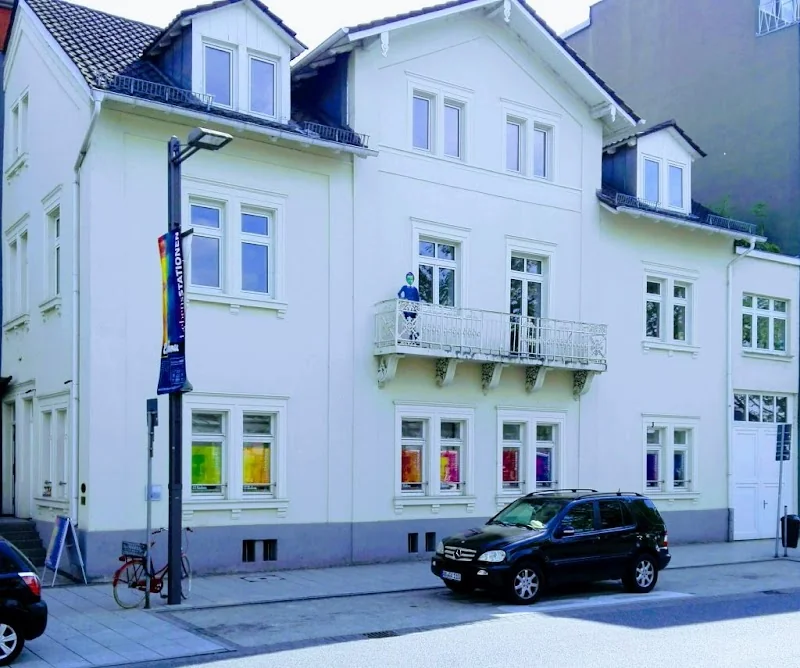
The KirchnerHAUS Aschaffenburg is not just any museum, but a place where art history, city history, and biography come together directly. At Ludwigstraße 19 stands the birthplace of Ernst Ludwig Kirchner, the expressionist born in Aschaffenburg in 1880, who later became one of the defining artists of modernity. Today, the house combines a documentary memory of his childhood with changing exhibitions, events, and a clear focus on the art of expressionism. Those interested in Kirchner will find not a huge museum complex here, but a compact, personal place with a high density of history and atmosphere. This is exactly what makes the location so relevant for inquiries about opening hours, exhibitions, photos, directions, parking, and the association: visitors want to quickly understand what to expect on-site, how to get there, and why the journey is worthwhile. The KirchnerHAUS responds with a mix of authentic birthplace, carefully curated program, and a location right by the train station, making the visit particularly uncomplicated. ([kirchnerhaus.com](https://www.kirchnerhaus.com/index.php/kirchnerhaus/))
Opening Hours, Admission, and Current Exhibition
The focus of the current program is BLICK.FANG.MODERNE – Human Images between Expressionism and New Objectivity. The official website shows the exhibition from March 7 to June 14, 2026, and connects it with a clear visitor framework: closed on Mondays, Tuesday to Saturday from 2:00 PM to 5:00 PM, Sundays from 11:00 AM to 5:00 PM. Admission is 5.00 euros, reduced 3.00 euros; children up to 15 years and members of the KirchnerHAUS Aschaffenburg e.V. receive free admission. Additionally, there are guided tours, such as a family tour and an open tour, which facilitate access to the exhibition and make the house attractive for younger visitors. For those looking for the event program in 2026, the view of upcoming dates is also exciting: the website has announced further exhibitions like Ernst Ludwig Kirchner Reloaded and Expressionism in Davos. This shows that the KirchnerHAUS is not only a place of memory but a vibrant exhibition space with regularly changing themes. ([kirchnerhaus.com](https://www.kirchnerhaus.com/))
The clear timing of the opening hours is particularly practical for day visitors and short visits. Those coming from Aschaffenburg itself or wanting to combine a city trip with art can easily incorporate the museum visit into an afternoon or Sunday stroll. The combination of the current special exhibition, a manageable admission structure, and guided tour offerings makes the house interesting for different target groups: art fans come for the content, families for the formats, and groups for the well-planned times. The focus of the house on Ernst Ludwig Kirchner, modernity, and expressionism fits very well with inquiries about exhibitions, museums, and opening hours. The added value here arises not from size but from concentration: few rooms, a strong place, a clear theme. This is exactly why the KirchnerHAUS remains so easily findable online and so concretely describable in search results. ([kirchnerhaus.com](https://www.kirchnerhaus.com/))
History of the Birthplace and KirchnerZIMMER
The house itself tells an independent story. According to the official construction and usage history, the building was erected in 1862 as a rental house. It remained unscathed during the war, which is a stroke of luck for a house so closely related to art history. After a monument-compliant renovation, the KirchnerHAUS Aschaffenburg e.V. established a documentation room on Kirchner's childhood on the first floor. In early 2014, additional rooms were added on the ground floor to enable exhibitions and events. This process gradually developed into the current museum: the website describes that the house has been run as the KirchnerHAUS Museum since successful exhibitions in 2017 or 2018. Thus, the location is not only a place for special exhibitions but an example of how civic engagement can transform a historical building into a cultural address. Those searching for Kirchnerhaus, Kirchnerhaus Museum, or Kirchnerhaus e.V. are therefore always also looking for this development from a private place of remembrance to a publicly accessible cultural forum. ([kirchnerhaus.com](https://www.kirchnerhaus.com/index.php/geschichte/))
There is a particularly strong biographical connection to the artist himself. The website links Kirchner with his childhood in Aschaffenburg: he was born on May 6, 1880, at the Bavarian-Prussian border station, and life at the station and the passing trains left a lasting impression on him. The historical aspect of the house is thus closely connected to an artistic perception of movement, speed, and modernity. As early as 1919, Kirchner created a sketch of his parents' house and wrote about his childhood memories of Aschaffenburg. In 1955, a memorial plaque was installed for the artist's 75th birthday, and in 2021, a bronze plaque designed by Otto Gentil was added. These traces make the building an authentic place of remembrance that not only informs about Kirchner but also makes his origins immediately readable. This is exactly why the house appears so impressive to visitors: it is neither an abstract museum narrative nor a mere memorial site, but a concretely experienceable piece of biography in the urban space. ([kirchnerhaus.com](https://www.kirchnerhaus.com/index.php/kirchnerhaus/))
Architecturally, the KirchnerHAUS also carries much of its history within it. The site describes the building as a classicist city house with facade segmentation and a modern cast-iron balcony, which has remained almost unchanged. It was built near the train station, almost simultaneously with the railway line and the Aschaffenburg train station, and was thus established from the beginning in a location shaped by traffic, change, and urban development. This location is important for today's understanding of the house because it explains why Kirchner perceived the trains and movement so intensely. The historical anchoring is therefore not just a detail for history enthusiasts but a part of the artistic narrative. Those who read the history of the house understand that here, birthplace, family apartment, memory space, and museum intertwine. This intertwining makes the place one of the few addresses where art, biography, and urban space touch so directly. ([kirchnerhaus.com](https://www.kirchnerhaus.com/index.php/geschichte/))
Directions, Stop, and Parking at Ludwigstraße
For the search for directions and parking, the location of the KirchnerHAUS is a great advantage. The official address is Ludwigstraße 19, 63739 Aschaffenburg, and on the KulturRegion page, the house is described as a place at the main train station. Aschaffenburg Hauptbahnhof is explicitly mentioned as a stop, with connections to regional train lines such as RE54, RE55, RB56, RB58, RE59, and RB75, as well as numerous bus lines. Those arriving by train can reach the museum without complicated detours. For drivers, the parking garage Aschaffenburg Hauptbahnhof is particularly relevant: according to DB BahnPark, it is less than 50 meters away, offers 459 parking spaces, and 5 accessible spaces. The facility is open 24 hours a day. This is remarkably convenient for a city center location and explains why inquiries about parking are so frequently combined with the location. Thus, the museum location connects culture and mobility in a compact space. ([krfrm.de](https://www.krfrm.de/venue/kirchnerhaus-museum/))
This accessibility is also a plus for a short visit. For example, those who only have an hour can easily plan the KirchnerHAUS as a stop right by the train station and then continue through the city center. The parking rates of the train station parking garage are transparently displayed, including 1 hour for 1.80 euros and 1 day for 15.00 euros at the parking garage Aschaffenburg Hauptbahnhof. Additionally, the surroundings with the train station, city center, and central paths make the museum visit easily accessible: one does not have to endure a remote parking search but stands almost directly at the door. For many visitors, this is crucial when searching for Ludwigstraße, main train station, parking, or directions. The combination of a central location, clear address indication, and official connection with the train station makes the way to the museum planable and stress-free. ([bahnhof.de](https://www.bahnhof.de/aschaffenburg-hbf/parkplaetze))
Moreover, the location is also practical for various types of visits. Those traveling with family can plan without a long journey and spontaneously decide whether to follow up with a walk or a city visit. Those who are in Aschaffenburg or at the train station for business have a cultural destination right on site. And those arriving by car benefit from the fact that the parking garage is not only nearby but also available around the clock. The accessible parking spaces are particularly relevant in this context, as they show that the location is designed for different needs. Together with the precise address and proximity to the train station, the KirchnerHAUS becomes an address that is easy to remember in everyday life. This is exactly why the location appears so often in search queries together with directions, Ludwigstraße, parking, and main train station. ([bahnhof.de](https://www.bahnhof.de/aschaffenburg-hbf/parkplaetze))
KirchnerHAUS Association, Library, and Program
Behind the house stands not only an exhibition space but an engaged association. The KirchnerHAUS Aschaffenburg e.V. promotes, according to its own presentation, the cultural life of the city with exhibitions and events related to the work and life of Ernst Ludwig Kirchner and other artists of expressionism. The website also lists a library with around 1900 titles, which underscores the scientific and documentary claim of the house. This is interesting for visitors who want to understand Kirchner in the context of Brücke, expressionism, and modern art history, rather than just taking a quick look at a work of art. The association thus makes the house a place of mediation: it collects, presents, explains, and connects biography with art. Those searching for Kirchnerhaus Association Aschaffenburg or Kirchnerhaus e.V. therefore encounter a structure that is much more than just an operator, namely the actual cultural driving force of the house. ([kirchnerhaus.com](https://www.kirchnerhaus.com/index.php/kontakt/))
This commitment is also reflected in the program. Already on the homepage, in addition to the current exhibition, further dates and upcoming exhibitions are listed, including Ernst Ludwig Kirchner Reloaded and Expressionism in Davos. Guided tours, family formats, and accompanying events are also included, which keep the house lively beyond the mere exhibition. Particularly valuable is the combination of local anchoring and thematic breadth: the museum talks about Kirchner in Aschaffenburg, but also about modernity, student projects, the dialogue with other positions, and the development of expressionism. This creates a profile that is equally relevant for inquiries about programs, exhibitions, museums, and associations. Those visiting the house's website quickly realize that here not only is there archiving but also forward-thinking. This mixture of research, mediation, and event work makes the KirchnerHAUS an address with substance. ([kirchnerhaus.com](https://www.kirchnerhaus.com/))
The significance of the house for local cultural life is also palpable. The association points out that the work would not be possible in this form without sponsors, foundations, and donations. This shows that the KirchnerHAUS in Aschaffenburg does not only exist as a museum location but as a lively part of a cultural network. The combination of membership, sponsorship work, and changing exhibitions ensures that the house does not stand still but continues to develop steadily. For visitors, this means: those who come today see not only a historical address but an institution with a future. The relevance for SEO and for the real visitor experience is the same: clear themes, clear responsibilities, clear cultural identity. This clarity makes the KirchnerHAUS so strong in search results and so easily findable in the urban landscape. ([kirchnerhaus.com](https://www.kirchnerhaus.com/index.php/kontakt/))
Photos, Exhibition Images, and Why the Visit is Worthwhile
The search query for photos is particularly obvious at the KirchnerHAUS because the house visually thrives on the historical site. The website works with image series, historical views, and object shots: on the history page, for example, one can see Ludwigstraße in the 1920s, the condition of the house around 1920, and various stages of the usage history. On the homepage, current exhibition motifs are at the center, which immediately convey the character of the house. This way, one already gets a sense of what to expect before the visit: a small, focused museum with a dense atmosphere and a clear art-historical orientation. Photos serve not only for illustration but for contextualization. They show that the building itself is an exhibit, that the history of the place remains readable, and that each exhibition is in dialogue with the architecture. This is exactly why search queries for photos, impressions, or images of the KirchnerHAUS work so well: those searching want not just to see but to understand what mood the house conveys. ([kirchnerhaus.com](https://www.kirchnerhaus.com/index.php/geschichte/))
The visit is worthwhile mainly because of this special mix of proximity and content. The KirchnerHAUS is not a large, confusing museum, but a place with a strong focus: birthplace, documentation room, special exhibition, association, library, and educational work interconnect. This makes it suitable for art enthusiasts as well as for people who want to discover Aschaffenburg as a city. Those who like expressionism, Ernst Ludwig Kirchner, or the history of a historical house will find here an authentic destination with real added value. The location at the main train station facilitates spontaneous planning, the opening hours are clear, the admission is low-threshold, and the themes range from childhood and biography to modernity and new objectivity. In short: the KirchnerHAUS is exactly the kind of place that is not only found in search results but also retained because it combines a strong first impression, a clear story, and a stable cultural profile. ([kirchnerhaus.com](https://www.kirchnerhaus.com/))
Especially for local SEO, the location is strong because it serves multiple search intents simultaneously. Those searching for opening hours want to plan immediately. Those searching for exhibitions want to know what is currently being shown. Those searching for directions or parking need a stress-free solution. Those searching for photos want to assess the atmosphere before the visit. And those searching for an association or museum want to understand the institutional context. The KirchnerHAUS answers all these questions with a compact yet content-rich offering. The place never feels overloaded but is particularly personal due to its size. This is also the reason why many visitors come not just for a single artwork but for the overall experience: history, architecture, art, and urban location interconnect. This creates a visit that not only informs but also remains in memory. ([kirchnerhaus.com](https://www.kirchnerhaus.com/index.php/geschichte/))
For those looking for a compact yet substantial art address in Aschaffenburg, the KirchnerHAUS offers a place with a clear identity: historically significant, art-close, easily accessible, and programmatically lively. The combination of birthplace, exhibition house, and association work makes the location particularly relevant not only for visitors but also for search engines. This is exactly why opening hours, exhibitions, directions, parking, photos, and the association cover the most important user questions that are repeatedly asked around the KirchnerHAUS. ([kirchnerhaus.com](https://www.kirchnerhaus.com/index.php/kirchnerhaus/))
Sources:
- KirchnerHAUS Aschaffenburg – Official Website ([kirchnerhaus.com](https://www.kirchnerhaus.com/))
- KirchnerHAUS Aschaffenburg – History and Construction History ([kirchnerhaus.com](https://www.kirchnerhaus.com/index.php/geschichte/))
- Cultural Region FrankfurtRheinMain – Kirchnerhaus Museum Aschaffenburg ([krfrm.de](https://www.krfrm.de/venue/kirchnerhaus-museum/))
- DB BahnPark – Parking Garage Aschaffenburg Hauptbahnhof ([bahnhof.de](https://www.bahnhof.de/aschaffenburg-hbf/parkplaetze))
- Museums in Bavaria – KirchnerHAUS Museum Aschaffenburg ([museen-in-bayern.de](https://museen-in-bayern.de/museen/detailseite-museum/kirchnerhaus-museum?utm_source=openai))
Show moreShow less
KirchnerHAUS Aschaffenburg | Opening Hours & Exhibition
The KirchnerHAUS Aschaffenburg is not just any museum, but a place where art history, city history, and biography come together directly. At Ludwigstraße 19 stands the birthplace of Ernst Ludwig Kirchner, the expressionist born in Aschaffenburg in 1880, who later became one of the defining artists of modernity. Today, the house combines a documentary memory of his childhood with changing exhibitions, events, and a clear focus on the art of expressionism. Those interested in Kirchner will find not a huge museum complex here, but a compact, personal place with a high density of history and atmosphere. This is exactly what makes the location so relevant for inquiries about opening hours, exhibitions, photos, directions, parking, and the association: visitors want to quickly understand what to expect on-site, how to get there, and why the journey is worthwhile. The KirchnerHAUS responds with a mix of authentic birthplace, carefully curated program, and a location right by the train station, making the visit particularly uncomplicated. ([kirchnerhaus.com](https://www.kirchnerhaus.com/index.php/kirchnerhaus/))
Opening Hours, Admission, and Current Exhibition
The focus of the current program is BLICK.FANG.MODERNE – Human Images between Expressionism and New Objectivity. The official website shows the exhibition from March 7 to June 14, 2026, and connects it with a clear visitor framework: closed on Mondays, Tuesday to Saturday from 2:00 PM to 5:00 PM, Sundays from 11:00 AM to 5:00 PM. Admission is 5.00 euros, reduced 3.00 euros; children up to 15 years and members of the KirchnerHAUS Aschaffenburg e.V. receive free admission. Additionally, there are guided tours, such as a family tour and an open tour, which facilitate access to the exhibition and make the house attractive for younger visitors. For those looking for the event program in 2026, the view of upcoming dates is also exciting: the website has announced further exhibitions like Ernst Ludwig Kirchner Reloaded and Expressionism in Davos. This shows that the KirchnerHAUS is not only a place of memory but a vibrant exhibition space with regularly changing themes. ([kirchnerhaus.com](https://www.kirchnerhaus.com/))
The clear timing of the opening hours is particularly practical for day visitors and short visits. Those coming from Aschaffenburg itself or wanting to combine a city trip with art can easily incorporate the museum visit into an afternoon or Sunday stroll. The combination of the current special exhibition, a manageable admission structure, and guided tour offerings makes the house interesting for different target groups: art fans come for the content, families for the formats, and groups for the well-planned times. The focus of the house on Ernst Ludwig Kirchner, modernity, and expressionism fits very well with inquiries about exhibitions, museums, and opening hours. The added value here arises not from size but from concentration: few rooms, a strong place, a clear theme. This is exactly why the KirchnerHAUS remains so easily findable online and so concretely describable in search results. ([kirchnerhaus.com](https://www.kirchnerhaus.com/))
History of the Birthplace and KirchnerZIMMER
The house itself tells an independent story. According to the official construction and usage history, the building was erected in 1862 as a rental house. It remained unscathed during the war, which is a stroke of luck for a house so closely related to art history. After a monument-compliant renovation, the KirchnerHAUS Aschaffenburg e.V. established a documentation room on Kirchner's childhood on the first floor. In early 2014, additional rooms were added on the ground floor to enable exhibitions and events. This process gradually developed into the current museum: the website describes that the house has been run as the KirchnerHAUS Museum since successful exhibitions in 2017 or 2018. Thus, the location is not only a place for special exhibitions but an example of how civic engagement can transform a historical building into a cultural address. Those searching for Kirchnerhaus, Kirchnerhaus Museum, or Kirchnerhaus e.V. are therefore always also looking for this development from a private place of remembrance to a publicly accessible cultural forum. ([kirchnerhaus.com](https://www.kirchnerhaus.com/index.php/geschichte/))
There is a particularly strong biographical connection to the artist himself. The website links Kirchner with his childhood in Aschaffenburg: he was born on May 6, 1880, at the Bavarian-Prussian border station, and life at the station and the passing trains left a lasting impression on him. The historical aspect of the house is thus closely connected to an artistic perception of movement, speed, and modernity. As early as 1919, Kirchner created a sketch of his parents' house and wrote about his childhood memories of Aschaffenburg. In 1955, a memorial plaque was installed for the artist's 75th birthday, and in 2021, a bronze plaque designed by Otto Gentil was added. These traces make the building an authentic place of remembrance that not only informs about Kirchner but also makes his origins immediately readable. This is exactly why the house appears so impressive to visitors: it is neither an abstract museum narrative nor a mere memorial site, but a concretely experienceable piece of biography in the urban space. ([kirchnerhaus.com](https://www.kirchnerhaus.com/index.php/kirchnerhaus/))
Architecturally, the KirchnerHAUS also carries much of its history within it. The site describes the building as a classicist city house with facade segmentation and a modern cast-iron balcony, which has remained almost unchanged. It was built near the train station, almost simultaneously with the railway line and the Aschaffenburg train station, and was thus established from the beginning in a location shaped by traffic, change, and urban development. This location is important for today's understanding of the house because it explains why Kirchner perceived the trains and movement so intensely. The historical anchoring is therefore not just a detail for history enthusiasts but a part of the artistic narrative. Those who read the history of the house understand that here, birthplace, family apartment, memory space, and museum intertwine. This intertwining makes the place one of the few addresses where art, biography, and urban space touch so directly. ([kirchnerhaus.com](https://www.kirchnerhaus.com/index.php/geschichte/))
Directions, Stop, and Parking at Ludwigstraße
For the search for directions and parking, the location of the KirchnerHAUS is a great advantage. The official address is Ludwigstraße 19, 63739 Aschaffenburg, and on the KulturRegion page, the house is described as a place at the main train station. Aschaffenburg Hauptbahnhof is explicitly mentioned as a stop, with connections to regional train lines such as RE54, RE55, RB56, RB58, RE59, and RB75, as well as numerous bus lines. Those arriving by train can reach the museum without complicated detours. For drivers, the parking garage Aschaffenburg Hauptbahnhof is particularly relevant: according to DB BahnPark, it is less than 50 meters away, offers 459 parking spaces, and 5 accessible spaces. The facility is open 24 hours a day. This is remarkably convenient for a city center location and explains why inquiries about parking are so frequently combined with the location. Thus, the museum location connects culture and mobility in a compact space. ([krfrm.de](https://www.krfrm.de/venue/kirchnerhaus-museum/))
This accessibility is also a plus for a short visit. For example, those who only have an hour can easily plan the KirchnerHAUS as a stop right by the train station and then continue through the city center. The parking rates of the train station parking garage are transparently displayed, including 1 hour for 1.80 euros and 1 day for 15.00 euros at the parking garage Aschaffenburg Hauptbahnhof. Additionally, the surroundings with the train station, city center, and central paths make the museum visit easily accessible: one does not have to endure a remote parking search but stands almost directly at the door. For many visitors, this is crucial when searching for Ludwigstraße, main train station, parking, or directions. The combination of a central location, clear address indication, and official connection with the train station makes the way to the museum planable and stress-free. ([bahnhof.de](https://www.bahnhof.de/aschaffenburg-hbf/parkplaetze))
Moreover, the location is also practical for various types of visits. Those traveling with family can plan without a long journey and spontaneously decide whether to follow up with a walk or a city visit. Those who are in Aschaffenburg or at the train station for business have a cultural destination right on site. And those arriving by car benefit from the fact that the parking garage is not only nearby but also available around the clock. The accessible parking spaces are particularly relevant in this context, as they show that the location is designed for different needs. Together with the precise address and proximity to the train station, the KirchnerHAUS becomes an address that is easy to remember in everyday life. This is exactly why the location appears so often in search queries together with directions, Ludwigstraße, parking, and main train station. ([bahnhof.de](https://www.bahnhof.de/aschaffenburg-hbf/parkplaetze))
KirchnerHAUS Association, Library, and Program
Behind the house stands not only an exhibition space but an engaged association. The KirchnerHAUS Aschaffenburg e.V. promotes, according to its own presentation, the cultural life of the city with exhibitions and events related to the work and life of Ernst Ludwig Kirchner and other artists of expressionism. The website also lists a library with around 1900 titles, which underscores the scientific and documentary claim of the house. This is interesting for visitors who want to understand Kirchner in the context of Brücke, expressionism, and modern art history, rather than just taking a quick look at a work of art. The association thus makes the house a place of mediation: it collects, presents, explains, and connects biography with art. Those searching for Kirchnerhaus Association Aschaffenburg or Kirchnerhaus e.V. therefore encounter a structure that is much more than just an operator, namely the actual cultural driving force of the house. ([kirchnerhaus.com](https://www.kirchnerhaus.com/index.php/kontakt/))
This commitment is also reflected in the program. Already on the homepage, in addition to the current exhibition, further dates and upcoming exhibitions are listed, including Ernst Ludwig Kirchner Reloaded and Expressionism in Davos. Guided tours, family formats, and accompanying events are also included, which keep the house lively beyond the mere exhibition. Particularly valuable is the combination of local anchoring and thematic breadth: the museum talks about Kirchner in Aschaffenburg, but also about modernity, student projects, the dialogue with other positions, and the development of expressionism. This creates a profile that is equally relevant for inquiries about programs, exhibitions, museums, and associations. Those visiting the house's website quickly realize that here not only is there archiving but also forward-thinking. This mixture of research, mediation, and event work makes the KirchnerHAUS an address with substance. ([kirchnerhaus.com](https://www.kirchnerhaus.com/))
The significance of the house for local cultural life is also palpable. The association points out that the work would not be possible in this form without sponsors, foundations, and donations. This shows that the KirchnerHAUS in Aschaffenburg does not only exist as a museum location but as a lively part of a cultural network. The combination of membership, sponsorship work, and changing exhibitions ensures that the house does not stand still but continues to develop steadily. For visitors, this means: those who come today see not only a historical address but an institution with a future. The relevance for SEO and for the real visitor experience is the same: clear themes, clear responsibilities, clear cultural identity. This clarity makes the KirchnerHAUS so strong in search results and so easily findable in the urban landscape. ([kirchnerhaus.com](https://www.kirchnerhaus.com/index.php/kontakt/))
Photos, Exhibition Images, and Why the Visit is Worthwhile
The search query for photos is particularly obvious at the KirchnerHAUS because the house visually thrives on the historical site. The website works with image series, historical views, and object shots: on the history page, for example, one can see Ludwigstraße in the 1920s, the condition of the house around 1920, and various stages of the usage history. On the homepage, current exhibition motifs are at the center, which immediately convey the character of the house. This way, one already gets a sense of what to expect before the visit: a small, focused museum with a dense atmosphere and a clear art-historical orientation. Photos serve not only for illustration but for contextualization. They show that the building itself is an exhibit, that the history of the place remains readable, and that each exhibition is in dialogue with the architecture. This is exactly why search queries for photos, impressions, or images of the KirchnerHAUS work so well: those searching want not just to see but to understand what mood the house conveys. ([kirchnerhaus.com](https://www.kirchnerhaus.com/index.php/geschichte/))
The visit is worthwhile mainly because of this special mix of proximity and content. The KirchnerHAUS is not a large, confusing museum, but a place with a strong focus: birthplace, documentation room, special exhibition, association, library, and educational work interconnect. This makes it suitable for art enthusiasts as well as for people who want to discover Aschaffenburg as a city. Those who like expressionism, Ernst Ludwig Kirchner, or the history of a historical house will find here an authentic destination with real added value. The location at the main train station facilitates spontaneous planning, the opening hours are clear, the admission is low-threshold, and the themes range from childhood and biography to modernity and new objectivity. In short: the KirchnerHAUS is exactly the kind of place that is not only found in search results but also retained because it combines a strong first impression, a clear story, and a stable cultural profile. ([kirchnerhaus.com](https://www.kirchnerhaus.com/))
Especially for local SEO, the location is strong because it serves multiple search intents simultaneously. Those searching for opening hours want to plan immediately. Those searching for exhibitions want to know what is currently being shown. Those searching for directions or parking need a stress-free solution. Those searching for photos want to assess the atmosphere before the visit. And those searching for an association or museum want to understand the institutional context. The KirchnerHAUS answers all these questions with a compact yet content-rich offering. The place never feels overloaded but is particularly personal due to its size. This is also the reason why many visitors come not just for a single artwork but for the overall experience: history, architecture, art, and urban location interconnect. This creates a visit that not only informs but also remains in memory. ([kirchnerhaus.com](https://www.kirchnerhaus.com/index.php/geschichte/))
For those looking for a compact yet substantial art address in Aschaffenburg, the KirchnerHAUS offers a place with a clear identity: historically significant, art-close, easily accessible, and programmatically lively. The combination of birthplace, exhibition house, and association work makes the location particularly relevant not only for visitors but also for search engines. This is exactly why opening hours, exhibitions, directions, parking, photos, and the association cover the most important user questions that are repeatedly asked around the KirchnerHAUS. ([kirchnerhaus.com](https://www.kirchnerhaus.com/index.php/kirchnerhaus/))
Sources:
- KirchnerHAUS Aschaffenburg – Official Website ([kirchnerhaus.com](https://www.kirchnerhaus.com/))
- KirchnerHAUS Aschaffenburg – History and Construction History ([kirchnerhaus.com](https://www.kirchnerhaus.com/index.php/geschichte/))
- Cultural Region FrankfurtRheinMain – Kirchnerhaus Museum Aschaffenburg ([krfrm.de](https://www.krfrm.de/venue/kirchnerhaus-museum/))
- DB BahnPark – Parking Garage Aschaffenburg Hauptbahnhof ([bahnhof.de](https://www.bahnhof.de/aschaffenburg-hbf/parkplaetze))
- Museums in Bavaria – KirchnerHAUS Museum Aschaffenburg ([museen-in-bayern.de](https://museen-in-bayern.de/museen/detailseite-museum/kirchnerhaus-museum?utm_source=openai))
KirchnerHAUS Aschaffenburg | Opening Hours & Exhibition
The KirchnerHAUS Aschaffenburg is not just any museum, but a place where art history, city history, and biography come together directly. At Ludwigstraße 19 stands the birthplace of Ernst Ludwig Kirchner, the expressionist born in Aschaffenburg in 1880, who later became one of the defining artists of modernity. Today, the house combines a documentary memory of his childhood with changing exhibitions, events, and a clear focus on the art of expressionism. Those interested in Kirchner will find not a huge museum complex here, but a compact, personal place with a high density of history and atmosphere. This is exactly what makes the location so relevant for inquiries about opening hours, exhibitions, photos, directions, parking, and the association: visitors want to quickly understand what to expect on-site, how to get there, and why the journey is worthwhile. The KirchnerHAUS responds with a mix of authentic birthplace, carefully curated program, and a location right by the train station, making the visit particularly uncomplicated. ([kirchnerhaus.com](https://www.kirchnerhaus.com/index.php/kirchnerhaus/))
Opening Hours, Admission, and Current Exhibition
The focus of the current program is BLICK.FANG.MODERNE – Human Images between Expressionism and New Objectivity. The official website shows the exhibition from March 7 to June 14, 2026, and connects it with a clear visitor framework: closed on Mondays, Tuesday to Saturday from 2:00 PM to 5:00 PM, Sundays from 11:00 AM to 5:00 PM. Admission is 5.00 euros, reduced 3.00 euros; children up to 15 years and members of the KirchnerHAUS Aschaffenburg e.V. receive free admission. Additionally, there are guided tours, such as a family tour and an open tour, which facilitate access to the exhibition and make the house attractive for younger visitors. For those looking for the event program in 2026, the view of upcoming dates is also exciting: the website has announced further exhibitions like Ernst Ludwig Kirchner Reloaded and Expressionism in Davos. This shows that the KirchnerHAUS is not only a place of memory but a vibrant exhibition space with regularly changing themes. ([kirchnerhaus.com](https://www.kirchnerhaus.com/))
The clear timing of the opening hours is particularly practical for day visitors and short visits. Those coming from Aschaffenburg itself or wanting to combine a city trip with art can easily incorporate the museum visit into an afternoon or Sunday stroll. The combination of the current special exhibition, a manageable admission structure, and guided tour offerings makes the house interesting for different target groups: art fans come for the content, families for the formats, and groups for the well-planned times. The focus of the house on Ernst Ludwig Kirchner, modernity, and expressionism fits very well with inquiries about exhibitions, museums, and opening hours. The added value here arises not from size but from concentration: few rooms, a strong place, a clear theme. This is exactly why the KirchnerHAUS remains so easily findable online and so concretely describable in search results. ([kirchnerhaus.com](https://www.kirchnerhaus.com/))
History of the Birthplace and KirchnerZIMMER
The house itself tells an independent story. According to the official construction and usage history, the building was erected in 1862 as a rental house. It remained unscathed during the war, which is a stroke of luck for a house so closely related to art history. After a monument-compliant renovation, the KirchnerHAUS Aschaffenburg e.V. established a documentation room on Kirchner's childhood on the first floor. In early 2014, additional rooms were added on the ground floor to enable exhibitions and events. This process gradually developed into the current museum: the website describes that the house has been run as the KirchnerHAUS Museum since successful exhibitions in 2017 or 2018. Thus, the location is not only a place for special exhibitions but an example of how civic engagement can transform a historical building into a cultural address. Those searching for Kirchnerhaus, Kirchnerhaus Museum, or Kirchnerhaus e.V. are therefore always also looking for this development from a private place of remembrance to a publicly accessible cultural forum. ([kirchnerhaus.com](https://www.kirchnerhaus.com/index.php/geschichte/))
There is a particularly strong biographical connection to the artist himself. The website links Kirchner with his childhood in Aschaffenburg: he was born on May 6, 1880, at the Bavarian-Prussian border station, and life at the station and the passing trains left a lasting impression on him. The historical aspect of the house is thus closely connected to an artistic perception of movement, speed, and modernity. As early as 1919, Kirchner created a sketch of his parents' house and wrote about his childhood memories of Aschaffenburg. In 1955, a memorial plaque was installed for the artist's 75th birthday, and in 2021, a bronze plaque designed by Otto Gentil was added. These traces make the building an authentic place of remembrance that not only informs about Kirchner but also makes his origins immediately readable. This is exactly why the house appears so impressive to visitors: it is neither an abstract museum narrative nor a mere memorial site, but a concretely experienceable piece of biography in the urban space. ([kirchnerhaus.com](https://www.kirchnerhaus.com/index.php/kirchnerhaus/))
Architecturally, the KirchnerHAUS also carries much of its history within it. The site describes the building as a classicist city house with facade segmentation and a modern cast-iron balcony, which has remained almost unchanged. It was built near the train station, almost simultaneously with the railway line and the Aschaffenburg train station, and was thus established from the beginning in a location shaped by traffic, change, and urban development. This location is important for today's understanding of the house because it explains why Kirchner perceived the trains and movement so intensely. The historical anchoring is therefore not just a detail for history enthusiasts but a part of the artistic narrative. Those who read the history of the house understand that here, birthplace, family apartment, memory space, and museum intertwine. This intertwining makes the place one of the few addresses where art, biography, and urban space touch so directly. ([kirchnerhaus.com](https://www.kirchnerhaus.com/index.php/geschichte/))
Directions, Stop, and Parking at Ludwigstraße
For the search for directions and parking, the location of the KirchnerHAUS is a great advantage. The official address is Ludwigstraße 19, 63739 Aschaffenburg, and on the KulturRegion page, the house is described as a place at the main train station. Aschaffenburg Hauptbahnhof is explicitly mentioned as a stop, with connections to regional train lines such as RE54, RE55, RB56, RB58, RE59, and RB75, as well as numerous bus lines. Those arriving by train can reach the museum without complicated detours. For drivers, the parking garage Aschaffenburg Hauptbahnhof is particularly relevant: according to DB BahnPark, it is less than 50 meters away, offers 459 parking spaces, and 5 accessible spaces. The facility is open 24 hours a day. This is remarkably convenient for a city center location and explains why inquiries about parking are so frequently combined with the location. Thus, the museum location connects culture and mobility in a compact space. ([krfrm.de](https://www.krfrm.de/venue/kirchnerhaus-museum/))
This accessibility is also a plus for a short visit. For example, those who only have an hour can easily plan the KirchnerHAUS as a stop right by the train station and then continue through the city center. The parking rates of the train station parking garage are transparently displayed, including 1 hour for 1.80 euros and 1 day for 15.00 euros at the parking garage Aschaffenburg Hauptbahnhof. Additionally, the surroundings with the train station, city center, and central paths make the museum visit easily accessible: one does not have to endure a remote parking search but stands almost directly at the door. For many visitors, this is crucial when searching for Ludwigstraße, main train station, parking, or directions. The combination of a central location, clear address indication, and official connection with the train station makes the way to the museum planable and stress-free. ([bahnhof.de](https://www.bahnhof.de/aschaffenburg-hbf/parkplaetze))
Moreover, the location is also practical for various types of visits. Those traveling with family can plan without a long journey and spontaneously decide whether to follow up with a walk or a city visit. Those who are in Aschaffenburg or at the train station for business have a cultural destination right on site. And those arriving by car benefit from the fact that the parking garage is not only nearby but also available around the clock. The accessible parking spaces are particularly relevant in this context, as they show that the location is designed for different needs. Together with the precise address and proximity to the train station, the KirchnerHAUS becomes an address that is easy to remember in everyday life. This is exactly why the location appears so often in search queries together with directions, Ludwigstraße, parking, and main train station. ([bahnhof.de](https://www.bahnhof.de/aschaffenburg-hbf/parkplaetze))
KirchnerHAUS Association, Library, and Program
Behind the house stands not only an exhibition space but an engaged association. The KirchnerHAUS Aschaffenburg e.V. promotes, according to its own presentation, the cultural life of the city with exhibitions and events related to the work and life of Ernst Ludwig Kirchner and other artists of expressionism. The website also lists a library with around 1900 titles, which underscores the scientific and documentary claim of the house. This is interesting for visitors who want to understand Kirchner in the context of Brücke, expressionism, and modern art history, rather than just taking a quick look at a work of art. The association thus makes the house a place of mediation: it collects, presents, explains, and connects biography with art. Those searching for Kirchnerhaus Association Aschaffenburg or Kirchnerhaus e.V. therefore encounter a structure that is much more than just an operator, namely the actual cultural driving force of the house. ([kirchnerhaus.com](https://www.kirchnerhaus.com/index.php/kontakt/))
This commitment is also reflected in the program. Already on the homepage, in addition to the current exhibition, further dates and upcoming exhibitions are listed, including Ernst Ludwig Kirchner Reloaded and Expressionism in Davos. Guided tours, family formats, and accompanying events are also included, which keep the house lively beyond the mere exhibition. Particularly valuable is the combination of local anchoring and thematic breadth: the museum talks about Kirchner in Aschaffenburg, but also about modernity, student projects, the dialogue with other positions, and the development of expressionism. This creates a profile that is equally relevant for inquiries about programs, exhibitions, museums, and associations. Those visiting the house's website quickly realize that here not only is there archiving but also forward-thinking. This mixture of research, mediation, and event work makes the KirchnerHAUS an address with substance. ([kirchnerhaus.com](https://www.kirchnerhaus.com/))
The significance of the house for local cultural life is also palpable. The association points out that the work would not be possible in this form without sponsors, foundations, and donations. This shows that the KirchnerHAUS in Aschaffenburg does not only exist as a museum location but as a lively part of a cultural network. The combination of membership, sponsorship work, and changing exhibitions ensures that the house does not stand still but continues to develop steadily. For visitors, this means: those who come today see not only a historical address but an institution with a future. The relevance for SEO and for the real visitor experience is the same: clear themes, clear responsibilities, clear cultural identity. This clarity makes the KirchnerHAUS so strong in search results and so easily findable in the urban landscape. ([kirchnerhaus.com](https://www.kirchnerhaus.com/index.php/kontakt/))
Photos, Exhibition Images, and Why the Visit is Worthwhile
The search query for photos is particularly obvious at the KirchnerHAUS because the house visually thrives on the historical site. The website works with image series, historical views, and object shots: on the history page, for example, one can see Ludwigstraße in the 1920s, the condition of the house around 1920, and various stages of the usage history. On the homepage, current exhibition motifs are at the center, which immediately convey the character of the house. This way, one already gets a sense of what to expect before the visit: a small, focused museum with a dense atmosphere and a clear art-historical orientation. Photos serve not only for illustration but for contextualization. They show that the building itself is an exhibit, that the history of the place remains readable, and that each exhibition is in dialogue with the architecture. This is exactly why search queries for photos, impressions, or images of the KirchnerHAUS work so well: those searching want not just to see but to understand what mood the house conveys. ([kirchnerhaus.com](https://www.kirchnerhaus.com/index.php/geschichte/))
The visit is worthwhile mainly because of this special mix of proximity and content. The KirchnerHAUS is not a large, confusing museum, but a place with a strong focus: birthplace, documentation room, special exhibition, association, library, and educational work interconnect. This makes it suitable for art enthusiasts as well as for people who want to discover Aschaffenburg as a city. Those who like expressionism, Ernst Ludwig Kirchner, or the history of a historical house will find here an authentic destination with real added value. The location at the main train station facilitates spontaneous planning, the opening hours are clear, the admission is low-threshold, and the themes range from childhood and biography to modernity and new objectivity. In short: the KirchnerHAUS is exactly the kind of place that is not only found in search results but also retained because it combines a strong first impression, a clear story, and a stable cultural profile. ([kirchnerhaus.com](https://www.kirchnerhaus.com/))
Especially for local SEO, the location is strong because it serves multiple search intents simultaneously. Those searching for opening hours want to plan immediately. Those searching for exhibitions want to know what is currently being shown. Those searching for directions or parking need a stress-free solution. Those searching for photos want to assess the atmosphere before the visit. And those searching for an association or museum want to understand the institutional context. The KirchnerHAUS answers all these questions with a compact yet content-rich offering. The place never feels overloaded but is particularly personal due to its size. This is also the reason why many visitors come not just for a single artwork but for the overall experience: history, architecture, art, and urban location interconnect. This creates a visit that not only informs but also remains in memory. ([kirchnerhaus.com](https://www.kirchnerhaus.com/index.php/geschichte/))
For those looking for a compact yet substantial art address in Aschaffenburg, the KirchnerHAUS offers a place with a clear identity: historically significant, art-close, easily accessible, and programmatically lively. The combination of birthplace, exhibition house, and association work makes the location particularly relevant not only for visitors but also for search engines. This is exactly why opening hours, exhibitions, directions, parking, photos, and the association cover the most important user questions that are repeatedly asked around the KirchnerHAUS. ([kirchnerhaus.com](https://www.kirchnerhaus.com/index.php/kirchnerhaus/))
Sources:
- KirchnerHAUS Aschaffenburg – Official Website ([kirchnerhaus.com](https://www.kirchnerhaus.com/))
- KirchnerHAUS Aschaffenburg – History and Construction History ([kirchnerhaus.com](https://www.kirchnerhaus.com/index.php/geschichte/))
- Cultural Region FrankfurtRheinMain – Kirchnerhaus Museum Aschaffenburg ([krfrm.de](https://www.krfrm.de/venue/kirchnerhaus-museum/))
- DB BahnPark – Parking Garage Aschaffenburg Hauptbahnhof ([bahnhof.de](https://www.bahnhof.de/aschaffenburg-hbf/parkplaetze))
- Museums in Bavaria – KirchnerHAUS Museum Aschaffenburg ([museen-in-bayern.de](https://museen-in-bayern.de/museen/detailseite-museum/kirchnerhaus-museum?utm_source=openai))
Upcoming Events
No events found
Frequently Asked Questions
Reviews
Paul Boldra
16. June 2019
Disappointing: only one Kirchner sketch. Firstly, I'm a big admirer of expressionism and Kirchner in particular. I spend a lot of my time visiting galleries and museums, having visited around fifty in the last twelve months. I enjoy cultural institutions as a whole, but I have never before thought that one would be better closed. Before visiting I inquired as to whether original works were on display, and was told there were exhibitions. Apparently there are *sometimes* exhibitions, but when there are not, only one Kirchner original is on display. It is a graphite portrait, showing none of the typical vibrant colours or carnal subjects for which Kirchner is famous. The sketch is not in good condition. To add to my disappointment I was informed by the staff that original works could be viewed at the nearby palace Schloss Johannisburg. Only prints were on view in the palace. I suggest Kirchnerhaus, where the artist only resided until the age of four, be used once more as housing. A very good selection of several Kirchner works are on view in Städel Museum in Frankfurt. For the life of Kirchner, this museum offers little that cannot be discovered reading Wikipedia in comfort at home.
Abdikader Ali haji hersi
18. November 2023
Well done
Jens Kruse
15. December 2025
A small but very nice exhibition house. The current exhibition ("Against All Resistance. Women Artists of Modernity"; running until 8.2.2026 and highly recommended!) goes well beyond previous exhibition activities, as all artworks are now provided with, in my opinion, just the right amount of information. This is another improvement. Great!
Eugenia K
20. February 2025
The house next to the central train station in Aschaffenburg, where the German expressionist artist Ernst Ludwig Kirchner (1880-1938) was born. In his childhood memories and his development as an artist, Kirchner specifically mentioned the view from the house to the station and how he tried to recreate images from it. Since 2013, a floor in the house has been dedicated to an exhibition in memory of the artist.
Ursula Hildmann
24. April 2023
A small and interesting exhibition about Kirchner's biography! Especially interesting are the drawings depicting the life of the 3 - 4 year old boy.