
Aschaffenburg
Karlsplatz, 63739 Aschaffenburg, Deutschland
Karlsplatz Aschaffenburg | History & Parking
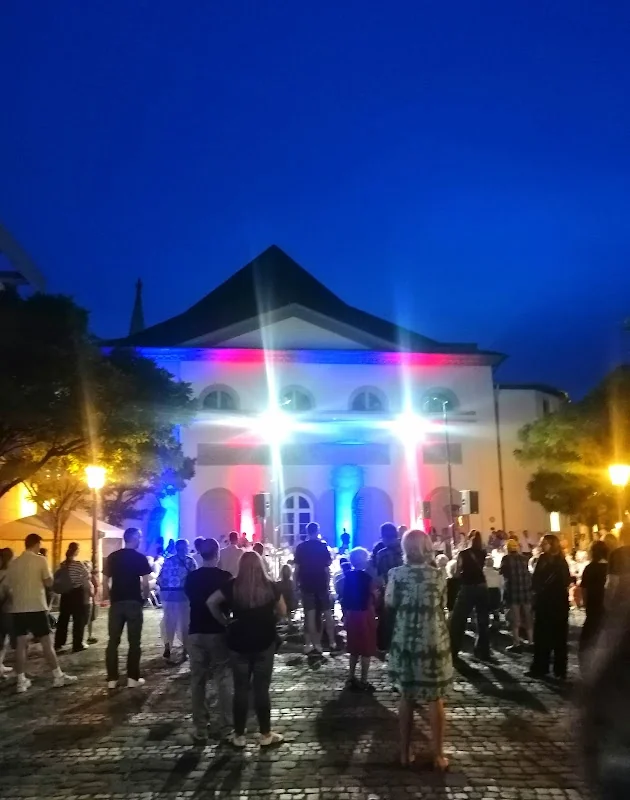
The Karlsplatz in Aschaffenburg is not a loud event venue with a permanent large program, but a historically shaped city square with a calm presence in the upper town. It is located east of the theater, spatially framed by administrative buildings, the back of the theater, and the Christuskirche, making it part of a very closely intertwined city center structure. Trees and benches provide additional quality for staying, while the city considers it as part of a historical and cultural center in the context of the upper town renovation. Therefore, those looking for Karlsplatz Aschaffenburg will find not just a name on the city map, but a place with history, urban function, and short distances to several attractions. ([aschaffenburg.de](https://www.aschaffenburg.de/PDF/Text.PDF?Ext=PDF&ObjID=1745&ObjLa=1&ObjSvrID=4173&WTR=1&_ts=1761639684))
History and Naming of Karlsplatz
The history of Karlsplatz is closely linked to Carl Theodor von Dalberg. The square was named after him in 1811, and the city thus commemorates one of the most influential figures in Aschaffenburg's history. Dalberg was the last Elector of Mainz, born in 1744, later served as Prince Primus in Aschaffenburg, and was Grand Duke of Frankfurt from 1810 to 1813. During this time, he promoted culture and science, founded the Karlsuniversität in 1808 and an arts and crafts school in 1807, and also had a new cemetery and a theater built. It is therefore very fitting that a square in close proximity to the theater bears his name, aligning well with the historical context of the place. Dalberg's heart was also transferred to Aschaffenburg and buried in the collegiate church, further emphasizing the close bond between the person and the city. ([aschaffenburgzweinull.stadtarchiv-digital.de](https://aschaffenburgzweinull.stadtarchiv-digital.de/karlsplatz/))
Thus, Karlsplatz is not isolated but belongs to a whole memory and naming space of the city. Karlstraße was also named after Dalberg, and the city explicitly points out that two streets and a square are named after him. This is important for orientation because Karlsplatz can be read not only as an address but also as a historical sign. In Aschaffenburg, it tells of a phase in which urban development, cultural policy, and representation were closely intertwined. The reference of the square name to Dalberg points to education, theater, civic order, and the transformation of the city in the early 19th century. Therefore, those visiting the square today stand in a place that carries two centuries of urban memory. This connection is a significant part of its appeal, especially for visitors who want to experience history not just by reading but in the urban space. ([aschaffenburgzweinull.stadtarchiv-digital.de](https://aschaffenburgzweinull.stadtarchiv-digital.de/karlsplatz/))
Location in the Upper Town: Theaterplatz, Christuskirche, and Administration
Spatially, Karlsplatz belongs to the upper town and connects to the Theaterplatz to the west. The city's inventory describes it as somewhat off the beaten path and less frequented than the neighboring Theaterplatz, but at the same time as a clearly defined urban space with high design quality. To the west, the back of the theater forms the edge of the space, to the south are administrative facilities, to the north is the Christuskirche, and on the east side, there is a restaurant in Pfaffengasse. Trees further enclose the square, and benches offer seating under the trees. This combination of architectural framing, greenery, and seating options makes it clear that this is a place for short stays, for pathways, and for a quiet urban pause. ([aschaffenburg.de](https://www.aschaffenburg.de/PDF/Text.PDF?Ext=PDF&ObjID=1745&ObjLa=1&ObjSvrID=4173&WTR=1&_ts=1761639684))
This location is particularly practical for orientation in Aschaffenburg because Karlsplatz is integrated into a dense network of cultural and urban functions. The nearby Theaterplatz has been redesigned in recent years with a water feature, sundial, and seating options, while Karlsplatz appears somewhat quieter in the urban space and thus forms a good counterpoint. The cityscape of the upper town thrives on this interplay between active squares, historical facades, and quieter intermediate spaces. Those coming from Theaterplatz experience Karlsplatz as a kind of continuation in the urban sense: less staged, but no less significant. This difference is important for those searching for Karlsplatz Aschaffenburg because it shows that the square does not primarily function as an event space but as an urban area with a neighborhood character, historical context, and pedestrian proximity to the church, town hall area, and theater. ([aschaffenburg.de](https://www.aschaffenburg.de/PDF/Text.PDF?Ext=PDF&ObjID=1745&ObjLa=1&ObjSvrID=4173&WTR=1&_ts=1761639684))
Parking and Access to Karlsplatz Aschaffenburg
Regarding parking, Karlsplatz is more of a location with good infrastructure in the surrounding area from a visitor's perspective than a square with generous parking spaces directly on the site. The city lists Karlsplatz in the resident parking areas, indicating that the area is regulated by parking law and visitors are better off using the official parking offers in the city center. At the same time, Aschaffenburg offers several municipal parking garages and underground garages in the vicinity, including the underground garage Theaterplatz, the underground garage Stadthalle, the parking garage Luitpoldstraße, and the parking lot Schlossplatz. For a visit to the upper town, these options are particularly relevant as they allow short distances to the historic center. The city's parking page also points out 10 minutes of free passage time and 11 kW charging stations in all municipal parking garages and underground garages, making access even more convenient. ([aschaffenburg.de](https://www.aschaffenburg.de/Leben-in-Aschaffenburg/KFZ-Stra%C3%9Fe-und-Verkehr/Stra%C3%9Fe-Verkehr/Parken-in-Aschaffenburg/Bewohnerparken/?utm_source=openai))
For practical access, it is worth looking at the specific locations. The underground garage Theaterplatz is located at Dalbergstraße 18 and offers 186 parking spaces, the underground garage Stadthalle has 438 parking spaces, the parking garage Luitpoldstraße has 405 parking spaces, and the parking lot Schlossplatz has 27 parking spaces. These numbers show that there are several alternatives in the immediate inner-city area, even if Karlsplatz itself is not a classic access point with its own large parking lot. Especially for visitors who want to connect the theater, Christuskirche, upper town, and city center in a tour, the official parking garages are a sensible starting point. Those using the square more as part of a walk can combine access via this parking infrastructure with a short walk. This is particularly relevant for the keyword topics Karlsplatz parking, Karlsplatz access, and city center parking, as the official city logic clearly focuses on central parking garages, underground garages, and short walking distances. ([mein.aschaffenburg.de](https://mein.aschaffenburg.de/parken/))
Events, City Life, and Everyday Use
Although Karlsplatz is not a classic fair or concert venue, it repeatedly appears in urban practice as a place for actions, encounters, and smaller formats. For example, the Office for Urban Planning and Climate Management set up an information booth there in May 2026 for “50 Years of City Center Renovation” and connected the presence in the square with city tours and information on ongoing and planned projects. This shows that Karlsplatz is perceived as a public space and used for citizen communication. The city therefore relies not only on large squares like Theaterplatz but also utilizes Karlsplatz to make developments in the city center visible. For inquiries such as events at Karlsplatz or Karlsplatz program, it is important to know that it is more about occasional uses than a permanently used event location. ([aschaffenburg.de](https://www.aschaffenburg.de/index.php?FID=4173.12211.1&ModID=7&object=tx%2C4173.5.1&topic=1))
The summer festival at Karlsplatz is also a good example of the special role of the square. The entry in the event calendar describes a benefit summer festival organized by the hospice group Aschaffenburg together with the police union and a restaurant. The format combines music, encounters, and social engagement and shows that Karlsplatz is suitable for summery open-air atmosphere when the city or local actors actively use the space. Together with the city's description as a rather quiet and less frequented square, an interesting picture emerges: Karlsplatz is a reserved place for everyday use but can serve very well as a stage for smaller, community-oriented events when suitable formats are in place. This mixture of calm and occasional activation makes it equally interesting for visitors, residents, and city marketing. ([mein.aschaffenburg.de](https://mein.aschaffenburg.de/event/sommerfestival-karlsplatz/))
Karlsplatz in the Transformation of City Development
Karlsplatz is also a component of the larger city development of Aschaffenburg. The city describes the renovation area of the upper town and riverbank as a historical and cultural center that should be preserved, enhanced, and made barrier-free. The investigation area includes, among other things, the upper town around the collegiate church, theater, and town hall, as well as the riverbank from the Willigis Bridge to the Pompejanum. This classification makes it clear that Karlsplatz is not viewed as a single, detached place but as part of a cohesive urban fabric with monument protection, public space, and cultural function. For urban planning, it is important to preserve historical structures while also creating new qualities for staying. Karlsplatz benefits from this guiding principle because it is located in close proximity to the central components of the upper town. ([aschaffenburg.de](https://www.aschaffenburg.de/Leben-in-Aschaffenburg/Stadtplanung-Klima-Nachhaltigkeit/Stadtplanung/Sanierung/Sanierungsgebiet-Oberstadt-und-Mainufer.php?La=1&NavID=4173.1353&object=tx%2C4173.10328.1&utm_source=openai))
In the ISEK of the city, Karlsplatz is described as a public space with high design quality, although it is used less intensively than the neighboring Theaterplatz. This finding is particularly valuable for classification: the square is not overloaded but open, calm, and structured. The trees, benches, and spatial framing by the theater, administration, and church create an atmosphere that recalls a high-quality urban pause rather than a commercial center. At the same time, the city's city center strategy shows that such squares are part of a long-term enhancement. Cityscape, traffic calming, historical identity, and quality of stay are not considered separately but together. Therefore, those searching for Karlsplatz Aschaffenburg in connection with renovation, upper town, or urban development will find a place where history, design, and urban future closely intertwine. ([aschaffenburg.de](https://www.aschaffenburg.de/PDF/Text.PDF?Ext=PDF&ObjID=1745&ObjLa=1&ObjSvrID=4173&WTR=1&_ts=1761639684))
Practical Tips for Walks, Orientation, and Visits
For a visit, it is advisable to plan Karlsplatz not only as a destination but as part of a small city center tour. Those coming from Theaterplatz can experience the transition to the quieter square area well and then include the Christuskirche, the collegiate square, or the town hall area. This short distance between the individual points is a great advantage of Karlsplatz because it makes the upper town experienceable as a cohesive urban space. The square is therefore particularly suitable for visitors seeking atmosphere without needing a large program or a loud event backdrop. The benches under the trees invite a pause, and the proximity to administration, restaurant, and theater makes the place versatile in daily life. Those exploring Aschaffenburg on foot can plan Karlsplatz as a quiet orientation point between cultural and ecclesiastical reference points. ([aschaffenburg.de](https://www.aschaffenburg.de/PDF/Text.PDF?Ext=PDF&ObjID=1745&ObjLa=1&ObjSvrID=4173&WTR=1&_ts=1761639684))
When arriving, one should use the official municipal parking offers in the vicinity and avoid trying to park directly in the square if possible. The city provides a clearly structured network of parking garages and underground garages that facilitate city center visits. For current dates or events, it is also worth checking the city’s event calendar, as Karlsplatz is mainly used for special occasions and does not function as a permanent festival area. Those wishing to connect their visit with some history should keep the name of the square in mind: Karlsplatz commemorates Carl Theodor von Dalberg and thus a phase in which Aschaffenburg was culturally strongly shaped as a residence city. This mixture of practical accessibility, historical depth, and calm presence makes Karlsplatz a place that can easily be overlooked in Aschaffenburg but is often not forgotten after the first conscious visit. ([mein.aschaffenburg.de](https://mein.aschaffenburg.de/parken/))
Sources:
Mehr anzeigenWeniger anzeigen
Karlsplatz Aschaffenburg | History & Parking
The Karlsplatz in Aschaffenburg is not a loud event venue with a permanent large program, but a historically shaped city square with a calm presence in the upper town. It is located east of the theater, spatially framed by administrative buildings, the back of the theater, and the Christuskirche, making it part of a very closely intertwined city center structure. Trees and benches provide additional quality for staying, while the city considers it as part of a historical and cultural center in the context of the upper town renovation. Therefore, those looking for Karlsplatz Aschaffenburg will find not just a name on the city map, but a place with history, urban function, and short distances to several attractions. ([aschaffenburg.de](https://www.aschaffenburg.de/PDF/Text.PDF?Ext=PDF&ObjID=1745&ObjLa=1&ObjSvrID=4173&WTR=1&_ts=1761639684))
History and Naming of Karlsplatz
The history of Karlsplatz is closely linked to Carl Theodor von Dalberg. The square was named after him in 1811, and the city thus commemorates one of the most influential figures in Aschaffenburg's history. Dalberg was the last Elector of Mainz, born in 1744, later served as Prince Primus in Aschaffenburg, and was Grand Duke of Frankfurt from 1810 to 1813. During this time, he promoted culture and science, founded the Karlsuniversität in 1808 and an arts and crafts school in 1807, and also had a new cemetery and a theater built. It is therefore very fitting that a square in close proximity to the theater bears his name, aligning well with the historical context of the place. Dalberg's heart was also transferred to Aschaffenburg and buried in the collegiate church, further emphasizing the close bond between the person and the city. ([aschaffenburgzweinull.stadtarchiv-digital.de](https://aschaffenburgzweinull.stadtarchiv-digital.de/karlsplatz/))
Thus, Karlsplatz is not isolated but belongs to a whole memory and naming space of the city. Karlstraße was also named after Dalberg, and the city explicitly points out that two streets and a square are named after him. This is important for orientation because Karlsplatz can be read not only as an address but also as a historical sign. In Aschaffenburg, it tells of a phase in which urban development, cultural policy, and representation were closely intertwined. The reference of the square name to Dalberg points to education, theater, civic order, and the transformation of the city in the early 19th century. Therefore, those visiting the square today stand in a place that carries two centuries of urban memory. This connection is a significant part of its appeal, especially for visitors who want to experience history not just by reading but in the urban space. ([aschaffenburgzweinull.stadtarchiv-digital.de](https://aschaffenburgzweinull.stadtarchiv-digital.de/karlsplatz/))
Location in the Upper Town: Theaterplatz, Christuskirche, and Administration
Spatially, Karlsplatz belongs to the upper town and connects to the Theaterplatz to the west. The city's inventory describes it as somewhat off the beaten path and less frequented than the neighboring Theaterplatz, but at the same time as a clearly defined urban space with high design quality. To the west, the back of the theater forms the edge of the space, to the south are administrative facilities, to the north is the Christuskirche, and on the east side, there is a restaurant in Pfaffengasse. Trees further enclose the square, and benches offer seating under the trees. This combination of architectural framing, greenery, and seating options makes it clear that this is a place for short stays, for pathways, and for a quiet urban pause. ([aschaffenburg.de](https://www.aschaffenburg.de/PDF/Text.PDF?Ext=PDF&ObjID=1745&ObjLa=1&ObjSvrID=4173&WTR=1&_ts=1761639684))
This location is particularly practical for orientation in Aschaffenburg because Karlsplatz is integrated into a dense network of cultural and urban functions. The nearby Theaterplatz has been redesigned in recent years with a water feature, sundial, and seating options, while Karlsplatz appears somewhat quieter in the urban space and thus forms a good counterpoint. The cityscape of the upper town thrives on this interplay between active squares, historical facades, and quieter intermediate spaces. Those coming from Theaterplatz experience Karlsplatz as a kind of continuation in the urban sense: less staged, but no less significant. This difference is important for those searching for Karlsplatz Aschaffenburg because it shows that the square does not primarily function as an event space but as an urban area with a neighborhood character, historical context, and pedestrian proximity to the church, town hall area, and theater. ([aschaffenburg.de](https://www.aschaffenburg.de/PDF/Text.PDF?Ext=PDF&ObjID=1745&ObjLa=1&ObjSvrID=4173&WTR=1&_ts=1761639684))
Parking and Access to Karlsplatz Aschaffenburg
Regarding parking, Karlsplatz is more of a location with good infrastructure in the surrounding area from a visitor's perspective than a square with generous parking spaces directly on the site. The city lists Karlsplatz in the resident parking areas, indicating that the area is regulated by parking law and visitors are better off using the official parking offers in the city center. At the same time, Aschaffenburg offers several municipal parking garages and underground garages in the vicinity, including the underground garage Theaterplatz, the underground garage Stadthalle, the parking garage Luitpoldstraße, and the parking lot Schlossplatz. For a visit to the upper town, these options are particularly relevant as they allow short distances to the historic center. The city's parking page also points out 10 minutes of free passage time and 11 kW charging stations in all municipal parking garages and underground garages, making access even more convenient. ([aschaffenburg.de](https://www.aschaffenburg.de/Leben-in-Aschaffenburg/KFZ-Stra%C3%9Fe-und-Verkehr/Stra%C3%9Fe-Verkehr/Parken-in-Aschaffenburg/Bewohnerparken/?utm_source=openai))
For practical access, it is worth looking at the specific locations. The underground garage Theaterplatz is located at Dalbergstraße 18 and offers 186 parking spaces, the underground garage Stadthalle has 438 parking spaces, the parking garage Luitpoldstraße has 405 parking spaces, and the parking lot Schlossplatz has 27 parking spaces. These numbers show that there are several alternatives in the immediate inner-city area, even if Karlsplatz itself is not a classic access point with its own large parking lot. Especially for visitors who want to connect the theater, Christuskirche, upper town, and city center in a tour, the official parking garages are a sensible starting point. Those using the square more as part of a walk can combine access via this parking infrastructure with a short walk. This is particularly relevant for the keyword topics Karlsplatz parking, Karlsplatz access, and city center parking, as the official city logic clearly focuses on central parking garages, underground garages, and short walking distances. ([mein.aschaffenburg.de](https://mein.aschaffenburg.de/parken/))
Events, City Life, and Everyday Use
Although Karlsplatz is not a classic fair or concert venue, it repeatedly appears in urban practice as a place for actions, encounters, and smaller formats. For example, the Office for Urban Planning and Climate Management set up an information booth there in May 2026 for “50 Years of City Center Renovation” and connected the presence in the square with city tours and information on ongoing and planned projects. This shows that Karlsplatz is perceived as a public space and used for citizen communication. The city therefore relies not only on large squares like Theaterplatz but also utilizes Karlsplatz to make developments in the city center visible. For inquiries such as events at Karlsplatz or Karlsplatz program, it is important to know that it is more about occasional uses than a permanently used event location. ([aschaffenburg.de](https://www.aschaffenburg.de/index.php?FID=4173.12211.1&ModID=7&object=tx%2C4173.5.1&topic=1))
The summer festival at Karlsplatz is also a good example of the special role of the square. The entry in the event calendar describes a benefit summer festival organized by the hospice group Aschaffenburg together with the police union and a restaurant. The format combines music, encounters, and social engagement and shows that Karlsplatz is suitable for summery open-air atmosphere when the city or local actors actively use the space. Together with the city's description as a rather quiet and less frequented square, an interesting picture emerges: Karlsplatz is a reserved place for everyday use but can serve very well as a stage for smaller, community-oriented events when suitable formats are in place. This mixture of calm and occasional activation makes it equally interesting for visitors, residents, and city marketing. ([mein.aschaffenburg.de](https://mein.aschaffenburg.de/event/sommerfestival-karlsplatz/))
Karlsplatz in the Transformation of City Development
Karlsplatz is also a component of the larger city development of Aschaffenburg. The city describes the renovation area of the upper town and riverbank as a historical and cultural center that should be preserved, enhanced, and made barrier-free. The investigation area includes, among other things, the upper town around the collegiate church, theater, and town hall, as well as the riverbank from the Willigis Bridge to the Pompejanum. This classification makes it clear that Karlsplatz is not viewed as a single, detached place but as part of a cohesive urban fabric with monument protection, public space, and cultural function. For urban planning, it is important to preserve historical structures while also creating new qualities for staying. Karlsplatz benefits from this guiding principle because it is located in close proximity to the central components of the upper town. ([aschaffenburg.de](https://www.aschaffenburg.de/Leben-in-Aschaffenburg/Stadtplanung-Klima-Nachhaltigkeit/Stadtplanung/Sanierung/Sanierungsgebiet-Oberstadt-und-Mainufer.php?La=1&NavID=4173.1353&object=tx%2C4173.10328.1&utm_source=openai))
In the ISEK of the city, Karlsplatz is described as a public space with high design quality, although it is used less intensively than the neighboring Theaterplatz. This finding is particularly valuable for classification: the square is not overloaded but open, calm, and structured. The trees, benches, and spatial framing by the theater, administration, and church create an atmosphere that recalls a high-quality urban pause rather than a commercial center. At the same time, the city's city center strategy shows that such squares are part of a long-term enhancement. Cityscape, traffic calming, historical identity, and quality of stay are not considered separately but together. Therefore, those searching for Karlsplatz Aschaffenburg in connection with renovation, upper town, or urban development will find a place where history, design, and urban future closely intertwine. ([aschaffenburg.de](https://www.aschaffenburg.de/PDF/Text.PDF?Ext=PDF&ObjID=1745&ObjLa=1&ObjSvrID=4173&WTR=1&_ts=1761639684))
Practical Tips for Walks, Orientation, and Visits
For a visit, it is advisable to plan Karlsplatz not only as a destination but as part of a small city center tour. Those coming from Theaterplatz can experience the transition to the quieter square area well and then include the Christuskirche, the collegiate square, or the town hall area. This short distance between the individual points is a great advantage of Karlsplatz because it makes the upper town experienceable as a cohesive urban space. The square is therefore particularly suitable for visitors seeking atmosphere without needing a large program or a loud event backdrop. The benches under the trees invite a pause, and the proximity to administration, restaurant, and theater makes the place versatile in daily life. Those exploring Aschaffenburg on foot can plan Karlsplatz as a quiet orientation point between cultural and ecclesiastical reference points. ([aschaffenburg.de](https://www.aschaffenburg.de/PDF/Text.PDF?Ext=PDF&ObjID=1745&ObjLa=1&ObjSvrID=4173&WTR=1&_ts=1761639684))
When arriving, one should use the official municipal parking offers in the vicinity and avoid trying to park directly in the square if possible. The city provides a clearly structured network of parking garages and underground garages that facilitate city center visits. For current dates or events, it is also worth checking the city’s event calendar, as Karlsplatz is mainly used for special occasions and does not function as a permanent festival area. Those wishing to connect their visit with some history should keep the name of the square in mind: Karlsplatz commemorates Carl Theodor von Dalberg and thus a phase in which Aschaffenburg was culturally strongly shaped as a residence city. This mixture of practical accessibility, historical depth, and calm presence makes Karlsplatz a place that can easily be overlooked in Aschaffenburg but is often not forgotten after the first conscious visit. ([mein.aschaffenburg.de](https://mein.aschaffenburg.de/parken/))
Sources:
Karlsplatz Aschaffenburg | History & Parking
The Karlsplatz in Aschaffenburg is not a loud event venue with a permanent large program, but a historically shaped city square with a calm presence in the upper town. It is located east of the theater, spatially framed by administrative buildings, the back of the theater, and the Christuskirche, making it part of a very closely intertwined city center structure. Trees and benches provide additional quality for staying, while the city considers it as part of a historical and cultural center in the context of the upper town renovation. Therefore, those looking for Karlsplatz Aschaffenburg will find not just a name on the city map, but a place with history, urban function, and short distances to several attractions. ([aschaffenburg.de](https://www.aschaffenburg.de/PDF/Text.PDF?Ext=PDF&ObjID=1745&ObjLa=1&ObjSvrID=4173&WTR=1&_ts=1761639684))
History and Naming of Karlsplatz
The history of Karlsplatz is closely linked to Carl Theodor von Dalberg. The square was named after him in 1811, and the city thus commemorates one of the most influential figures in Aschaffenburg's history. Dalberg was the last Elector of Mainz, born in 1744, later served as Prince Primus in Aschaffenburg, and was Grand Duke of Frankfurt from 1810 to 1813. During this time, he promoted culture and science, founded the Karlsuniversität in 1808 and an arts and crafts school in 1807, and also had a new cemetery and a theater built. It is therefore very fitting that a square in close proximity to the theater bears his name, aligning well with the historical context of the place. Dalberg's heart was also transferred to Aschaffenburg and buried in the collegiate church, further emphasizing the close bond between the person and the city. ([aschaffenburgzweinull.stadtarchiv-digital.de](https://aschaffenburgzweinull.stadtarchiv-digital.de/karlsplatz/))
Thus, Karlsplatz is not isolated but belongs to a whole memory and naming space of the city. Karlstraße was also named after Dalberg, and the city explicitly points out that two streets and a square are named after him. This is important for orientation because Karlsplatz can be read not only as an address but also as a historical sign. In Aschaffenburg, it tells of a phase in which urban development, cultural policy, and representation were closely intertwined. The reference of the square name to Dalberg points to education, theater, civic order, and the transformation of the city in the early 19th century. Therefore, those visiting the square today stand in a place that carries two centuries of urban memory. This connection is a significant part of its appeal, especially for visitors who want to experience history not just by reading but in the urban space. ([aschaffenburgzweinull.stadtarchiv-digital.de](https://aschaffenburgzweinull.stadtarchiv-digital.de/karlsplatz/))
Location in the Upper Town: Theaterplatz, Christuskirche, and Administration
Spatially, Karlsplatz belongs to the upper town and connects to the Theaterplatz to the west. The city's inventory describes it as somewhat off the beaten path and less frequented than the neighboring Theaterplatz, but at the same time as a clearly defined urban space with high design quality. To the west, the back of the theater forms the edge of the space, to the south are administrative facilities, to the north is the Christuskirche, and on the east side, there is a restaurant in Pfaffengasse. Trees further enclose the square, and benches offer seating under the trees. This combination of architectural framing, greenery, and seating options makes it clear that this is a place for short stays, for pathways, and for a quiet urban pause. ([aschaffenburg.de](https://www.aschaffenburg.de/PDF/Text.PDF?Ext=PDF&ObjID=1745&ObjLa=1&ObjSvrID=4173&WTR=1&_ts=1761639684))
This location is particularly practical for orientation in Aschaffenburg because Karlsplatz is integrated into a dense network of cultural and urban functions. The nearby Theaterplatz has been redesigned in recent years with a water feature, sundial, and seating options, while Karlsplatz appears somewhat quieter in the urban space and thus forms a good counterpoint. The cityscape of the upper town thrives on this interplay between active squares, historical facades, and quieter intermediate spaces. Those coming from Theaterplatz experience Karlsplatz as a kind of continuation in the urban sense: less staged, but no less significant. This difference is important for those searching for Karlsplatz Aschaffenburg because it shows that the square does not primarily function as an event space but as an urban area with a neighborhood character, historical context, and pedestrian proximity to the church, town hall area, and theater. ([aschaffenburg.de](https://www.aschaffenburg.de/PDF/Text.PDF?Ext=PDF&ObjID=1745&ObjLa=1&ObjSvrID=4173&WTR=1&_ts=1761639684))
Parking and Access to Karlsplatz Aschaffenburg
Regarding parking, Karlsplatz is more of a location with good infrastructure in the surrounding area from a visitor's perspective than a square with generous parking spaces directly on the site. The city lists Karlsplatz in the resident parking areas, indicating that the area is regulated by parking law and visitors are better off using the official parking offers in the city center. At the same time, Aschaffenburg offers several municipal parking garages and underground garages in the vicinity, including the underground garage Theaterplatz, the underground garage Stadthalle, the parking garage Luitpoldstraße, and the parking lot Schlossplatz. For a visit to the upper town, these options are particularly relevant as they allow short distances to the historic center. The city's parking page also points out 10 minutes of free passage time and 11 kW charging stations in all municipal parking garages and underground garages, making access even more convenient. ([aschaffenburg.de](https://www.aschaffenburg.de/Leben-in-Aschaffenburg/KFZ-Stra%C3%9Fe-und-Verkehr/Stra%C3%9Fe-Verkehr/Parken-in-Aschaffenburg/Bewohnerparken/?utm_source=openai))
For practical access, it is worth looking at the specific locations. The underground garage Theaterplatz is located at Dalbergstraße 18 and offers 186 parking spaces, the underground garage Stadthalle has 438 parking spaces, the parking garage Luitpoldstraße has 405 parking spaces, and the parking lot Schlossplatz has 27 parking spaces. These numbers show that there are several alternatives in the immediate inner-city area, even if Karlsplatz itself is not a classic access point with its own large parking lot. Especially for visitors who want to connect the theater, Christuskirche, upper town, and city center in a tour, the official parking garages are a sensible starting point. Those using the square more as part of a walk can combine access via this parking infrastructure with a short walk. This is particularly relevant for the keyword topics Karlsplatz parking, Karlsplatz access, and city center parking, as the official city logic clearly focuses on central parking garages, underground garages, and short walking distances. ([mein.aschaffenburg.de](https://mein.aschaffenburg.de/parken/))
Events, City Life, and Everyday Use
Although Karlsplatz is not a classic fair or concert venue, it repeatedly appears in urban practice as a place for actions, encounters, and smaller formats. For example, the Office for Urban Planning and Climate Management set up an information booth there in May 2026 for “50 Years of City Center Renovation” and connected the presence in the square with city tours and information on ongoing and planned projects. This shows that Karlsplatz is perceived as a public space and used for citizen communication. The city therefore relies not only on large squares like Theaterplatz but also utilizes Karlsplatz to make developments in the city center visible. For inquiries such as events at Karlsplatz or Karlsplatz program, it is important to know that it is more about occasional uses than a permanently used event location. ([aschaffenburg.de](https://www.aschaffenburg.de/index.php?FID=4173.12211.1&ModID=7&object=tx%2C4173.5.1&topic=1))
The summer festival at Karlsplatz is also a good example of the special role of the square. The entry in the event calendar describes a benefit summer festival organized by the hospice group Aschaffenburg together with the police union and a restaurant. The format combines music, encounters, and social engagement and shows that Karlsplatz is suitable for summery open-air atmosphere when the city or local actors actively use the space. Together with the city's description as a rather quiet and less frequented square, an interesting picture emerges: Karlsplatz is a reserved place for everyday use but can serve very well as a stage for smaller, community-oriented events when suitable formats are in place. This mixture of calm and occasional activation makes it equally interesting for visitors, residents, and city marketing. ([mein.aschaffenburg.de](https://mein.aschaffenburg.de/event/sommerfestival-karlsplatz/))
Karlsplatz in the Transformation of City Development
Karlsplatz is also a component of the larger city development of Aschaffenburg. The city describes the renovation area of the upper town and riverbank as a historical and cultural center that should be preserved, enhanced, and made barrier-free. The investigation area includes, among other things, the upper town around the collegiate church, theater, and town hall, as well as the riverbank from the Willigis Bridge to the Pompejanum. This classification makes it clear that Karlsplatz is not viewed as a single, detached place but as part of a cohesive urban fabric with monument protection, public space, and cultural function. For urban planning, it is important to preserve historical structures while also creating new qualities for staying. Karlsplatz benefits from this guiding principle because it is located in close proximity to the central components of the upper town. ([aschaffenburg.de](https://www.aschaffenburg.de/Leben-in-Aschaffenburg/Stadtplanung-Klima-Nachhaltigkeit/Stadtplanung/Sanierung/Sanierungsgebiet-Oberstadt-und-Mainufer.php?La=1&NavID=4173.1353&object=tx%2C4173.10328.1&utm_source=openai))
In the ISEK of the city, Karlsplatz is described as a public space with high design quality, although it is used less intensively than the neighboring Theaterplatz. This finding is particularly valuable for classification: the square is not overloaded but open, calm, and structured. The trees, benches, and spatial framing by the theater, administration, and church create an atmosphere that recalls a high-quality urban pause rather than a commercial center. At the same time, the city's city center strategy shows that such squares are part of a long-term enhancement. Cityscape, traffic calming, historical identity, and quality of stay are not considered separately but together. Therefore, those searching for Karlsplatz Aschaffenburg in connection with renovation, upper town, or urban development will find a place where history, design, and urban future closely intertwine. ([aschaffenburg.de](https://www.aschaffenburg.de/PDF/Text.PDF?Ext=PDF&ObjID=1745&ObjLa=1&ObjSvrID=4173&WTR=1&_ts=1761639684))
Practical Tips for Walks, Orientation, and Visits
For a visit, it is advisable to plan Karlsplatz not only as a destination but as part of a small city center tour. Those coming from Theaterplatz can experience the transition to the quieter square area well and then include the Christuskirche, the collegiate square, or the town hall area. This short distance between the individual points is a great advantage of Karlsplatz because it makes the upper town experienceable as a cohesive urban space. The square is therefore particularly suitable for visitors seeking atmosphere without needing a large program or a loud event backdrop. The benches under the trees invite a pause, and the proximity to administration, restaurant, and theater makes the place versatile in daily life. Those exploring Aschaffenburg on foot can plan Karlsplatz as a quiet orientation point between cultural and ecclesiastical reference points. ([aschaffenburg.de](https://www.aschaffenburg.de/PDF/Text.PDF?Ext=PDF&ObjID=1745&ObjLa=1&ObjSvrID=4173&WTR=1&_ts=1761639684))
When arriving, one should use the official municipal parking offers in the vicinity and avoid trying to park directly in the square if possible. The city provides a clearly structured network of parking garages and underground garages that facilitate city center visits. For current dates or events, it is also worth checking the city’s event calendar, as Karlsplatz is mainly used for special occasions and does not function as a permanent festival area. Those wishing to connect their visit with some history should keep the name of the square in mind: Karlsplatz commemorates Carl Theodor von Dalberg and thus a phase in which Aschaffenburg was culturally strongly shaped as a residence city. This mixture of practical accessibility, historical depth, and calm presence makes Karlsplatz a place that can easily be overlooked in Aschaffenburg but is often not forgotten after the first conscious visit. ([mein.aschaffenburg.de](https://mein.aschaffenburg.de/parken/))
Sources:
Frequently Asked Questions
Reviews
No reviews found