
Aschaffenburg
63741 Aschaffenburg, Germany
Festsaal Park Schönbusch | Images & Photos Aschaffenburg
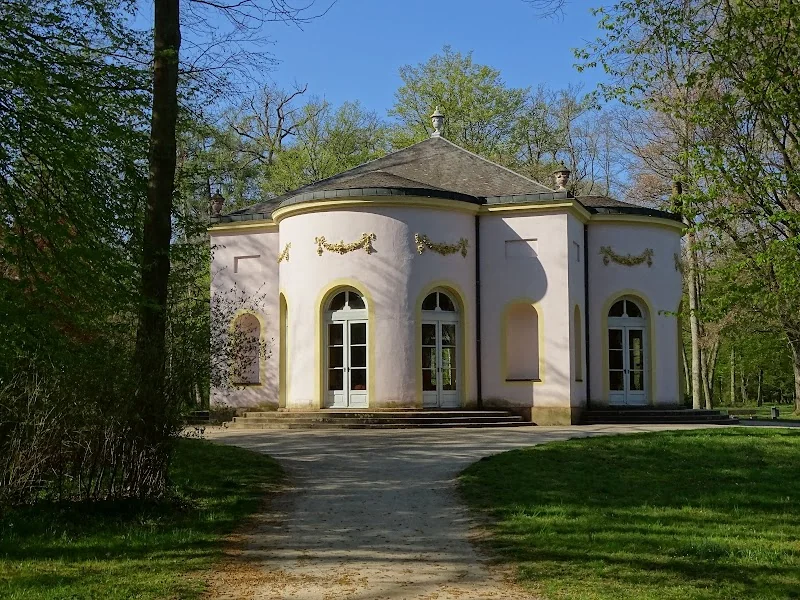
The Festsaal in Park Schönbusch in Aschaffenburg, also locally known as the dining hall, is one of the most atmospheric small concert venues in Lower Franconia. Nestled in one of the oldest landscape gardens in Germany, the circular pavilion combines historic charm with an intimate proximity between stage and audience. Those looking for images and photos will find an aesthetic mix of classical architecture, surrounding meadows, and sightlines that model the light particularly softly at any time of day. The season falls in the warm months, which further shapes the popular summer concerts. For visitors, the way is easy: At the park entrance on Kleine Schönbuschallee 1, parking spaces are available, from where a short walk leads to the hall. The room itself accommodates up to 134 people in row seating and is ideal for chamber music and readings. This overview consolidates the most important information about images, history, events, access, parking, capacity, and seating, as well as helpful tips for your visit.
Images and Atmosphere in the Festsaal Park Schönbusch Aschaffenburg
Those viewing images of the Festsaal Park Schönbusch immediately recognize the special design language: The building is designed as a circle, an architectural decision that creates a sense of sheltered spaciousness in the interior. The circular floor plan, with a diameter of about twelve meters, ensures that the audience and podium come together closely without creating a sense of crowding. This gives photos from the interior a clear composition, where lines and arches harmonize almost automatically. Particularly striking are the historical landscape paintings inside, which lead the eye around. Above the heads hovers the depiction of Flora, the Roman goddess of spring, an iconic detail that focuses on many interior shots and gives the room a poetic accent. Exterior shots benefit from the advantageous location in the romantic landscape park: Lawns, solitary trees, and sightlines form natural frames, while the adjacent lake sparkles in the distance. Photographically interesting are the twilight hours when the light is filtered through the foliage. Even on the way from the parking lot to the hall, numerous motifs present themselves, such as the avenue, gentle terrain modeling, decorative buildings, and bridges. Panorama shots capture the embedding of the pavilion in the grand garden artwork, while detail shots show the fine state of preservation and the texture of the surfaces. For organizers, the visual world of the Festsaal is a clear advantage: Press photos succeed both in wide shots and as concentrated portraits in front of the wall paintings. Those managing social media will find that thanks to the circular geometry, motifs appear three-dimensional and lively without elaborate lighting. The interplay of architecture and nature creates a recognizable look that combines the elegance of classicism with the lightness of a summer day.
History and Special Features of the Dining Hall in Park Schönbusch
Park Schönbusch was created from the second half of the 18th century as an English landscape garden and is one of the earliest and most significant facilities of this kind in Germany. In this context, the Festsaal, which is referred to in contemporary sources as a dining hall or social and festive hall, belongs. Its construction dates back to the late 1780s, during which several decorative buildings made the park a walkable stage landscape. The pavilion replaced a wooden predecessor and was designed in masonry with classical allusions. Its interior is characterized by surrounding landscape paintings, while the ceiling painting with the allegorical figure of Flora emphasizes the seasonal character and festive culture of the park. Unlike large residence halls, the Festsaal is intimately proportioned. This scale explains why it remains suitable for formats that require calm, fine nuances, and closeness. The historical use as a place for social gatherings and musical performances is thus continuously maintained. For conservation reasons, the hall remains unheated, which means that its use is seasonally concentrated in the warmer months. This historical imprint adds to its charm: Events fit into the annual cycle of the garden when the paths are dry, the trees are leafy, and the evenings are long. For monument preservation, this also means manageable burdens and a considerate operation. The Festsaal, like the castle and park, belongs to the holdings of the Bavarian Administration of State Castles, Gardens, and Lakes. They are responsible for rentals, define requirements, and provide the basic equipment. Those seeking an atmospheric home in the historical tradition of garden salons for retreat, music-making, and conversation will find here an authentic example of late-classical park architecture that still appears modern in its clarity.
Events and Program in the Festsaal: Schönbusch Serenades and Chamber Music
The Festsaal is primarily known in the regional cultural scene as a stage for special chamber music series. A flagship is the Schönbusch Serenades, which take place in the summer months. They utilize exactly those advantages that this space offers: the circular geometry, which ensures immediate acoustics, and the intimate distance between performers and audience. The series focuses on programs that unfold their effect in the concentrated atmosphere of the hall, such as string quartets, wind ensembles, piano and voice, as well as chamber music mixtures. At entry and during the intermission, the park landscape becomes part of the experience: Visitors step from the coolness of the interior color into the evening light, hear birdsong, and stroll among old trees before taking their seats again for the next movement. In addition to the serenades, occasional benefit evenings, readings, or lectures take place, which utilize high speech intelligibility and the clear room sound. The room capacity of up to 134 seats is deliberately manageable, creating an almost private atmosphere. Organizers appreciate the reliable ambiance and the provided setting: The basic equipment with chairs and podium covers most acoustic formats, and additional technology is brought in as needed. Since the hall cannot be heated, the schedule focuses on the period from April 1 to September 30. This seasonality has curatorial advantages, as it allows for the development of programs with a summery focus and guides the audience into the park on planned paths. For guests coming for the first time, it is important to know: There is a short, easily walkable footpath between the parking lot and the hall. The flow on concert evenings is thus relaxed, and travel times can be easily calculated. This creates a total experience of music, landscape, and architecture that makes the Festsaal in Schönbusch a brand.
Access and Parking: How to Reach the Festsaal in Park Schönbusch
The Festsaal is located in the western urban area of Aschaffenburg, about four kilometers from the center. The postal address is Kleine Schönbuschallee 1, 63741 Aschaffenburg. For those arriving by car, parking spaces are available at the park entrance, including the parking lot on Kleine Schönbuschallee. From there, a roughly 400-meter walking path leads to the pavilion. Those coming from the city center can reach the park beautifully on foot or by bike via Kleine Schönbuschallee, a historic promenade about 2.2 kilometers long that has marked the way from the city center to the park since the 18th century. For navigation systems, it is advisable to enter the mentioned address, as it points exactly to the main entrance. Public transport will take you into the urban area, with the last section being on foot. Visitors should plan a few minutes of reserve for the walk from the parking lot to the hall, especially for evening events. The park is extensive as a garden monument, but the paths are well developed and signposted. For cyclists, the approach is also pleasant; Kleine Schönbuschallee is known as an axis between the city and the park. Those combining several stops in the urban area will find a good base at the park entrance to incorporate a short walk by the lake or through the meadows after the concert. For bus groups, coordination with the organizer and administration is recommended to keep stop times and paths short. Since the park operation takes nature and monument protection into account, parking spaces are concentrated, and there are no access roads directly at the hall. This contributes to the tranquility of the concert operation and preserves the historical park backdrop that frames the Festsaal so uniquely.
Capacity, Seating, and Hall Plan: What to Expect Inside
The Festsaal has a room size of 110 square meters, organized as a circular area with a diameter of about twelve meters. In row seating, up to 134 people are allowed. This configuration allows for clear sightlines, short distances, and a very direct address, which is crucial in chamber music. There is no fixed, permanently installed hall plan, as seating and podium are arranged according to the occasion. Row seating is common; for lectures with a speaker's podium or small ensembles, a low platform is suitable. The historical interior painting forms a calm, bright stage that focuses the eye and ear without distraction. A numbered seating system is usually not provided, as flexible furnishing is prioritized; the specific seating assignment is determined by the respective organizer and communicated in the ticket information. Acoustically, the circular floor plan rewards fine dynamics and articulation. Strings, winds, and voices benefit from the close but not dry sound image. Professional photography and video documentation particularly appreciate the balanced lighting: large window openings and bright wall surfaces ensure a friendly base brightness even in the evening hours, harmonizing with discreet additional lights. The maximum occupancy is clearly defined for safety reasons, ensuring that all guests find comfortable seating and escape routes remain clear. For those who pay attention to short distances, it is important to know: The hall is accessible at ground level, and the footpath from the parking lot leads through the park without significant inclines. Wheelchair spaces or special needs should be discussed in advance with the organizer to ensure appropriate arrangements. This creates an environment in the Festsaal that is equally focused, intimate, and comfortable.
Season, Requirements, and Equipment: What Matters in Planning
The availability of the Festsaal is set for the period from April 1 to September 30. This framework ties into the historical use throughout the year and also takes into account the fact that the hall cannot be heated. For planning practice, this means that evening temperatures and daylight should be particularly considered. Requirements include a candle prohibition and the principle that events with catering in the Festsaal are not planned. These rules protect the monument, the interior paintings, and the historical building substance. In the rental, chairs and a podium are provided as basic technical equipment; additional technology such as microphones, music stands, or small PA systems is added as needed. The hall itself is predestined for pure acoustic formats; for amplified programs, a very discreet sound system tailored to speech or chamber music is helpful. Administration lies with the Bavarian Administration of State Castles, Gardens, and Lakes, which is also the contact for reservations and detailed arrangements. Thanks to the clear framework conditions, organizers keep costs in view while utilizing the special features of the location. The park operation provides parking spaces at the entrance, making delivery and guest pathways manageable. Those welcoming international guests can communicate the good orientation aid via Kleine Schönbuschallee and the park entrance. For recurring series like the Schönbusch Serenades, seasonality is even a trademark: The programs are cleverly tailored to summer evenings, and during intermissions, the park landscape invites leisurely strolls. From a communication perspective, these details are important, as they provide tangible added value for a culture-interested audience seeking special places and decelerated experiences.
Photo Tips and Visitor Experience: How to Capture Images of the Festsaal
The most common image searches for the Festsaal revolve around atmospheric exterior shots and interior motifs that showcase the special spatial atmosphere. For exterior photos, it is worthwhile to look along the sightlines: A slight offset from the pavilion, flanked by trees, adds depth to the image. Early in the morning and during the golden hour in the evening, soft contrasts emerge that emphasize the warm tone of the facade and the greenery of the park. Inside, it is advisable to place the podium deep in the image and consciously include the ceiling with the Flora depiction to make the vertical dimension palpable. Those photographing during a concert should work discreetly and without flash, always observing the house rules of the organizer. For smartphones, the ultra-wide angle is practical to capture the circular geometry; perspective distortions can be mitigated by a slightly elevated viewpoint. Detail shots are also worthwhile: textures of the wall painting, rows of chairs in an arc, light reflections on instruments. For break images, paths, bridges, and shore areas near the park are suitable. Those wishing to combine several motifs can create a small series that tells the journey from the parking lot through the park to the concert and back. For guests, the visitor experience is clearly structured: Arriving at the park entrance, a short walk, a concert in an intimate setting, and winding down among the trees. This dramaturgy is what makes many images so impactful. Organizers can incorporate this into their communication by providing clear route maps, times, and notes on seasonality. This way, image searches turn into concrete visits, and the Festsaal is perceived not only as a motif but as a living cultural venue.
Sources:
- Bavarian Castle Administration – Festsaal Park Schönbusch
- Bavarian Castle Administration – Event Rooms Park Schönbusch
- City Theater Aschaffenburg – Festsaal in Park Schönbusch
- Bavarian Castle Administration – Directions to Castle and Park Schönbusch
- Wikipedia – List of Historical Monuments in Aschaffenburg, Entry Dining Hall 1788–1792
- City Archive Digital Aschaffenburg – Kleine Schönbuschallee, historical information
Show moreShow less
Festsaal Park Schönbusch | Images & Photos Aschaffenburg
The Festsaal in Park Schönbusch in Aschaffenburg, also locally known as the dining hall, is one of the most atmospheric small concert venues in Lower Franconia. Nestled in one of the oldest landscape gardens in Germany, the circular pavilion combines historic charm with an intimate proximity between stage and audience. Those looking for images and photos will find an aesthetic mix of classical architecture, surrounding meadows, and sightlines that model the light particularly softly at any time of day. The season falls in the warm months, which further shapes the popular summer concerts. For visitors, the way is easy: At the park entrance on Kleine Schönbuschallee 1, parking spaces are available, from where a short walk leads to the hall. The room itself accommodates up to 134 people in row seating and is ideal for chamber music and readings. This overview consolidates the most important information about images, history, events, access, parking, capacity, and seating, as well as helpful tips for your visit.
Images and Atmosphere in the Festsaal Park Schönbusch Aschaffenburg
Those viewing images of the Festsaal Park Schönbusch immediately recognize the special design language: The building is designed as a circle, an architectural decision that creates a sense of sheltered spaciousness in the interior. The circular floor plan, with a diameter of about twelve meters, ensures that the audience and podium come together closely without creating a sense of crowding. This gives photos from the interior a clear composition, where lines and arches harmonize almost automatically. Particularly striking are the historical landscape paintings inside, which lead the eye around. Above the heads hovers the depiction of Flora, the Roman goddess of spring, an iconic detail that focuses on many interior shots and gives the room a poetic accent. Exterior shots benefit from the advantageous location in the romantic landscape park: Lawns, solitary trees, and sightlines form natural frames, while the adjacent lake sparkles in the distance. Photographically interesting are the twilight hours when the light is filtered through the foliage. Even on the way from the parking lot to the hall, numerous motifs present themselves, such as the avenue, gentle terrain modeling, decorative buildings, and bridges. Panorama shots capture the embedding of the pavilion in the grand garden artwork, while detail shots show the fine state of preservation and the texture of the surfaces. For organizers, the visual world of the Festsaal is a clear advantage: Press photos succeed both in wide shots and as concentrated portraits in front of the wall paintings. Those managing social media will find that thanks to the circular geometry, motifs appear three-dimensional and lively without elaborate lighting. The interplay of architecture and nature creates a recognizable look that combines the elegance of classicism with the lightness of a summer day.
History and Special Features of the Dining Hall in Park Schönbusch
Park Schönbusch was created from the second half of the 18th century as an English landscape garden and is one of the earliest and most significant facilities of this kind in Germany. In this context, the Festsaal, which is referred to in contemporary sources as a dining hall or social and festive hall, belongs. Its construction dates back to the late 1780s, during which several decorative buildings made the park a walkable stage landscape. The pavilion replaced a wooden predecessor and was designed in masonry with classical allusions. Its interior is characterized by surrounding landscape paintings, while the ceiling painting with the allegorical figure of Flora emphasizes the seasonal character and festive culture of the park. Unlike large residence halls, the Festsaal is intimately proportioned. This scale explains why it remains suitable for formats that require calm, fine nuances, and closeness. The historical use as a place for social gatherings and musical performances is thus continuously maintained. For conservation reasons, the hall remains unheated, which means that its use is seasonally concentrated in the warmer months. This historical imprint adds to its charm: Events fit into the annual cycle of the garden when the paths are dry, the trees are leafy, and the evenings are long. For monument preservation, this also means manageable burdens and a considerate operation. The Festsaal, like the castle and park, belongs to the holdings of the Bavarian Administration of State Castles, Gardens, and Lakes. They are responsible for rentals, define requirements, and provide the basic equipment. Those seeking an atmospheric home in the historical tradition of garden salons for retreat, music-making, and conversation will find here an authentic example of late-classical park architecture that still appears modern in its clarity.
Events and Program in the Festsaal: Schönbusch Serenades and Chamber Music
The Festsaal is primarily known in the regional cultural scene as a stage for special chamber music series. A flagship is the Schönbusch Serenades, which take place in the summer months. They utilize exactly those advantages that this space offers: the circular geometry, which ensures immediate acoustics, and the intimate distance between performers and audience. The series focuses on programs that unfold their effect in the concentrated atmosphere of the hall, such as string quartets, wind ensembles, piano and voice, as well as chamber music mixtures. At entry and during the intermission, the park landscape becomes part of the experience: Visitors step from the coolness of the interior color into the evening light, hear birdsong, and stroll among old trees before taking their seats again for the next movement. In addition to the serenades, occasional benefit evenings, readings, or lectures take place, which utilize high speech intelligibility and the clear room sound. The room capacity of up to 134 seats is deliberately manageable, creating an almost private atmosphere. Organizers appreciate the reliable ambiance and the provided setting: The basic equipment with chairs and podium covers most acoustic formats, and additional technology is brought in as needed. Since the hall cannot be heated, the schedule focuses on the period from April 1 to September 30. This seasonality has curatorial advantages, as it allows for the development of programs with a summery focus and guides the audience into the park on planned paths. For guests coming for the first time, it is important to know: There is a short, easily walkable footpath between the parking lot and the hall. The flow on concert evenings is thus relaxed, and travel times can be easily calculated. This creates a total experience of music, landscape, and architecture that makes the Festsaal in Schönbusch a brand.
Access and Parking: How to Reach the Festsaal in Park Schönbusch
The Festsaal is located in the western urban area of Aschaffenburg, about four kilometers from the center. The postal address is Kleine Schönbuschallee 1, 63741 Aschaffenburg. For those arriving by car, parking spaces are available at the park entrance, including the parking lot on Kleine Schönbuschallee. From there, a roughly 400-meter walking path leads to the pavilion. Those coming from the city center can reach the park beautifully on foot or by bike via Kleine Schönbuschallee, a historic promenade about 2.2 kilometers long that has marked the way from the city center to the park since the 18th century. For navigation systems, it is advisable to enter the mentioned address, as it points exactly to the main entrance. Public transport will take you into the urban area, with the last section being on foot. Visitors should plan a few minutes of reserve for the walk from the parking lot to the hall, especially for evening events. The park is extensive as a garden monument, but the paths are well developed and signposted. For cyclists, the approach is also pleasant; Kleine Schönbuschallee is known as an axis between the city and the park. Those combining several stops in the urban area will find a good base at the park entrance to incorporate a short walk by the lake or through the meadows after the concert. For bus groups, coordination with the organizer and administration is recommended to keep stop times and paths short. Since the park operation takes nature and monument protection into account, parking spaces are concentrated, and there are no access roads directly at the hall. This contributes to the tranquility of the concert operation and preserves the historical park backdrop that frames the Festsaal so uniquely.
Capacity, Seating, and Hall Plan: What to Expect Inside
The Festsaal has a room size of 110 square meters, organized as a circular area with a diameter of about twelve meters. In row seating, up to 134 people are allowed. This configuration allows for clear sightlines, short distances, and a very direct address, which is crucial in chamber music. There is no fixed, permanently installed hall plan, as seating and podium are arranged according to the occasion. Row seating is common; for lectures with a speaker's podium or small ensembles, a low platform is suitable. The historical interior painting forms a calm, bright stage that focuses the eye and ear without distraction. A numbered seating system is usually not provided, as flexible furnishing is prioritized; the specific seating assignment is determined by the respective organizer and communicated in the ticket information. Acoustically, the circular floor plan rewards fine dynamics and articulation. Strings, winds, and voices benefit from the close but not dry sound image. Professional photography and video documentation particularly appreciate the balanced lighting: large window openings and bright wall surfaces ensure a friendly base brightness even in the evening hours, harmonizing with discreet additional lights. The maximum occupancy is clearly defined for safety reasons, ensuring that all guests find comfortable seating and escape routes remain clear. For those who pay attention to short distances, it is important to know: The hall is accessible at ground level, and the footpath from the parking lot leads through the park without significant inclines. Wheelchair spaces or special needs should be discussed in advance with the organizer to ensure appropriate arrangements. This creates an environment in the Festsaal that is equally focused, intimate, and comfortable.
Season, Requirements, and Equipment: What Matters in Planning
The availability of the Festsaal is set for the period from April 1 to September 30. This framework ties into the historical use throughout the year and also takes into account the fact that the hall cannot be heated. For planning practice, this means that evening temperatures and daylight should be particularly considered. Requirements include a candle prohibition and the principle that events with catering in the Festsaal are not planned. These rules protect the monument, the interior paintings, and the historical building substance. In the rental, chairs and a podium are provided as basic technical equipment; additional technology such as microphones, music stands, or small PA systems is added as needed. The hall itself is predestined for pure acoustic formats; for amplified programs, a very discreet sound system tailored to speech or chamber music is helpful. Administration lies with the Bavarian Administration of State Castles, Gardens, and Lakes, which is also the contact for reservations and detailed arrangements. Thanks to the clear framework conditions, organizers keep costs in view while utilizing the special features of the location. The park operation provides parking spaces at the entrance, making delivery and guest pathways manageable. Those welcoming international guests can communicate the good orientation aid via Kleine Schönbuschallee and the park entrance. For recurring series like the Schönbusch Serenades, seasonality is even a trademark: The programs are cleverly tailored to summer evenings, and during intermissions, the park landscape invites leisurely strolls. From a communication perspective, these details are important, as they provide tangible added value for a culture-interested audience seeking special places and decelerated experiences.
Photo Tips and Visitor Experience: How to Capture Images of the Festsaal
The most common image searches for the Festsaal revolve around atmospheric exterior shots and interior motifs that showcase the special spatial atmosphere. For exterior photos, it is worthwhile to look along the sightlines: A slight offset from the pavilion, flanked by trees, adds depth to the image. Early in the morning and during the golden hour in the evening, soft contrasts emerge that emphasize the warm tone of the facade and the greenery of the park. Inside, it is advisable to place the podium deep in the image and consciously include the ceiling with the Flora depiction to make the vertical dimension palpable. Those photographing during a concert should work discreetly and without flash, always observing the house rules of the organizer. For smartphones, the ultra-wide angle is practical to capture the circular geometry; perspective distortions can be mitigated by a slightly elevated viewpoint. Detail shots are also worthwhile: textures of the wall painting, rows of chairs in an arc, light reflections on instruments. For break images, paths, bridges, and shore areas near the park are suitable. Those wishing to combine several motifs can create a small series that tells the journey from the parking lot through the park to the concert and back. For guests, the visitor experience is clearly structured: Arriving at the park entrance, a short walk, a concert in an intimate setting, and winding down among the trees. This dramaturgy is what makes many images so impactful. Organizers can incorporate this into their communication by providing clear route maps, times, and notes on seasonality. This way, image searches turn into concrete visits, and the Festsaal is perceived not only as a motif but as a living cultural venue.
Sources:
- Bavarian Castle Administration – Festsaal Park Schönbusch
- Bavarian Castle Administration – Event Rooms Park Schönbusch
- City Theater Aschaffenburg – Festsaal in Park Schönbusch
- Bavarian Castle Administration – Directions to Castle and Park Schönbusch
- Wikipedia – List of Historical Monuments in Aschaffenburg, Entry Dining Hall 1788–1792
- City Archive Digital Aschaffenburg – Kleine Schönbuschallee, historical information
Festsaal Park Schönbusch | Images & Photos Aschaffenburg
The Festsaal in Park Schönbusch in Aschaffenburg, also locally known as the dining hall, is one of the most atmospheric small concert venues in Lower Franconia. Nestled in one of the oldest landscape gardens in Germany, the circular pavilion combines historic charm with an intimate proximity between stage and audience. Those looking for images and photos will find an aesthetic mix of classical architecture, surrounding meadows, and sightlines that model the light particularly softly at any time of day. The season falls in the warm months, which further shapes the popular summer concerts. For visitors, the way is easy: At the park entrance on Kleine Schönbuschallee 1, parking spaces are available, from where a short walk leads to the hall. The room itself accommodates up to 134 people in row seating and is ideal for chamber music and readings. This overview consolidates the most important information about images, history, events, access, parking, capacity, and seating, as well as helpful tips for your visit.
Images and Atmosphere in the Festsaal Park Schönbusch Aschaffenburg
Those viewing images of the Festsaal Park Schönbusch immediately recognize the special design language: The building is designed as a circle, an architectural decision that creates a sense of sheltered spaciousness in the interior. The circular floor plan, with a diameter of about twelve meters, ensures that the audience and podium come together closely without creating a sense of crowding. This gives photos from the interior a clear composition, where lines and arches harmonize almost automatically. Particularly striking are the historical landscape paintings inside, which lead the eye around. Above the heads hovers the depiction of Flora, the Roman goddess of spring, an iconic detail that focuses on many interior shots and gives the room a poetic accent. Exterior shots benefit from the advantageous location in the romantic landscape park: Lawns, solitary trees, and sightlines form natural frames, while the adjacent lake sparkles in the distance. Photographically interesting are the twilight hours when the light is filtered through the foliage. Even on the way from the parking lot to the hall, numerous motifs present themselves, such as the avenue, gentle terrain modeling, decorative buildings, and bridges. Panorama shots capture the embedding of the pavilion in the grand garden artwork, while detail shots show the fine state of preservation and the texture of the surfaces. For organizers, the visual world of the Festsaal is a clear advantage: Press photos succeed both in wide shots and as concentrated portraits in front of the wall paintings. Those managing social media will find that thanks to the circular geometry, motifs appear three-dimensional and lively without elaborate lighting. The interplay of architecture and nature creates a recognizable look that combines the elegance of classicism with the lightness of a summer day.
History and Special Features of the Dining Hall in Park Schönbusch
Park Schönbusch was created from the second half of the 18th century as an English landscape garden and is one of the earliest and most significant facilities of this kind in Germany. In this context, the Festsaal, which is referred to in contemporary sources as a dining hall or social and festive hall, belongs. Its construction dates back to the late 1780s, during which several decorative buildings made the park a walkable stage landscape. The pavilion replaced a wooden predecessor and was designed in masonry with classical allusions. Its interior is characterized by surrounding landscape paintings, while the ceiling painting with the allegorical figure of Flora emphasizes the seasonal character and festive culture of the park. Unlike large residence halls, the Festsaal is intimately proportioned. This scale explains why it remains suitable for formats that require calm, fine nuances, and closeness. The historical use as a place for social gatherings and musical performances is thus continuously maintained. For conservation reasons, the hall remains unheated, which means that its use is seasonally concentrated in the warmer months. This historical imprint adds to its charm: Events fit into the annual cycle of the garden when the paths are dry, the trees are leafy, and the evenings are long. For monument preservation, this also means manageable burdens and a considerate operation. The Festsaal, like the castle and park, belongs to the holdings of the Bavarian Administration of State Castles, Gardens, and Lakes. They are responsible for rentals, define requirements, and provide the basic equipment. Those seeking an atmospheric home in the historical tradition of garden salons for retreat, music-making, and conversation will find here an authentic example of late-classical park architecture that still appears modern in its clarity.
Events and Program in the Festsaal: Schönbusch Serenades and Chamber Music
The Festsaal is primarily known in the regional cultural scene as a stage for special chamber music series. A flagship is the Schönbusch Serenades, which take place in the summer months. They utilize exactly those advantages that this space offers: the circular geometry, which ensures immediate acoustics, and the intimate distance between performers and audience. The series focuses on programs that unfold their effect in the concentrated atmosphere of the hall, such as string quartets, wind ensembles, piano and voice, as well as chamber music mixtures. At entry and during the intermission, the park landscape becomes part of the experience: Visitors step from the coolness of the interior color into the evening light, hear birdsong, and stroll among old trees before taking their seats again for the next movement. In addition to the serenades, occasional benefit evenings, readings, or lectures take place, which utilize high speech intelligibility and the clear room sound. The room capacity of up to 134 seats is deliberately manageable, creating an almost private atmosphere. Organizers appreciate the reliable ambiance and the provided setting: The basic equipment with chairs and podium covers most acoustic formats, and additional technology is brought in as needed. Since the hall cannot be heated, the schedule focuses on the period from April 1 to September 30. This seasonality has curatorial advantages, as it allows for the development of programs with a summery focus and guides the audience into the park on planned paths. For guests coming for the first time, it is important to know: There is a short, easily walkable footpath between the parking lot and the hall. The flow on concert evenings is thus relaxed, and travel times can be easily calculated. This creates a total experience of music, landscape, and architecture that makes the Festsaal in Schönbusch a brand.
Access and Parking: How to Reach the Festsaal in Park Schönbusch
The Festsaal is located in the western urban area of Aschaffenburg, about four kilometers from the center. The postal address is Kleine Schönbuschallee 1, 63741 Aschaffenburg. For those arriving by car, parking spaces are available at the park entrance, including the parking lot on Kleine Schönbuschallee. From there, a roughly 400-meter walking path leads to the pavilion. Those coming from the city center can reach the park beautifully on foot or by bike via Kleine Schönbuschallee, a historic promenade about 2.2 kilometers long that has marked the way from the city center to the park since the 18th century. For navigation systems, it is advisable to enter the mentioned address, as it points exactly to the main entrance. Public transport will take you into the urban area, with the last section being on foot. Visitors should plan a few minutes of reserve for the walk from the parking lot to the hall, especially for evening events. The park is extensive as a garden monument, but the paths are well developed and signposted. For cyclists, the approach is also pleasant; Kleine Schönbuschallee is known as an axis between the city and the park. Those combining several stops in the urban area will find a good base at the park entrance to incorporate a short walk by the lake or through the meadows after the concert. For bus groups, coordination with the organizer and administration is recommended to keep stop times and paths short. Since the park operation takes nature and monument protection into account, parking spaces are concentrated, and there are no access roads directly at the hall. This contributes to the tranquility of the concert operation and preserves the historical park backdrop that frames the Festsaal so uniquely.
Capacity, Seating, and Hall Plan: What to Expect Inside
The Festsaal has a room size of 110 square meters, organized as a circular area with a diameter of about twelve meters. In row seating, up to 134 people are allowed. This configuration allows for clear sightlines, short distances, and a very direct address, which is crucial in chamber music. There is no fixed, permanently installed hall plan, as seating and podium are arranged according to the occasion. Row seating is common; for lectures with a speaker's podium or small ensembles, a low platform is suitable. The historical interior painting forms a calm, bright stage that focuses the eye and ear without distraction. A numbered seating system is usually not provided, as flexible furnishing is prioritized; the specific seating assignment is determined by the respective organizer and communicated in the ticket information. Acoustically, the circular floor plan rewards fine dynamics and articulation. Strings, winds, and voices benefit from the close but not dry sound image. Professional photography and video documentation particularly appreciate the balanced lighting: large window openings and bright wall surfaces ensure a friendly base brightness even in the evening hours, harmonizing with discreet additional lights. The maximum occupancy is clearly defined for safety reasons, ensuring that all guests find comfortable seating and escape routes remain clear. For those who pay attention to short distances, it is important to know: The hall is accessible at ground level, and the footpath from the parking lot leads through the park without significant inclines. Wheelchair spaces or special needs should be discussed in advance with the organizer to ensure appropriate arrangements. This creates an environment in the Festsaal that is equally focused, intimate, and comfortable.
Season, Requirements, and Equipment: What Matters in Planning
The availability of the Festsaal is set for the period from April 1 to September 30. This framework ties into the historical use throughout the year and also takes into account the fact that the hall cannot be heated. For planning practice, this means that evening temperatures and daylight should be particularly considered. Requirements include a candle prohibition and the principle that events with catering in the Festsaal are not planned. These rules protect the monument, the interior paintings, and the historical building substance. In the rental, chairs and a podium are provided as basic technical equipment; additional technology such as microphones, music stands, or small PA systems is added as needed. The hall itself is predestined for pure acoustic formats; for amplified programs, a very discreet sound system tailored to speech or chamber music is helpful. Administration lies with the Bavarian Administration of State Castles, Gardens, and Lakes, which is also the contact for reservations and detailed arrangements. Thanks to the clear framework conditions, organizers keep costs in view while utilizing the special features of the location. The park operation provides parking spaces at the entrance, making delivery and guest pathways manageable. Those welcoming international guests can communicate the good orientation aid via Kleine Schönbuschallee and the park entrance. For recurring series like the Schönbusch Serenades, seasonality is even a trademark: The programs are cleverly tailored to summer evenings, and during intermissions, the park landscape invites leisurely strolls. From a communication perspective, these details are important, as they provide tangible added value for a culture-interested audience seeking special places and decelerated experiences.
Photo Tips and Visitor Experience: How to Capture Images of the Festsaal
The most common image searches for the Festsaal revolve around atmospheric exterior shots and interior motifs that showcase the special spatial atmosphere. For exterior photos, it is worthwhile to look along the sightlines: A slight offset from the pavilion, flanked by trees, adds depth to the image. Early in the morning and during the golden hour in the evening, soft contrasts emerge that emphasize the warm tone of the facade and the greenery of the park. Inside, it is advisable to place the podium deep in the image and consciously include the ceiling with the Flora depiction to make the vertical dimension palpable. Those photographing during a concert should work discreetly and without flash, always observing the house rules of the organizer. For smartphones, the ultra-wide angle is practical to capture the circular geometry; perspective distortions can be mitigated by a slightly elevated viewpoint. Detail shots are also worthwhile: textures of the wall painting, rows of chairs in an arc, light reflections on instruments. For break images, paths, bridges, and shore areas near the park are suitable. Those wishing to combine several motifs can create a small series that tells the journey from the parking lot through the park to the concert and back. For guests, the visitor experience is clearly structured: Arriving at the park entrance, a short walk, a concert in an intimate setting, and winding down among the trees. This dramaturgy is what makes many images so impactful. Organizers can incorporate this into their communication by providing clear route maps, times, and notes on seasonality. This way, image searches turn into concrete visits, and the Festsaal is perceived not only as a motif but as a living cultural venue.
Sources:
- Bavarian Castle Administration – Festsaal Park Schönbusch
- Bavarian Castle Administration – Event Rooms Park Schönbusch
- City Theater Aschaffenburg – Festsaal in Park Schönbusch
- Bavarian Castle Administration – Directions to Castle and Park Schönbusch
- Wikipedia – List of Historical Monuments in Aschaffenburg, Entry Dining Hall 1788–1792
- City Archive Digital Aschaffenburg – Kleine Schönbuschallee, historical information
Frequently Asked Questions
Reviews
Martin Wening
9. May 2022
A roughly circular, but polygonal building with one room. It is probably used for concerts in the summer, among other things. The sign next to it calls it a "dining hall," which is somewhat confusing. Built in 1792.
Katja K.
6. August 2025
A lovely setting, but it's not always open. We were there for a classical concert, but it's not exactly the ideal location for string instruments: the nearly 76% humidity meant constant retuning was necessary because the hall was packed and it was pouring rain outside. And the stuffy, musty smell in the room wasn't exactly pleasant either.
Ulrike Schell
5. November 2021
Information from the plaque: The dining room was built in 1792 as the "Salle de la Comwagnie et de Festin" (Communion and Festival Hall). View of the Old Chapel of Nilkheim. Point 29 on the map for sights in the park. I would also like to see all the buildings in the park from the inside. I only know them from the closed doors. The park is worth a stroll at any time of year. Especially for children, as there are always a variety of hot spots.
Lutz Kremer
21. June 2025
Beautiful park with beer garden/restaurant.
Alois Wollnik
7. May 2021
In the 60s, there were occasional classical concerts there. People would lie outside on the grass and let themselves be enchanted by the music. The children, including me, would jump around...it was always a wonderful day.