
Aschaffenburg
Roßmarkt 11, 63739 Aschaffenburg, Deutschland
Digital Store Aschaffenburg | Opening Hours & Address
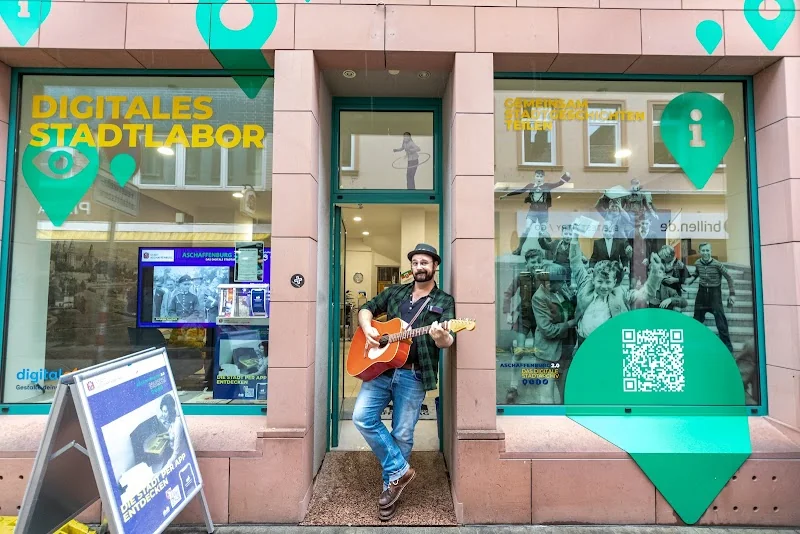
Whether it's Digital Store Aschaffenburg, digital store, digitalo store, or colorful digital store: It refers to the municipal Digital Store at Roßmarkt 11, which has developed into an important interface between administration, city history, and digital future in recent years. If you're looking for a place to ask questions about online services, contribute ideas for the city, or learn about local digital projects, you've come to the right place. The Digital Store is not to be understood as a classic sales room, but as an open, citizen-friendly point of contact with the aim of conveying digital topics in an understandable, personal way right in the city center. Since April 2021, the location in Aschaffenburg has been a visible place for participation, exchange, and information dissemination; today it connects analog encounters with digital formats, making tangible what many search queries already suggest: a store for the digital city of tomorrow. ([digital.aschaffenburg.de](https://digital.aschaffenburg.de/2021/03/rossmarkt-11-digitales-stadtlabor-und-ideenschmiede/?utm_source=openai))
Opening Hours and Address of the Digital Store in Aschaffenburg
The most important information for many visitors is quite simple: Where can I find the Digital Store, and when is it open? The official address is Roßmarkt 11, 63739 Aschaffenburg. According to the current city website, the Digital Store is open on Tuesdays and Thursdays from 10 AM to 4 PM and on Wednesdays from 10 AM to 2 PM. This makes the location well-integrated into everyday life, especially for people who are out and about in the city center during the day or specifically want to come by with questions about digital offerings. Additionally, the Digital Store is described as a central and easily accessible place in the pedestrian zone. If you want to get in touch, you can find the email address digital@aschaffenburg.de on the official city pages. For an SEO-oriented search intent, this combination of address, opening hours, and contact is crucial, as it directly answers the most searched user questions while simultaneously creating a clear incentive to visit. ([digital.aschaffenburg.de](https://digital.aschaffenburg.de/digitalladen/))
From a usage perspective, the structure of the offerings is also clearly understandable: The Digital Store is not a place for long detours but for direct orientation. If you have a question about the digital future of the city, online services, or participation opportunities, you will find a fixed point of contact here. The official communication also emphasizes that the location serves as a place for the digital strategy and is anchored in the pedestrian zone. This is an important distinction from many other municipal offerings that take place solely online or get lost in administrative routines. The Digital Store creates visibility by lowering the threshold between digital offerings and personal conversation. For visitors, this means: You don't have to be a tech professional to get answers here. This low-threshold access makes the location relevant for older people, families, engaged individuals, and those interested alike. So, if you're looking for opening hours, address, or contact, you're really searching for a place where digital topics become understandable. ([digital.aschaffenburg.de](https://digital.aschaffenburg.de/digitalladen/))
What the Digital Store at Roßmarkt 11 Actually Is
The Digital Store is functionally much larger than its name suggests. On the official city pages, it is described as a central point of contact for all citizens who have questions about the digital future of Aschaffenburg. At the same time, it is a driver of digital development, an idea factory, and an interface between the analog and digital worlds. These terms are not just marketing formulas but describe very precisely what the place is about: It's not about abstract future debates but about concrete topics like online citizen services, smart city concepts, participation formats, and digital inclusion. The city of Aschaffenburg links administration, communication, and urban development at a visible location in the city center. Therefore, anyone who stops by experiences not just an information offering but a kind of public laboratory for digital urban design. This is equally interesting for residents as it is for people who want to experience Aschaffenburg as a modern, open municipality. ([digital.aschaffenburg.de](https://digital.aschaffenburg.de/digitalladen/))
It is particularly important that the Digital Store does not operate in isolation but functions as a collaboration. The city website explicitly mentions the cooperation between the Office for Digitalization, Organization, and IT, as well as the City and Stiftsarchiv. This creates a rare mix of technical future work and historical perspective. Thus, the Digital Store is not only an information point for digitalization but also a place where administration, archival work, and participation come together. This is its unique selling point: It not only tells about digital solutions but also shows them in everyday municipal life. This makes the location relevant for people looking for a place for advice, exchange, or inspiration, but also for those who want to understand how a city visibly organizes its digital development. In the SEO context, this is particularly valuable because search queries like digital store Aschaffenburg or digital store often refer to this very mix of advice, information, and city reference. ([aschaffenburg.de](https://www.aschaffenburg.de/Beteiligen-Gestalten/index.php?FID=4173.723.1&La=1&ModID=9&NavID=4173.507&object=tx%2C4173.1.1&utm_source=openai))
Aschaffenburg 2.0 and City History as a Participation Format
A central theme in the Digital Store is the project Aschaffenburg 2.0. It connects city history with citizen participation and turns it into an open city laboratory. The official description emphasizes that citizens can fill the knowledge repository of the open archive with their own contributions and thus actively participate in the digital and cultural development of the city. This is particularly important for the content identity of the Digital Store because here, history is not only talked about but is created together. Those who contribute photos, documents, films, or personal memories help build a collective city memory. The project thus bridges the gap between the past and the present while giving the digital a human, narrative dimension. This makes Aschaffenburg 2.0 highly accessible for citizens, associations, schools, and anyone who wants to not just consume local stories but actively shape them. ([digital.aschaffenburg.de](https://digital.aschaffenburg.de/digitalladen/))
From an SEO perspective, this connection is also strong because many users do not search for an abstract administrative term but for something concrete like city history, participation, or local memory culture. The Digital Store meets this need by making historical content accessible in a digital format. It becomes clear that the city of Aschaffenburg does not view its past as a closed area but as a living part of the present. In the official texts, it is repeatedly mentioned that the digital future is linked to city history and that the Digital Store makes this connection visible both spatially and content-wise. For visitors, this means that a visit to the Digital Store can be more than just a brief consultation: It can be the starting point for engaging with city histories, regional memories, and digital archives. This content mix makes the place attractive for both culture-interested and digitally savvy individuals alike. ([digital.aschaffenburg.de](https://digital.aschaffenburg.de/digitalladen/))
Digital Consultation Hours, Workshops, and Events
If you understand the Digital Store not just as a quiet information place but as a lively event space, you're correct. The city of Aschaffenburg communicates various recurring offerings, including the open media consultation hour of the MIZ and the digital consultation hour with Mayor Eric Leiderer and the digital team. The media consultation hour is primarily aimed at older people and offers practical help in dealing with smartphones, tablets, and similar devices. The digital consultation hour, on the other hand, invites questions about smart city projects, online access, or digital developments in the city. The attitude is also important: The city describes the consultation hours as a component of its digital strategy Dialog City, which places people at the center and involves the entire urban society in the digital transformation. This makes the Digital Store a place where participation is not only thought about but is concretely organized. ([digital.aschaffenburg.de](https://digital.aschaffenburg.de/digitalladen/))
Additionally, the location is repeatedly used for events, workshops, and open formats. The official contributions include references to the nationwide Digital Day, open house days, programming workshops for children, and participation formats around new digital projects. The Digital Store is thus not limited to a single type of event but is flexible enough to reach different target groups. Families find low-threshold offerings there, older people practical support, and politically or urban development-interested citizens a platform for questions and ideas. It is particularly relevant that appointments can also be used by groups or associations if arranged in advance. This shows that the Digital Store is not just an address but an open infrastructure. For the content strategy, this is precisely important: The search intent behind terms like digital consultation, events, open consultation hour, or participation is not separated here but brought together. ([digital.aschaffenburg.de](https://digital.aschaffenburg.de/digitalladen/))
Home Hub, Digital Manufactory, and Other Projects in the Digital Store
The Digital Store is also exciting because it makes several projects visible that showcase different facets of digital urban development. This includes, for example, Home Hub at the Bavarian Untermain, described as a collaborative project of the City and Stiftsarchiv Aschaffenburg, Burglandschaft e.V., and Kulturlandschaft Kahlgrund e.V. The goal of this project is to build a collective cultural memory of the region and make it publicly usable with a participation platform. People can write contributions, upload photos, and share their perspectives on the region. Thus, a digital archive is created that not only collects information but also strengthens regional identity. The Digital Store is an ideal place for this because it bridges the gap between personal exchange and digital platform. Those who want to make regional history, club life, or local memories visible will find a low-threshold point of contact here. ([digital.aschaffenburg.de](https://digital.aschaffenburg.de/digitalladen/))
Equally important is the Digital Manufactory, or dima, which is anchored in the official sources as an innovative participation project with personal support in the Digital Store. The city of Aschaffenburg describes the Digital Store as an analog point of contact where the dima team supports citizens while the digital platform is thought of both online and on-site. This combination of personal conversation and digital participation is a core motive of the location. It is complemented by other projects such as Monument Topography Digital, Dialogue Romanticism, or formats that connect history, data, and citizen knowledge. This makes the Digital Store a showcase of the city's digital strategy. Seekers looking for digital participation projects, innovative administrative approaches, or smart urban development will find here not just a single offering but an entire ecosystem. This is exactly what makes the place content-rich and valuable for SEO reach. ([digital.aschaffenburg.de](https://digital.aschaffenburg.de/dima/projektbeschreibung/?utm_source=openai))
Virtual Tour, Central Location, and On-Site Visit
A particularly modern feature of the Digital Store is its digital accessibility. The official project communication describes a virtual space that is accessible around the clock and independent of location. There, online visitors can take tours through the Digital Store and learn about current digital projects. Short videos, images, and 3D models from city history invite visitors to not only read the content but to experience it spatially. This is remarkable for a municipal location because it offers not only an analog space but also a digital extension of it. This creates a form of hybrid experience that makes the Digital Store visible even outside of opening hours and reaches new target groups. Especially for people who want to inform themselves online first, this digital option is a real added value. ([stadtarchiv-aschaffenburg.de](https://stadtarchiv-aschaffenburg.de/aschaffenburger-digitalladen-ab-sofort-virtuell-begehbar?utm_source=openai))
On-site, the location remains a strong argument. The Digital Store is centrally located in the pedestrian zone at Roßmarkt 11 and is, according to the official representation, easy to reach. This good accessibility is crucial for inner-city offerings as it facilitates spontaneous visits and anchors the place in urban everyday life. So, if you're looking for directions, a central location, or a place for a personal appointment, you get a clear point of contact here. The combination of personal consultation, participation offerings, and virtual presence also shows how consistently the Digital Store is conceived as a modern citizen address. It is not only an information point but also a place where digital future becomes visible in everyday life. For Aschaffenburg, this means: Modern urban development gets a face, an address, and a space with the Digital Store that works both online and offline. For seekers, this is exactly the answer to many variations of the same question, whether they enter Digital Store Aschaffenburg, digital store, or colorful digital store. ([digital.aschaffenburg.de](https://digital.aschaffenburg.de/2024/09/sprechstunde/))
Sources:
- Digital Store – Citizen Participation and Digital Store of the City of Aschaffenburg
- Activities in the Digital Store – Digital Aschaffenburg
- Consultation Hour for Digital Matters in the Digital Store – Digital Aschaffenburg
- Aschaffenburg Digital Store Now Virtually Accessible – City & Stiftsarchiv
- Contact & Directions – City & Stiftsarchiv
Show moreShow less
Digital Store Aschaffenburg | Opening Hours & Address
Whether it's Digital Store Aschaffenburg, digital store, digitalo store, or colorful digital store: It refers to the municipal Digital Store at Roßmarkt 11, which has developed into an important interface between administration, city history, and digital future in recent years. If you're looking for a place to ask questions about online services, contribute ideas for the city, or learn about local digital projects, you've come to the right place. The Digital Store is not to be understood as a classic sales room, but as an open, citizen-friendly point of contact with the aim of conveying digital topics in an understandable, personal way right in the city center. Since April 2021, the location in Aschaffenburg has been a visible place for participation, exchange, and information dissemination; today it connects analog encounters with digital formats, making tangible what many search queries already suggest: a store for the digital city of tomorrow. ([digital.aschaffenburg.de](https://digital.aschaffenburg.de/2021/03/rossmarkt-11-digitales-stadtlabor-und-ideenschmiede/?utm_source=openai))
Opening Hours and Address of the Digital Store in Aschaffenburg
The most important information for many visitors is quite simple: Where can I find the Digital Store, and when is it open? The official address is Roßmarkt 11, 63739 Aschaffenburg. According to the current city website, the Digital Store is open on Tuesdays and Thursdays from 10 AM to 4 PM and on Wednesdays from 10 AM to 2 PM. This makes the location well-integrated into everyday life, especially for people who are out and about in the city center during the day or specifically want to come by with questions about digital offerings. Additionally, the Digital Store is described as a central and easily accessible place in the pedestrian zone. If you want to get in touch, you can find the email address digital@aschaffenburg.de on the official city pages. For an SEO-oriented search intent, this combination of address, opening hours, and contact is crucial, as it directly answers the most searched user questions while simultaneously creating a clear incentive to visit. ([digital.aschaffenburg.de](https://digital.aschaffenburg.de/digitalladen/))
From a usage perspective, the structure of the offerings is also clearly understandable: The Digital Store is not a place for long detours but for direct orientation. If you have a question about the digital future of the city, online services, or participation opportunities, you will find a fixed point of contact here. The official communication also emphasizes that the location serves as a place for the digital strategy and is anchored in the pedestrian zone. This is an important distinction from many other municipal offerings that take place solely online or get lost in administrative routines. The Digital Store creates visibility by lowering the threshold between digital offerings and personal conversation. For visitors, this means: You don't have to be a tech professional to get answers here. This low-threshold access makes the location relevant for older people, families, engaged individuals, and those interested alike. So, if you're looking for opening hours, address, or contact, you're really searching for a place where digital topics become understandable. ([digital.aschaffenburg.de](https://digital.aschaffenburg.de/digitalladen/))
What the Digital Store at Roßmarkt 11 Actually Is
The Digital Store is functionally much larger than its name suggests. On the official city pages, it is described as a central point of contact for all citizens who have questions about the digital future of Aschaffenburg. At the same time, it is a driver of digital development, an idea factory, and an interface between the analog and digital worlds. These terms are not just marketing formulas but describe very precisely what the place is about: It's not about abstract future debates but about concrete topics like online citizen services, smart city concepts, participation formats, and digital inclusion. The city of Aschaffenburg links administration, communication, and urban development at a visible location in the city center. Therefore, anyone who stops by experiences not just an information offering but a kind of public laboratory for digital urban design. This is equally interesting for residents as it is for people who want to experience Aschaffenburg as a modern, open municipality. ([digital.aschaffenburg.de](https://digital.aschaffenburg.de/digitalladen/))
It is particularly important that the Digital Store does not operate in isolation but functions as a collaboration. The city website explicitly mentions the cooperation between the Office for Digitalization, Organization, and IT, as well as the City and Stiftsarchiv. This creates a rare mix of technical future work and historical perspective. Thus, the Digital Store is not only an information point for digitalization but also a place where administration, archival work, and participation come together. This is its unique selling point: It not only tells about digital solutions but also shows them in everyday municipal life. This makes the location relevant for people looking for a place for advice, exchange, or inspiration, but also for those who want to understand how a city visibly organizes its digital development. In the SEO context, this is particularly valuable because search queries like digital store Aschaffenburg or digital store often refer to this very mix of advice, information, and city reference. ([aschaffenburg.de](https://www.aschaffenburg.de/Beteiligen-Gestalten/index.php?FID=4173.723.1&La=1&ModID=9&NavID=4173.507&object=tx%2C4173.1.1&utm_source=openai))
Aschaffenburg 2.0 and City History as a Participation Format
A central theme in the Digital Store is the project Aschaffenburg 2.0. It connects city history with citizen participation and turns it into an open city laboratory. The official description emphasizes that citizens can fill the knowledge repository of the open archive with their own contributions and thus actively participate in the digital and cultural development of the city. This is particularly important for the content identity of the Digital Store because here, history is not only talked about but is created together. Those who contribute photos, documents, films, or personal memories help build a collective city memory. The project thus bridges the gap between the past and the present while giving the digital a human, narrative dimension. This makes Aschaffenburg 2.0 highly accessible for citizens, associations, schools, and anyone who wants to not just consume local stories but actively shape them. ([digital.aschaffenburg.de](https://digital.aschaffenburg.de/digitalladen/))
From an SEO perspective, this connection is also strong because many users do not search for an abstract administrative term but for something concrete like city history, participation, or local memory culture. The Digital Store meets this need by making historical content accessible in a digital format. It becomes clear that the city of Aschaffenburg does not view its past as a closed area but as a living part of the present. In the official texts, it is repeatedly mentioned that the digital future is linked to city history and that the Digital Store makes this connection visible both spatially and content-wise. For visitors, this means that a visit to the Digital Store can be more than just a brief consultation: It can be the starting point for engaging with city histories, regional memories, and digital archives. This content mix makes the place attractive for both culture-interested and digitally savvy individuals alike. ([digital.aschaffenburg.de](https://digital.aschaffenburg.de/digitalladen/))
Digital Consultation Hours, Workshops, and Events
If you understand the Digital Store not just as a quiet information place but as a lively event space, you're correct. The city of Aschaffenburg communicates various recurring offerings, including the open media consultation hour of the MIZ and the digital consultation hour with Mayor Eric Leiderer and the digital team. The media consultation hour is primarily aimed at older people and offers practical help in dealing with smartphones, tablets, and similar devices. The digital consultation hour, on the other hand, invites questions about smart city projects, online access, or digital developments in the city. The attitude is also important: The city describes the consultation hours as a component of its digital strategy Dialog City, which places people at the center and involves the entire urban society in the digital transformation. This makes the Digital Store a place where participation is not only thought about but is concretely organized. ([digital.aschaffenburg.de](https://digital.aschaffenburg.de/digitalladen/))
Additionally, the location is repeatedly used for events, workshops, and open formats. The official contributions include references to the nationwide Digital Day, open house days, programming workshops for children, and participation formats around new digital projects. The Digital Store is thus not limited to a single type of event but is flexible enough to reach different target groups. Families find low-threshold offerings there, older people practical support, and politically or urban development-interested citizens a platform for questions and ideas. It is particularly relevant that appointments can also be used by groups or associations if arranged in advance. This shows that the Digital Store is not just an address but an open infrastructure. For the content strategy, this is precisely important: The search intent behind terms like digital consultation, events, open consultation hour, or participation is not separated here but brought together. ([digital.aschaffenburg.de](https://digital.aschaffenburg.de/digitalladen/))
Home Hub, Digital Manufactory, and Other Projects in the Digital Store
The Digital Store is also exciting because it makes several projects visible that showcase different facets of digital urban development. This includes, for example, Home Hub at the Bavarian Untermain, described as a collaborative project of the City and Stiftsarchiv Aschaffenburg, Burglandschaft e.V., and Kulturlandschaft Kahlgrund e.V. The goal of this project is to build a collective cultural memory of the region and make it publicly usable with a participation platform. People can write contributions, upload photos, and share their perspectives on the region. Thus, a digital archive is created that not only collects information but also strengthens regional identity. The Digital Store is an ideal place for this because it bridges the gap between personal exchange and digital platform. Those who want to make regional history, club life, or local memories visible will find a low-threshold point of contact here. ([digital.aschaffenburg.de](https://digital.aschaffenburg.de/digitalladen/))
Equally important is the Digital Manufactory, or dima, which is anchored in the official sources as an innovative participation project with personal support in the Digital Store. The city of Aschaffenburg describes the Digital Store as an analog point of contact where the dima team supports citizens while the digital platform is thought of both online and on-site. This combination of personal conversation and digital participation is a core motive of the location. It is complemented by other projects such as Monument Topography Digital, Dialogue Romanticism, or formats that connect history, data, and citizen knowledge. This makes the Digital Store a showcase of the city's digital strategy. Seekers looking for digital participation projects, innovative administrative approaches, or smart urban development will find here not just a single offering but an entire ecosystem. This is exactly what makes the place content-rich and valuable for SEO reach. ([digital.aschaffenburg.de](https://digital.aschaffenburg.de/dima/projektbeschreibung/?utm_source=openai))
Virtual Tour, Central Location, and On-Site Visit
A particularly modern feature of the Digital Store is its digital accessibility. The official project communication describes a virtual space that is accessible around the clock and independent of location. There, online visitors can take tours through the Digital Store and learn about current digital projects. Short videos, images, and 3D models from city history invite visitors to not only read the content but to experience it spatially. This is remarkable for a municipal location because it offers not only an analog space but also a digital extension of it. This creates a form of hybrid experience that makes the Digital Store visible even outside of opening hours and reaches new target groups. Especially for people who want to inform themselves online first, this digital option is a real added value. ([stadtarchiv-aschaffenburg.de](https://stadtarchiv-aschaffenburg.de/aschaffenburger-digitalladen-ab-sofort-virtuell-begehbar?utm_source=openai))
On-site, the location remains a strong argument. The Digital Store is centrally located in the pedestrian zone at Roßmarkt 11 and is, according to the official representation, easy to reach. This good accessibility is crucial for inner-city offerings as it facilitates spontaneous visits and anchors the place in urban everyday life. So, if you're looking for directions, a central location, or a place for a personal appointment, you get a clear point of contact here. The combination of personal consultation, participation offerings, and virtual presence also shows how consistently the Digital Store is conceived as a modern citizen address. It is not only an information point but also a place where digital future becomes visible in everyday life. For Aschaffenburg, this means: Modern urban development gets a face, an address, and a space with the Digital Store that works both online and offline. For seekers, this is exactly the answer to many variations of the same question, whether they enter Digital Store Aschaffenburg, digital store, or colorful digital store. ([digital.aschaffenburg.de](https://digital.aschaffenburg.de/2024/09/sprechstunde/))
Sources:
- Digital Store – Citizen Participation and Digital Store of the City of Aschaffenburg
- Activities in the Digital Store – Digital Aschaffenburg
- Consultation Hour for Digital Matters in the Digital Store – Digital Aschaffenburg
- Aschaffenburg Digital Store Now Virtually Accessible – City & Stiftsarchiv
- Contact & Directions – City & Stiftsarchiv
Digital Store Aschaffenburg | Opening Hours & Address
Whether it's Digital Store Aschaffenburg, digital store, digitalo store, or colorful digital store: It refers to the municipal Digital Store at Roßmarkt 11, which has developed into an important interface between administration, city history, and digital future in recent years. If you're looking for a place to ask questions about online services, contribute ideas for the city, or learn about local digital projects, you've come to the right place. The Digital Store is not to be understood as a classic sales room, but as an open, citizen-friendly point of contact with the aim of conveying digital topics in an understandable, personal way right in the city center. Since April 2021, the location in Aschaffenburg has been a visible place for participation, exchange, and information dissemination; today it connects analog encounters with digital formats, making tangible what many search queries already suggest: a store for the digital city of tomorrow. ([digital.aschaffenburg.de](https://digital.aschaffenburg.de/2021/03/rossmarkt-11-digitales-stadtlabor-und-ideenschmiede/?utm_source=openai))
Opening Hours and Address of the Digital Store in Aschaffenburg
The most important information for many visitors is quite simple: Where can I find the Digital Store, and when is it open? The official address is Roßmarkt 11, 63739 Aschaffenburg. According to the current city website, the Digital Store is open on Tuesdays and Thursdays from 10 AM to 4 PM and on Wednesdays from 10 AM to 2 PM. This makes the location well-integrated into everyday life, especially for people who are out and about in the city center during the day or specifically want to come by with questions about digital offerings. Additionally, the Digital Store is described as a central and easily accessible place in the pedestrian zone. If you want to get in touch, you can find the email address digital@aschaffenburg.de on the official city pages. For an SEO-oriented search intent, this combination of address, opening hours, and contact is crucial, as it directly answers the most searched user questions while simultaneously creating a clear incentive to visit. ([digital.aschaffenburg.de](https://digital.aschaffenburg.de/digitalladen/))
From a usage perspective, the structure of the offerings is also clearly understandable: The Digital Store is not a place for long detours but for direct orientation. If you have a question about the digital future of the city, online services, or participation opportunities, you will find a fixed point of contact here. The official communication also emphasizes that the location serves as a place for the digital strategy and is anchored in the pedestrian zone. This is an important distinction from many other municipal offerings that take place solely online or get lost in administrative routines. The Digital Store creates visibility by lowering the threshold between digital offerings and personal conversation. For visitors, this means: You don't have to be a tech professional to get answers here. This low-threshold access makes the location relevant for older people, families, engaged individuals, and those interested alike. So, if you're looking for opening hours, address, or contact, you're really searching for a place where digital topics become understandable. ([digital.aschaffenburg.de](https://digital.aschaffenburg.de/digitalladen/))
What the Digital Store at Roßmarkt 11 Actually Is
The Digital Store is functionally much larger than its name suggests. On the official city pages, it is described as a central point of contact for all citizens who have questions about the digital future of Aschaffenburg. At the same time, it is a driver of digital development, an idea factory, and an interface between the analog and digital worlds. These terms are not just marketing formulas but describe very precisely what the place is about: It's not about abstract future debates but about concrete topics like online citizen services, smart city concepts, participation formats, and digital inclusion. The city of Aschaffenburg links administration, communication, and urban development at a visible location in the city center. Therefore, anyone who stops by experiences not just an information offering but a kind of public laboratory for digital urban design. This is equally interesting for residents as it is for people who want to experience Aschaffenburg as a modern, open municipality. ([digital.aschaffenburg.de](https://digital.aschaffenburg.de/digitalladen/))
It is particularly important that the Digital Store does not operate in isolation but functions as a collaboration. The city website explicitly mentions the cooperation between the Office for Digitalization, Organization, and IT, as well as the City and Stiftsarchiv. This creates a rare mix of technical future work and historical perspective. Thus, the Digital Store is not only an information point for digitalization but also a place where administration, archival work, and participation come together. This is its unique selling point: It not only tells about digital solutions but also shows them in everyday municipal life. This makes the location relevant for people looking for a place for advice, exchange, or inspiration, but also for those who want to understand how a city visibly organizes its digital development. In the SEO context, this is particularly valuable because search queries like digital store Aschaffenburg or digital store often refer to this very mix of advice, information, and city reference. ([aschaffenburg.de](https://www.aschaffenburg.de/Beteiligen-Gestalten/index.php?FID=4173.723.1&La=1&ModID=9&NavID=4173.507&object=tx%2C4173.1.1&utm_source=openai))
Aschaffenburg 2.0 and City History as a Participation Format
A central theme in the Digital Store is the project Aschaffenburg 2.0. It connects city history with citizen participation and turns it into an open city laboratory. The official description emphasizes that citizens can fill the knowledge repository of the open archive with their own contributions and thus actively participate in the digital and cultural development of the city. This is particularly important for the content identity of the Digital Store because here, history is not only talked about but is created together. Those who contribute photos, documents, films, or personal memories help build a collective city memory. The project thus bridges the gap between the past and the present while giving the digital a human, narrative dimension. This makes Aschaffenburg 2.0 highly accessible for citizens, associations, schools, and anyone who wants to not just consume local stories but actively shape them. ([digital.aschaffenburg.de](https://digital.aschaffenburg.de/digitalladen/))
From an SEO perspective, this connection is also strong because many users do not search for an abstract administrative term but for something concrete like city history, participation, or local memory culture. The Digital Store meets this need by making historical content accessible in a digital format. It becomes clear that the city of Aschaffenburg does not view its past as a closed area but as a living part of the present. In the official texts, it is repeatedly mentioned that the digital future is linked to city history and that the Digital Store makes this connection visible both spatially and content-wise. For visitors, this means that a visit to the Digital Store can be more than just a brief consultation: It can be the starting point for engaging with city histories, regional memories, and digital archives. This content mix makes the place attractive for both culture-interested and digitally savvy individuals alike. ([digital.aschaffenburg.de](https://digital.aschaffenburg.de/digitalladen/))
Digital Consultation Hours, Workshops, and Events
If you understand the Digital Store not just as a quiet information place but as a lively event space, you're correct. The city of Aschaffenburg communicates various recurring offerings, including the open media consultation hour of the MIZ and the digital consultation hour with Mayor Eric Leiderer and the digital team. The media consultation hour is primarily aimed at older people and offers practical help in dealing with smartphones, tablets, and similar devices. The digital consultation hour, on the other hand, invites questions about smart city projects, online access, or digital developments in the city. The attitude is also important: The city describes the consultation hours as a component of its digital strategy Dialog City, which places people at the center and involves the entire urban society in the digital transformation. This makes the Digital Store a place where participation is not only thought about but is concretely organized. ([digital.aschaffenburg.de](https://digital.aschaffenburg.de/digitalladen/))
Additionally, the location is repeatedly used for events, workshops, and open formats. The official contributions include references to the nationwide Digital Day, open house days, programming workshops for children, and participation formats around new digital projects. The Digital Store is thus not limited to a single type of event but is flexible enough to reach different target groups. Families find low-threshold offerings there, older people practical support, and politically or urban development-interested citizens a platform for questions and ideas. It is particularly relevant that appointments can also be used by groups or associations if arranged in advance. This shows that the Digital Store is not just an address but an open infrastructure. For the content strategy, this is precisely important: The search intent behind terms like digital consultation, events, open consultation hour, or participation is not separated here but brought together. ([digital.aschaffenburg.de](https://digital.aschaffenburg.de/digitalladen/))
Home Hub, Digital Manufactory, and Other Projects in the Digital Store
The Digital Store is also exciting because it makes several projects visible that showcase different facets of digital urban development. This includes, for example, Home Hub at the Bavarian Untermain, described as a collaborative project of the City and Stiftsarchiv Aschaffenburg, Burglandschaft e.V., and Kulturlandschaft Kahlgrund e.V. The goal of this project is to build a collective cultural memory of the region and make it publicly usable with a participation platform. People can write contributions, upload photos, and share their perspectives on the region. Thus, a digital archive is created that not only collects information but also strengthens regional identity. The Digital Store is an ideal place for this because it bridges the gap between personal exchange and digital platform. Those who want to make regional history, club life, or local memories visible will find a low-threshold point of contact here. ([digital.aschaffenburg.de](https://digital.aschaffenburg.de/digitalladen/))
Equally important is the Digital Manufactory, or dima, which is anchored in the official sources as an innovative participation project with personal support in the Digital Store. The city of Aschaffenburg describes the Digital Store as an analog point of contact where the dima team supports citizens while the digital platform is thought of both online and on-site. This combination of personal conversation and digital participation is a core motive of the location. It is complemented by other projects such as Monument Topography Digital, Dialogue Romanticism, or formats that connect history, data, and citizen knowledge. This makes the Digital Store a showcase of the city's digital strategy. Seekers looking for digital participation projects, innovative administrative approaches, or smart urban development will find here not just a single offering but an entire ecosystem. This is exactly what makes the place content-rich and valuable for SEO reach. ([digital.aschaffenburg.de](https://digital.aschaffenburg.de/dima/projektbeschreibung/?utm_source=openai))
Virtual Tour, Central Location, and On-Site Visit
A particularly modern feature of the Digital Store is its digital accessibility. The official project communication describes a virtual space that is accessible around the clock and independent of location. There, online visitors can take tours through the Digital Store and learn about current digital projects. Short videos, images, and 3D models from city history invite visitors to not only read the content but to experience it spatially. This is remarkable for a municipal location because it offers not only an analog space but also a digital extension of it. This creates a form of hybrid experience that makes the Digital Store visible even outside of opening hours and reaches new target groups. Especially for people who want to inform themselves online first, this digital option is a real added value. ([stadtarchiv-aschaffenburg.de](https://stadtarchiv-aschaffenburg.de/aschaffenburger-digitalladen-ab-sofort-virtuell-begehbar?utm_source=openai))
On-site, the location remains a strong argument. The Digital Store is centrally located in the pedestrian zone at Roßmarkt 11 and is, according to the official representation, easy to reach. This good accessibility is crucial for inner-city offerings as it facilitates spontaneous visits and anchors the place in urban everyday life. So, if you're looking for directions, a central location, or a place for a personal appointment, you get a clear point of contact here. The combination of personal consultation, participation offerings, and virtual presence also shows how consistently the Digital Store is conceived as a modern citizen address. It is not only an information point but also a place where digital future becomes visible in everyday life. For Aschaffenburg, this means: Modern urban development gets a face, an address, and a space with the Digital Store that works both online and offline. For seekers, this is exactly the answer to many variations of the same question, whether they enter Digital Store Aschaffenburg, digital store, or colorful digital store. ([digital.aschaffenburg.de](https://digital.aschaffenburg.de/2024/09/sprechstunde/))
Sources:
- Digital Store – Citizen Participation and Digital Store of the City of Aschaffenburg
- Activities in the Digital Store – Digital Aschaffenburg
- Consultation Hour for Digital Matters in the Digital Store – Digital Aschaffenburg
- Aschaffenburg Digital Store Now Virtually Accessible – City & Stiftsarchiv
- Contact & Directions – City & Stiftsarchiv
Upcoming Events
No events found
Frequently Asked Questions
Reviews
No reviews found