
Aschaffenburg
Pfaffengasse 26, 63739 Aschaffenburg, Deutschland
Christian Schad Museum | Opening Hours & Tickets
The Christian Schad Museum at Pfaffengasse 26 is one of the most prominent art addresses in Aschaffenburg and is a place that not only showcases a single artist's life but also makes an entire era understandable. It is dedicated to Christian Schad (1894–1982), who became known as a representative of New Objectivity, a precise observer of his time, and the inventor of Schadography. His estate includes more than 3,200 works, providing a rare deep insight into nearly all phases of the artist's work. This abundance is a key reason why inquiries about opening hours, tickets, tours, exhibitions, and photos are so frequent: Those who visit the house want to see not just pictures but to experience a curated body of work. The museum is located in the historic center of the city, is closely linked with the Jesuit Church Art Hall, and together with it and the arcade courtyard forms a cultural ensemble that visibly shapes the urban space. For visitors, this creates a place where art history, architecture, and biographical narrative come together. ([museen-in-bayern.de](https://museen-in-bayern.de/museen/detailseite-museum/christian-schad-museum))
Opening Hours, Tickets, and Admission Prices
Those planning a visit will find clearly designated opening hours and admission prices. The museum portal currently lists the Christian Schad Museum as open on Tuesdays from 10 AM to 9 PM and Wednesdays to Sundays from 10 AM to 6 PM; the house is closed on Mondays. At the same time, press releases from the city of Aschaffenburg indicate that different regulations may apply on holidays, such as during Easter or on May 1st, when the city's cultural institutions were also open from 10 AM to 6 PM. Practically, this means that the regular rhythm is reliable, but special days should be checked again before visiting. The current admission prices are also transparent: single tickets cost 5 euros, reduced tickets 3.50 euros. Those who wish to visit the museum together with the Jesuit Church Art Hall benefit from a combination ticket for 7 euros or 5.50 euros reduced. This clear pricing structure makes planning easy and increases the attractiveness of the location, especially for day visitors, art enthusiasts, and families. ([museen-in-bayern.de](https://museen-in-bayern.de/museen/detailseite-museum/christian-schad-museum))
Also practical is the spatial proximity to the Jesuit Church Art Hall, as both houses share an entrance according to the tour offerings. This creates an ensemble that can be experienced well in a circular tour and organizes the museum visit without long distances. The contact details are also easy to find: The museum ticket office can be reached at the well-known Aschaffenburg phone number, and a central email address and the museum website are also available. For visitors searching for tickets or the box office in search engines, this is an important advantage, as reservation, inquiry, and orientation are bundled in one place. The house thus does not function as an isolated single station but as part of a larger museum landscape where exhibitions, tours, and special formats are coordinated. Therefore, anyone planning a cultural city stroll can easily connect the Christian Schad Museum with other stops in the old town and thus build an entire day around art and history. ([vhs-aschaffenburg.de](https://www.vhs-aschaffenburg.de/kurse/fuehrungen/fuehrungsthemen?utm_source=openai))
Guided Tours, Bookings, and Mediation
A particularly strong theme of the keyword analysis is guided tours, and this is exactly where the Christian Schad Museum shows its strength. The tour network of the vhs Aschaffenburg offers bookable tours at desired times for adults, children's and youth groups, families, school classes, and kindergarten groups. Content-wise, these offerings cover several approaches: There is a tour about the life of the artist Christian Schad, a more compact and a more detailed format on biography and art, an in-depth tour on Christian Schad's artistic development, as well as offerings on Expressionism, Dada, New Objectivity, and Magical Realism. Particularly interesting are also thematic tours on Christian Schad and the Nazi era, as well as on Grünewald's Stuppacher Madonna and its copy. For open tours, prices are quoted depending on duration: 5.50 euros for 60 minutes, 6.50 euros for 90 minutes, and 7.50 euros for 120 minutes; for bookable adult groups, prices range between 60 and 88 euros plus admission depending on duration and group size. This combination of low-threshold public tours and planable group formats makes the museum attractive for different target groups. ([vhs-aschaffenburg.de](https://vhs-aschaffenburg.de/fileadmin/vhs-aschaffenburg/PDF/FuehrungenCSM_Flyer_final_03062022__1_.pdf))
The mediation offerings are also well-structured not only in content but also organizationally. Adults book through the tourist information, children's and youth groups through the tour network of the vhs; for open tours, registration is mentioned through the museum ticket office. This is important for visitors who are specifically looking for tickets for the Christian Schad Museum or for tours, as they can immediately recognize which contact point is responsible for which need. For seekers interested in the artistic profile of the house, the themes are particularly helpful: They connect the individual artist with the major art movements of the 20th century and relate his biography to political and social developments. This makes the museum not just a pure workshop but a vibrant place of learning that also engages first-time visitors with clear language and well-structured offerings. Those who want to delve deeper will find not only exhibition spaces here but also a didactically well-thought-out approach to an extraordinary artist's life. ([vhs-aschaffenburg.de](https://vhs-aschaffenburg.de/fileadmin/vhs-aschaffenburg/PDF/FuehrungenCSM_Flyer_final_03062022__1_.pdf))
Christian Schad, New Objectivity, and the Collection
The centerpiece of the museum is, of course, the collection itself. Christian Schad is considered one of the significant German protagonists of modernity; in the sources, he is described as a leading figure of New Objectivity, but also as an artist whose work goes far beyond this one attribution. His Schadographies, or photography without a camera, made him internationally known. The estate, which remained in Aschaffenburg thanks to a donation from his widow Bettina, includes over 3,200 works and allows the museum to broadly showcase the artist's creative periods. This is particularly exciting for visitors because the house contains not only individual favorite images but also development lines: from early experimental phases through Dada and Expressionism to New Objectivity and Magical Realism. This tension arc explains why the museum often appears as a search target. It is not only a place for art lovers but also for all those who want to understand how an artist navigated through the upheavals of the 20th century. Schad lived in Aschaffenburg for over four decades, and this long connection to the city gives the museum a special authenticity. ([museen-in-bayern.de](https://museen-in-bayern.de/museen/detailseite-museum/christian-schad-museum))
Particularly strong is the way the museum intertwines biography with art. The exhibition descriptions emphasize that the exhibition makes all creative periods of the master of New Objectivity visible while placing Dada, Expressionism, New Objectivity, and Schadographies in a larger context. For the audience, this means: One comes not only for individual works but for a curated narrative in which stylistic questions, contemporary history, and personal life stages intertwine. The current museum overview also shows that the house operates as a lively exhibition venue: For the period from April 30, 2026, to February 10, 2027, the exhibition A European Collection. Masterpieces from the Khanenko Museum in Kyiv is listed. This underscores that the Christian Schad Museum is not only a place of remembrance but also an active site of international exhibitions. Therefore, anyone searching for Christian Schad Museum exhibition or images from Christian Schad Museum will find a place that continuously works with changing exhibitions, collection presentations, and art-historical contextualization. ([kulturtage.kulturamt-aschaffenburg.de](https://kulturtage.kulturamt-aschaffenburg.de/veranstaltung/dauerausstellung-christian-schad-museum/))
Architecture, Old Town Location, and Museum Ensemble
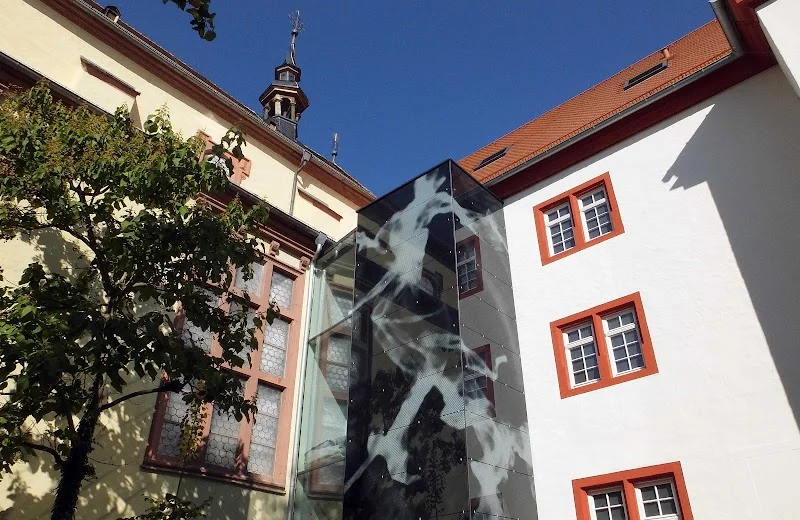
Architecturally, the Christian Schad Museum is also remarkable. The city brochure describes that the building designed by Böhm and Kuhn is located in the heart of Aschaffenburg's old town, in sight of Johannisburg Castle. Particularly striking are the large glass walls printed with Schadographies, which give the museum an immediately recognizable presence in the urban space. This makes it visible from the outside what is at stake inside: Art is not only exhibited but integrated into the building shell, into the path through the city, and into the view of the surroundings. The location between Pfaffengasse and Landingstraße makes the house easy to find for visitors, and the connection to the Jesuit Church Art Hall enhances the impression of a cohesive cultural quarter. This is an important point from an SEO perspective, as many search queries concern not only the museum itself but also access, location, entrance, and photos. Those who know the exterior view recognize the building immediately, and this recognizability is a strong feature of the house. ([aschaffenburg.de](https://www.aschaffenburg.de/dokumente/Buerger-in-Aschaffenburg/Planen-Bauen-und-Wohnen/Stadt_AB_BlaueReihe_Schad__2022_barrierearm.pdf?utm_source=openai))
The history behind this place is also closely linked to Aschaffenburg. The Christian Schad Foundation was established by Bettina Schad in memory of her deceased husband; its initial capital consisted of around 800 works according to city information. In 2002, the entire estate was finally handed over to the city's museums, laying the foundation for a permanent, comprehensive presentation. After a longer preparation period, the museum was finally opened in 2022; contemporary reports describe it as a project that gives both the artist and the city a home. Particularly interesting is that the building does not function in isolation but forms an architectural unit together with the Jesuit Church Art Hall and the arcade courtyard. This makes the Christian Schad Museum part of a larger cultural history of the city, where historical spaces, modern exhibition practices, and museum mediation intertwine. For visitors, this is a real added value, as the tour through the old town can be easily complemented with just a few steps to other art locations. ([aschaffenburg.de](https://www.aschaffenburg.de/Beteiligen-Gestalten/Vereine-und-Stiftungen/?utm_source=openai))
Accessibility, Photos, Management, and Practical Information
For practical questions, the museum also provides solid answers. The museum portal describes the location as partially accessible; the event notice additionally states that the place is step-free accessible, has a wheelchair-accessible toilet, and offers sufficient movement space for people in wheelchairs. Therefore, anyone searching for accessibility, photos, or reviews will find a house that clearly documents its visitability and appears transparent in its external presentation. For the management level, Johannes Honeck is an important name: In current event announcements, he is mentioned as the director of the Jesuit Church Art Hall and the Christian Schad Museum. This is relevant for many search queries about management or director, as it makes a specific contact person visible in public communication. Additionally, the official image galleries show exterior views of the museum from Pfaffengasse and Landingstraße as well as images of works, allowing a good impression of the place and collection to be gained even before the visit. The social media hints with @MuseenAB complement this impression and make it clear that the house is also digitally present. ([museen-in-bayern.de](https://museen-in-bayern.de/museen/detailseite-museum/christian-schad-museum))
For actual visit planning, this is helpful as it allows several search intentions to be covered simultaneously: opening hours, tickets, tours, photos, and current exhibition notices. Especially in combination with the Jesuit Church Art Hall, a visit is worthwhile, as both houses are described together as a lively center for art and culture, and a common entrance facilitates the tour. Those planning only a short stop can very well integrate the Christian Schad Museum into a visit to the old town due to its compact location; those who have more time can combine it with a tour, a changing exhibition, or a second museum visit in the ensemble. This mix of clear information and content depth is valuable for visibility in search engines, as the house answers the most common questions on its own: Where is it? When is it open? What does admission cost? Are there tours? Is it accessible? And who leads it? The Christian Schad Museum provides precise answers to all these points while remaining a place where art of the 20th century, urban history, and modern museum communication convincingly connect. ([vhs-aschaffenburg.de](https://www.vhs-aschaffenburg.de/kurse/fuehrungen/fuehrungsthemen?utm_source=openai))
Sources:
Show moreShow less
Christian Schad Museum | Opening Hours & Tickets
The Christian Schad Museum at Pfaffengasse 26 is one of the most prominent art addresses in Aschaffenburg and is a place that not only showcases a single artist's life but also makes an entire era understandable. It is dedicated to Christian Schad (1894–1982), who became known as a representative of New Objectivity, a precise observer of his time, and the inventor of Schadography. His estate includes more than 3,200 works, providing a rare deep insight into nearly all phases of the artist's work. This abundance is a key reason why inquiries about opening hours, tickets, tours, exhibitions, and photos are so frequent: Those who visit the house want to see not just pictures but to experience a curated body of work. The museum is located in the historic center of the city, is closely linked with the Jesuit Church Art Hall, and together with it and the arcade courtyard forms a cultural ensemble that visibly shapes the urban space. For visitors, this creates a place where art history, architecture, and biographical narrative come together. ([museen-in-bayern.de](https://museen-in-bayern.de/museen/detailseite-museum/christian-schad-museum))
Opening Hours, Tickets, and Admission Prices
Those planning a visit will find clearly designated opening hours and admission prices. The museum portal currently lists the Christian Schad Museum as open on Tuesdays from 10 AM to 9 PM and Wednesdays to Sundays from 10 AM to 6 PM; the house is closed on Mondays. At the same time, press releases from the city of Aschaffenburg indicate that different regulations may apply on holidays, such as during Easter or on May 1st, when the city's cultural institutions were also open from 10 AM to 6 PM. Practically, this means that the regular rhythm is reliable, but special days should be checked again before visiting. The current admission prices are also transparent: single tickets cost 5 euros, reduced tickets 3.50 euros. Those who wish to visit the museum together with the Jesuit Church Art Hall benefit from a combination ticket for 7 euros or 5.50 euros reduced. This clear pricing structure makes planning easy and increases the attractiveness of the location, especially for day visitors, art enthusiasts, and families. ([museen-in-bayern.de](https://museen-in-bayern.de/museen/detailseite-museum/christian-schad-museum))
Also practical is the spatial proximity to the Jesuit Church Art Hall, as both houses share an entrance according to the tour offerings. This creates an ensemble that can be experienced well in a circular tour and organizes the museum visit without long distances. The contact details are also easy to find: The museum ticket office can be reached at the well-known Aschaffenburg phone number, and a central email address and the museum website are also available. For visitors searching for tickets or the box office in search engines, this is an important advantage, as reservation, inquiry, and orientation are bundled in one place. The house thus does not function as an isolated single station but as part of a larger museum landscape where exhibitions, tours, and special formats are coordinated. Therefore, anyone planning a cultural city stroll can easily connect the Christian Schad Museum with other stops in the old town and thus build an entire day around art and history. ([vhs-aschaffenburg.de](https://www.vhs-aschaffenburg.de/kurse/fuehrungen/fuehrungsthemen?utm_source=openai))
Guided Tours, Bookings, and Mediation
A particularly strong theme of the keyword analysis is guided tours, and this is exactly where the Christian Schad Museum shows its strength. The tour network of the vhs Aschaffenburg offers bookable tours at desired times for adults, children's and youth groups, families, school classes, and kindergarten groups. Content-wise, these offerings cover several approaches: There is a tour about the life of the artist Christian Schad, a more compact and a more detailed format on biography and art, an in-depth tour on Christian Schad's artistic development, as well as offerings on Expressionism, Dada, New Objectivity, and Magical Realism. Particularly interesting are also thematic tours on Christian Schad and the Nazi era, as well as on Grünewald's Stuppacher Madonna and its copy. For open tours, prices are quoted depending on duration: 5.50 euros for 60 minutes, 6.50 euros for 90 minutes, and 7.50 euros for 120 minutes; for bookable adult groups, prices range between 60 and 88 euros plus admission depending on duration and group size. This combination of low-threshold public tours and planable group formats makes the museum attractive for different target groups. ([vhs-aschaffenburg.de](https://vhs-aschaffenburg.de/fileadmin/vhs-aschaffenburg/PDF/FuehrungenCSM_Flyer_final_03062022__1_.pdf))
The mediation offerings are also well-structured not only in content but also organizationally. Adults book through the tourist information, children's and youth groups through the tour network of the vhs; for open tours, registration is mentioned through the museum ticket office. This is important for visitors who are specifically looking for tickets for the Christian Schad Museum or for tours, as they can immediately recognize which contact point is responsible for which need. For seekers interested in the artistic profile of the house, the themes are particularly helpful: They connect the individual artist with the major art movements of the 20th century and relate his biography to political and social developments. This makes the museum not just a pure workshop but a vibrant place of learning that also engages first-time visitors with clear language and well-structured offerings. Those who want to delve deeper will find not only exhibition spaces here but also a didactically well-thought-out approach to an extraordinary artist's life. ([vhs-aschaffenburg.de](https://vhs-aschaffenburg.de/fileadmin/vhs-aschaffenburg/PDF/FuehrungenCSM_Flyer_final_03062022__1_.pdf))
Christian Schad, New Objectivity, and the Collection
The centerpiece of the museum is, of course, the collection itself. Christian Schad is considered one of the significant German protagonists of modernity; in the sources, he is described as a leading figure of New Objectivity, but also as an artist whose work goes far beyond this one attribution. His Schadographies, or photography without a camera, made him internationally known. The estate, which remained in Aschaffenburg thanks to a donation from his widow Bettina, includes over 3,200 works and allows the museum to broadly showcase the artist's creative periods. This is particularly exciting for visitors because the house contains not only individual favorite images but also development lines: from early experimental phases through Dada and Expressionism to New Objectivity and Magical Realism. This tension arc explains why the museum often appears as a search target. It is not only a place for art lovers but also for all those who want to understand how an artist navigated through the upheavals of the 20th century. Schad lived in Aschaffenburg for over four decades, and this long connection to the city gives the museum a special authenticity. ([museen-in-bayern.de](https://museen-in-bayern.de/museen/detailseite-museum/christian-schad-museum))
Particularly strong is the way the museum intertwines biography with art. The exhibition descriptions emphasize that the exhibition makes all creative periods of the master of New Objectivity visible while placing Dada, Expressionism, New Objectivity, and Schadographies in a larger context. For the audience, this means: One comes not only for individual works but for a curated narrative in which stylistic questions, contemporary history, and personal life stages intertwine. The current museum overview also shows that the house operates as a lively exhibition venue: For the period from April 30, 2026, to February 10, 2027, the exhibition A European Collection. Masterpieces from the Khanenko Museum in Kyiv is listed. This underscores that the Christian Schad Museum is not only a place of remembrance but also an active site of international exhibitions. Therefore, anyone searching for Christian Schad Museum exhibition or images from Christian Schad Museum will find a place that continuously works with changing exhibitions, collection presentations, and art-historical contextualization. ([kulturtage.kulturamt-aschaffenburg.de](https://kulturtage.kulturamt-aschaffenburg.de/veranstaltung/dauerausstellung-christian-schad-museum/))
Architecture, Old Town Location, and Museum Ensemble
Architecturally, the Christian Schad Museum is also remarkable. The city brochure describes that the building designed by Böhm and Kuhn is located in the heart of Aschaffenburg's old town, in sight of Johannisburg Castle. Particularly striking are the large glass walls printed with Schadographies, which give the museum an immediately recognizable presence in the urban space. This makes it visible from the outside what is at stake inside: Art is not only exhibited but integrated into the building shell, into the path through the city, and into the view of the surroundings. The location between Pfaffengasse and Landingstraße makes the house easy to find for visitors, and the connection to the Jesuit Church Art Hall enhances the impression of a cohesive cultural quarter. This is an important point from an SEO perspective, as many search queries concern not only the museum itself but also access, location, entrance, and photos. Those who know the exterior view recognize the building immediately, and this recognizability is a strong feature of the house. ([aschaffenburg.de](https://www.aschaffenburg.de/dokumente/Buerger-in-Aschaffenburg/Planen-Bauen-und-Wohnen/Stadt_AB_BlaueReihe_Schad__2022_barrierearm.pdf?utm_source=openai))
The history behind this place is also closely linked to Aschaffenburg. The Christian Schad Foundation was established by Bettina Schad in memory of her deceased husband; its initial capital consisted of around 800 works according to city information. In 2002, the entire estate was finally handed over to the city's museums, laying the foundation for a permanent, comprehensive presentation. After a longer preparation period, the museum was finally opened in 2022; contemporary reports describe it as a project that gives both the artist and the city a home. Particularly interesting is that the building does not function in isolation but forms an architectural unit together with the Jesuit Church Art Hall and the arcade courtyard. This makes the Christian Schad Museum part of a larger cultural history of the city, where historical spaces, modern exhibition practices, and museum mediation intertwine. For visitors, this is a real added value, as the tour through the old town can be easily complemented with just a few steps to other art locations. ([aschaffenburg.de](https://www.aschaffenburg.de/Beteiligen-Gestalten/Vereine-und-Stiftungen/?utm_source=openai))
Accessibility, Photos, Management, and Practical Information
For practical questions, the museum also provides solid answers. The museum portal describes the location as partially accessible; the event notice additionally states that the place is step-free accessible, has a wheelchair-accessible toilet, and offers sufficient movement space for people in wheelchairs. Therefore, anyone searching for accessibility, photos, or reviews will find a house that clearly documents its visitability and appears transparent in its external presentation. For the management level, Johannes Honeck is an important name: In current event announcements, he is mentioned as the director of the Jesuit Church Art Hall and the Christian Schad Museum. This is relevant for many search queries about management or director, as it makes a specific contact person visible in public communication. Additionally, the official image galleries show exterior views of the museum from Pfaffengasse and Landingstraße as well as images of works, allowing a good impression of the place and collection to be gained even before the visit. The social media hints with @MuseenAB complement this impression and make it clear that the house is also digitally present. ([museen-in-bayern.de](https://museen-in-bayern.de/museen/detailseite-museum/christian-schad-museum))
For actual visit planning, this is helpful as it allows several search intentions to be covered simultaneously: opening hours, tickets, tours, photos, and current exhibition notices. Especially in combination with the Jesuit Church Art Hall, a visit is worthwhile, as both houses are described together as a lively center for art and culture, and a common entrance facilitates the tour. Those planning only a short stop can very well integrate the Christian Schad Museum into a visit to the old town due to its compact location; those who have more time can combine it with a tour, a changing exhibition, or a second museum visit in the ensemble. This mix of clear information and content depth is valuable for visibility in search engines, as the house answers the most common questions on its own: Where is it? When is it open? What does admission cost? Are there tours? Is it accessible? And who leads it? The Christian Schad Museum provides precise answers to all these points while remaining a place where art of the 20th century, urban history, and modern museum communication convincingly connect. ([vhs-aschaffenburg.de](https://www.vhs-aschaffenburg.de/kurse/fuehrungen/fuehrungsthemen?utm_source=openai))
Sources:
Christian Schad Museum | Opening Hours & Tickets
The Christian Schad Museum at Pfaffengasse 26 is one of the most prominent art addresses in Aschaffenburg and is a place that not only showcases a single artist's life but also makes an entire era understandable. It is dedicated to Christian Schad (1894–1982), who became known as a representative of New Objectivity, a precise observer of his time, and the inventor of Schadography. His estate includes more than 3,200 works, providing a rare deep insight into nearly all phases of the artist's work. This abundance is a key reason why inquiries about opening hours, tickets, tours, exhibitions, and photos are so frequent: Those who visit the house want to see not just pictures but to experience a curated body of work. The museum is located in the historic center of the city, is closely linked with the Jesuit Church Art Hall, and together with it and the arcade courtyard forms a cultural ensemble that visibly shapes the urban space. For visitors, this creates a place where art history, architecture, and biographical narrative come together. ([museen-in-bayern.de](https://museen-in-bayern.de/museen/detailseite-museum/christian-schad-museum))
Opening Hours, Tickets, and Admission Prices
Those planning a visit will find clearly designated opening hours and admission prices. The museum portal currently lists the Christian Schad Museum as open on Tuesdays from 10 AM to 9 PM and Wednesdays to Sundays from 10 AM to 6 PM; the house is closed on Mondays. At the same time, press releases from the city of Aschaffenburg indicate that different regulations may apply on holidays, such as during Easter or on May 1st, when the city's cultural institutions were also open from 10 AM to 6 PM. Practically, this means that the regular rhythm is reliable, but special days should be checked again before visiting. The current admission prices are also transparent: single tickets cost 5 euros, reduced tickets 3.50 euros. Those who wish to visit the museum together with the Jesuit Church Art Hall benefit from a combination ticket for 7 euros or 5.50 euros reduced. This clear pricing structure makes planning easy and increases the attractiveness of the location, especially for day visitors, art enthusiasts, and families. ([museen-in-bayern.de](https://museen-in-bayern.de/museen/detailseite-museum/christian-schad-museum))
Also practical is the spatial proximity to the Jesuit Church Art Hall, as both houses share an entrance according to the tour offerings. This creates an ensemble that can be experienced well in a circular tour and organizes the museum visit without long distances. The contact details are also easy to find: The museum ticket office can be reached at the well-known Aschaffenburg phone number, and a central email address and the museum website are also available. For visitors searching for tickets or the box office in search engines, this is an important advantage, as reservation, inquiry, and orientation are bundled in one place. The house thus does not function as an isolated single station but as part of a larger museum landscape where exhibitions, tours, and special formats are coordinated. Therefore, anyone planning a cultural city stroll can easily connect the Christian Schad Museum with other stops in the old town and thus build an entire day around art and history. ([vhs-aschaffenburg.de](https://www.vhs-aschaffenburg.de/kurse/fuehrungen/fuehrungsthemen?utm_source=openai))
Guided Tours, Bookings, and Mediation
A particularly strong theme of the keyword analysis is guided tours, and this is exactly where the Christian Schad Museum shows its strength. The tour network of the vhs Aschaffenburg offers bookable tours at desired times for adults, children's and youth groups, families, school classes, and kindergarten groups. Content-wise, these offerings cover several approaches: There is a tour about the life of the artist Christian Schad, a more compact and a more detailed format on biography and art, an in-depth tour on Christian Schad's artistic development, as well as offerings on Expressionism, Dada, New Objectivity, and Magical Realism. Particularly interesting are also thematic tours on Christian Schad and the Nazi era, as well as on Grünewald's Stuppacher Madonna and its copy. For open tours, prices are quoted depending on duration: 5.50 euros for 60 minutes, 6.50 euros for 90 minutes, and 7.50 euros for 120 minutes; for bookable adult groups, prices range between 60 and 88 euros plus admission depending on duration and group size. This combination of low-threshold public tours and planable group formats makes the museum attractive for different target groups. ([vhs-aschaffenburg.de](https://vhs-aschaffenburg.de/fileadmin/vhs-aschaffenburg/PDF/FuehrungenCSM_Flyer_final_03062022__1_.pdf))
The mediation offerings are also well-structured not only in content but also organizationally. Adults book through the tourist information, children's and youth groups through the tour network of the vhs; for open tours, registration is mentioned through the museum ticket office. This is important for visitors who are specifically looking for tickets for the Christian Schad Museum or for tours, as they can immediately recognize which contact point is responsible for which need. For seekers interested in the artistic profile of the house, the themes are particularly helpful: They connect the individual artist with the major art movements of the 20th century and relate his biography to political and social developments. This makes the museum not just a pure workshop but a vibrant place of learning that also engages first-time visitors with clear language and well-structured offerings. Those who want to delve deeper will find not only exhibition spaces here but also a didactically well-thought-out approach to an extraordinary artist's life. ([vhs-aschaffenburg.de](https://vhs-aschaffenburg.de/fileadmin/vhs-aschaffenburg/PDF/FuehrungenCSM_Flyer_final_03062022__1_.pdf))
Christian Schad, New Objectivity, and the Collection
The centerpiece of the museum is, of course, the collection itself. Christian Schad is considered one of the significant German protagonists of modernity; in the sources, he is described as a leading figure of New Objectivity, but also as an artist whose work goes far beyond this one attribution. His Schadographies, or photography without a camera, made him internationally known. The estate, which remained in Aschaffenburg thanks to a donation from his widow Bettina, includes over 3,200 works and allows the museum to broadly showcase the artist's creative periods. This is particularly exciting for visitors because the house contains not only individual favorite images but also development lines: from early experimental phases through Dada and Expressionism to New Objectivity and Magical Realism. This tension arc explains why the museum often appears as a search target. It is not only a place for art lovers but also for all those who want to understand how an artist navigated through the upheavals of the 20th century. Schad lived in Aschaffenburg for over four decades, and this long connection to the city gives the museum a special authenticity. ([museen-in-bayern.de](https://museen-in-bayern.de/museen/detailseite-museum/christian-schad-museum))
Particularly strong is the way the museum intertwines biography with art. The exhibition descriptions emphasize that the exhibition makes all creative periods of the master of New Objectivity visible while placing Dada, Expressionism, New Objectivity, and Schadographies in a larger context. For the audience, this means: One comes not only for individual works but for a curated narrative in which stylistic questions, contemporary history, and personal life stages intertwine. The current museum overview also shows that the house operates as a lively exhibition venue: For the period from April 30, 2026, to February 10, 2027, the exhibition A European Collection. Masterpieces from the Khanenko Museum in Kyiv is listed. This underscores that the Christian Schad Museum is not only a place of remembrance but also an active site of international exhibitions. Therefore, anyone searching for Christian Schad Museum exhibition or images from Christian Schad Museum will find a place that continuously works with changing exhibitions, collection presentations, and art-historical contextualization. ([kulturtage.kulturamt-aschaffenburg.de](https://kulturtage.kulturamt-aschaffenburg.de/veranstaltung/dauerausstellung-christian-schad-museum/))
Architecture, Old Town Location, and Museum Ensemble
Architecturally, the Christian Schad Museum is also remarkable. The city brochure describes that the building designed by Böhm and Kuhn is located in the heart of Aschaffenburg's old town, in sight of Johannisburg Castle. Particularly striking are the large glass walls printed with Schadographies, which give the museum an immediately recognizable presence in the urban space. This makes it visible from the outside what is at stake inside: Art is not only exhibited but integrated into the building shell, into the path through the city, and into the view of the surroundings. The location between Pfaffengasse and Landingstraße makes the house easy to find for visitors, and the connection to the Jesuit Church Art Hall enhances the impression of a cohesive cultural quarter. This is an important point from an SEO perspective, as many search queries concern not only the museum itself but also access, location, entrance, and photos. Those who know the exterior view recognize the building immediately, and this recognizability is a strong feature of the house. ([aschaffenburg.de](https://www.aschaffenburg.de/dokumente/Buerger-in-Aschaffenburg/Planen-Bauen-und-Wohnen/Stadt_AB_BlaueReihe_Schad__2022_barrierearm.pdf?utm_source=openai))
The history behind this place is also closely linked to Aschaffenburg. The Christian Schad Foundation was established by Bettina Schad in memory of her deceased husband; its initial capital consisted of around 800 works according to city information. In 2002, the entire estate was finally handed over to the city's museums, laying the foundation for a permanent, comprehensive presentation. After a longer preparation period, the museum was finally opened in 2022; contemporary reports describe it as a project that gives both the artist and the city a home. Particularly interesting is that the building does not function in isolation but forms an architectural unit together with the Jesuit Church Art Hall and the arcade courtyard. This makes the Christian Schad Museum part of a larger cultural history of the city, where historical spaces, modern exhibition practices, and museum mediation intertwine. For visitors, this is a real added value, as the tour through the old town can be easily complemented with just a few steps to other art locations. ([aschaffenburg.de](https://www.aschaffenburg.de/Beteiligen-Gestalten/Vereine-und-Stiftungen/?utm_source=openai))
Accessibility, Photos, Management, and Practical Information
For practical questions, the museum also provides solid answers. The museum portal describes the location as partially accessible; the event notice additionally states that the place is step-free accessible, has a wheelchair-accessible toilet, and offers sufficient movement space for people in wheelchairs. Therefore, anyone searching for accessibility, photos, or reviews will find a house that clearly documents its visitability and appears transparent in its external presentation. For the management level, Johannes Honeck is an important name: In current event announcements, he is mentioned as the director of the Jesuit Church Art Hall and the Christian Schad Museum. This is relevant for many search queries about management or director, as it makes a specific contact person visible in public communication. Additionally, the official image galleries show exterior views of the museum from Pfaffengasse and Landingstraße as well as images of works, allowing a good impression of the place and collection to be gained even before the visit. The social media hints with @MuseenAB complement this impression and make it clear that the house is also digitally present. ([museen-in-bayern.de](https://museen-in-bayern.de/museen/detailseite-museum/christian-schad-museum))
For actual visit planning, this is helpful as it allows several search intentions to be covered simultaneously: opening hours, tickets, tours, photos, and current exhibition notices. Especially in combination with the Jesuit Church Art Hall, a visit is worthwhile, as both houses are described together as a lively center for art and culture, and a common entrance facilitates the tour. Those planning only a short stop can very well integrate the Christian Schad Museum into a visit to the old town due to its compact location; those who have more time can combine it with a tour, a changing exhibition, or a second museum visit in the ensemble. This mix of clear information and content depth is valuable for visibility in search engines, as the house answers the most common questions on its own: Where is it? When is it open? What does admission cost? Are there tours? Is it accessible? And who leads it? The Christian Schad Museum provides precise answers to all these points while remaining a place where art of the 20th century, urban history, and modern museum communication convincingly connect. ([vhs-aschaffenburg.de](https://www.vhs-aschaffenburg.de/kurse/fuehrungen/fuehrungsthemen?utm_source=openai))
Sources:
Upcoming Events
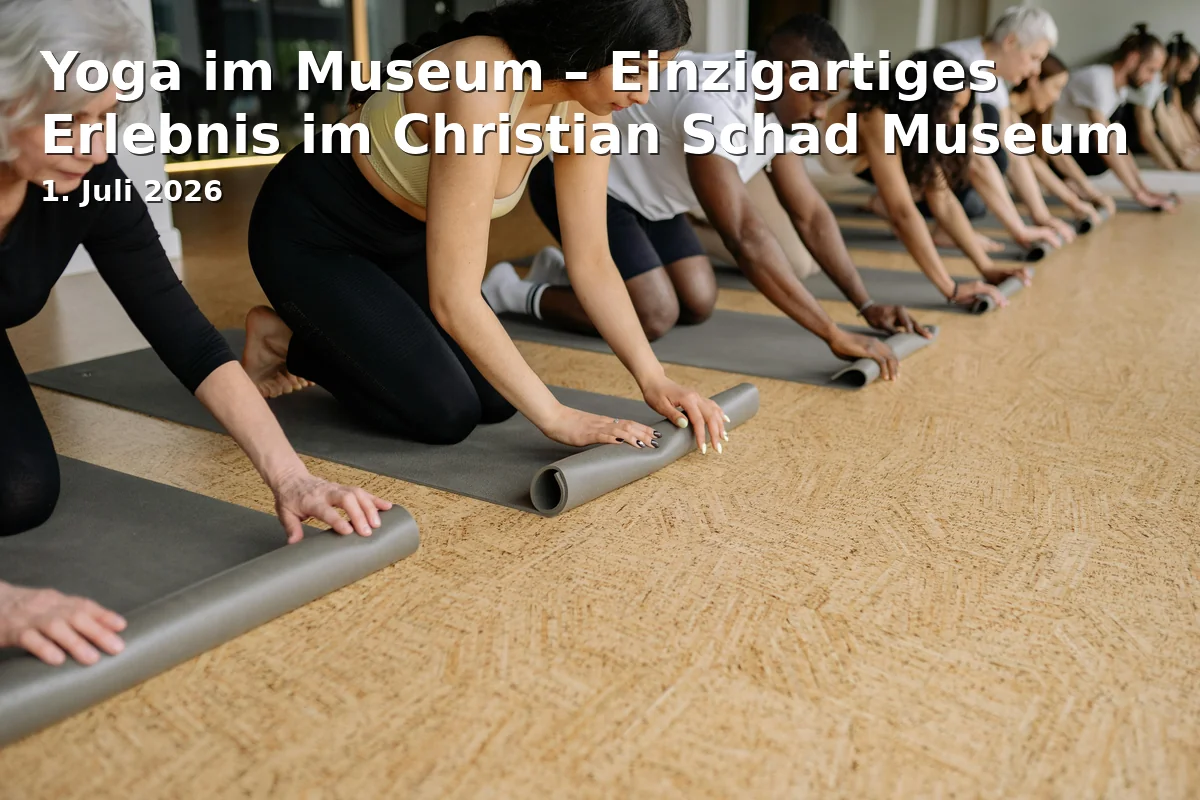
Yoga in the Museum – Unique Experience at the Christian Schad Museum
Join a Vinyasa flow yoga session at the Christian Schad Museum Aschaffenburg. An inspiring connection of art and movement awaits you.
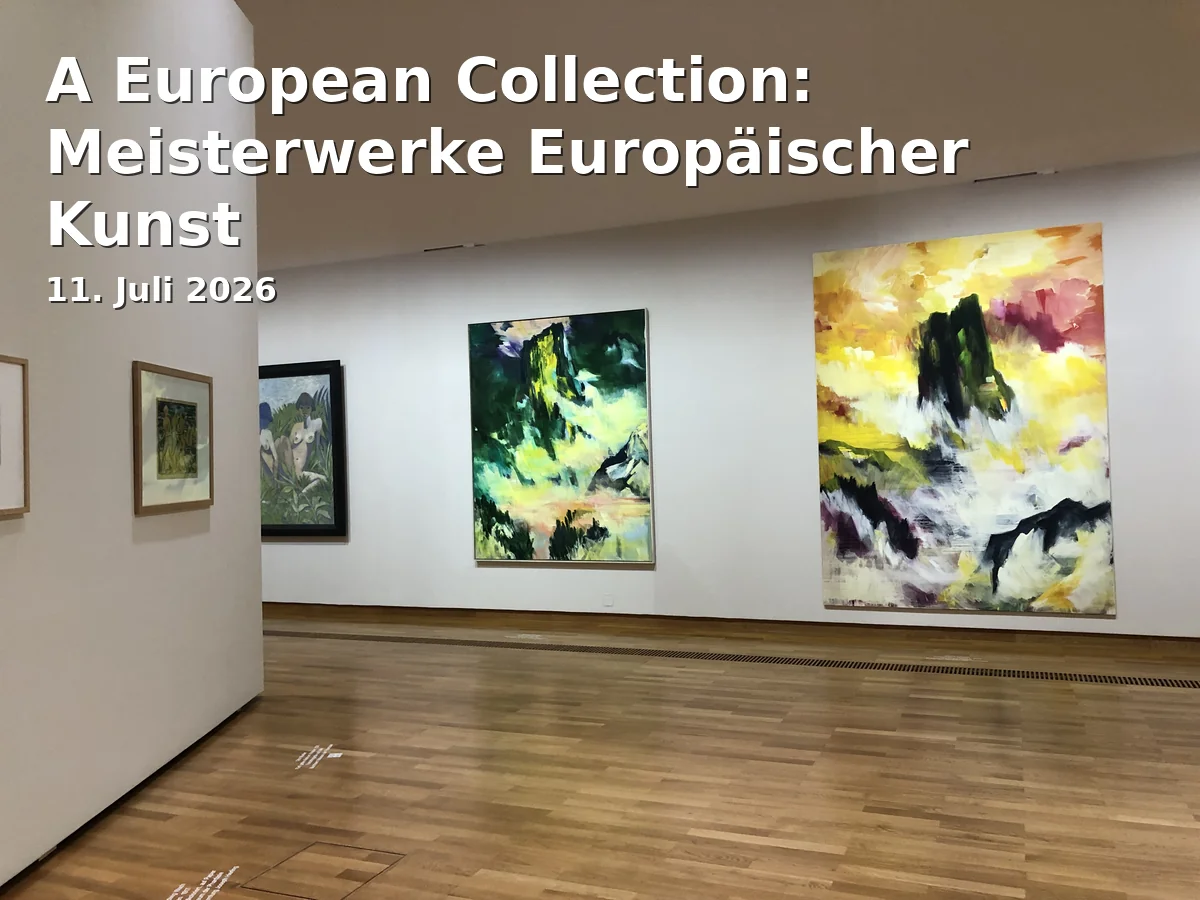
A European Collection: Masterpieces of European Art
Experience 73 masterpieces of early modern art at the Christian Schad Museum in Aschaffenburg.
Frequently Asked Questions
Reviews
Jayson Scott Grimes
7. September 2024
The issue here is not the museum itself, which is quite a good overview of Schad's work, however the staff are rude. I was with a friend who brought her purse and though her purse wasn't larger than allowed by the measuring guide provided by the museum and fit perfectly easily into the slot provided for determining said measure, we were told after we'd purchased the tickets that she would have to leave it in a locker. I asked why when we'd only just checked to make sure it was a size that was permitted. The service person told me that it was nonetheless a large enough bag that my friend might bump into something. Naturally, I asked what the measuring device was for then. I was told by the service personnel that they would, "feel better" if it were checked into a locker. My friend didn't have a €1 coin with her to put into the locker and they let her borrow one with the express command to not forget to give it back to them before leaving. I would have normally left at that point, but as mentioned, we'd already paid for our tickets. We never did figure out what the function of the measuring device was, nor why their "feelings" were able to determine museum policy. I suppose the "feelings" of their paying visitors are of no importance at all. My "feeling" is that this museum should be avoided.
Alberto der Fisch
26. December 2025
Went to the Chad museum, got mogged :(
Gordon Trachtenberg
21. January 2025
Great little museum. Learned about artist I knew little about beforehand.
Muhammad Afan
16. November 2025
Do you need review?
Christine Grasser
8. March 2026
We need to come back because today there was only a small exhibition. Very nice ladies at the reception.