
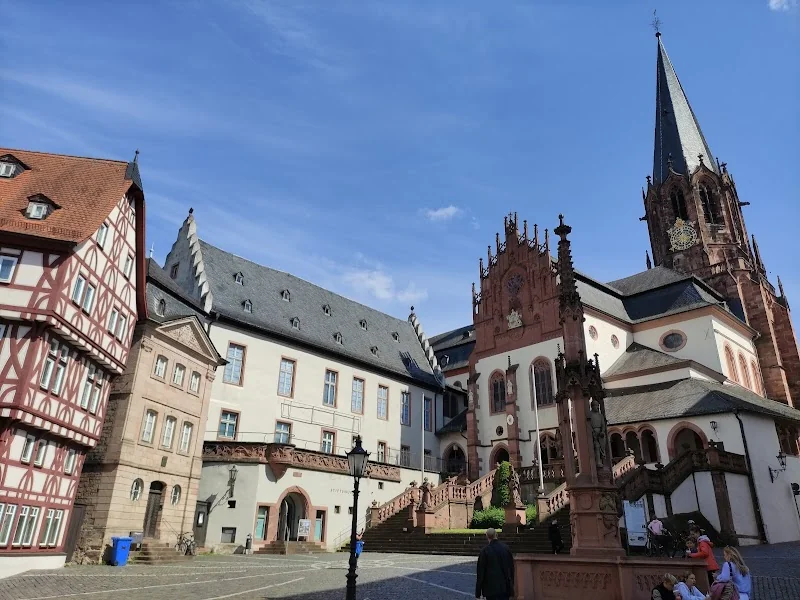
Aschaffenburg
Stiftsgasse 1, 63739 Aschaffenburg, Deutschland
Aschaffenburg Stiftsmusik | Events & Tickets
The Aschaffenburg Stiftsmusik is much more than an organizational name on a program booklet. It represents church musical life in the heart of the city, choir work with children, youth, and adults, high-level organ music, and a place where tradition does not feel museum-like but becomes audible anew every month. Those looking for events, tickets, or the current program quickly find an address closely linked to the Stiftsbasilika St. Peter and Alexander. It is precisely there that the musical profile of the Stiftsmusik unfolds: liturgical celebrations, a cappella singing, choir-orchestra concerts, organ events, and family-oriented offerings. The website presents a particularly diverse spectrum for 2026, ranging from festive services to Bach days to the traditional Christmas concert. Thus, the Stiftsmusik is not a classic event venue in the sense of a multipurpose hall, but a cultural and spiritual center where music, history, and city identity come together. Visitors to this place experience not just a concert or a mass, but a cultivated cultural space with a special atmosphere, a clear musical signature, and a calendar that conveys both local connectedness and artistic ambition.
Events and Current Program
The most important search topic surrounding the Aschaffenburg Stiftsmusik is the current event program. The official website does not focus on a single major event but rather on a whole series of formats that spread throughout the year and appeal to various target groups. These include festive services in the church year, organ concerts, cloister concerts, children’s and youth projects, choir services, and collaborations with other church or city actors. The homepage announces a very diverse program for 2026: from rather intimate liturgical celebrations in great tradition to a cappella singing and children’s musicals to festive cantata services and choir-orchestra concerts. This mixture is a strong characteristic of the Stiftsmusik because it appeals not only to concert audiences but also to worship communities, families, and music-interested visitors. Therefore, those searching for the term events find not just individual dates but a vibrant annual arc with many occasions that continually highlight new content and ensembles. Such dates become particularly visible during the Bach days in July or the Musical Autumn, which is explicitly highlighted on the website. The Museum Night of the Aschaffenburg Cultural Days also appears as an important format, showing that the Stiftsmusik is present in the city’s cultural life. The program thus does not seem random but clearly curated: spiritual music, historical places, contemporary approaches, and family-friendly offerings are consciously combined. For practical planning, this means: Those wishing to attend a concert, mass, or special choir date should regularly check the date area of the website, as that is where the latest announcements are made. It is precisely this closeness of tradition and current events that makes the Stiftsmusik such an interesting venue.
For search queries like program or calendar, it is also important that the Stiftsmusik not only publishes its own dates but is also integrated into city and regional event structures. This means specifically: There are classic individual dates like festive masses, organ tours, or concert evenings, but also projects that spread across multiple locations and partners. A good example is the Aschaffenburg organ tour, where the Stiftsmusik, together with other actors, forms a musical route through various inner-city churches. Such formats make it clear that the Stiftsmusik does not work in isolation but as part of a larger musical landscape in the center of Aschaffenburg. For visitors, this is an advantage because the website not only provides dates but often also explains the content framework of the respective evening: who is performing, which works will be played, whether the date is intended liturgically or concertantly, and whether an admission fee is charged. This is particularly helpful for people who are not just looking for any evening but want to consciously distinguish between spiritual celebration, concert, and family offering. The program of the Stiftsmusik is therefore particularly relevant for search engines because it serves multiple search intentions simultaneously: current dates, special events, seasonal highlights, children’s offerings, and musical tradition. Those planning here should not only look at the date but also at the description of the respective event, as that is where it becomes clear what atmosphere to expect and in what context the event stands. Thus, a mere overview of dates transforms into a genuine insight into the musical life around the Stiftsberg.
Tickets, Admission, and Date Planning
The second major topic is the question of tickets. At the Aschaffenburg Stiftsmusik, planning works somewhat differently than at large pop or theater venues. The website primarily shows events with direct date descriptions, liturgical backgrounds, or concert characteristics. For many of these dates, admission is explicitly free, as is mentioned for the Aschaffenburg organ tour. Other events in the context of the Stiftsmusik are often advertised with free access or voluntary donations. This is important for visitors because the Stiftsmusik relies less on a central ticket portal and more on information in the individual event entry. Therefore, those looking for tickets should not only ask for an online shop but primarily check the respective date page. It is precisely there that it states whether a reservation is necessary, whether admission is free, or whether there is a special form of participation. This structure is typical for a church musical institution where not every event has the same visitor model. Liturgical celebrations are usually open to the public, while special concert formats may be supplemented by donation recommendations, donation purposes, or further notes. For good date planning, it is therefore crucial to distinguish between open worship, concert, and project format. Those planning a visit should also keep an eye on the time of day, as the Stiftsmusik regularly organizes dates in the morning, afternoon, and evening. The mixture of worship times and evening concerts makes planning somewhat more individual than in a classic event house. This may initially seem unusual but is also an advantage: the visitor experiences music not just as a show but as part of a rhythmically grown church and cultural life. For families, regular guests, and tourists, this means that tickets do not always take center stage, but rather the targeted examination of the respective date. Those reading the specific notes on the website usually gain quick clarity about whether they can simply drop by or whether special organization is required.
In date planning, it is also helpful that the Stiftsmusik describes its offerings very transparently and understandably. This is especially true for programs that have multiple stations or multiple participants. For example, a concert of the organ tour names the participating churches, the times, and the contributors. Such information is useful for visitors coming from afar as well as for people from Aschaffenburg who want to plan their evening or morning flexibly. For the keyword tickets, it is also important that the Stiftsmusik does not present itself like a commercial ticket center but as an institution that emphasizes music education and faith life. This does not mean that tickets or reservations are unimportant, but that they are handled differently depending on the event. Especially for freely accessible dates, the term tickets is more of a search intention than a fixed purchase requirement. Therefore, the best practical recommendation is: read the date page, pay attention to the admission notes, and use the contact of the Stiftsmusik if necessary. Those wishing to attend a larger event should also arrive early, as spiritual concerts or special choir dates typically attract an interested audience. Thus, the search for tickets becomes an overall more relaxed planning: not improvising at the entrance but checking in advance how the respective evening is organized. This is precisely the strength of the Stiftsmusik: it provides concise but reliable information and still allows the visitor to consciously experience the place and the music. This fits well with a house that understands culture not as mass processing but as personal encounter.
Chorhaus at Stiftsplatz and the Address in the Stiftsviertel
The Chorhaus at Stiftsplatz is the crucial point of orientation for many visitors when they want to spatially locate the Stiftsmusik. It is located in the historic environment of the Stiftsberg, an area that has been shaped for centuries by the Stiftskirche, the cloister, and the former chapter buildings. The Stiftsmusik itself is officially registered with an address at Stiftsgasse 5, while materials for the Chorhaus at Stiftsplatz also mention Stiftsgasse 1. This duplication primarily shows one thing: the Stiftsmusik is spatially closely embedded in the Stiftsviertel and works with several nearby buildings. For visitors, this means that the way does not lead to a remote cultural center but right into the old town. The surroundings are pedestrian-friendly, with short distances to the Stiftskirche, the Stiftsmuseum, and the Stiftsplatz. This creates the special charm of the place. Those arriving here do not enter an interchangeable event building but a city space with historical depth. The Chorhaus is not just an address but part of a musical infrastructure: rehearsals, youth work, organizational processes, and individual singing or meeting moments are connected to this place. In the official pages, the Chorhaus does not appear as an isolated hall but as part of a vibrant church musical home. For search queries related to Stiftsgasse 1, it is important to know that this point is mentioned multiple times in the context of the Stiftsmusik and is associated with choir work and club activities. Visitors coming to an event should therefore not only rely on the name but pay attention to the specific event description, as the location may vary between Chorhaus, Stiftsbasilika, Muttergotteskirche, or other inner-city churches depending on the format. This closeness of various performance venues is a strength because it makes the musical life in the city center visible and tangible.
The location in the Stiftsviertel is also practically relevant because it allows visitors to combine their visit with a stroll through the old town. The Stiftsbasilika St. Peter and Alexander, the cloister, and the Stiftsmuseum are in close proximity and are not only religious or historical reference points but also visual anchors of the quarter. This gives a visit to the Stiftsmusik a framework that goes far beyond mere listening. Many people come not only for a single concert but for the combination of place, music, and atmosphere. The Chorhaus at Stiftsplatz symbolically represents this connection. It marks the organizational core of an institution that does not lose itself in a neutral event logic but works from the grown city quarter. Therefore, those searching for an address there find not just a sign but a part of the inner-city cultural history of Aschaffenburg. For navigation, the most important practical insight is: the Stiftsviertel is compact, the paths are short, and the central location makes the visit possible without significant logistical effort. Those arriving early can still perceive the Stiftsplatz, the Stiftskirche, and the surrounding alleys in peace. This embedding in the urban space is an advantage of the Stiftsmusik compared to an isolated large venue. It is anchored in the city, easily accessible, and atmospherically unique. The Chorhaus is thus both a place for musical work and a point of orientation for all who wish to experience the cultural cosmos around the Stiftskirche.
Directions and Parking in the Aschaffenburg City Center
The question of directions and parking is one of the most important search terms because the Aschaffenburg Stiftsmusik is very centrally located. Those driving into the city center are moving in an area that has grown historically and is traffic-regulated. For the immediate vicinity of the Stiftsplatz, there is a clear municipal recommendation: In an information sheet from the city of Aschaffenburg regarding Webergasse, the best parking option is named as the underground garage at Theaterplatz. This is particularly helpful because the Theaterplatz is easily reachable on foot from there, and visitors do not have to search long for a parking space. Additionally, the city points out that parking fees apply in the city center. In practice, this means: those traveling to a concert, mass, or rehearsal in the vicinity of the Stiftsmusik should treat the city center more like a pedestrian destination and park their car in a suitable underground garage. This is also sensible from a tourist perspective, as the entire Stifts district is best experienced on foot. The central location is therefore not a hindrance but part of the experience. Those parking at Theaterplatz or in a nearby garage can reach the Chorhaus, Stiftsplatz, and Stiftskirche in just a few minutes. This makes the journey manageable and reduces stress before the event begins. It is also important to note that the Stiftsmusik is located in an area where other inner-city facilities, administrative offices, and cultural places are also concentrated. Therefore, traffic is sometimes denser than in outer areas. An earlier parking space is therefore always the more relaxing choice. For people with special mobility needs, the general municipal regulations regarding designated disabled parking spaces and parking facilitation apply. Those who want to be on the safe side should check the current city center situation in advance or plan directly with the underground garage at Theaterplatz. This way, the journey does not become a hurdle but an easy first step towards a successful concert visit.
Even though the Stiftsmusik itself does not operate a large parking facility, accessibility is still good. The city center of Aschaffenburg is compact, and the area around Stiftsplatz, Theaterplatz, and Stiftsgasse is logically laid out. Those preparing navigation will quickly find that traveling by car is just one of several options. The central location also makes the place attractive on foot or by public transport, especially for guests from the city itself or from the surrounding districts. For a cultural evening, it is often pleasant not to have to park right at the door but to walk the last meters through the historic city center. This way, one experiences the transition from urban everyday life to the musical space already on the way. However, those traveling with children, older companions, or larger luggage particularly benefit from the proximity of the underground garage at Theaterplatz. The city’s recommendation is therefore a very helpful anchor point for all those looking for parking. It provides orientation and prevents unnecessary searching in the small alleys around the Stiftsberg. Overall, the location of the Stiftsmusik is very practical: central, historical, pedestrian-friendly, and easily accessible for visitors with some prior planning. Especially since many events take place in the evening or on weekends, a good parking strategy is useful. Those arriving early can arrive calmly, orient themselves, and enter the venue without haste. Thus, the journey already contributes to a positive overall experience and prepares the focus on what matters: the music.
Choirs, Organ, and Musical Offerings
The Aschaffenburg Stiftsmusik thrives on its musical breadth. It is not only a venue but also a training and working center for different choir groups and musical profiles. The website explicitly mentions the singing school, the Stifts choir boys and girls, the youth choir, the chamber choir of the Stiftskirche, the MartinusChor, the schola cantorum, as well as organ music and liturgical celebrations. This diversity is one of the reasons why the Stiftsmusik is so present in search contexts. Parents look for offerings for children, adults for choir projects, music lovers for organ events, and culture-interested visitors for spiritual concerts. The Stiftsmusik addresses all these interests under one roof. Particularly important is the youth work: the Stifts choir boys and girls have been nurturing spiritual choral music at the Stiftsbasilika since 1973 and regularly shape services and concerts in Aschaffenburg and the region. The chamber choir of the Stiftsbasilika was founded in 1997 and alternates with the other choirs in performing spiritual music in liturgy and concert. Additionally, there is the MartinusChor, which is also anchored in the church musical life of the city. Therefore, those searching for choir find not just an ensemble but a whole structure of training, participation, and performance. For visitors, this means: the programs often have different sound colors, from festive services to grand concert evenings. This makes the Stiftsmusik particularly attractive for people who want to discover choral music not just passively but in its diversity. The organ also plays an equally important role. The website features a dedicated organ section with disposition and dates, showing that the instrument is not just accompaniment but an independent program focus. For concert visitors who respond to organ music, the Stiftsmusik is thus a relevant place. Furthermore, many dates are closely tied to the church year and thus gain a special depth. Therefore, when attending an evening at the Stiftsmusik, one usually hears not just a single ensemble but experiences a whole musical culture with liturgical, educational, and artistic references. This mixture makes the place unique.
Another interesting aspect is the connection between musical tradition and modern communication. The Stiftsmusik works with children, youth, and adults, thereby opening access to music across various life phases. This is particularly valuable in today’s concert landscape because it is not just about performances but about long-term musical development. The website describes a singing school with early education, choir groups, and further support formats. This shows: the Stiftsmusik thinks of music as a path and not just as an event. For visitors, this becomes visible when they find various formats in the program, ranging from child-friendly or family-friendly offerings to demanding choir-orchestra concerts. The cooperation with the city and regional partners is also a sign that no closed niche is created here but a lively cultural exchange. The musical offerings are therefore both broad in content and well-structured organizationally. Those searching for Aschaffenburg Stiftsmusik choir or organ often look for more than just a date. They seek a place where choral sound, church space, and education interact. The Stiftsmusik offers exactly that. Particularly strong is the continuity: there are choirs that have grown over decades, as well as new projects that expand the repertoire. Visitors notice this in the diversity of the programs, the participation of various ensembles, and the significant role of liturgical music. Thus, a musical overall picture emerges that is firmly anchored in Aschaffenburg and is perceived beyond the city limits.
History, Stiftsberg, and Special Atmosphere
To understand the Aschaffenburg Stiftsmusik, one must also consider the historical place. The Stiftskirche St. Peter and Alexander has shaped the Stiftsberg for nearly a millennium and forms a closed historical ensemble with the cloister and chapter buildings. This historical depth is not just a backdrop but part of the identity of the Stiftsmusik. The location is thus closely linked to the development of Aschaffenburg, as a central core of the city’s history emerged around the church. The Stiftsmuseum has been housed in the former chapter buildings since 1861, and the entire area still conveys the impression of a grown spiritual and cultural center. Visitors can feel this as soon as they reach the Stiftsplatz: the place feels calm, concentrated, and simultaneously open to music, education, and celebration. This atmosphere makes the Stiftsmusik so special. It is not an isolated concert operation but part of a place that has connected religious, artistic, and urban functions over centuries. Therefore, the name Chorhaus at Stiftsplatz fits so well with what visitors experience there. It refers not only to a part of the building but to a whole tradition of singing and making music in the environment of the Stiftskirche. The special effect of the place is also evident in that the program of the Stiftsmusik frequently mediates between liturgical celebration and concert. The music is thus never isolated in the space but in relation to architecture, history, and community. For people seeking places with character, this is a strong attraction. Upon entering the ensemble, one experiences the connection of old substance and vibrant presence. This is a fundamental reason why the Stiftsmusik is so firmly rooted in Aschaffenburg and why its events attract interest far beyond the narrow church circle.
This historical atmosphere is also very practical because it is not presented as a distant monument but as a lively place. The Stiftsmusik uses the history of the surroundings to shape the present: with children’s and youth choir work, with organ art, with choir projects, and with concerts that also appeal to modern visitors. This connection makes the place not elitist but accessible. One can experience spiritual music here without prior knowledge and can also dive deeply into the tradition if interested in history. The Stiftskirche itself is an impressive sign of this continuity, and the musical work of the Stiftsmusik carries it into the present. Those searching for a place with soul, substance, and cultural credibility will find it here. The Aschaffenburg Stiftsmusik succeeds in combining historical authenticity with a vibrant program. This is particularly valuable in the context of events and tickets because it enriches the visit beyond the mere program point. One does not just go to a concert but to a place that has been shaped by music for centuries. This also explains why terms like program, concert, Chorhaus, organ, and Stiftsplatz are so closely related. They do not describe five different things but a shared cultural experience. This is where the special strength of this location lies: it offers not only content but a framework that gives meaning to these contents. And this framework is unmistakable in Aschaffenburg.
Sources:
- Aschaffenburg Stiftsmusik - Home
- Aschaffenburg Stiftsmusik - we for you
- Aschaffenburg Stiftsmusik - Stifts choir boys & girls
- Aschaffenburg Stiftsmusik - Chamber Choir
- Museums of the City of Aschaffenburg: Stiftsschatz - History
- City of Aschaffenburg - Information Sheet Webergasse
- City of Aschaffenburg - Parking Fee Regulations
- Aschaffenburg Stiftsmusik - Aschaffenburg Organ Tour: Concert in the Stiftsbasilika
Show moreShow less
Aschaffenburg Stiftsmusik | Events & Tickets
The Aschaffenburg Stiftsmusik is much more than an organizational name on a program booklet. It represents church musical life in the heart of the city, choir work with children, youth, and adults, high-level organ music, and a place where tradition does not feel museum-like but becomes audible anew every month. Those looking for events, tickets, or the current program quickly find an address closely linked to the Stiftsbasilika St. Peter and Alexander. It is precisely there that the musical profile of the Stiftsmusik unfolds: liturgical celebrations, a cappella singing, choir-orchestra concerts, organ events, and family-oriented offerings. The website presents a particularly diverse spectrum for 2026, ranging from festive services to Bach days to the traditional Christmas concert. Thus, the Stiftsmusik is not a classic event venue in the sense of a multipurpose hall, but a cultural and spiritual center where music, history, and city identity come together. Visitors to this place experience not just a concert or a mass, but a cultivated cultural space with a special atmosphere, a clear musical signature, and a calendar that conveys both local connectedness and artistic ambition.
Events and Current Program
The most important search topic surrounding the Aschaffenburg Stiftsmusik is the current event program. The official website does not focus on a single major event but rather on a whole series of formats that spread throughout the year and appeal to various target groups. These include festive services in the church year, organ concerts, cloister concerts, children’s and youth projects, choir services, and collaborations with other church or city actors. The homepage announces a very diverse program for 2026: from rather intimate liturgical celebrations in great tradition to a cappella singing and children’s musicals to festive cantata services and choir-orchestra concerts. This mixture is a strong characteristic of the Stiftsmusik because it appeals not only to concert audiences but also to worship communities, families, and music-interested visitors. Therefore, those searching for the term events find not just individual dates but a vibrant annual arc with many occasions that continually highlight new content and ensembles. Such dates become particularly visible during the Bach days in July or the Musical Autumn, which is explicitly highlighted on the website. The Museum Night of the Aschaffenburg Cultural Days also appears as an important format, showing that the Stiftsmusik is present in the city’s cultural life. The program thus does not seem random but clearly curated: spiritual music, historical places, contemporary approaches, and family-friendly offerings are consciously combined. For practical planning, this means: Those wishing to attend a concert, mass, or special choir date should regularly check the date area of the website, as that is where the latest announcements are made. It is precisely this closeness of tradition and current events that makes the Stiftsmusik such an interesting venue.
For search queries like program or calendar, it is also important that the Stiftsmusik not only publishes its own dates but is also integrated into city and regional event structures. This means specifically: There are classic individual dates like festive masses, organ tours, or concert evenings, but also projects that spread across multiple locations and partners. A good example is the Aschaffenburg organ tour, where the Stiftsmusik, together with other actors, forms a musical route through various inner-city churches. Such formats make it clear that the Stiftsmusik does not work in isolation but as part of a larger musical landscape in the center of Aschaffenburg. For visitors, this is an advantage because the website not only provides dates but often also explains the content framework of the respective evening: who is performing, which works will be played, whether the date is intended liturgically or concertantly, and whether an admission fee is charged. This is particularly helpful for people who are not just looking for any evening but want to consciously distinguish between spiritual celebration, concert, and family offering. The program of the Stiftsmusik is therefore particularly relevant for search engines because it serves multiple search intentions simultaneously: current dates, special events, seasonal highlights, children’s offerings, and musical tradition. Those planning here should not only look at the date but also at the description of the respective event, as that is where it becomes clear what atmosphere to expect and in what context the event stands. Thus, a mere overview of dates transforms into a genuine insight into the musical life around the Stiftsberg.
Tickets, Admission, and Date Planning
The second major topic is the question of tickets. At the Aschaffenburg Stiftsmusik, planning works somewhat differently than at large pop or theater venues. The website primarily shows events with direct date descriptions, liturgical backgrounds, or concert characteristics. For many of these dates, admission is explicitly free, as is mentioned for the Aschaffenburg organ tour. Other events in the context of the Stiftsmusik are often advertised with free access or voluntary donations. This is important for visitors because the Stiftsmusik relies less on a central ticket portal and more on information in the individual event entry. Therefore, those looking for tickets should not only ask for an online shop but primarily check the respective date page. It is precisely there that it states whether a reservation is necessary, whether admission is free, or whether there is a special form of participation. This structure is typical for a church musical institution where not every event has the same visitor model. Liturgical celebrations are usually open to the public, while special concert formats may be supplemented by donation recommendations, donation purposes, or further notes. For good date planning, it is therefore crucial to distinguish between open worship, concert, and project format. Those planning a visit should also keep an eye on the time of day, as the Stiftsmusik regularly organizes dates in the morning, afternoon, and evening. The mixture of worship times and evening concerts makes planning somewhat more individual than in a classic event house. This may initially seem unusual but is also an advantage: the visitor experiences music not just as a show but as part of a rhythmically grown church and cultural life. For families, regular guests, and tourists, this means that tickets do not always take center stage, but rather the targeted examination of the respective date. Those reading the specific notes on the website usually gain quick clarity about whether they can simply drop by or whether special organization is required.
In date planning, it is also helpful that the Stiftsmusik describes its offerings very transparently and understandably. This is especially true for programs that have multiple stations or multiple participants. For example, a concert of the organ tour names the participating churches, the times, and the contributors. Such information is useful for visitors coming from afar as well as for people from Aschaffenburg who want to plan their evening or morning flexibly. For the keyword tickets, it is also important that the Stiftsmusik does not present itself like a commercial ticket center but as an institution that emphasizes music education and faith life. This does not mean that tickets or reservations are unimportant, but that they are handled differently depending on the event. Especially for freely accessible dates, the term tickets is more of a search intention than a fixed purchase requirement. Therefore, the best practical recommendation is: read the date page, pay attention to the admission notes, and use the contact of the Stiftsmusik if necessary. Those wishing to attend a larger event should also arrive early, as spiritual concerts or special choir dates typically attract an interested audience. Thus, the search for tickets becomes an overall more relaxed planning: not improvising at the entrance but checking in advance how the respective evening is organized. This is precisely the strength of the Stiftsmusik: it provides concise but reliable information and still allows the visitor to consciously experience the place and the music. This fits well with a house that understands culture not as mass processing but as personal encounter.
Chorhaus at Stiftsplatz and the Address in the Stiftsviertel
The Chorhaus at Stiftsplatz is the crucial point of orientation for many visitors when they want to spatially locate the Stiftsmusik. It is located in the historic environment of the Stiftsberg, an area that has been shaped for centuries by the Stiftskirche, the cloister, and the former chapter buildings. The Stiftsmusik itself is officially registered with an address at Stiftsgasse 5, while materials for the Chorhaus at Stiftsplatz also mention Stiftsgasse 1. This duplication primarily shows one thing: the Stiftsmusik is spatially closely embedded in the Stiftsviertel and works with several nearby buildings. For visitors, this means that the way does not lead to a remote cultural center but right into the old town. The surroundings are pedestrian-friendly, with short distances to the Stiftskirche, the Stiftsmuseum, and the Stiftsplatz. This creates the special charm of the place. Those arriving here do not enter an interchangeable event building but a city space with historical depth. The Chorhaus is not just an address but part of a musical infrastructure: rehearsals, youth work, organizational processes, and individual singing or meeting moments are connected to this place. In the official pages, the Chorhaus does not appear as an isolated hall but as part of a vibrant church musical home. For search queries related to Stiftsgasse 1, it is important to know that this point is mentioned multiple times in the context of the Stiftsmusik and is associated with choir work and club activities. Visitors coming to an event should therefore not only rely on the name but pay attention to the specific event description, as the location may vary between Chorhaus, Stiftsbasilika, Muttergotteskirche, or other inner-city churches depending on the format. This closeness of various performance venues is a strength because it makes the musical life in the city center visible and tangible.
The location in the Stiftsviertel is also practically relevant because it allows visitors to combine their visit with a stroll through the old town. The Stiftsbasilika St. Peter and Alexander, the cloister, and the Stiftsmuseum are in close proximity and are not only religious or historical reference points but also visual anchors of the quarter. This gives a visit to the Stiftsmusik a framework that goes far beyond mere listening. Many people come not only for a single concert but for the combination of place, music, and atmosphere. The Chorhaus at Stiftsplatz symbolically represents this connection. It marks the organizational core of an institution that does not lose itself in a neutral event logic but works from the grown city quarter. Therefore, those searching for an address there find not just a sign but a part of the inner-city cultural history of Aschaffenburg. For navigation, the most important practical insight is: the Stiftsviertel is compact, the paths are short, and the central location makes the visit possible without significant logistical effort. Those arriving early can still perceive the Stiftsplatz, the Stiftskirche, and the surrounding alleys in peace. This embedding in the urban space is an advantage of the Stiftsmusik compared to an isolated large venue. It is anchored in the city, easily accessible, and atmospherically unique. The Chorhaus is thus both a place for musical work and a point of orientation for all who wish to experience the cultural cosmos around the Stiftskirche.
Directions and Parking in the Aschaffenburg City Center
The question of directions and parking is one of the most important search terms because the Aschaffenburg Stiftsmusik is very centrally located. Those driving into the city center are moving in an area that has grown historically and is traffic-regulated. For the immediate vicinity of the Stiftsplatz, there is a clear municipal recommendation: In an information sheet from the city of Aschaffenburg regarding Webergasse, the best parking option is named as the underground garage at Theaterplatz. This is particularly helpful because the Theaterplatz is easily reachable on foot from there, and visitors do not have to search long for a parking space. Additionally, the city points out that parking fees apply in the city center. In practice, this means: those traveling to a concert, mass, or rehearsal in the vicinity of the Stiftsmusik should treat the city center more like a pedestrian destination and park their car in a suitable underground garage. This is also sensible from a tourist perspective, as the entire Stifts district is best experienced on foot. The central location is therefore not a hindrance but part of the experience. Those parking at Theaterplatz or in a nearby garage can reach the Chorhaus, Stiftsplatz, and Stiftskirche in just a few minutes. This makes the journey manageable and reduces stress before the event begins. It is also important to note that the Stiftsmusik is located in an area where other inner-city facilities, administrative offices, and cultural places are also concentrated. Therefore, traffic is sometimes denser than in outer areas. An earlier parking space is therefore always the more relaxing choice. For people with special mobility needs, the general municipal regulations regarding designated disabled parking spaces and parking facilitation apply. Those who want to be on the safe side should check the current city center situation in advance or plan directly with the underground garage at Theaterplatz. This way, the journey does not become a hurdle but an easy first step towards a successful concert visit.
Even though the Stiftsmusik itself does not operate a large parking facility, accessibility is still good. The city center of Aschaffenburg is compact, and the area around Stiftsplatz, Theaterplatz, and Stiftsgasse is logically laid out. Those preparing navigation will quickly find that traveling by car is just one of several options. The central location also makes the place attractive on foot or by public transport, especially for guests from the city itself or from the surrounding districts. For a cultural evening, it is often pleasant not to have to park right at the door but to walk the last meters through the historic city center. This way, one experiences the transition from urban everyday life to the musical space already on the way. However, those traveling with children, older companions, or larger luggage particularly benefit from the proximity of the underground garage at Theaterplatz. The city’s recommendation is therefore a very helpful anchor point for all those looking for parking. It provides orientation and prevents unnecessary searching in the small alleys around the Stiftsberg. Overall, the location of the Stiftsmusik is very practical: central, historical, pedestrian-friendly, and easily accessible for visitors with some prior planning. Especially since many events take place in the evening or on weekends, a good parking strategy is useful. Those arriving early can arrive calmly, orient themselves, and enter the venue without haste. Thus, the journey already contributes to a positive overall experience and prepares the focus on what matters: the music.
Choirs, Organ, and Musical Offerings
The Aschaffenburg Stiftsmusik thrives on its musical breadth. It is not only a venue but also a training and working center for different choir groups and musical profiles. The website explicitly mentions the singing school, the Stifts choir boys and girls, the youth choir, the chamber choir of the Stiftskirche, the MartinusChor, the schola cantorum, as well as organ music and liturgical celebrations. This diversity is one of the reasons why the Stiftsmusik is so present in search contexts. Parents look for offerings for children, adults for choir projects, music lovers for organ events, and culture-interested visitors for spiritual concerts. The Stiftsmusik addresses all these interests under one roof. Particularly important is the youth work: the Stifts choir boys and girls have been nurturing spiritual choral music at the Stiftsbasilika since 1973 and regularly shape services and concerts in Aschaffenburg and the region. The chamber choir of the Stiftsbasilika was founded in 1997 and alternates with the other choirs in performing spiritual music in liturgy and concert. Additionally, there is the MartinusChor, which is also anchored in the church musical life of the city. Therefore, those searching for choir find not just an ensemble but a whole structure of training, participation, and performance. For visitors, this means: the programs often have different sound colors, from festive services to grand concert evenings. This makes the Stiftsmusik particularly attractive for people who want to discover choral music not just passively but in its diversity. The organ also plays an equally important role. The website features a dedicated organ section with disposition and dates, showing that the instrument is not just accompaniment but an independent program focus. For concert visitors who respond to organ music, the Stiftsmusik is thus a relevant place. Furthermore, many dates are closely tied to the church year and thus gain a special depth. Therefore, when attending an evening at the Stiftsmusik, one usually hears not just a single ensemble but experiences a whole musical culture with liturgical, educational, and artistic references. This mixture makes the place unique.
Another interesting aspect is the connection between musical tradition and modern communication. The Stiftsmusik works with children, youth, and adults, thereby opening access to music across various life phases. This is particularly valuable in today’s concert landscape because it is not just about performances but about long-term musical development. The website describes a singing school with early education, choir groups, and further support formats. This shows: the Stiftsmusik thinks of music as a path and not just as an event. For visitors, this becomes visible when they find various formats in the program, ranging from child-friendly or family-friendly offerings to demanding choir-orchestra concerts. The cooperation with the city and regional partners is also a sign that no closed niche is created here but a lively cultural exchange. The musical offerings are therefore both broad in content and well-structured organizationally. Those searching for Aschaffenburg Stiftsmusik choir or organ often look for more than just a date. They seek a place where choral sound, church space, and education interact. The Stiftsmusik offers exactly that. Particularly strong is the continuity: there are choirs that have grown over decades, as well as new projects that expand the repertoire. Visitors notice this in the diversity of the programs, the participation of various ensembles, and the significant role of liturgical music. Thus, a musical overall picture emerges that is firmly anchored in Aschaffenburg and is perceived beyond the city limits.
History, Stiftsberg, and Special Atmosphere
To understand the Aschaffenburg Stiftsmusik, one must also consider the historical place. The Stiftskirche St. Peter and Alexander has shaped the Stiftsberg for nearly a millennium and forms a closed historical ensemble with the cloister and chapter buildings. This historical depth is not just a backdrop but part of the identity of the Stiftsmusik. The location is thus closely linked to the development of Aschaffenburg, as a central core of the city’s history emerged around the church. The Stiftsmuseum has been housed in the former chapter buildings since 1861, and the entire area still conveys the impression of a grown spiritual and cultural center. Visitors can feel this as soon as they reach the Stiftsplatz: the place feels calm, concentrated, and simultaneously open to music, education, and celebration. This atmosphere makes the Stiftsmusik so special. It is not an isolated concert operation but part of a place that has connected religious, artistic, and urban functions over centuries. Therefore, the name Chorhaus at Stiftsplatz fits so well with what visitors experience there. It refers not only to a part of the building but to a whole tradition of singing and making music in the environment of the Stiftskirche. The special effect of the place is also evident in that the program of the Stiftsmusik frequently mediates between liturgical celebration and concert. The music is thus never isolated in the space but in relation to architecture, history, and community. For people seeking places with character, this is a strong attraction. Upon entering the ensemble, one experiences the connection of old substance and vibrant presence. This is a fundamental reason why the Stiftsmusik is so firmly rooted in Aschaffenburg and why its events attract interest far beyond the narrow church circle.
This historical atmosphere is also very practical because it is not presented as a distant monument but as a lively place. The Stiftsmusik uses the history of the surroundings to shape the present: with children’s and youth choir work, with organ art, with choir projects, and with concerts that also appeal to modern visitors. This connection makes the place not elitist but accessible. One can experience spiritual music here without prior knowledge and can also dive deeply into the tradition if interested in history. The Stiftskirche itself is an impressive sign of this continuity, and the musical work of the Stiftsmusik carries it into the present. Those searching for a place with soul, substance, and cultural credibility will find it here. The Aschaffenburg Stiftsmusik succeeds in combining historical authenticity with a vibrant program. This is particularly valuable in the context of events and tickets because it enriches the visit beyond the mere program point. One does not just go to a concert but to a place that has been shaped by music for centuries. This also explains why terms like program, concert, Chorhaus, organ, and Stiftsplatz are so closely related. They do not describe five different things but a shared cultural experience. This is where the special strength of this location lies: it offers not only content but a framework that gives meaning to these contents. And this framework is unmistakable in Aschaffenburg.
Sources:
- Aschaffenburg Stiftsmusik - Home
- Aschaffenburg Stiftsmusik - we for you
- Aschaffenburg Stiftsmusik - Stifts choir boys & girls
- Aschaffenburg Stiftsmusik - Chamber Choir
- Museums of the City of Aschaffenburg: Stiftsschatz - History
- City of Aschaffenburg - Information Sheet Webergasse
- City of Aschaffenburg - Parking Fee Regulations
- Aschaffenburg Stiftsmusik - Aschaffenburg Organ Tour: Concert in the Stiftsbasilika
Aschaffenburg Stiftsmusik | Events & Tickets
The Aschaffenburg Stiftsmusik is much more than an organizational name on a program booklet. It represents church musical life in the heart of the city, choir work with children, youth, and adults, high-level organ music, and a place where tradition does not feel museum-like but becomes audible anew every month. Those looking for events, tickets, or the current program quickly find an address closely linked to the Stiftsbasilika St. Peter and Alexander. It is precisely there that the musical profile of the Stiftsmusik unfolds: liturgical celebrations, a cappella singing, choir-orchestra concerts, organ events, and family-oriented offerings. The website presents a particularly diverse spectrum for 2026, ranging from festive services to Bach days to the traditional Christmas concert. Thus, the Stiftsmusik is not a classic event venue in the sense of a multipurpose hall, but a cultural and spiritual center where music, history, and city identity come together. Visitors to this place experience not just a concert or a mass, but a cultivated cultural space with a special atmosphere, a clear musical signature, and a calendar that conveys both local connectedness and artistic ambition.
Events and Current Program
The most important search topic surrounding the Aschaffenburg Stiftsmusik is the current event program. The official website does not focus on a single major event but rather on a whole series of formats that spread throughout the year and appeal to various target groups. These include festive services in the church year, organ concerts, cloister concerts, children’s and youth projects, choir services, and collaborations with other church or city actors. The homepage announces a very diverse program for 2026: from rather intimate liturgical celebrations in great tradition to a cappella singing and children’s musicals to festive cantata services and choir-orchestra concerts. This mixture is a strong characteristic of the Stiftsmusik because it appeals not only to concert audiences but also to worship communities, families, and music-interested visitors. Therefore, those searching for the term events find not just individual dates but a vibrant annual arc with many occasions that continually highlight new content and ensembles. Such dates become particularly visible during the Bach days in July or the Musical Autumn, which is explicitly highlighted on the website. The Museum Night of the Aschaffenburg Cultural Days also appears as an important format, showing that the Stiftsmusik is present in the city’s cultural life. The program thus does not seem random but clearly curated: spiritual music, historical places, contemporary approaches, and family-friendly offerings are consciously combined. For practical planning, this means: Those wishing to attend a concert, mass, or special choir date should regularly check the date area of the website, as that is where the latest announcements are made. It is precisely this closeness of tradition and current events that makes the Stiftsmusik such an interesting venue.
For search queries like program or calendar, it is also important that the Stiftsmusik not only publishes its own dates but is also integrated into city and regional event structures. This means specifically: There are classic individual dates like festive masses, organ tours, or concert evenings, but also projects that spread across multiple locations and partners. A good example is the Aschaffenburg organ tour, where the Stiftsmusik, together with other actors, forms a musical route through various inner-city churches. Such formats make it clear that the Stiftsmusik does not work in isolation but as part of a larger musical landscape in the center of Aschaffenburg. For visitors, this is an advantage because the website not only provides dates but often also explains the content framework of the respective evening: who is performing, which works will be played, whether the date is intended liturgically or concertantly, and whether an admission fee is charged. This is particularly helpful for people who are not just looking for any evening but want to consciously distinguish between spiritual celebration, concert, and family offering. The program of the Stiftsmusik is therefore particularly relevant for search engines because it serves multiple search intentions simultaneously: current dates, special events, seasonal highlights, children’s offerings, and musical tradition. Those planning here should not only look at the date but also at the description of the respective event, as that is where it becomes clear what atmosphere to expect and in what context the event stands. Thus, a mere overview of dates transforms into a genuine insight into the musical life around the Stiftsberg.
Tickets, Admission, and Date Planning
The second major topic is the question of tickets. At the Aschaffenburg Stiftsmusik, planning works somewhat differently than at large pop or theater venues. The website primarily shows events with direct date descriptions, liturgical backgrounds, or concert characteristics. For many of these dates, admission is explicitly free, as is mentioned for the Aschaffenburg organ tour. Other events in the context of the Stiftsmusik are often advertised with free access or voluntary donations. This is important for visitors because the Stiftsmusik relies less on a central ticket portal and more on information in the individual event entry. Therefore, those looking for tickets should not only ask for an online shop but primarily check the respective date page. It is precisely there that it states whether a reservation is necessary, whether admission is free, or whether there is a special form of participation. This structure is typical for a church musical institution where not every event has the same visitor model. Liturgical celebrations are usually open to the public, while special concert formats may be supplemented by donation recommendations, donation purposes, or further notes. For good date planning, it is therefore crucial to distinguish between open worship, concert, and project format. Those planning a visit should also keep an eye on the time of day, as the Stiftsmusik regularly organizes dates in the morning, afternoon, and evening. The mixture of worship times and evening concerts makes planning somewhat more individual than in a classic event house. This may initially seem unusual but is also an advantage: the visitor experiences music not just as a show but as part of a rhythmically grown church and cultural life. For families, regular guests, and tourists, this means that tickets do not always take center stage, but rather the targeted examination of the respective date. Those reading the specific notes on the website usually gain quick clarity about whether they can simply drop by or whether special organization is required.
In date planning, it is also helpful that the Stiftsmusik describes its offerings very transparently and understandably. This is especially true for programs that have multiple stations or multiple participants. For example, a concert of the organ tour names the participating churches, the times, and the contributors. Such information is useful for visitors coming from afar as well as for people from Aschaffenburg who want to plan their evening or morning flexibly. For the keyword tickets, it is also important that the Stiftsmusik does not present itself like a commercial ticket center but as an institution that emphasizes music education and faith life. This does not mean that tickets or reservations are unimportant, but that they are handled differently depending on the event. Especially for freely accessible dates, the term tickets is more of a search intention than a fixed purchase requirement. Therefore, the best practical recommendation is: read the date page, pay attention to the admission notes, and use the contact of the Stiftsmusik if necessary. Those wishing to attend a larger event should also arrive early, as spiritual concerts or special choir dates typically attract an interested audience. Thus, the search for tickets becomes an overall more relaxed planning: not improvising at the entrance but checking in advance how the respective evening is organized. This is precisely the strength of the Stiftsmusik: it provides concise but reliable information and still allows the visitor to consciously experience the place and the music. This fits well with a house that understands culture not as mass processing but as personal encounter.
Chorhaus at Stiftsplatz and the Address in the Stiftsviertel
The Chorhaus at Stiftsplatz is the crucial point of orientation for many visitors when they want to spatially locate the Stiftsmusik. It is located in the historic environment of the Stiftsberg, an area that has been shaped for centuries by the Stiftskirche, the cloister, and the former chapter buildings. The Stiftsmusik itself is officially registered with an address at Stiftsgasse 5, while materials for the Chorhaus at Stiftsplatz also mention Stiftsgasse 1. This duplication primarily shows one thing: the Stiftsmusik is spatially closely embedded in the Stiftsviertel and works with several nearby buildings. For visitors, this means that the way does not lead to a remote cultural center but right into the old town. The surroundings are pedestrian-friendly, with short distances to the Stiftskirche, the Stiftsmuseum, and the Stiftsplatz. This creates the special charm of the place. Those arriving here do not enter an interchangeable event building but a city space with historical depth. The Chorhaus is not just an address but part of a musical infrastructure: rehearsals, youth work, organizational processes, and individual singing or meeting moments are connected to this place. In the official pages, the Chorhaus does not appear as an isolated hall but as part of a vibrant church musical home. For search queries related to Stiftsgasse 1, it is important to know that this point is mentioned multiple times in the context of the Stiftsmusik and is associated with choir work and club activities. Visitors coming to an event should therefore not only rely on the name but pay attention to the specific event description, as the location may vary between Chorhaus, Stiftsbasilika, Muttergotteskirche, or other inner-city churches depending on the format. This closeness of various performance venues is a strength because it makes the musical life in the city center visible and tangible.
The location in the Stiftsviertel is also practically relevant because it allows visitors to combine their visit with a stroll through the old town. The Stiftsbasilika St. Peter and Alexander, the cloister, and the Stiftsmuseum are in close proximity and are not only religious or historical reference points but also visual anchors of the quarter. This gives a visit to the Stiftsmusik a framework that goes far beyond mere listening. Many people come not only for a single concert but for the combination of place, music, and atmosphere. The Chorhaus at Stiftsplatz symbolically represents this connection. It marks the organizational core of an institution that does not lose itself in a neutral event logic but works from the grown city quarter. Therefore, those searching for an address there find not just a sign but a part of the inner-city cultural history of Aschaffenburg. For navigation, the most important practical insight is: the Stiftsviertel is compact, the paths are short, and the central location makes the visit possible without significant logistical effort. Those arriving early can still perceive the Stiftsplatz, the Stiftskirche, and the surrounding alleys in peace. This embedding in the urban space is an advantage of the Stiftsmusik compared to an isolated large venue. It is anchored in the city, easily accessible, and atmospherically unique. The Chorhaus is thus both a place for musical work and a point of orientation for all who wish to experience the cultural cosmos around the Stiftskirche.
Directions and Parking in the Aschaffenburg City Center
The question of directions and parking is one of the most important search terms because the Aschaffenburg Stiftsmusik is very centrally located. Those driving into the city center are moving in an area that has grown historically and is traffic-regulated. For the immediate vicinity of the Stiftsplatz, there is a clear municipal recommendation: In an information sheet from the city of Aschaffenburg regarding Webergasse, the best parking option is named as the underground garage at Theaterplatz. This is particularly helpful because the Theaterplatz is easily reachable on foot from there, and visitors do not have to search long for a parking space. Additionally, the city points out that parking fees apply in the city center. In practice, this means: those traveling to a concert, mass, or rehearsal in the vicinity of the Stiftsmusik should treat the city center more like a pedestrian destination and park their car in a suitable underground garage. This is also sensible from a tourist perspective, as the entire Stifts district is best experienced on foot. The central location is therefore not a hindrance but part of the experience. Those parking at Theaterplatz or in a nearby garage can reach the Chorhaus, Stiftsplatz, and Stiftskirche in just a few minutes. This makes the journey manageable and reduces stress before the event begins. It is also important to note that the Stiftsmusik is located in an area where other inner-city facilities, administrative offices, and cultural places are also concentrated. Therefore, traffic is sometimes denser than in outer areas. An earlier parking space is therefore always the more relaxing choice. For people with special mobility needs, the general municipal regulations regarding designated disabled parking spaces and parking facilitation apply. Those who want to be on the safe side should check the current city center situation in advance or plan directly with the underground garage at Theaterplatz. This way, the journey does not become a hurdle but an easy first step towards a successful concert visit.
Even though the Stiftsmusik itself does not operate a large parking facility, accessibility is still good. The city center of Aschaffenburg is compact, and the area around Stiftsplatz, Theaterplatz, and Stiftsgasse is logically laid out. Those preparing navigation will quickly find that traveling by car is just one of several options. The central location also makes the place attractive on foot or by public transport, especially for guests from the city itself or from the surrounding districts. For a cultural evening, it is often pleasant not to have to park right at the door but to walk the last meters through the historic city center. This way, one experiences the transition from urban everyday life to the musical space already on the way. However, those traveling with children, older companions, or larger luggage particularly benefit from the proximity of the underground garage at Theaterplatz. The city’s recommendation is therefore a very helpful anchor point for all those looking for parking. It provides orientation and prevents unnecessary searching in the small alleys around the Stiftsberg. Overall, the location of the Stiftsmusik is very practical: central, historical, pedestrian-friendly, and easily accessible for visitors with some prior planning. Especially since many events take place in the evening or on weekends, a good parking strategy is useful. Those arriving early can arrive calmly, orient themselves, and enter the venue without haste. Thus, the journey already contributes to a positive overall experience and prepares the focus on what matters: the music.
Choirs, Organ, and Musical Offerings
The Aschaffenburg Stiftsmusik thrives on its musical breadth. It is not only a venue but also a training and working center for different choir groups and musical profiles. The website explicitly mentions the singing school, the Stifts choir boys and girls, the youth choir, the chamber choir of the Stiftskirche, the MartinusChor, the schola cantorum, as well as organ music and liturgical celebrations. This diversity is one of the reasons why the Stiftsmusik is so present in search contexts. Parents look for offerings for children, adults for choir projects, music lovers for organ events, and culture-interested visitors for spiritual concerts. The Stiftsmusik addresses all these interests under one roof. Particularly important is the youth work: the Stifts choir boys and girls have been nurturing spiritual choral music at the Stiftsbasilika since 1973 and regularly shape services and concerts in Aschaffenburg and the region. The chamber choir of the Stiftsbasilika was founded in 1997 and alternates with the other choirs in performing spiritual music in liturgy and concert. Additionally, there is the MartinusChor, which is also anchored in the church musical life of the city. Therefore, those searching for choir find not just an ensemble but a whole structure of training, participation, and performance. For visitors, this means: the programs often have different sound colors, from festive services to grand concert evenings. This makes the Stiftsmusik particularly attractive for people who want to discover choral music not just passively but in its diversity. The organ also plays an equally important role. The website features a dedicated organ section with disposition and dates, showing that the instrument is not just accompaniment but an independent program focus. For concert visitors who respond to organ music, the Stiftsmusik is thus a relevant place. Furthermore, many dates are closely tied to the church year and thus gain a special depth. Therefore, when attending an evening at the Stiftsmusik, one usually hears not just a single ensemble but experiences a whole musical culture with liturgical, educational, and artistic references. This mixture makes the place unique.
Another interesting aspect is the connection between musical tradition and modern communication. The Stiftsmusik works with children, youth, and adults, thereby opening access to music across various life phases. This is particularly valuable in today’s concert landscape because it is not just about performances but about long-term musical development. The website describes a singing school with early education, choir groups, and further support formats. This shows: the Stiftsmusik thinks of music as a path and not just as an event. For visitors, this becomes visible when they find various formats in the program, ranging from child-friendly or family-friendly offerings to demanding choir-orchestra concerts. The cooperation with the city and regional partners is also a sign that no closed niche is created here but a lively cultural exchange. The musical offerings are therefore both broad in content and well-structured organizationally. Those searching for Aschaffenburg Stiftsmusik choir or organ often look for more than just a date. They seek a place where choral sound, church space, and education interact. The Stiftsmusik offers exactly that. Particularly strong is the continuity: there are choirs that have grown over decades, as well as new projects that expand the repertoire. Visitors notice this in the diversity of the programs, the participation of various ensembles, and the significant role of liturgical music. Thus, a musical overall picture emerges that is firmly anchored in Aschaffenburg and is perceived beyond the city limits.
History, Stiftsberg, and Special Atmosphere
To understand the Aschaffenburg Stiftsmusik, one must also consider the historical place. The Stiftskirche St. Peter and Alexander has shaped the Stiftsberg for nearly a millennium and forms a closed historical ensemble with the cloister and chapter buildings. This historical depth is not just a backdrop but part of the identity of the Stiftsmusik. The location is thus closely linked to the development of Aschaffenburg, as a central core of the city’s history emerged around the church. The Stiftsmuseum has been housed in the former chapter buildings since 1861, and the entire area still conveys the impression of a grown spiritual and cultural center. Visitors can feel this as soon as they reach the Stiftsplatz: the place feels calm, concentrated, and simultaneously open to music, education, and celebration. This atmosphere makes the Stiftsmusik so special. It is not an isolated concert operation but part of a place that has connected religious, artistic, and urban functions over centuries. Therefore, the name Chorhaus at Stiftsplatz fits so well with what visitors experience there. It refers not only to a part of the building but to a whole tradition of singing and making music in the environment of the Stiftskirche. The special effect of the place is also evident in that the program of the Stiftsmusik frequently mediates between liturgical celebration and concert. The music is thus never isolated in the space but in relation to architecture, history, and community. For people seeking places with character, this is a strong attraction. Upon entering the ensemble, one experiences the connection of old substance and vibrant presence. This is a fundamental reason why the Stiftsmusik is so firmly rooted in Aschaffenburg and why its events attract interest far beyond the narrow church circle.
This historical atmosphere is also very practical because it is not presented as a distant monument but as a lively place. The Stiftsmusik uses the history of the surroundings to shape the present: with children’s and youth choir work, with organ art, with choir projects, and with concerts that also appeal to modern visitors. This connection makes the place not elitist but accessible. One can experience spiritual music here without prior knowledge and can also dive deeply into the tradition if interested in history. The Stiftskirche itself is an impressive sign of this continuity, and the musical work of the Stiftsmusik carries it into the present. Those searching for a place with soul, substance, and cultural credibility will find it here. The Aschaffenburg Stiftsmusik succeeds in combining historical authenticity with a vibrant program. This is particularly valuable in the context of events and tickets because it enriches the visit beyond the mere program point. One does not just go to a concert but to a place that has been shaped by music for centuries. This also explains why terms like program, concert, Chorhaus, organ, and Stiftsplatz are so closely related. They do not describe five different things but a shared cultural experience. This is where the special strength of this location lies: it offers not only content but a framework that gives meaning to these contents. And this framework is unmistakable in Aschaffenburg.
Sources:
- Aschaffenburg Stiftsmusik - Home
- Aschaffenburg Stiftsmusik - we for you
- Aschaffenburg Stiftsmusik - Stifts choir boys & girls
- Aschaffenburg Stiftsmusik - Chamber Choir
- Museums of the City of Aschaffenburg: Stiftsschatz - History
- City of Aschaffenburg - Information Sheet Webergasse
- City of Aschaffenburg - Parking Fee Regulations
- Aschaffenburg Stiftsmusik - Aschaffenburg Organ Tour: Concert in the Stiftsbasilika
Frequently Asked Questions
Reviews
No reviews found