
Krzysztof Warlikowski
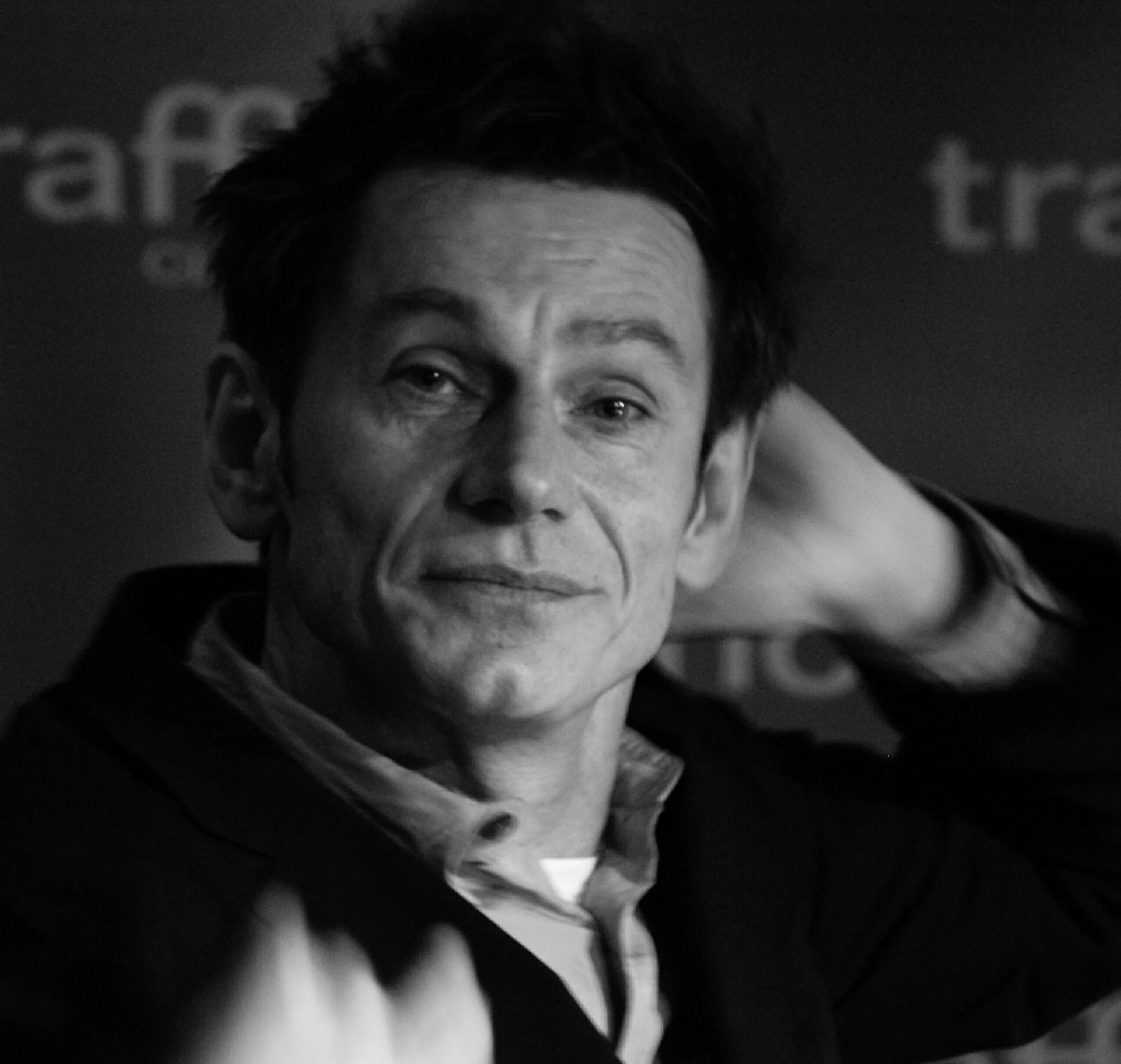
Image from Wikipedia
Image from Wikipedia
Krzysztof Warlikowski: The visionary theater and opera director who has redefined Europe's stages
An artist between theater, opera, and radical contemporaneity
Krzysztof Warlikowski, born on May 26, 1962, in Szczecin, is one of the defining theater and opera directors in Europe. His artistic career merges acting, musical theater, and intellectual analysis of the present into a distinctive signature. Those who observe his productions encounter not a pure revival of classic works but an uncompromising interrogation of identity, memory, physicality, and societal order.
Warlikowski belongs to that rare generation of directors who do not perceive theater as a museum-like space but as a vibrant resonating body for political, psychological, and cultural conflicts. His works originated in Poland, gained early international recognition, and solidified his reputation as a director who has sustainably transformed European stage aesthetics. In particular, he developed a language in musical theater that rethinks opera as a dramatic and visual grand form.
Biographical influences and academic training
Warlikowski studied history, philosophy, and theater studies in Kraków and completed a study stay in Paris. He then began his directing studies at the National Academy of Dramatic Art in Kraków. This academic foundation explains the analytical core of his work: his productions rely not only on emotionality but also on precise structure, historical reflection, and philosophical depth.
Important influences came from assistants to Krystian Lupa, Peter Brook, Ingmar Bergman, and Giorgio Strehler. These names not only mark prestigious stations but also refer to the European theater tradition in which Warlikowski positioned himself. From this school, he developed a style that combines psychological precision with a powerful imagery.
The breakthrough in Polish theater
Warlikowski's first professional productions were realized in Poland at the Stary Teatr in Kraków and at the Teatr Nowy in Poznań. There, he directed, among others, Heinrich von Kleist's The Marquise of O. and Bernard-Marie Koltès' Roberto Zucco. With the latter work, he early earned the reputation of a theater provocateur by linking the destructive energy of modern drama with a radically contemporary visual language.
By the 1990s, it became clear that Warlikowski would not merely enrich the Polish theater landscape but shift it. His works emerged at the intersection of classical repertoire, contemporary drama, and European avant-garde. The director worked with texts by Shakespeare, Kafka, Euripides, Gombrowicz, Dostoevsky, and Kleist, presenting them with an attitude that consistently made historical distance present.
International rise and artistic authority in Europe
From the late 1990s, Warlikowski became a fixture internationally. He worked in Warsaw, Hamburg, Stuttgart, Tel Aviv, Zagreb, Milan, Brussels, Amsterdam, and Paris. The Odéon Théâtre de l’Europe describes his work as present throughout Europe; also, the Ruhrtriennale refers to more than fifty theater and opera productions in Poland and abroad. Thus, Warlikowski is among the directors whose name has become a hallmark of quality.
In 2015, he wrote the official message for World Theater Day, which was translated into 22 languages. Such tasks are given only to artists of high cultural authority, whose voice carries weight beyond individual productions. In 2021, the Biennale di Venezia honored him in the theater category with the Golden Lion for his lifetime achievement, one of the most significant awards in the international stage context.
Musical theater as a second home
Warlikowski's work in the field of opera is particularly impressive. The Odéon biography mentions, among others, The Music Programme by Roxanna Panufnik, Don Carlos by Verdi, Ubu Roi by Krzysztof Penderecki, Iphigénie en Tauride by Gluck, L’Affaire Makropoulos by Leoš Janáček, Parsifal by Richard Wagner, and Médée by Cherubini. This selection demonstrates the range of his repertoire: from baroque and classical tragedy to late romantic and modern opera.
Warlikowski approaches opera not illustratively, but dramaturgically. He uncovers hidden conflicts, shifts perspectives, and develops strong images that connect musical form and psychological perception. Particularly in Paris, Munich, Brussels, and Berlin, he became a director whose musical theater is understood not as decorative sound art, but as existential drama.
Style, themes, and aesthetic signature
Warlikowski's directorial style is based on compression, montage, and intense psychological precision. He often works with fragmented narrative structures, cinematic references, and a clear focus on body, desire, guilt, and memory. The collaboration with set and costume designer Małgorzata Szczęśniak significantly shapes this aesthetic; they have realized numerous productions together and formed a distinctive visual world.
In terms of content, his works often revolve around social outskirts, traumatic history, and issues of identity and belonging. Culture.pl describes that Warlikowski was considered a provocateur from an early age, while also rising to become one of the key voices in European theater. His productions such as Angels in America, Die Gezeichneten, Pelléas et Mélisande, or We Are Leaving demonstrate how he translates classical material and modern drama into a contemporary field of perception.
Current projects, recent works, and presence in the international schedule
Among the recent highlights are We Are Leaving in 2018 and Odyssey: The Story of Hollywood from 2021 at the Nowy Teatr in Warsaw. For the 2024/2025 season, Warlikowski will prominently reappear in the European opera calendar. The Théâtre des Champs-Élysées has announced his production of Der Rosenkavalier for May 21, 2025; the production has been described as a contemporary interpretation that centralizes questions of desire, power, and sexual identity.
The Nowy Teatr also emphasizes the ongoing international impact of his work: Warlikowski's influence is described as the foundation for a theater that opens up socially relevant and formally experimental forms. In the theater reporting for the 2024 and 2025 seasons, Elizabeth Costello also appears as a central project of the institution, which toured through Europe. This underscores that Warlikowski's working environment continues to be among the most important laboratories of contemporary theater.
Discography, repertoire, and critical reception
Krzysztof Warlikowski does not have a classical discography in the musical sense, as he is not a performing musician or recording artist. His artistic work consists of theater and opera productions that correspond more to a repertoire than a discography. For those seeking his "artistic oeuvre," the list of key productions, opera works, and festival appearances serves as the relevant canon.
Frequently highlighted works include Roberto Zucco, Angels in America, (A)pollonia, Die Gezeichneten, and Pelléas et Mélisande. Critical reactions regularly emphasize the intensity of his imagery, the psychological power of actor direction, and the ability to read musical works as modern existential dramas. The French and German press has consistently responded to his work with great attention because Warlikowski perceives musical theater as a place of intellectual and emotional intensification.
Cultural influence and significance for the European stage
Warlikowski has fundamentally changed the relationship between direction, text, and music. He represents a theater that does not offer simple solutions but makes contradictions productive. Particularly in opera productions, he brought a new depth of interpretation to the repertoire by intertwining psychological configurations, social ruptures, and visual metaphor.
His significance extends beyond Poland. He has been awarded for his international promotion of Polish culture, received the Golden Lion for his lifetime achievement, and is among the directors whose work is regularly discussed at the highest level in European metropolises. His career shows how theater directing can evolve from a local practice to a transnational art form.
Conclusion: A director of rare intensity
Krzysztof Warlikowski remains exciting because he combines theater and opera with intellectual sharpness, emotional power, and formal risk-taking. His works open spaces for friction, reflection, and unrest, rather than settling for decorative beauty. This is precisely where his extraordinary position in European music and spoken theater lies.
Those who experience his productions do not only see great stage art but an uncompromising engagement with the present. Warlikowski's work belongs on the live stage, where his visual power, his dramaturgy, and his radical interpretation transform classical material into a vibrant present.
Official channels of Krzysztof Warlikowski:
- Instagram: No official profile found
- Facebook: No official profile found
- YouTube: No official profile found
- Spotify: No official profile found
- TikTok: No official profile found
Sources:
- Wikipedia: Krzysztof Warlikowski
- Culture.pl - Krzysztof Warlikowski - Biography
- Akademie der Künste Berlin - Krzysztof Warlikowski
- Ruhrtriennale Archive - Krzysztof Warlikowski
- Odéon Théâtre de l'Europe - Krzysztof Warlikowski
- Nowy Teatr - Program / Theater
- Théâtre des Champs-Élysées - Le Chevalier à la rose
- e-teatr.pl - Nowy Teatr goes on tour 2024/2025
Upcoming Events
Europe
Europa