
Krischa Weber
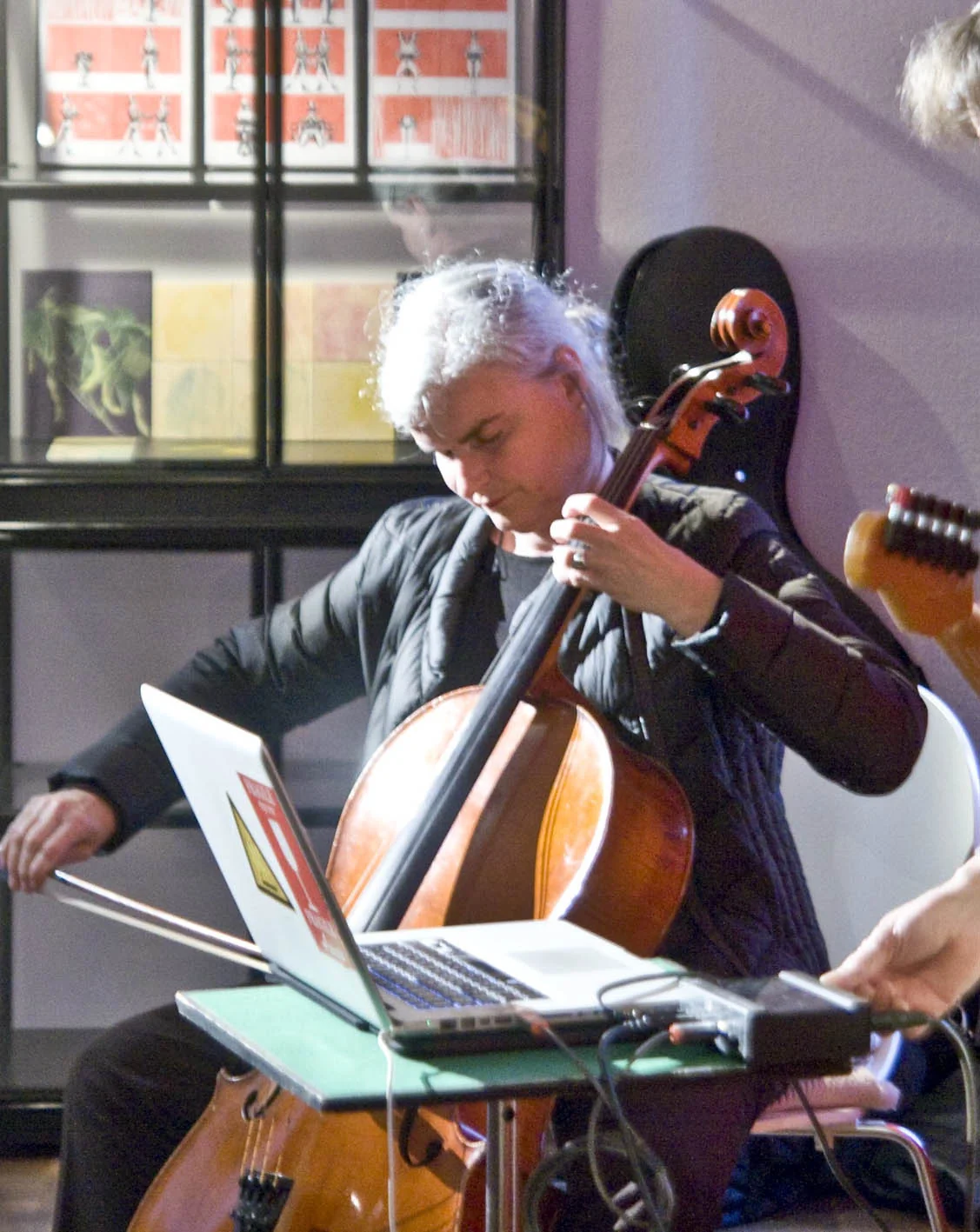
Image from Wikipedia
Image from Wikipedia
Krischa Weber – a Cellist between Improvisation, Sound Research, and Cultural Work
A musician who brings the cello from the classical tradition into new spaces
Krischa Weber, born in 1961, belongs to that rare generation of female musicians who consistently think of virtuosity, curiosity, and cultural engagement as interconnected. The German cellist and organizer of cultural projects combines classical training, jazz, improvisation, and interdisciplinary formats into an artistic signature that cannot be reduced to a single genre. Her profile represents a music career that not only takes place on the concert stage but also unfolds in workshops, cultural projects, and experimental stage concepts. ([de.wikipedia.org](https://de.wikipedia.org/wiki/Krischa_Weber))
Biographical Roots and Musical Influence
The biographical data of Krischa Weber remains deliberately sparse in public sources, but the contours of her career are clearly recognizable: She received training in both classical music and jazz, developing an open, improvisational approach to the cello. This dual influence is central to her artistic development, as it combines the rigor of classical training with the freedom of spontaneous play. From this tension emerges a stage presence that is both focused and experimental. ([de.wikipedia.org](https://de.wikipedia.org/wiki/Krischa_Weber))
Weber does not work as a soloist in the traditional sense; instead, she operates as a musician within a network: ensemble, duo, theater, reading, film, and public space are the fields in which her work flourishes. This versatility makes her a cultural actor whose music career is defined more by substantive coherence than by market mechanisms. Her artistic profile fits within the tradition of those German improvisational musicians who view the cello as a voice, resonance body, and dramatic instrument. ([de.wikipedia.org](https://de.wikipedia.org/wiki/Krischa_Weber))
Ensemble Work as an Artistic Center
A defining aspect of her career is her work in different formations. Wikipedia mentions, among others, the Erste Improvisierende Streichorchester, the duos Marie Claire, Weber Wendt, and Das Himmlische Vergnügen, as well as the cello ensemble Cello en Vogue. These projects demonstrate how strongly Weber relies on collective sound formation and how naturally she shifts between notated music, arrangement, and free improvisation. In this context, the cello becomes not just a melody instrument but also a motoric, harmonic, and atmospheric force. ([de.wikipedia.org](https://de.wikipedia.org/wiki/Krischa_Weber))
On Ulrich Kodjo Wendt's website, her ensemble activity is further specified: Krischa Weber plays, among other things, in Cello enVogue and in the Erste Improvisierende Streichorchester E.I.S., as well as in contexts for theater music and reading accompaniment. Particularly revealing is the duo WeberWendt, described not just as a concert format but as a mobile, scenic sound laboratory. Performances range from theaters and festivals to unusual locations such as beaches, doormats, kindergartens, or underground spaces in Rome. This variety of locations is not a gimmick; it is an expression of a musician who understands performance as a cultural situation. ([ulrichwendt.de](https://ulrichwendt.de/performer/duo-weber-wendt/))
Improvisation, Conceptual Art, and Public Spaces
For several years, Krischa Weber has been intensively exploring the possibilities of improvisation. This involves not just spontaneous playing ideas but a mindset toward music that combines openness, responsiveness, and conceptual precision. Particularly noteworthy is her development of musical concepts for different occasions, going beyond the role of the interpreter. She works at the intersection of composition, performance, and cultural mediation. ([de.wikipedia.org](https://de.wikipedia.org/wiki/Krischa_Weber))
A striking example is the "Dreckstückchen-Ensemble," founded in 2002, which focuses on musically and artistically designed doormats. The very name signals how Weber productively engages with everyday objects, spatial ideas, and aesthetic friction. Additionally, she undertakes cultural projects in public spaces like "Tun: Musikalische LandArt" in Hamburg's HafenCity. Such works expand the notion of discography to include a performative dimension where place, audience, and sound landscape are inseparable. ([de.wikipedia.org](https://de.wikipedia.org/wiki/Krischa_Weber))
Film Music, Recording Work, and Compositional Signature
Krischa Weber is also present in the field of film music. According to Wikipedia, she was involved in the film score for "Im Juli" by Fatih Akin. In addition, she composed and performed the music for the CD "Neben mir im Sand saß Gott und schlief." These milestones point to a musical language that does not rely solely on virtuosity but focuses on atmosphere, timing, and dramatic density. Particularly in film and recordings, it becomes evident how precisely Weber organizes sound colors. ([de.wikipedia.org](https://de.wikipedia.org/wiki/Krischa_Weber))
The duo WeberWendt showcases this ability in a special form. The silent film programs and stage concepts mentioned there combine cello, singing saw, accordion, piano, and sounds into vibrant, narrative soundscapes. The goal is not merely to accompany but to present a new interpretation of silent film as a contemporary performance. The description of the music as "like film music without a film" captures this aesthetic aptly, as it places the narrative power of live improvisation at the forefront. ([ulrichwendt.de](https://ulrichwendt.de/performer/duo-weber-wendt/))
Teaching, Workshops, and Cultural Mediation
In addition to her artistic work, Krischa Weber is also active as a teacher and workshop leader. Wikipedia explicitly notes that she conducts workshops for children and adults. This highlights an important aspect of her music career: the sharing of experience, technique, and artistic openness. Those who teach improvisation also impart courage for individual sound and the ability to musically respond to others. ([de.wikipedia.org](https://de.wikipedia.org/wiki/Krischa_Weber))
On the Musica Altona website, Krischa Weber is listed as a cello instructor. Here, the lessons are described as working with classical pieces and "hits from all times," played in small groups, either unison or in multiple parts. This formulation shows how strongly her pedagogical approach focuses on accessibility, ensemble spirit, and musical practice. The connection between teaching and performance is a central feature of her artistic authority. ([musica-altona.de](https://musica-altona.de/kurse/cello))
Awards and Recognition
The documented awards are modest but significant. In 2001, she received a grant for musicians from the Hamburg Cultural Authority with the duo Marie Claire, followed by an invitation to OMI International Musicians Residency in Hudson, NY, in 2011. These milestones mark recognition for work that has proven itself in artistic quality, independence, and project idea. Especially in the free scene, such support is an important signal of relevance and professional grounding. ([de.wikipedia.org](https://de.wikipedia.org/wiki/Krischa_Weber))
Style, Sound Language, and Cultural Impact
Weber represents a form of contemporary cello playing that does not treat classical music and jazz as opposites but as productive poles of an open aesthetic. Her style is characterized by an awareness of sound, improvisational art, and the willingness to transfer instrumental technique into performative situations. The cello does not appear in her work as a static traditional instrument but as a flexible medium for movement, scene, and resonance. ([de.wikipedia.org](https://de.wikipedia.org/wiki/Krischa_Weber))
Her cultural impact is less visible in charts or major hit successes than in the sustainable expansion of what a cello program can be. Projects in public spaces, silent film concerts, reading accompaniment, and interdisciplinary ensembles shape an artistic area that emphasizes closeness, exchange, and experimental openness. It is precisely here that the value of her work lies: she makes music a lived practice, not a rigid repertoire. ([de.wikipedia.org](https://de.wikipedia.org/wiki/Krischa_Weber))
Current Projects and Presence
The available sources show Krischa Weber continuing to be active in various contexts, primarily with duo formats, ensemble work, and teaching. On the WeberWendt website, for instance, there are reports of the "PopUp Park Concerts," which emerged during the Corona crisis as a special concert series in Fischers Park Altona. Between April and November 1, 2020, twelve concerts took place there in front of a growing audience while maintaining distance—an example of creative adaptability in challenging times. ([ulrichwendt.de](https://ulrichwendt.de/performer/duo-weber-wendt/))
No verifiable, reliable evidence of new albums, singles, or official social media channels could be found in web research. This does not mean that no current activities exist but simply that they are not documented as official releases or channels in the sources found. Therefore, for a serious artist page, the focus remains on the documented stations that paint a clear picture of her work. ([de.wikipedia.org](https://de.wikipedia.org/wiki/Krischa_Weber))
Conclusion: Why Krischa Weber Remains Fascinating
Krischa Weber is fascinating because she extracts the cello from the pure concert context and thinks of it as an instrument of encounter, experiment, and cultural mediation. Her music career combines classical training, jazz, improvisation, film, pedagogy, and cultural projects into a cohesive artistic movement. Anyone interested in advanced cello music, the free scene, and interdisciplinary performance will find here a musician with attitude, substance, and a unique sound. ([de.wikipedia.org](https://de.wikipedia.org/wiki/Krischa_Weber))
Particularly in live performances, this work unfolds its full impact: in the immediate reaction to space, audience, and fellow musicians, in the fine balance between structure and freedom, and in the presence of an artist who understands music as an event. Krischa Weber invites you not just to listen but to experience sound as a social and aesthetic event. Those who see her on stage encounter a cellist who captivates with intelligent openness and strong stage presence. ([de.wikipedia.org](https://de.wikipedia.org/wiki/Krischa_Weber))
Official Channels of Krischa Weber:
- Instagram: No official profile found
- Facebook: No official profile found
- YouTube: No official profile found
- Spotify: No official profile found
- TikTok: No official profile found
Sources:
- Krischa Weber – Wikipedia
- Duo WeberWendt – Ulrich Kodjo Wendt
- Silent Film Concerts – Ulrich Kodjo Wendt
- Cello – Musica Altona
- Wikipedia: Image and text source