
Faun (Band)
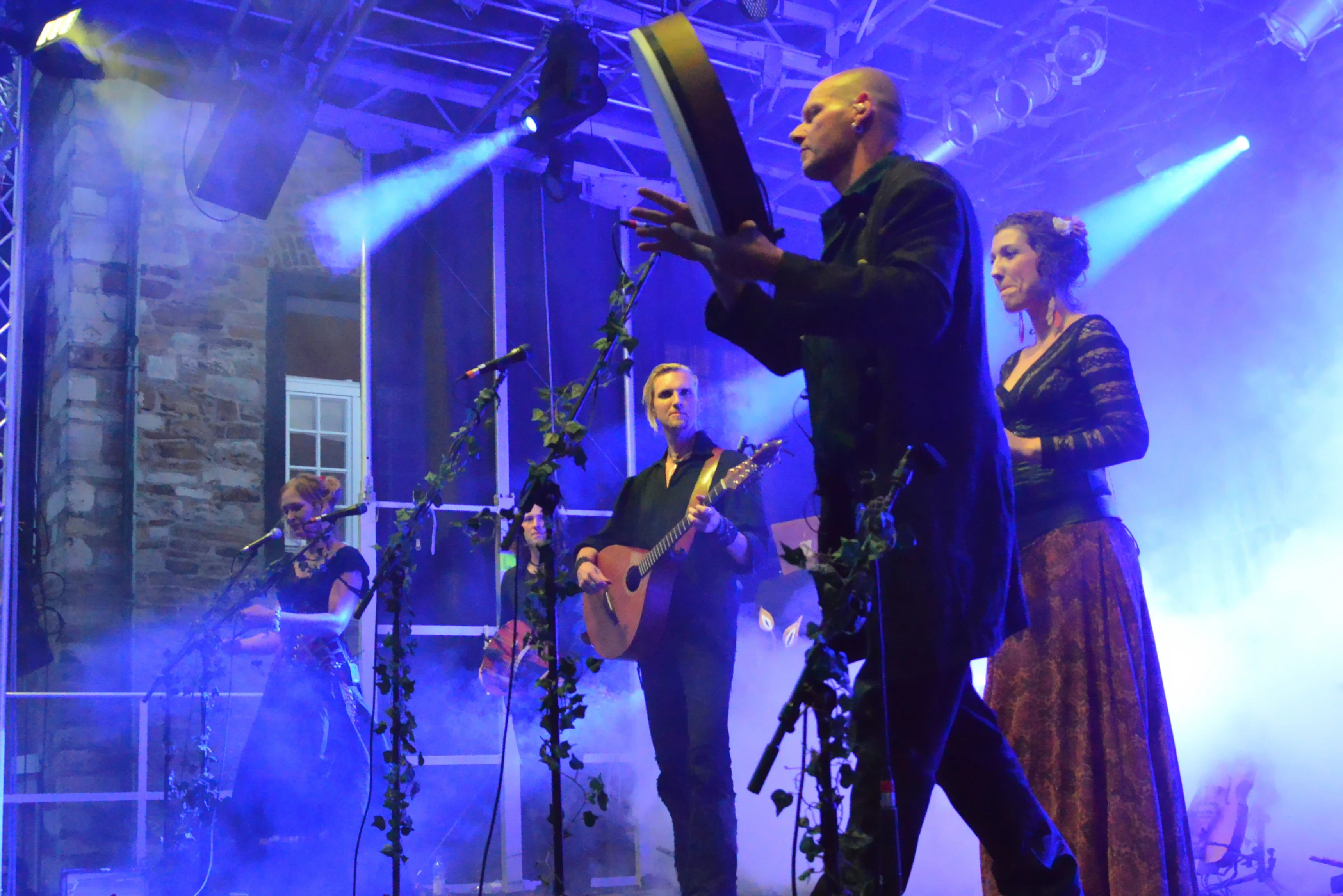
Image from Wikipedia
Image from Wikipedia
FAUN – Pagan Folk, mythology, and modern sound magic from Germany
One of the defining forces of modern medieval folk
FAUN is a German Pagan Folk band from Gräfelfing near Munich, which has created its own niche between the medieval scene, folk, pop, and experimental electronics since the late 1990s. The band combines historical soundscapes with contemporary production, building a loyal international audience. Notably, the mythological themes, narrative depth, and strong stage presence have accompanied FAUN as they developed their music career over decades. ([de.wikipedia.org](https://de.wikipedia.org/wiki/Faun_%28Band%29))
From acoustic origins to international brand
FAUN was founded in 1999 by Oliver Pade, Birgit Muggenthaler, and Werner Schwab; in 2000, Muggenthaler left the band but was still featured on the debut album. Early on, the band saw stable lineup changes with Niel Mitra and later other musicians, which steadily expanded the group's sound. The first major development step was the completely acoustic debut Zaubersprüche, which managed without modern instruments or electronic sounds and already hinted at the later aesthetic direction. ([de.wikipedia.org](https://de.wikipedia.org/wiki/Faun_%28Band%29))
Crucial for the artistic development was the band's ability to tell historical materials not in a museum-like fashion, but vividly. In their songs, Middle High German texts, old folk ballads, and modern arrangements come together; the band works with themes ranging from Germanic mythology to Celtic myths. This concept gave FAUN a clear identity that transcends mere "medieval" folklore and creates its own musical narrative world. ([de.wikipedia.org](https://de.wikipedia.org/wiki/Faun_%28Band%29))
The breakthrough with major releases and chart success
The definitive breakthrough came in 2012 with the major debut Von den Elben, released through Universal. The band combined romantic and mythical medieval music quotations with contemporary influences, reaching a significantly wider audience. According to Universal and Wikipedia, this album marked the phase in which FAUN emerged from the scene into the mainstream of the German-speaking music landscape. ([universal-music.de](https://www.universal-music.de/faun/biografie))
The chart and sales successes underline this rise: Pagan reached number 3, Midgard number 3, and Luna number 4 on the German album charts. Von den Elben was awarded Platinum, Luna was awarded Gold; furthermore, the band was nominated three times for the Echo award. This track record makes FAUN one of the most commercially successful formations in the tension between folk, medieval, and pagan music. ([faune.de](https://faune.de/de/band/))
Musical language: Folk, medieval sound, and modern production
The characteristic sound of FAUN arises from the interplay of natural instruments, multi-part harmonies, percussion, and subtle electronic elements. The band works with nyckelharpa, harp, flutes, and historical sound colors, without tipping the song structure into mere reconstruction. This balance between authenticity and contemporary arrangement makes the band's appeal and gives their production a rare tension. ([universal-music.de](https://www.universal-music.de/faun/biografie))
Textually, FAUN also cultivates a remarkable diversity. The songs draw on contemporary German, Middle High German, Old Icelandic, Latin, English, Finnish, Uighur, and other languages, giving the albums the feel of cultural-historical sound journeys. Thematically, the releases often revolve around nature, spirituality, feminine mythologies, Nordic sagas, rebirth, and the otherworld. ([de.wikipedia.org](https://de.wikipedia.org/wiki/Faun_%28Band%29))
Discography: a journey through eleven, twelve, and more sound worlds
The discography of FAUN shows a consistent artistic development from the acoustic original form to elaborated studio productions. The studio albums include Zaubersprüche (2002), Licht (2003), Renaissance (2005), Totem (2007), Faun Acoustic – Buch der Balladen (2009), Eden (2011), Von den Elben (2013), Luna (2014), Midgard (2016), Märchen & Mythen (2019), Pagan (2022), and Hex (2025). There are also live albums, video productions, and the compilation XV – Best Of. ([de.wikipedia.org](https://de.wikipedia.org/wiki/Faun_%28Band%29))
The later works particularly show how well FAUN combines musical identity and progression. On Pagan and Hex, the sound becomes darker, denser, and more international, without abandoning the folk core aesthetic. The band increasingly collaborates with guest contributions and expands its scope with new moods, languages, and production approaches, making the discography feel ever-evolving. ([open.spotify.com](https://open.spotify.com/artist/2wPOgnQ6eW3X73uIJZ4YFE?utm_source=openai))
Current projects, new songs, and the present of the band
The most recent phase of FAUN is characterized by new music and expanded touring activity. The band announced the studio album Hex for September 5, 2025, which is heavily inspired by healers, wise women, and witches. In the spring and summer of 2025, the single “Lament” was released, which was described in the official announcement as an epic, emotional song featuring choirs, drums, and ancient instruments. ([faune.de](https://faune.de/de/news/))
At the end of January 2026, FAUN also released “Drei Tage” and pointed out in their own news that the song is available on all platforms. Already in 2025, the band announced an extensive world tour, including Europe, the UK, the USA, and South America. This keeps FAUN a highly active live band, whose artistic presence is based not only on studio work but also on the concert format. ([faune.de](https://faune.de/de/news/))
Critical reception and cultural influence
For years, music press has described FAUN as a formation that has developed a distinctive signature between medieval romanticism, pagan folk, and modern pop sensibility. Deutschlandfunk Kultur highlighted that the band understands its music as “Pagan Folk” and has made it to number 7 on the album charts from a musical niche. Other reviews also emphasize the atmospheric, nature-connected character of the music, which transports listeners to fantasy worlds. ([deutschlandfunkkultur.de](https://www.deutschlandfunkkultur.de/folk-band-faun-beim-esc-vorentscheid-von-der-nische-in-die-100.html?utm_source=openai))
FAUN has significantly shaped Pagan Folk in the German-speaking area by merging historical materials, mythological motifs, and modern arrangements into a popular overall picture. The band represents an aesthetic that works equally well in concert halls, festival stages, and streaming platforms. Through touring, collaborations, and constant releases, FAUN has made the genre visible far beyond the scene. ([faune.de](https://faune.de/de/band/))
Stage presence, touring culture, and live format
FAUN is considered a particularly strong live band and has played more than 950 concerts worldwide. Depending on the format, the group performs with different setups: as a quieter, seated acoustic program for theaters, churches, and concert halls, in classical concert venues, or as an exhilarating festival show without seating. This flexibility is a central part of their music career and demonstrates how seriously the band takes the dramaturgy of their performances. ([faune.de](https://faune.de/de/band/))
It is especially in live performances that the band's unique quality unfolds: the transition between ballads, dance songs, and epic choirs creates a strong emotional dynamics. FAUN works with a visual and acoustic staging that gives the themes of Vikings, gods, witches, and old ballads an immediate presence. This makes the concerts not only audible but almost ritualistically experienceable. ([universal-music.de](https://www.universal-music.de/faun/biografie))
Voices of the fans
The official social media presence of FAUN is clearly verifiable, yet the available web results do not provide any reliable, directly quotable fan comments from the platforms themselves. However, the enormous resonance surrounding releases, videos, and tour announcements is evident, reflected in reach, streaming numbers, and ongoing fan engagement. For a clean editorial presentation, therefore, the assessment remains limited to the documented reactions from press, platform presence, and official band communications. ([open.spotify.com](https://open.spotify.com/artist/2wPOgnQ6eW3X73uIJZ4YFE?utm_source=openai))
Conclusion: Why FAUN captivates to this day
FAUN is exciting because the band connects historical depth, musical fantasy, and modern production in a rare harmonious way. The group has created a distinctive international sound language from Pagan Folk that is compelling both on album level and on stage. Those who experience FAUN live do not just listen to a folk band, but to a carefully crafted sound world between myth, melody, and contemporary pop culture. ([universal-music.de](https://www.universal-music.de/faun/biografie))
It is precisely the mix of cultural memory, strong instrumentation, and emotional directness that makes this band so enduring. FAUN thus remains one of the most influential German formations in the intersection of medieval folk, pagan folk, and modern songwriting. Anyone who wants to understand the music should not only stream it but absolutely experience it live at a concert. ([faune.de](https://faune.de/de/band/))
Official channels of FAUN:
- Instagram: https://www.instagram.com/faunofficial/
- Facebook: https://www.facebook.com/FaunOfficial/
- YouTube: https://www.youtube.com/user/fauntube
- Spotify: https://open.spotify.com/artist/2wPOgnQ6eW3X73uIJZ4YFE
- TikTok: https://www.tiktok.com/@faunofficial
Sources:
- FAUN – Band / Official Website
- FAUN – News / Official Website
- Universal Music – Faun | Biography
- Wikipedia – Faun (Band)
- Spotify – Faun
- YouTube – FAUN “Lament” (Official Video)
- YouTube – FAUN “Walpurgisnacht” (Official Video)
- Deutschlandfunk Kultur – FAUN at the ESC Preselection
- AllMusic – Faun Biography