
Christian Schad
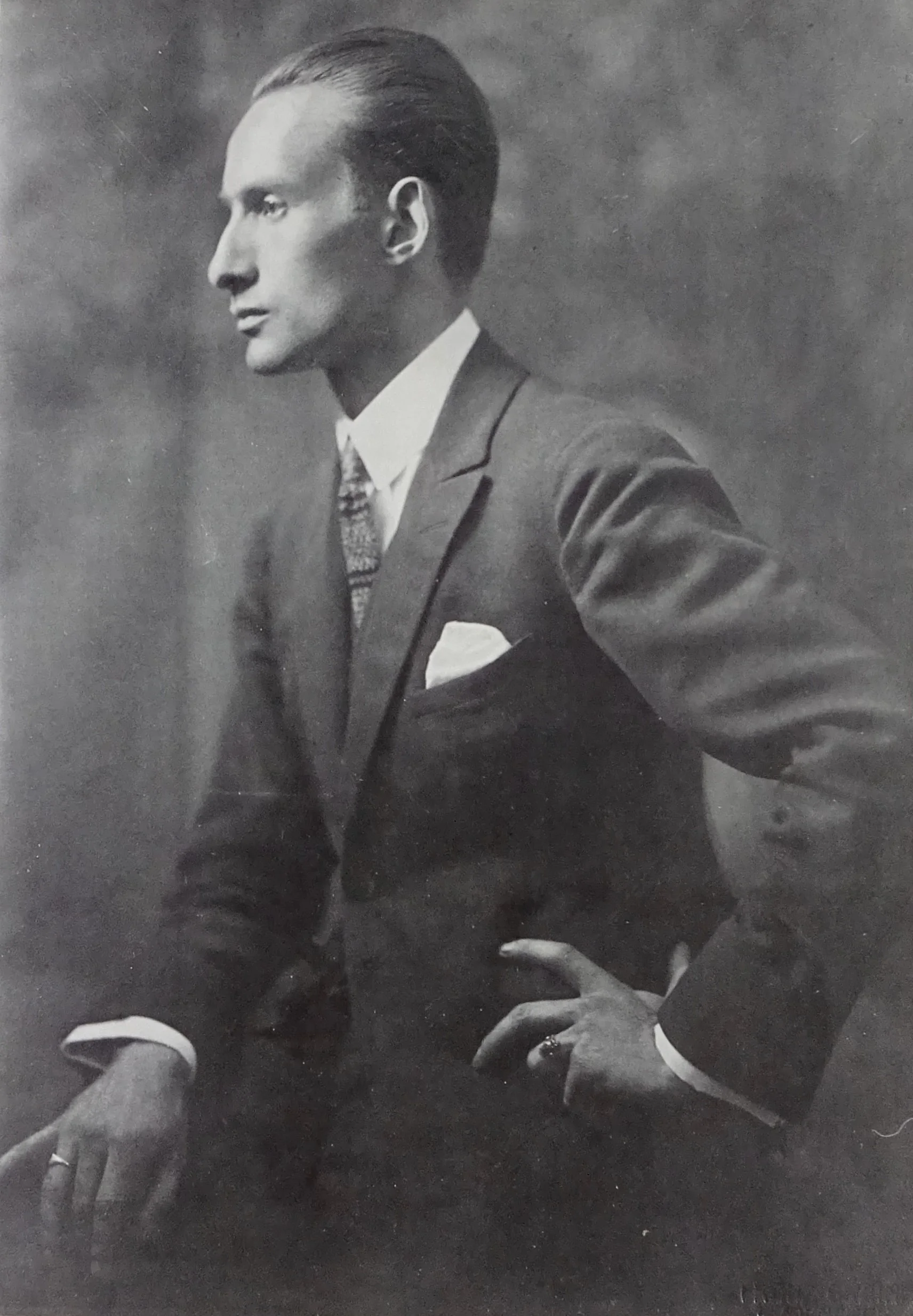
Image from Wikipedia
Image from Wikipedia
Christian Schad – The Cool Precision of New Objectivity and the Radical Vision of Modernity
A German Painter Between Dada, Verism, and Artistic Integrity
Christian Schad is considered one of the most prominent figures of German modernism. Born on August 21, 1894, in Miesbach, Upper Bavaria, and died on February 25, 1982, in Stuttgart, he developed a body of work that occupies a distinctive position between Expressionism, Dada, and New Objectivity. Primarily recognized as a representative of Verism, alongside Otto Dix, George Grosz, Rudolf Schlichter, Karl Hubbuch, and Richard Ziegler, he is one of the defining voices of his generation.
Schad's imagery is characterized by a cool, analytical observation that depicts social reality without euphemistic distance. His portraits and cityscapes combine technical precision with psychological tension, simultaneously documenting the zeitgeist of the Weimar Republic. His estate is preserved by the Christian Schad Foundation in Aschaffenburg and serves as the foundation for contemporary scholarly engagement with his work.
Biographical Beginnings: Munich, War, and the Escape to Neutral Switzerland
Schad grew up in a bourgeois environment and attended a secondary school in Munich. In 1913 and 1914, he studied at the Academy of Fine Arts in Munich in Heinrich von Zügel's painting class, before the First World War abruptly changed his development. After the outbreak of the war, he faked a heart defect to avoid conscription and fled to neutral Switzerland in 1915, settling in Zurich.
There, he encountered the intellectual milieu of the avant-garde. Together with Walter Serner, he published the literary magazine "Sirius" and witnessed the founding of Dadaism at Cabaret Voltaire up close. Nonetheless, he maintained a distanced stance towards Dada, seeing the movement more as a continuation of expressionist energies rather than a separate artistic goal. Even here, his characteristic independence from rigid group affiliations is evident.
Between Dada and New Objectivity: The Development of a Distinctive Vision
In 1919, Schad developed early photograms in Geneva, which later became famous as Schadographs. He placed objects on light-sensitive paper and created image forms that functioned without a camera, making shadows the image bearers. These experiments are seen as groundbreaking within the history of photography, demonstrating how closely conceptual thinking, technical innovation, and formal radicality were intertwined in Schad's work.
From 1920 to 1925, he lived mainly in Italy, particularly in Naples. There, he attended painting and drawing courses at the art academy and married Marcella Arcangeli, the daughter of a Roman professor. In 1927, the family moved to Vienna, where Schad's painting became closely linked with New Objectivity. His works from this period are among the most significant testimonies of a sober, almost clinical realism that turns portraiture into a kind of soul seismograph.
The Berlin Years: City Life, Psychology, and the Veristic Breakthrough
At the end of the 1920s, Schad returned to Berlin, finding an urban stage where his art gained its greatest sharpness. The portraits from this phase distill social roles, erotic tension, and psychological coldness into images of enormous presence. The famous self-portrait with model from 1927 is now among his best-known and most frequently reproduced works.
During this time, he developed the visual language of Verism in a form that can be described as controlled, cool, and yet disturbing. Figures appear precisely modeled, often with smooth surfaces and high levels of detail, but beneath the visible order lies a palpable inner unrest. Schad's gaze is never merely documentary; it is always revealing.
Style and Technique: Painting, Photography, and Schadography as Artistic Research
Schad's oeuvre encompasses painting, photography, Schadographs, graphic works, drawings, and watercolors. Particularly, his early experiments with the photogram mark a break with traditional production methods and are among the most original contributions of modernism. The term "Schadography" today represents a form of artistic thinking in which light, object, and chance merge into an autonomous image event.
In his painting, influences from Cubism and Futurism combine with a later shift towards smooth, realistic shaping. In Naples, a stylistic clarity emerged that recalls the Renaissance yet is fully in the spirit of interwar modernity. It is precisely this tension between classical order and time-diagnostic harshness that makes Schad's work so enduring and art historically significant.
Crises, Withdrawal, and Late Recognition
Around 1930, Schad became increasingly interested in Eastern philosophy, and his artistic production significantly declined. After the stock market crash of 1929, he could no longer rely on financial support from his father and largely ceased painting in the early 1930s. This turning point marks not only a biographical rupture but also a phase of withdrawal from the center of the art scene.
Unlike many of his colleagues, his art was not condemned by the Nazis as severely as the works of Otto Dix, George Grosz, or Max Beckmann. In 1937, he was included in the Great German Art Exhibition, and recent research has shed light on his NSDAP membership from 1933. During the war, he lived largely in the German provinces; after his studio was destroyed in 1943, he moved to Aschaffenburg, where he worked on a copy of Matthias Grünewald's "Mary with Child" until 1947.
Aschaffenburg, Rediscovery, and Institutional Presence
In Aschaffenburg, Schad remained resident for decades. Bettina, his later wife, preserved works and materials after the destruction of his Berlin studio and brought them to him in Aschaffenburg. This phase represents a continuation of work under difficult conditions, but also marks a long, quiet artistic restart. In the 1950s, he continued painting in the style of Magic Realism and returned to photogram experiments in the 1960s.
His reputation only began to recover in the 1960s when exhibitions in Europe sparked a new art historical interest. In 2002, Bettina founded the Christian Schad Foundation in Aschaffenburg; the collection includes over 3,200 works and is presented in changing exhibitions at the Christian Schad Museum. Thus, today his work holds an institutional place of extraordinary density and continuity.
Cultural Influence: Why Christian Schad Remains Important to This Day
Schad is a key figure of New Objectivity, as he has translated its aesthetic stance with great consistency into a visual understanding of the 20th century. His portraits read like precise documents of an era, yet they never remain mere images of the times. Beneath the surface of accuracy lies a layer of social observation, eroticism, isolation, and psychological ambivalence.
He has also left traces in the history of photography. The Schadographs are among the earliest and most independent forms of camera-free images and have significantly shaped the development of photograms. Those who consider Christian Schad see not just a painter of the interwar years but an artist who has radically expanded the possibilities of perception, reproduction, and representation of reality.
Conclusion: An Artist of Sharp Perception and Lasting Relevance
Christian Schad remains compelling because his work observes with cold clarity and great formal discipline, without ever becoming dull. He combines avant-garde experimentation with portrait precision and makes the inner tension of his time visible. Anyone interested in New Objectivity, Dada, Verism, and the art of modernity will find in Schad one of the most distinctive and intellectually independent representatives of the 20th century.
A visit to his works is worthwhile not only for art historians but for anyone who wants to see how modern a seemingly sober gaze can be. Particularly in person at the museum, his paintings and Schadographs unfold that quiet intensity that is often only hinted at in reproductions. Christian Schad is among those artists whose impact deepens with every new look.
Official Channels of Christian Schad:
- Instagram: No official profile found
- Facebook: No official profile found
- YouTube: No official profile found
- Spotify: No official profile found
- TikTok: No official profile found