Experience Youth Centers & Cultural Venues in Aschaffenburg
Experience Youth Centers & Cultural Venues in Aschaffenburg: Dates, Offers and Orientation for 2026/27
If you are looking for open meetups, children's culture, media and creative offers, concerts or workshops in Aschaffenburg in the coming months, you will find a dense network of contact points. This overview helps you orient yourself for the season starting autumn 2026: What types of offers are typical, how do you find reliable dates – and what should you pay attention to when planning?
Neighborhood Meetups & Offers in the Districts (2026/27)
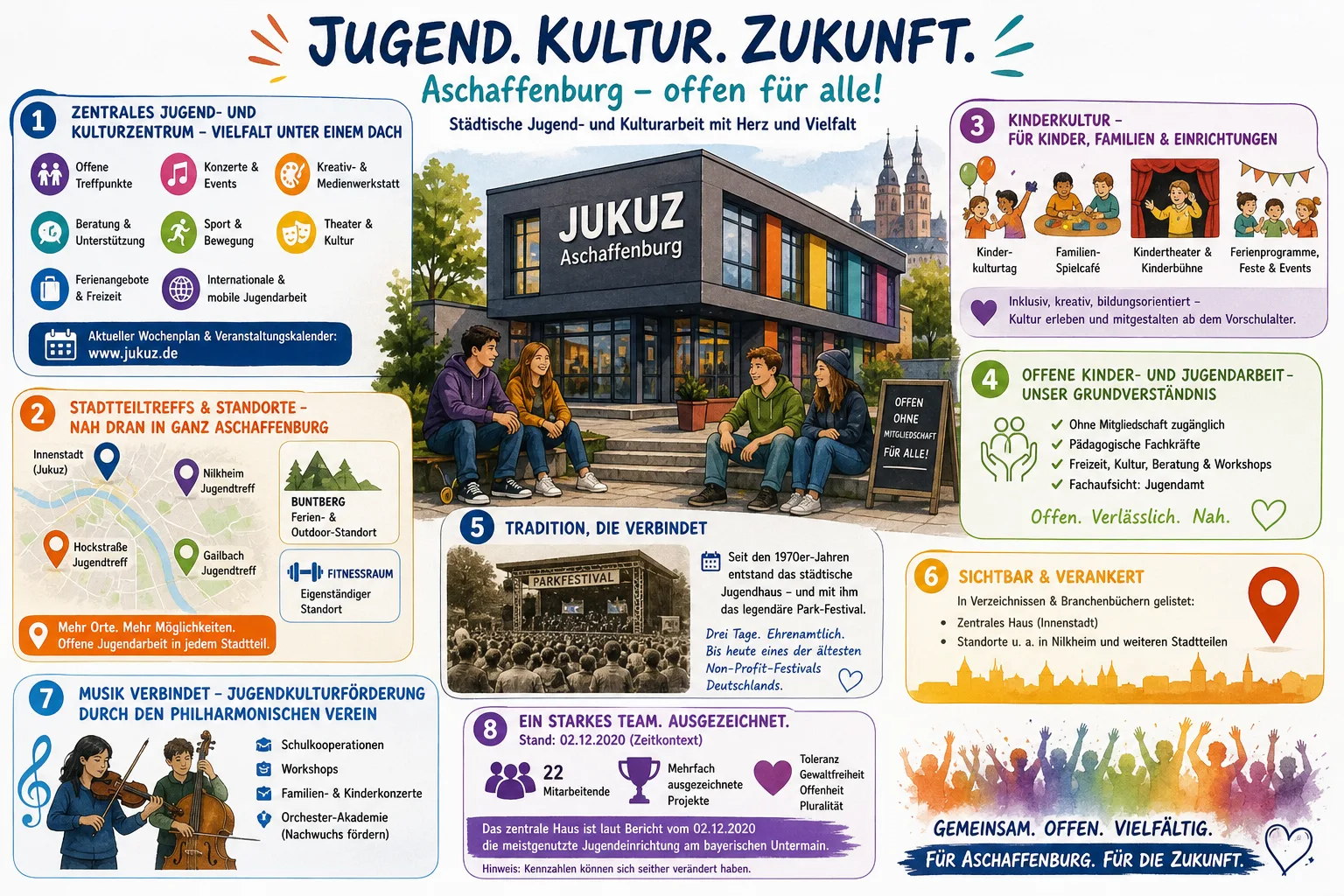
For autumn/winter 2026 and the year 2027, it is worth looking not only in the city center: Open child and youth work is often deliberately brought into the districts. Typical formats there include:
- Neighborhood open meetups (short distances, familiar groups, often in the afternoons)
- Holiday activities with a local focus (e.g. day programs instead of longer trips)
- Participation activities around neighborhood life (e.g. small festivals, neighborhood projects, action days)
If you are new to Aschaffenburg: Search specifically for the youth center in your district via the city portal or the responsible youth welfare office (see sources). This way you will find reliable contacts instead of relying on unclear entries from directories.
Children's Culture & Family Formats: Ideas for Weekends and Holidays 2026/27
For families, kindergartens and elementary school children, the season from autumn 2026 typically features recurring building blocks that are well suited for weekend or holiday planning:
- Participation days & action days (e.g. culture or play days with stations)
- Children's theater / children's stage (performances or open stage formats – depending on the program)
- Family meetup formats (e.g. play cafés or open family afternoons)
- Holiday programs (creative, sporty, media-related or as project weeks)
Practical tip for 2026/27: Pay attention to registration deadlines early for holiday formats. Many programs are quickly booked out – especially in autumn, carnival and Easter holidays.
Workshops, Media Workshop & Creative Workshop: Typical Formats
For teenagers and young adults, formats are often offered from autumn 2026 that can be roughly divided into three categories. Even if the specific content varies depending on the calendar, this classification helps with selection:
1) Media Workshop (Production + Media Literacy)
- Video/short film projects, editing & storytelling
- Podcast/audio formats (recording, interview, editorial)
- Content reflection: rights, privacy, platform logics (often as accompanying modules)
2) Creative Workshop (Design + Expression)
- Drawing, painting, design, collage
- Street art/lettering/style workshops (depending on house rules and space concept)
- Upcycling, building, mixed media
3) Stage, Music & Youth Culture
- Band rehearsal slots, technical/sound introductory workshops
- Small showcases, youth concerts or open stage evenings (depending on the program)
- Project formats with a performance at the end (typical during holidays or theme weeks)
If you have a specific goal (e.g. "start a podcast" or "exhibit a photo series"), for 2026/27 it is worth asking about project phases: Many institutions prefer to bundle resources in clearly timed blocks rather than loose drop-in lessons.
How to Find Real Dates & Registration Rules (Without Guesswork)
To get truly reliable information for 2026/27, it is best to proceed in this order:
- Check official calendars: City portal, youth welfare office pages or the website of the respective venue (opening hours, holiday regulations, age information).
- Clarify registration & costs: Is it open (without registration) or a course/project with limited places? Are there participation fees or material costs?
- Check consent/rules: For minors, depending on the format, consent forms, photo/video rules or pick-up regulations may apply.
- Address accessibility & inclusion: Ask in advance about accessibility, support or quiet areas if relevant.
This way you avoid arriving at an event that is actually a closed course – or missing a registration deadline.
Safety, Protection Concepts & Reliable Contacts
Especially for offers for children and young people, it is important for the 2026/27 season that institutions work transparently: Who is responsible, how are supervision and protection organized, who can you contact with questions?
Orientation is provided by the professional framework of child and youth welfare, which is described, among other things, in the SGB VIII. For families and participants, this means in practice: There should be clear responsibilities, transparent rules and accessible contact options (e.g. phone/email via official channels).
If you are unsure whether an offer is suitable, ask before participating:
- Age group & target group
- Supervision/contact persons on site
- Handling of photos/videos, data protection and publication
- Rules of conduct (e.g. respectful interaction, house rules)
Outlook 2026/27: Trends You Can Plan For
For the coming period from autumn 2026, developments are emerging in many cities (and typically also in municipal youth and cultural offers) that you can take into account when searching and planning:
- More participation: Programs are more often developed together with young people (e.g. theme weeks, self-curated stage evenings).
- Project-oriented formats: Instead of permanent courses, there are more often compact series (e.g. 4–8 dates) with a final presentation.
- Media & public: Media literacy is more often combined with creative practice (production + reflection on rights/privacy).
- Cooperations: More interfaces with schools, clubs and cultural partners (e.g. spaces/technology + educational support).
If you want to experience Aschaffenburg "young" in the coming months, it is worth taking a look at program calendars and holiday overviews – the main focuses often appear there earlier than in general city guides.