Citizen Participation and Urban Development in Aschaffenburg Digital
Citizen Participation & Urban Development in Aschaffenburg: Which Participation Formats Will Be Possible in the Coming Years
This overview classifies which participation paths citizens in Aschaffenburg will be able to use in the future – digitally and on site – and how urban development projects on mobility, climate, accessibility, and neighborhoods can emerge from them.
What It's About in the Future
If urban development is to succeed in the coming years, it will increasingly have to be organized in a dialogue-oriented way: with clear participation phases, understandable documentation, and visible feedback loops. In Aschaffenburg, three levels will typically interact for this purpose:
- Digital participation (e.g. online surveys, idea spaces, project pages),
- Structured project development (so that proposals can be professionally reviewed and implemented),
- Formal and analog participation rights (e.g. question times, assemblies, referendums).
This article describes what such formats could look like in the future, what rules typically apply, and how citizens can contribute in a way that is as useful as possible for planning.
Digital Manufactory (dima): From Idea to Reviewable Project Portfolio
A future core principle of modern participation is the translation of ideas into concrete, reviewable projects. Corresponding approaches are often described as a "digital manufactory": citizens can submit proposals, which are then further developed along a defined process – for example, with methods from Design Thinking and supporting digital tools.
This is how the process could run in the coming project cycles
- Idea submission: Citizens describe the need, location, target group, and expected benefit (e.g. accessibility, quality of stay, climate adaptation).
- Structuring: The proposal is divided into work packages (goals, risks, responsibilities, rough cost framework, time horizon).
- Feasibility check: Administration and, if necessary, partners (e.g. specialist departments, sponsors, university teams) check legal and technical framework conditions.
- Project portfolio: The result is a comprehensible document that facilitates prioritization, budget decisions, and political consultation.
- Feedback: The submitters receive a reasoned response (e.g. "feasible", "with adjustments", "currently not possible").
Which project ideas will typically be suitable in the future
For future implementation rounds, proposals that are concrete and describe a clear benefit are usually suitable. Common topics are:
- Urban nature & microclimate (e.g. greening, unsealing, shading),
- Accessibility in everyday life (e.g. temporary or mobile solutions, guidance systems, safe crossings),
- Quality of stay (e.g. seating, drinking water facilities, better path connections),
- Sustainable mobility (e.g. safe cycling and walking paths, understandable signage, pilot projects in neighborhoods).
Important for the credibility and fairness of future selection processes: Criteria such as benefit, costs, follow-up costs, availability of space, safety requirements, and equal treatment should be communicated transparently in advance.
Project-Based Online Participation: Follow, Comment, Read Up
For the coming years, it is obvious for many municipalities (and thus also in Aschaffenburg) to bundle participation via a project-based online platform. Such platforms are typically set up so that citizens can:
- register and participate in surveys,
- submit ideas or comment on variants,
- track interim results and weighings,
- find a results documentation (including justifications) at the end.
What citizens should pay attention to in digital participation in the future
- Reference to the question: Comments are most effective when they directly address the key questions of a participation phase.
- Traceability: Statements are stronger when linked to observations ("at peak times..."), locations ("at the crossing..."), and concrete suggestions.
- Respectful debate: Platforms only work in the long term with clear moderation rules and a factual tone.
- Low-barrier use: In the future, the platform should meet the requirements for digital accessibility (e.g. keyboard operability, plain language, contrasts).
Classic Participation: Question Times, Assemblies, and Referendums
Digital formats are likely to continue to grow in the coming years. At the same time, analog and formal participation rights remain crucial because they reduce access barriers and ensure democratic legitimacy.
Formats that will remain relevant in the future
- Citizen question times: Citizens can address concerns in committees – particularly suitable for specific queries about ongoing or planned projects (e.g. traffic safety, construction processes, environmental concerns).
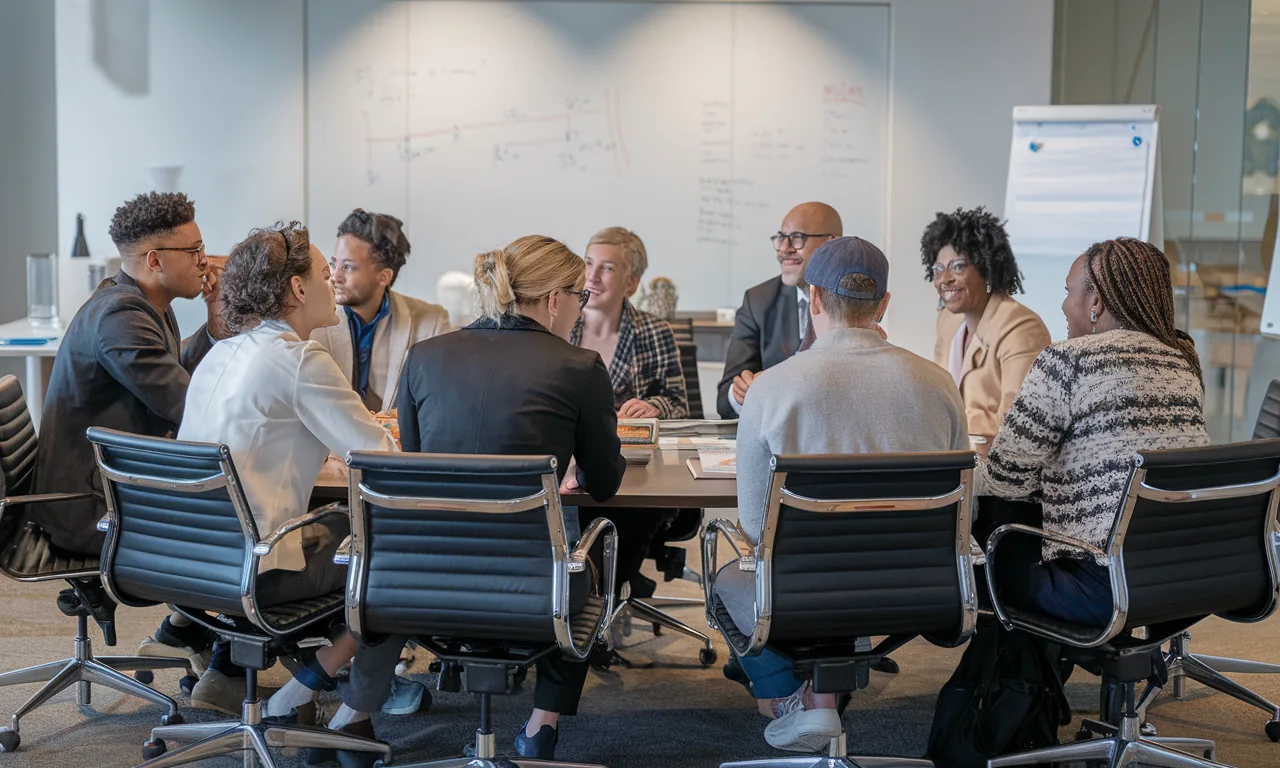
- Citizen assemblies (city-wide or district-based): These will also remain important in the future to explain planning in an understandable way, moderate conflicts, and take up suggestions from the neighborhood.
- Citizen petitions and referendums: For fundamental questions of urban development, this instrument – in compliance with legal requirements – can also lead to direct votes in the future.
- Consultation hours and dialogue formats: Additional on-site and online appointments can help clarify complex topics (e.g. digital services, planning documents) in a low-threshold way.
For citizens, it is particularly important: Formal procedures have deadlines and admissibility requirements. Anyone who wants to pursue a concern in the long term should gather information early and seek advice in good time.
Urban Development in the Neighborhood: Advisory Boards, Initiatives, and Implementation-Oriented Proposals
In the coming years, urban development will often be most visible where people are out and about every day: in the neighborhood. Neighborhood-based participation (e.g. via advisory boards, district rounds, or thematic working groups) can become particularly effective in the future if it combines two goals:
- Gathering everyday knowledge (e.g. dangerous intersections, missing seating, heat islands),
- Formulating implementable measures (e.g. short-term tests, medium-term conversions, long-term guidelines).
Examples of future neighborhood measures (typical use cases)
- Safe crossings through better lines of sight, markings, or adjusted traffic light phases,
- Shade & cooling through additional trees, greening, or water-sensitive elements,
- Low-barrier route chains (curb lowering, clear guidance, sufficiently wide passages),
- Small places to stay (seating islands, quiet zones, better lighting).
So that neighborhood ideas can be politically and professionally reviewed in the next step, they should ideally be described with location, target group, conflict points, and impact (e.g. safety, health/heat, social participation).
Youth and Climate: Participation for the Period Until 2040
Youth Participation as a Permanent Planning Partner
If Aschaffenburg plans for the long term in the coming years, youth participation will probably have to be increasingly involved as a continuous partner: not just occasionally, but along concrete projects (paths, squares, sports and cultural areas, mobility). In practice, youth committees, workshops at schools, or project-based online formats can be used for this.
Youth participation is particularly effective when it is linked to clear feedback: What is adopted? What is not – and why? What are the next steps?
Climate Neutrality by 2040 at the Latest: What Participation Can Achieve in the Future
The goal of climate neutrality by 2040 at the latest requires that many measures are coordinated in the coming years: in transport, buildings/energy, and climate adaptation (heat, heavy rainfall, green structures). Participation can fulfill three functions in the future:
- Clarifying priorities (which measures first, where are the biggest levers?),
- Increasing acceptance (through transparency, weighing, and comprehensible decisions),
- Accelerating implementation (when local actors – citizens, associations, businesses – contribute concrete inputs).
To ensure that participation remains effective here, future processes should include measurable goals (e.g. indicators, milestones) and document results in a way that remains understandable to the public.
Transparency, Conflicts, and Digital Information Channels: How Procedures Can Become Robust in the Future
Urban development will inevitably generate discussions in the future – for example, when housing needs, nature conservation, traffic, and quality of stay compete with each other. To deal with such goal conflicts fairly, participation procedures will be considered trustworthy in the future, especially if they:
- start early (not only when everything is decided),
- disclose planning variants and their consequences,
- explain weighings in an understandable way (e.g. space, costs, safety, climate effects),
- archive results in a findable way (project page, minutes, resolutions, next steps).
Digital information channels (municipal website, project pages, document repositories) will play a central role in this in the coming years – also so that citizens can follow developments over longer periods.
What This Could Mean for Residents and Visitors in the Coming Years
For residents, participation could mainly have the following effects in the future:
- More co-creation through combined online and on-site formats,
- better traceability of decisions when results and weighings are published,
- higher chance that implementation-oriented proposals (e.g. on accessibility, greenery, safety) are included in project lists.
For visitors, urban development could become noticeable in the future when measures on quality of stay, route guidance, accessibility, and climate-adapted urban spaces are implemented. Even without participating themselves, public project information can be used to understand which goals Aschaffenburg is pursuing in the coming years.